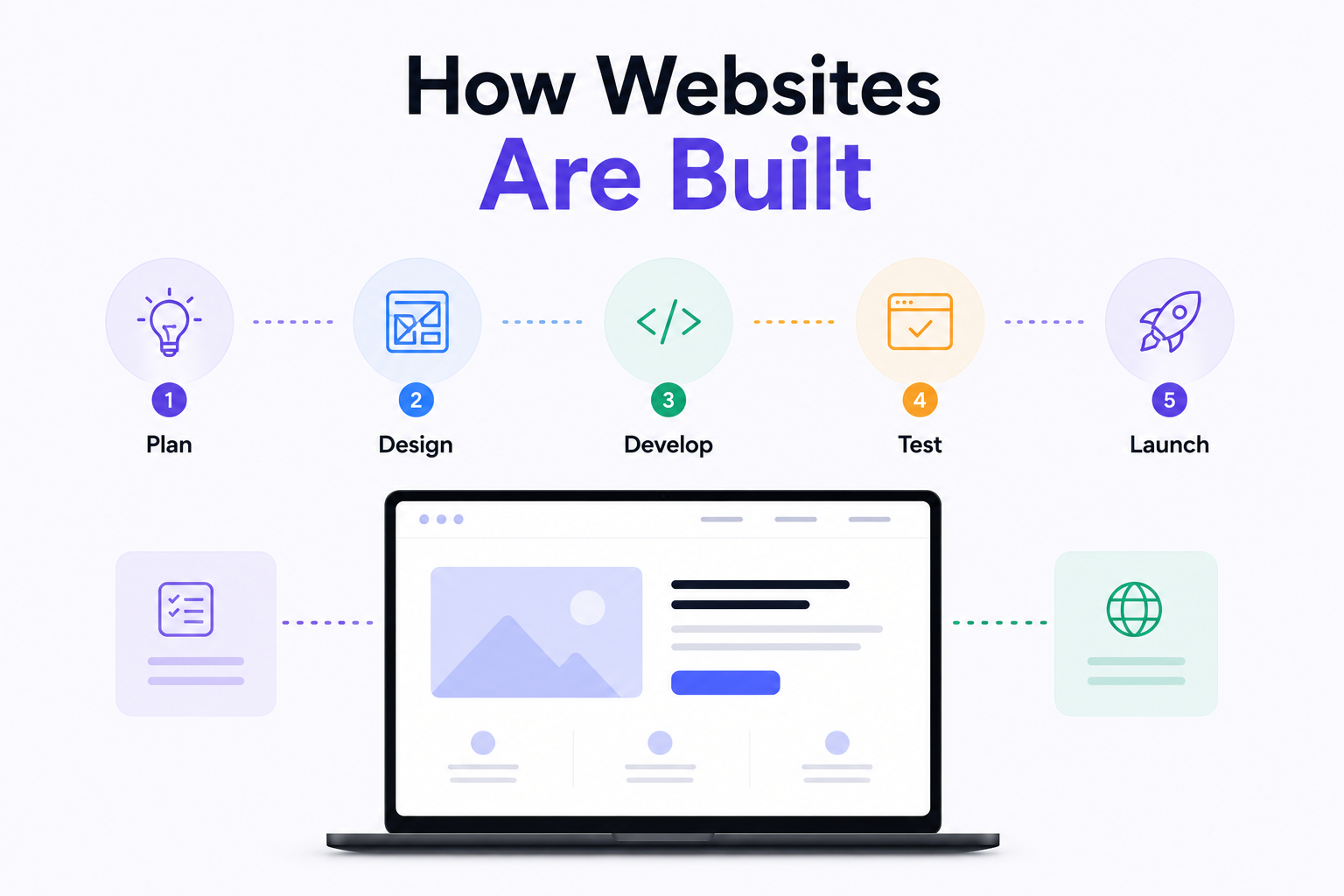
How Are Websites Built? A Complete Overview
Most people interact with websites every single day without ever thinking about what is actually happening behind the screen. A website feels simple to use, but building one properly involves multiple layers of technology, planning, and engineering working together. Understanding how websites are built helps business owners make better decisions when investing in their digital presence, and helps beginners understand what the profession actually involves.
How websites are built today looks very different from how they were built ten or fifteen years ago. The tools are more powerful, the standards are higher, and user expectations have shifted dramatically. A site that loads slowly, breaks on mobile, or looks outdated will lose visitors within seconds. Modern website development accounts for all of this from the very beginning of the build process.
The Core Building Blocks of Every Website
Every website, regardless of how complex or simple it appears, is built on three foundational technologies. HTML provides the structure, defining what elements exist on the page and in what order. CSS controls the visual presentation, handling layout, colors, spacing, typography, and how the site responds to different screen sizes. JavaScript adds interactivity, enabling dynamic behavior like dropdown menus, form validation, animations, and real-time content updates.
These three technologies are what every browser understands natively. Everything else in the modern web development stack, including frameworks, libraries, and backend systems, is built on top of this foundation. Understanding this helps explain why these fundamentals are still taught first regardless of which specialization a developer eventually pursues.
How Modern Websites Are Built
How modern websites are built differs significantly from the early days of the web. Rather than writing raw HTML files manually, professional developers today use component-based frameworks that make building complex interfaces faster, more maintainable, and more consistent. React is currently the most widely adopted frontend framework in the world, used by companies ranging from small startups to global enterprises.
Next.js builds on top of React and adds capabilities that are critical for performance and search engine visibility. Server-side rendering means pages are generated on the server before being sent to the browser, which results in faster load times and better indexing by search engines. Static site generation pre-builds pages at deployment time, making them incredibly fast to serve. These are not optional extras for serious web projects, they are standard practice in professional development environments.
On the backend, modern websites are powered by server environments like Node.js, which handles the logic that runs behind the scenes. This includes user authentication, database queries, API communication, payment processing, and any other functionality that requires server-side computation. The backend communicates with the frontend through APIs, sending and receiving data in a structured format that both sides understand.
What Are Database Driven Websites and How Are They Built?
A database driven website is one where the content displayed to users is pulled dynamically from a database rather than being hardcoded into static HTML files. This is how most modern websites work. When you visit an e-commerce store and see product listings, or log into a platform and see your personal account data, that content is being retrieved from a database in real time and rendered into the page.
Building a database driven website requires a backend system that connects the frontend interface to the data layer. The frontend sends a request, the backend processes it, queries the database, and returns the relevant data which is then displayed to the user. Databases like PostgreSQL handle structured, relational data efficiently, while MongoDB is used when the data structure is more flexible or document-based.
How dynamic websites are built follows this same pattern. Dynamic content means the page changes based on who is viewing it, what they have done previously, or what data exists in the system at that moment. This is in contrast to static websites where every visitor sees exactly the same content regardless of context.
How Many Websites Are Built on WordPress?
WordPress powers approximately 43 percent of all websites on the internet, making it by far the most widely used content management system in the world. How many websites are built with WordPress globally runs into the hundreds of millions. Its popularity comes from its accessibility. It requires no coding knowledge to get a basic site running, and a large ecosystem of themes and plugins makes it possible to add functionality without custom development.
However, WordPress has real limitations for businesses that need performance, scalability, and full design flexibility. Sites built on WordPress often carry plugin bloat that slows down load times, which directly impacts both user experience and search rankings. For businesses serious about growth, a custom-built site on a modern stack consistently outperforms a WordPress build in terms of speed, security, and long-term maintainability.
How Many Websites Are Built Every Day?
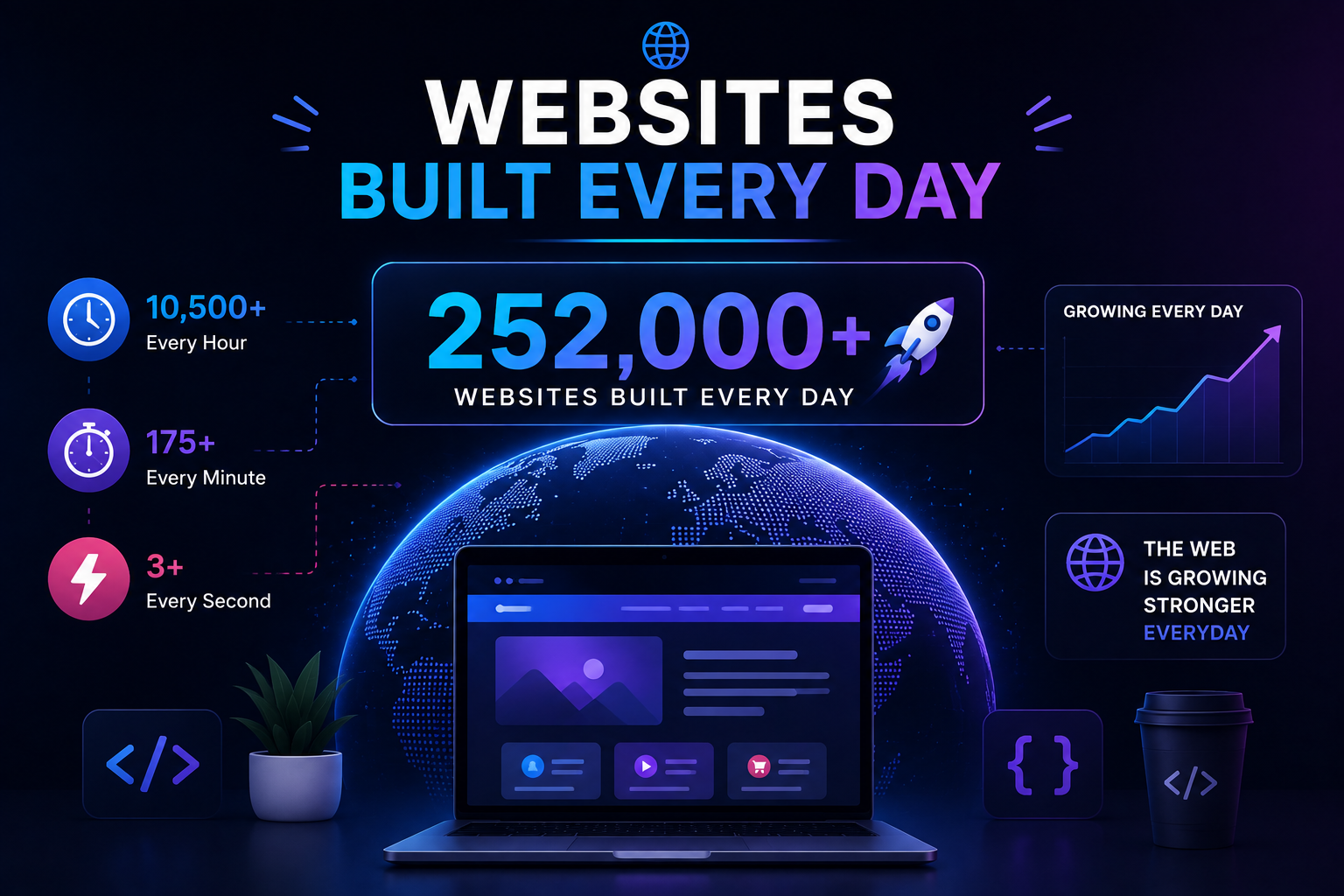
Estimates suggest that somewhere between 500,000 and 1.5 million new websites are created every day globally. How many new websites are built every minute works out to roughly 350 to 1,000 depending on the time of day and the source of the estimate. The majority of these are simple sites built on platforms like WordPress, Wix, or Squarespace. A much smaller proportion are custom-built professional products developed by agencies or in-house engineering teams.
This volume highlights both the opportunity and the challenge for businesses online. The internet is not getting less crowded. Standing out requires more than just having a website. It requires a site that is fast, well-structured, properly optimized for search, and genuinely useful to the people it is built for.
How to Find Out What a Website Is Built With
There are several ways to find out what technology stack a website is built with. Browser extensions like Wappalyzer or BuiltWith detect the frameworks, CMS platforms, analytics tools, and hosting providers used by any site you visit. Simply installing the extension and visiting a website will reveal the underlying technology in seconds.
You can also inspect a website's source code directly in the browser by right-clicking and selecting "View Page Source." This reveals the HTML markup and often includes references to the frameworks and libraries being used. For developers doing competitive research or businesses evaluating what their competitors are using, these tools provide genuinely useful insight into the technical decisions being made across the industry.
Want a Website Built the Right Way?
Now that you understand how websites are built, the next step is working with a team that builds them properly. At Munix Studio we use a modern development stack built for performance, scalability, and long-term business growth. No templates, no shortcuts, no bloated plugins.
Website Development Services — Custom websites built on React and Next.js, engineered for speed, SEO, and growth.
UI/UX Design Services — Interfaces designed to reduce friction and convert visitors into customers.
App Development Services — Web and mobile applications for businesses that need more than a standard website.
Maintenance and Support — Ongoing management to keep your website secure, updated, and performing at its best.
Frequently Asked Questions
How are websites built today compared to before?
Modern websites are built using component-based frameworks like React and Next.js rather than hand-written HTML files. Development workflows now include version control, automated testing, CI/CD deployment pipelines, and cloud infrastructure. The result is faster, more reliable, and more maintainable products compared to how websites were built in the early days of the web.
How are most websites built?
The majority of websites on the internet are built on content management systems, with WordPress being the most dominant. However, professionally built websites for businesses with serious growth goals are typically built on custom stacks using frameworks like React, Next.js, and Node.js. These custom builds offer better performance, security, and flexibility than template-based solutions.
How many websites are built on WordPress?
WordPress powers around 43 percent of all websites globally, which translates to hundreds of millions of sites. It is the most widely used CMS in the world due to its accessibility and large plugin ecosystem. That said, WordPress is not always the right choice for businesses that need high performance, custom functionality, or a scalable technical foundation.
How are dynamic websites built?
Dynamic websites are built with a frontend interface connected to a backend server and database. When a user visits the site, the frontend sends requests to the backend, which queries the database and returns the relevant data. This data is then rendered into the page in real time. Frameworks like Next.js handle this efficiently through server-side rendering, ensuring dynamic content is delivered fast and indexed properly by search engines.
How many websites are built every day?
Estimates place the number of new websites created globally at between 500,000 and 1.5 million per day. The vast majority are simple sites built on website builders or CMS platforms. A much smaller number are professionally developed custom products. This volume makes it clear that simply having a website is not enough. Performance, design quality, and search visibility are what determine whether a site actually reaches its intended audience.
How do you find out what a website is built with?
The easiest way is to use a browser extension like Wappalyzer or BuiltWith, both of which detect the technology stack of any website you visit instantly. You can also view a site's page source directly in the browser to see references to the frameworks and libraries being used. These tools are useful for competitive research, technical due diligence, or simply satisfying curiosity about how a particular site was built.
Frequently Asked Questions
Ready to Get Started?
Custom Development for the Modern Web
Most agencies just give you a template. At Munix Studio, we specialize in how are websites built today—using high-performance code that is tailored to your business needs. Whether you need a database-driven platform or a lightning-fast modern landing page, we have the expertise to build it from the ground up.
Explore Website DevelopmentRelated Articles
What is Website Development? The Complete Guide for Beginners

Website Development Process & Life Cycle : Complete Guide
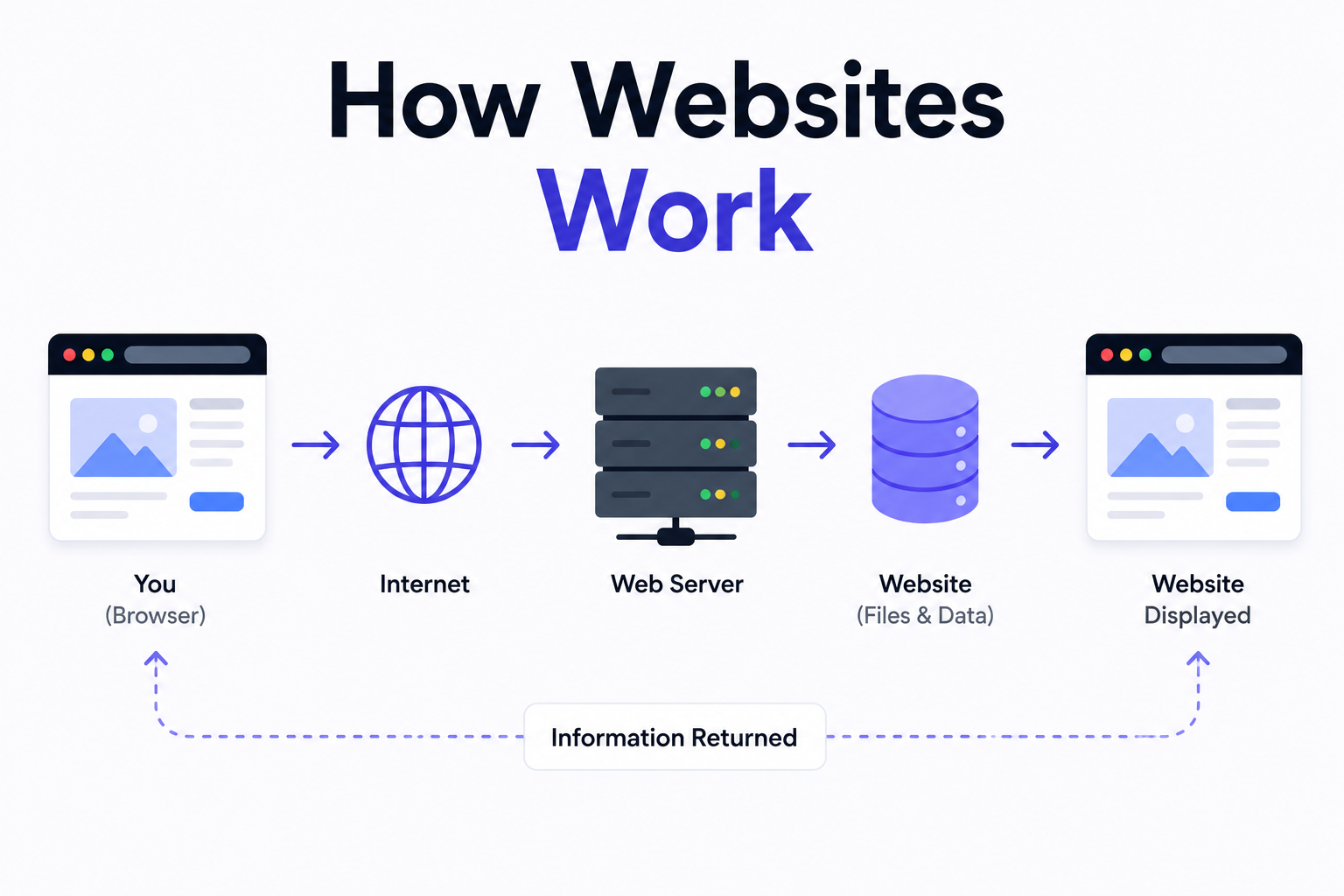
How Websites Work: DNS, Servers, Browsers
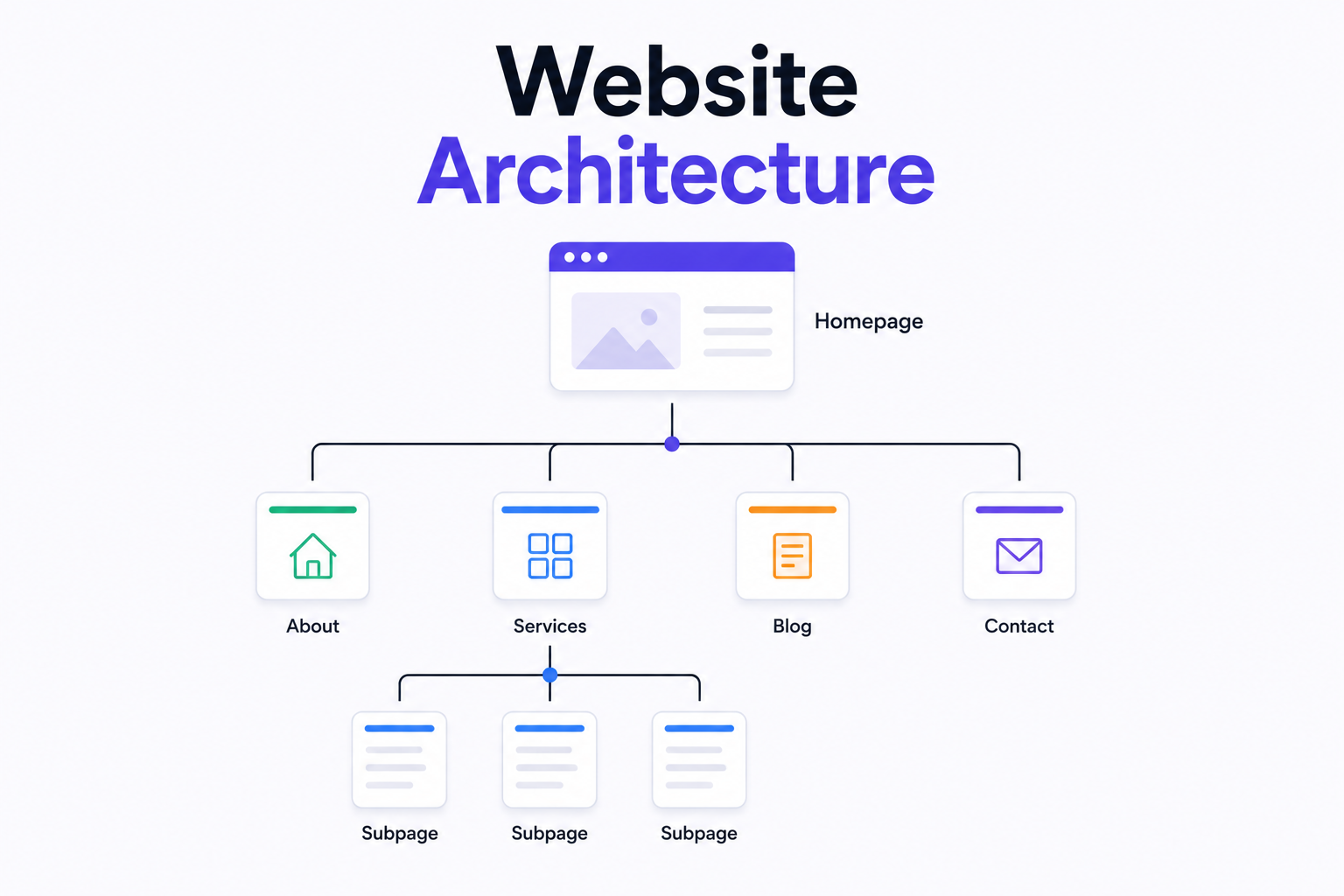
What is Website Architecture? Best Practices
Architecture Firm Website Design & Portfolio