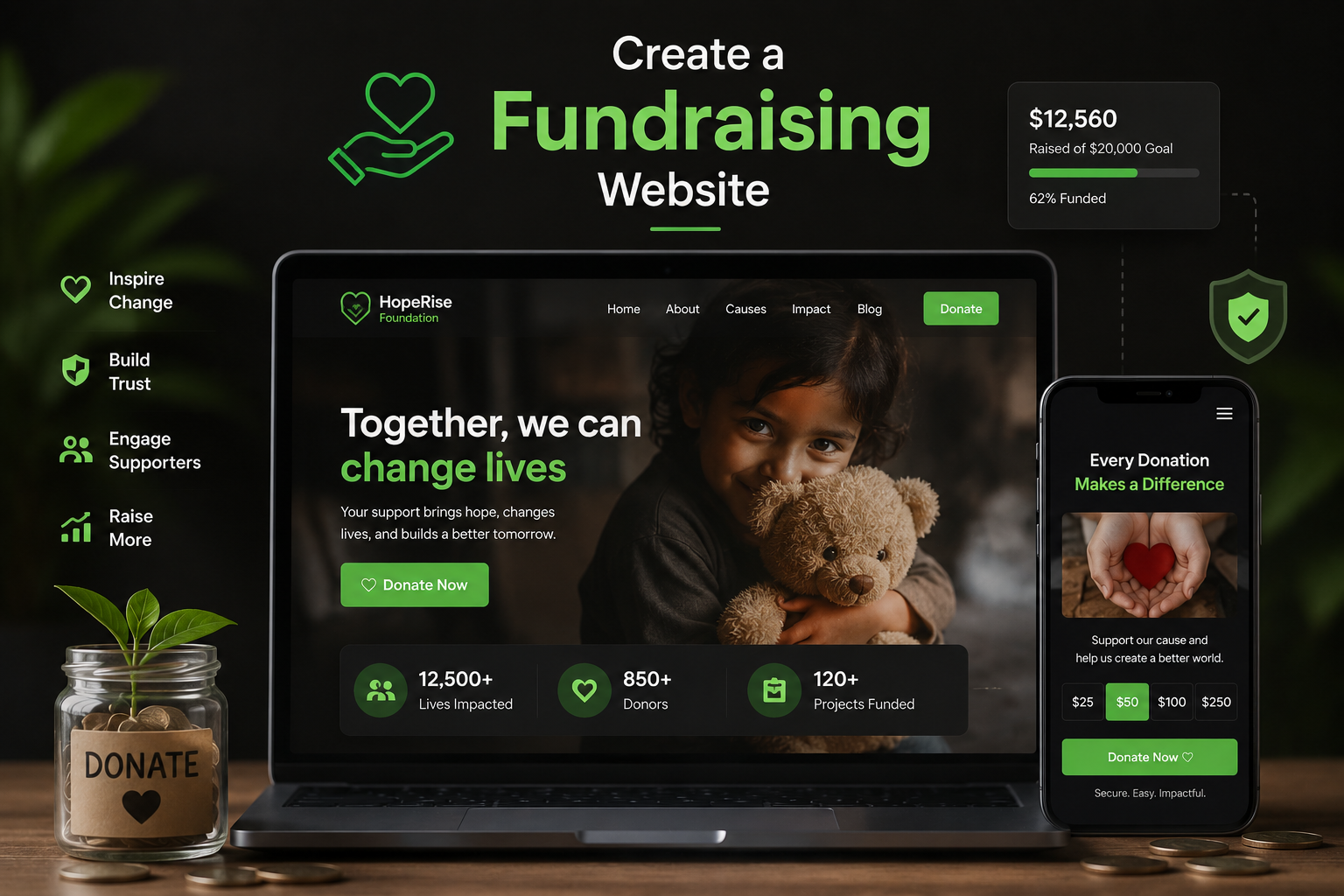
A charity website carries a weight that most other websites do not. It is asking visitors to give something — money, time, or both — based entirely on the trust it manages to create in the few minutes someone spends reading it. A corporate website needs to persuade someone to buy a product. A charity website needs to persuade someone to part with their own resources for the benefit of people they may never meet. That is a fundamentally different communication challenge, and it requires a fundamentally different approach to design, content, and structure.
This guide covers the full process of building a charity or nonprofit website that does its job: establishing credibility quickly, communicating the mission with clarity, making donation and volunteering pathways frictionless, and building the kind of sustained online presence that supports long-term fundraising and community growth. Whether you are launching a new nonprofit, rebuilding an outdated charity site, or helping an organisation take its first steps online, the principles here apply across cause areas and organisation sizes.
Why a Charity Website Is Non-Negotiable
The first thing most potential donors, volunteers, grant-makers, and press contacts do when they encounter a charity for the first time is search for it online. A charity without a website — or with a website that looks neglected, loads slowly, or fails to communicate its mission clearly — loses that first impression before the conversation has even begun. In a giving landscape where donors have access to thousands of organisations through platforms like JustGiving, GoFundMe, and Charity Navigator, the organisations that stand out are those that present themselves with the same professionalism they bring to their work on the ground.
Grant-making organisations and institutional funders routinely cite a charity's website as part of their due diligence process. A well-maintained website with transparent financial reporting, clear programme descriptions, and documented impact demonstrates organisational competence in a way that no grant application alone can. The website is evidence of how the organisation presents itself to the world, and that presentation is itself a signal of capacity.
Online donations have grown substantially as a proportion of total charitable giving over the past decade. Research from the Fundraising Effectiveness Project and similar bodies consistently shows that organisations with functional, well-designed online donation experiences raise more money from digital channels than those relying on offline giving alone. The website is the infrastructure that makes this possible.
Charity vs Nonprofit Website: What's Actually Different
"Charity" and "nonprofit" are often used interchangeably, and for most of what this guide covers — trust-building, donation design, content strategy — the advice applies equally regardless of which term describes your organisation. But the two terms reflect genuinely different legal structures depending on where an organisation is registered, and a website needs to reflect the correct one accurately, both for compliance and for donor trust.
In the United Kingdom, "charity" is a specific legal status granted by the Charity Commission for England and Wales, or the equivalent regulators in Scotland and Northern Ireland. A registered charity has a charity number that should appear in the website footer, is subject to specific reporting requirements, and can offer UK taxpayers Gift Aid — a mechanism that lets the charity reclaim basic-rate tax on donations, increasing the value of every gift by 25% at no extra cost to the donor. A charity website should make Gift Aid eligibility visible and easy to opt into directly within the donation flow, since failing to prompt for it is a common and costly oversight that leaves free money unclaimed on every donation.
In the United States, "nonprofit" is the broader term, and 501(c)(3) is the specific IRS tax-exempt status that most charitable organisations register under. A 501(c)(3) organisation issues tax-deductible donation receipts, and US donors expect to see this status referenced clearly, along with the organisation's EIN (Employer Identification Number), particularly around tax season when donors are compiling records for their own filing. Unlike Gift Aid, there is no equivalent mechanism that increases the donation's value automatically — the tax benefit accrues to the donor directly through their own return, which means the website's job is limited to providing a clear, prompt donation receipt rather than managing an additional claim process.
Organisations operating internationally, or accepting donations from both UK and US donors, need to address both frameworks clearly rather than defaulting to one. This typically means a donation page that detects or asks for the donor's country and surfaces the relevant mechanism — a Gift Aid checkbox for UK donors, a tax-deductibility statement and EIN for US donors — rather than presenting a single generic donation form that serves neither audience's compliance needs well.
Beyond the legal distinction, the practical content advice in this guide — mission clarity, impact reporting, donation UX, trust signals — applies identically whether an organisation is a UK-registered charity, a US 501(c)(3), or an equivalent structure elsewhere. The terminology used throughout a website's copy should match the organisation's actual legal status and its primary donor base's expectations, rather than being chosen arbitrarily.
Defining What Your Charity Website Needs to Do
Before any design or technical decisions are made, the most useful exercise is identifying exactly what the website needs to achieve and for whom. Charity websites typically serve several distinct audiences simultaneously: individual donors considering a one-time or recurring gift, volunteers looking to contribute time and skills, corporate partners exploring sponsorship or in-kind support, grant-makers assessing organisational credibility, beneficiaries seeking services or information, and press contacts researching the organisation for coverage.
Each of these audiences has different questions and different information needs. A donor wants to know that their money will be used well and that the cause is genuine. A volunteer wants to know how to get involved and what the commitment looks like. A grant-maker wants to see financial transparency, governance information, and documented outcomes. A beneficiary wants to know whether the organisation can help them and how to access that help. A website that tries to address all of these needs on a single homepage produces a cluttered, unfocused experience that serves none of them well. A website with clear navigational pathways for each audience type serves all of them effectively.
How to Create a Charity Website: Step-by-Step
The sections that follow in this guide go deep on each individual aspect of a charity website. This section lays out the sequence those pieces fit into, for anyone who wants the roadmap before the detail.
Step 1: Define your audiences and goals. Before any design or platform decision, identify which of the audiences covered in the previous section — donors, volunteers, corporate partners, grant-makers, beneficiaries, press — matter most for your organisation, and what you want each of them to do on the site.
Step 2: Choose your platform. Match your technical capacity and budget to a platform, covered in detail in the next section. Most charities are well served by WordPress with nonprofit-specific plugins; established organisations with complex operational needs may need custom development.
Step 3: Plan your core pages. At minimum, a charity website needs a homepage, an about or mission page, a donation page, a programmes or services page, a volunteer page, a governance or transparency page, and a contact page. Larger organisations add dedicated pages per programme and per active campaign.
Step 4: Set up donation processing. Choose a payment gateway (Stripe and PayPal cover most needs, detailed later in this guide), configure suggested giving amounts and monthly giving options, and test the full donation flow end to end before launch, including the confirmation email and any tax or Gift Aid receipting.
Step 5: Write and gather your core content. Draft the mission statement, collect impact data and outcome statistics, and gather or commission photography of real beneficiaries, staff, and volunteers. This step typically takes longer than the technical build and should start in parallel with platform setup rather than after it.
Step 6: Build in accessibility and compliance from the start. WCAG 2.1 AA compliance, a GDPR-compliant privacy policy, and cookie consent management are far easier to implement correctly during the build than to retrofit afterward.
Step 7: Test the donation and volunteer pathways specifically. Before launch, have someone unfamiliar with the site attempt to make a small donation and sign up as a volunteer. Friction that the internal team has become blind to is often immediately obvious to a first-time visitor.
Step 8: Launch and submit to Google Search Console. Submit your sitemap so Google begins indexing the site promptly, and apply for Google for Nonprofits if eligible, which unlocks the Google Ad Grants programme covered later in this guide.
Step 9: Set up ongoing content and maintenance. Establish a realistic publishing schedule for news and impact updates, and put a maintenance arrangement in place for security updates, backups, and monitoring, covered in full at the end of this guide.
Each of these steps is covered in far more depth in the sections that follow — this sequence exists to show how they connect before diving into any one of them individually.
What to Include on a Charity Website
The content requirements of a charity website are distinct from those of a commercial site. Certain elements that are optional on a business website are essential on a charity site because they directly address the trust deficit that charitable giving requires donors to overcome.
A Clear and Compelling Mission Statement
The mission statement is the single most important piece of copy on a charity website, and it needs to appear prominently on the homepage rather than buried in an about page. It should answer three questions without ambiguity: what problem does the organisation address, who does it serve, and how does it work. Vague mission statements — "working to make the world a better place" or "dedicated to helping those in need" — communicate nothing specific enough to generate commitment. "Providing free legal representation to asylum seekers in Lahore" is a mission statement that a visitor understands immediately and can decide to support or not based on their values.
Impact and Outcomes Data
Donors and grant-makers are increasingly sophisticated about the difference between activity and impact. A charity that reports "we delivered 500 workshops last year" is describing activity. A charity that reports "83% of participants in our literacy programme tested at grade level within six months, compared to a national average of 61%" is describing impact. Where the organisation has genuine outcome data, it should be presented prominently, ideally on the homepage and in a dedicated impact section. Where outcome data is limited, honest reporting of what has been achieved and what the organisation is working to measure is more credible than inflated activity statistics.
Donation Pages and Giving Options
The donation page is the highest-stakes conversion point on any charity website, and it deserves more design attention than almost any other element. The page needs to be fast, simple, and reassuring. Every additional step in the donation process, every form field that is not strictly necessary, and every moment of visual confusion is a point at which a donor can decide to close the tab instead.
Offering suggested donation amounts with specific impact descriptions dramatically outperforms open text fields for donation amount. "£25 provides school supplies for one child for a term" is more compelling than a blank box asking for a number. Monthly giving options should be prominently offered alongside one-time gifts — recurring donors represent far higher lifetime value to a charity than one-time givers at the same initial amount, and the website should make the case for recurring giving clearly.
Volunteer and Involvement Pathways
A visitor who wants to give time rather than money needs a clear pathway to do so. A volunteer page that describes available roles, time commitments, required skills, and the application or sign-up process gives that visitor everything they need to take the next step. Volunteer opportunities that are vaguely described or that require multiple contact exchanges before anything concrete is established lose prospective volunteers who were ready to commit but encountered too much friction.
Transparency and Governance Information
Financial transparency is one of the strongest trust signals a charity website can offer. An annual report, a summary of how funds are allocated across programmes, administration, and fundraising, and the organisation's registration details with the relevant charity regulator should all be accessible from the website. Organisations that score well on platforms like Charity Navigator do so partly because they make this information readily available, and donors who check those platforms will verify whether the website matches what the regulator records show.
A board of trustees or directors page with brief biographies adds significant credibility. It shows that real, accountable people with identifiable backgrounds are responsible for the organisation's governance. Anonymous charities with no named leadership are a red flag to experienced donors and grant-makers, and a website that addresses this concern proactively removes a barrier to trust that would otherwise need to be overcome through direct communication.
Stories and Case Studies
Data tells donors what the organisation achieves. Stories tell them why it matters. The most effective charity websites combine both: statistics that demonstrate scale and effectiveness alongside individual stories that make the impact human and emotionally real. A single well-told story of one person whose situation changed because of the organisation's work does more to motivate giving than a page of percentages. These stories need to be told with the subject's genuine informed consent and, where appropriate, with their identity protected according to the charity's safeguarding policies.
News, Blog, and Updates
A charity website that has not been updated for months communicates that the organisation may not be actively operating, which is damaging to credibility regardless of what is actually happening on the ground. A news or updates section that is refreshed regularly — programme news, event announcements, staff changes, advocacy updates — signals that the organisation is active and engaged. This content also provides the raw material for newsletter campaigns and social media posts, making it a content asset that serves multiple channels simultaneously.
Choosing the Right Platform for a Charity Website
Platform selection for a charity website involves considerations that differ from commercial site choices. Budget constraints are real in the nonprofit sector, and the ongoing cost of a platform matters alongside its capabilities. Technical capacity within the organisation affects how much ongoing maintenance the platform will require. And the specific features a charity needs — donation processing, event management, volunteer registration, email list integration — may or may not be available natively on a given platform.
Platform Best For Donation Integration Ongoing Cost Technical Skill Needed SEO Control WordPress Most charities, flexible needs Excellent via plugins Low Moderate High Squarespace Small charities, simple needs Basic via third-party Medium Low Moderate Wix Very small, low-budget orgs Limited Low to Medium Very Low Limited Webflow Design-conscious nonprofits Via third-party embeds Medium Moderate Good Custom Built Established orgs, complex needs Full control Variable Managed by dev team Complete
WordPress for Nonprofits
WordPress remains the most practical platform choice for the majority of charity websites because its plugin ecosystem covers virtually every nonprofit-specific requirement. GiveWP and Charitable are both well-regarded WordPress plugins built specifically for charitable donation management, offering recurring giving, donor management, campaign pages, and payment gateway integration. The platform's maturity means that volunteer registration forms, event calendars, multilingual content, and accessibility compliance are all achievable without building custom functionality from scratch.
WordPress also qualifies for Google for Nonprofits, which gives eligible organisations access to Google Workspace, Google Ad Grants — up to $10,000 per month in free search advertising — and other tools. The Google Ad Grants programme specifically requires a website that meets Google's quality standards, which effectively creates an incentive for nonprofits to invest in proper website development rather than minimally functional placeholders.
When Custom Development Makes Sense
For established charities with complex operational requirements — membership management systems, case management integration, multi-programme donation tracking, large multilingual content libraries, or beneficiary portal access — a custom-built website delivers capabilities that no off-the-shelf platform provides cleanly. The investment in custom development is justified when the organisation's operational complexity has outgrown what plugins and workarounds can handle, or when the website needs to integrate with CRM systems, grant management software, or government reporting tools that have no standard integrations available.
Custom development also removes the recurring platform licensing costs and plugin subscription fees that accumulate significantly for organisations running multiple premium plugins. A well-built custom system, properly maintained, can be more cost-effective over a five-year horizon than the ongoing subscription costs of a fully configured commercial platform.
What Are Charity Microsites and When to Use One
A charity microsite is a small, focused website — often just a single page or a handful of pages — built separately from an organisation's main website, usually to support one specific campaign, event, or appeal. Unlike a page added to the main site's navigation, a microsite typically lives on its own memorable domain or subdomain (a Christmas appeal at give.charityname.org, for example) and strips away everything except what's needed to drive a single action: donate, register, or sign up.
The case for a microsite over a page on the main site comes down to focus and shareability. A general charity website needs to serve donors, volunteers, grant-makers, and beneficiaries simultaneously, which means every page carries some navigational complexity. A campaign microsite serves exactly one purpose for exactly one audience during a defined window of time, which lets it strip out the main navigation, the mission-wide messaging, and anything else that isn't directly relevant to the specific ask. This focus consistently improves conversion rates for time-bound campaigns compared to a page competing for attention within a larger site's structure.
Microsites are also easier to promote with a short, memorable URL in print materials, on social media, or verbally in media appearances — "visit give.charityname.org" is easier to communicate and remember than a deep URL nested several levels into a main site's structure.
When a microsite makes sense:
A time-bound campaign or appeal with a clear start and end date — an annual giving day, an emergency response appeal, a capital campaign
An event that needs its own registration and information flow, such as a fundraising gala, a sponsored run, or a conference
A campaign requiring a distinct visual identity or partnership branding that shouldn't be permanently absorbed into the main site's design
When a page on the main site is the better choice instead:
Ongoing programmes without a defined end date, which benefit more from being permanently discoverable within the main site's navigation and SEO structure
Smaller organisations without the technical or content resources to maintain a second, separate web property
Any content that needs to build long-term search visibility, since a short-lived microsite domain accumulates none of the SEO authority that a permanent page on the established main domain does
The main tradeoff with microsites is exactly that SEO cost: splitting content across multiple domains means link authority and search relevance never consolidate onto one property. A microsite that outperforms expectations and continues indefinitely is usually a signal that its content should be migrated into the main site's structure rather than left running as a permanent separate property. For most charities, a small number of well-planned microsites for genuinely time-bound campaigns, alongside a comprehensive and permanent main website, is the right balance.
Accepting Donations Online: Technical and Trust Requirements
Online donation processing involves both technical infrastructure and the trust signals that make donors willing to use it. On the technical side, the donation form needs to be served over HTTPS, process payments through a PCI-compliant payment gateway, and provide immediate confirmation to the donor that their transaction has been received. On the trust side, the donation page needs to carry the same credibility signals as the rest of the site, with the addition of visible security indicators and clear information about how the donation will be used.
Payment Gateway Options for Charities
Stripe and PayPal are the two most widely used payment gateways for charity websites globally, and both offer reduced fee structures for verified nonprofit organisations. Stripe processes cards directly on the donation page without redirecting the donor to an external site, which research consistently shows produces higher conversion rates than redirect-based payment flows. PayPal has higher consumer recognition in some markets, which can increase conversion among donors who are unfamiliar with or uncertain about other payment processors.
For organisations in specific markets, local payment options matter. In South Asia, bank transfer integrations and mobile wallet payment options can significantly increase donation completion rates among audiences who are less comfortable with card-based online transactions. A donation infrastructure that accommodates multiple payment methods removes a barrier that a card-only form imposes on a portion of potential donors.
Donation Feature Why It Matters Impact on Conversion Complexity to Implement Suggested donation amounts Reduces decision paralysis High positive Low Monthly giving option Increases donor lifetime value Very High Medium Impact descriptions per amount Makes giving concrete and motivating High positive Low Guest checkout (no account required) Removes friction for first-time donors High positive Low Multiple payment methods Accommodates different donor preferences Moderate positive Medium Donation confirmation email Builds trust, enables tax receipts Retention impact Low Dedicated campaign pages Enables targeted fundraising drives High for campaigns Medium
Designing a Charity Website That Builds Trust
Trust is not a single element on a charity website — it is an accumulation of signals that a visitor evaluates both consciously and unconsciously as they move through the site. Professional visual design is the foundation: a site that looks amateurish, outdated, or inconsistent raises immediate doubts about organisational capacity regardless of the quality of the work being done. This does not mean expensive or complex design — it means clean, consistent, and clearly intentional design that communicates competence.
Photography and Visual Storytelling
Photography is the most powerful trust-building tool available to a charity website. Images of real beneficiaries, real volunteers, real staff, and real programme activities convey authenticity in a way that stock photography categorically cannot. Stock images of smiling generic people from unrelated contexts are immediately recognisable for what they are, and they undermine the claim to authenticity that a charity website needs to make. Investing in even a modest amount of original photography — a half-day session with a photographer who understands documentary work — produces assets that transform how the organisation presents itself online.
Where original photography is used, it must be handled with care. Images of beneficiaries, particularly children or vulnerable adults, require appropriate consent and must be managed according to the charity's safeguarding and image use policies. These are not merely procedural requirements — they are ethical obligations that a properly governed charity takes seriously, and the website should reflect that seriousness in how it uses visual content.
Accessibility as a Core Requirement
Many charities serve beneficiary communities that include people with disabilities, and a website that is inaccessible to screen reader users, keyboard-only navigators, or people with visual impairments fails those communities before they have even reached the content. WCAG 2.1 AA compliance should be treated as a baseline standard for any charity website, not an optional enhancement. This means proper heading structure, sufficient colour contrast, alternative text on all meaningful images, keyboard-navigable forms, and captions on video content.
Beyond the ethical dimension, accessibility compliance is increasingly a legal requirement in many jurisdictions for public-facing organisations. A charity that fails to meet accessibility standards is exposed to both reputational and legal risk that a relatively small development investment could prevent entirely.
SEO for Charity Websites
Search engine optimisation for a charity website serves a different purpose from commercial SEO. The goal is not primarily to compete for commercial keywords but to be found by people who are already motivated to support a cause like yours — donors searching for charities to support, volunteers looking for opportunities in their area, beneficiaries seeking the type of help the organisation provides, and journalists researching the sector.
Cause-Specific and Local Keyword Targeting
The keywords that matter for a charity website are specific to the cause area and often include geographic modifiers. A charity providing food assistance in Karachi should be findable for searches like "food charity Karachi," "donate food Pakistan," and "volunteer food bank Karachi" — not just the organisation's name. Each programme or service the charity offers represents an additional set of keywords it could rank for, and creating dedicated pages for each programme rather than describing everything on a single services page is a straightforward way to expand search visibility.
Google Ad Grants for Nonprofits
Eligible nonprofits can access up to $10,000 per month in free Google Search advertising through the Google Ad Grants programme. This is one of the most significant digital marketing resources available to charities, and it is underused by a significant proportion of eligible organisations. The programme requires the charity to have a functioning website that meets Google's quality guidelines, to use the grant only for text ads in Google Search, and to maintain a minimum click-through rate on campaigns. A charity website that is properly structured and has dedicated landing pages for donation campaigns, volunteer recruitment, and programme information is well-positioned to use this grant effectively.
Content Marketing for Charities
A charity blog or resources section that publishes useful, informative content related to the cause area builds long-term search visibility while also demonstrating the organisation's expertise and depth of engagement with its field. A mental health charity that publishes guides on recognising anxiety symptoms, supporting a friend in crisis, or accessing services in a specific region creates content that helps people who need it, attracts organic search traffic, and positions the organisation as a credible voice in the space — all simultaneously. This type of content also tends to earn inbound links from other organisations, media coverage, and social shares, which build the domain authority that improves overall search rankings.
Email Marketing and Donor Retention
Acquiring a new donor is significantly more expensive than retaining an existing one, and the website plays a central role in both acquisition and retention. Every donor who completes an online donation should be entered into an email communication sequence that acknowledges their gift, shares the impact it will have, and begins building the relationship that converts a one-time donor into a regular supporter.
Newsletter signup opportunities should appear at multiple points on the website — not just on a dedicated contact page. A signup form in the footer, an inline prompt within blog content, and a prompt on the donation thank-you page all capture visitors at different points in their engagement with the organisation. The value proposition for the newsletter should be specific: not "sign up for updates" but "receive quarterly impact reports and stories from our beneficiaries" or "be the first to know about our fundraising campaigns and events."
Email automation for donor communications — thank-you emails, donation receipts, anniversary messages on the date of a donor's first gift, impact updates timed to programme milestones — can be configured once and run consistently without ongoing manual effort. This kind of systematic donor communication is one of the most cost-effective retention tools available to a nonprofit and is substantially easier to implement when the website and email platform are properly integrated from the start.
Performance, Security, and Ongoing Maintenance
A charity website that processes financial transactions has a higher security obligation than a purely informational site. Keeping WordPress core, themes, and plugins updated is the most basic and most commonly neglected security practice. A website running outdated software is a vulnerability that bad actors actively exploit, and the reputational damage of a data breach involving donor payment information is severe and often irreversible.
Page speed matters for charity websites for the same reason it matters for commercial ones. A donation page that takes four seconds to load loses a measurable proportion of donors at the moment they are most ready to give. Google's Core Web Vitals standards apply equally to nonprofit sites, and meeting them is both an SEO requirement and a user experience one. Image optimisation, caching, and a reliable hosting provider are the foundational elements of a well-performing charity website.
Regular backups, uptime monitoring, and a clear process for responding to site issues are all components of responsible ongoing website management. For organisations without in-house technical capacity, a maintenance and support arrangement with the development team that built the site is the most reliable way to ensure these requirements are consistently met without placing the burden on non-technical staff.
Related Services
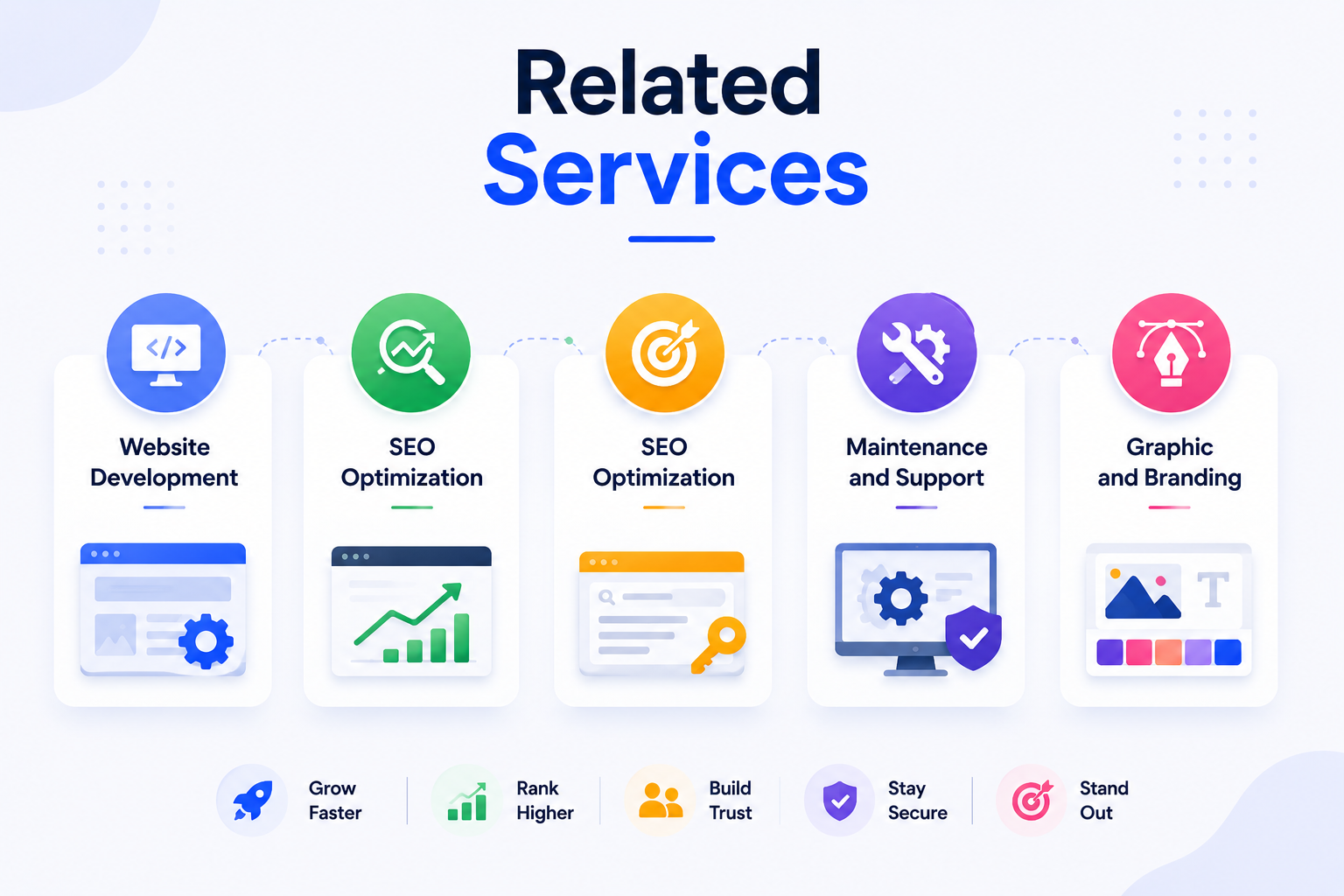
Building a charity website that earns donor trust and supports long-term fundraising draws on expertise across several disciplines. The following Munix Studio services are directly relevant to creating and growing a professional nonprofit online presence:
Website Development — Custom charity website development with integrated donation systems, volunteer management, campaign pages, and accessibility compliance built into the foundation.
UI/UX Design — Nonprofit-focused interface design that guides donors through a trust-building journey from mission discovery to completed donation, optimised for conversion and accessibility.
SEO Optimization — Charity website SEO covering cause-specific keyword targeting, local search visibility, Google Ad Grants readiness, and content strategy to attract donors and volunteers through search.
Digital Marketing — Fundraising campaign strategy, donor email marketing, social media management, and Google Ad Grants setup to grow your supporter base and drive sustained giving.
Graphic and Branding — Charity brand identity development covering logo, colour system, and visual guidelines that communicate credibility and consistency across all donor-facing communications.
Maintenance and Support — Ongoing website security, performance monitoring, content updates, and technical support so your charity site stays secure, fast, and current without requiring in-house technical staff.
Frequently Asked Questions
Ready to Get Started?
Website Development
Custom charity website development with integrated donation systems, campaign pages, volunteer management, and accessibility compliance built into every layer.
Explore Website DevelopmentUI/UX Design
Nonprofit interface design that guides visitors from mission discovery to completed donation — built for trust, clarity, and conversion at every step.
Explore UI/UX DesignSEO Optimization
Charity website SEO covering cause-specific keyword targeting, Google Ad Grants readiness, local search visibility, and content strategy to attract donors through search.
Explore SEO OptimizationDigital Marketing
Fundraising campaign strategy, donor email marketing, and Google Ad Grants setup to grow your supporter base and drive sustained giving year-round.
Explore Digital MarketingGraphic and Branding
Charity brand identity covering logo, colour system, and visual guidelines that communicate credibility and consistency across all donor-facing communications.
Explore Graphic and BrandingMaintenance and Support
Ongoing charity website security, performance monitoring, and content updates — keeping your site secure, fast, and current without requiring in-house technical staff.
Explore Maintenance and SupportRelated Articles
What is Website Development? The Complete Guide for Beginners
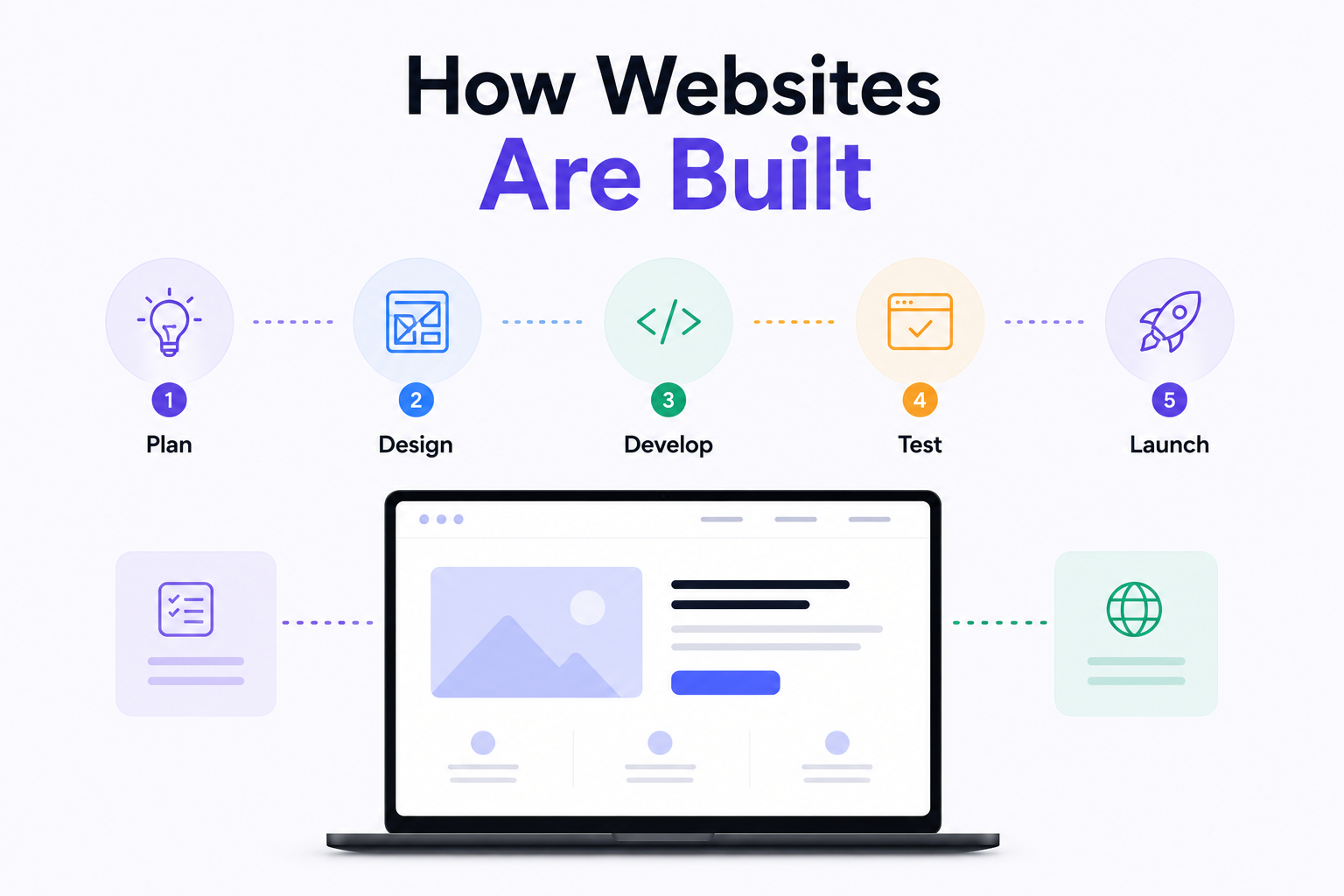
How Are Modern Websites Built in 2026?

Website Development Process & Life Cycle : Complete Guide
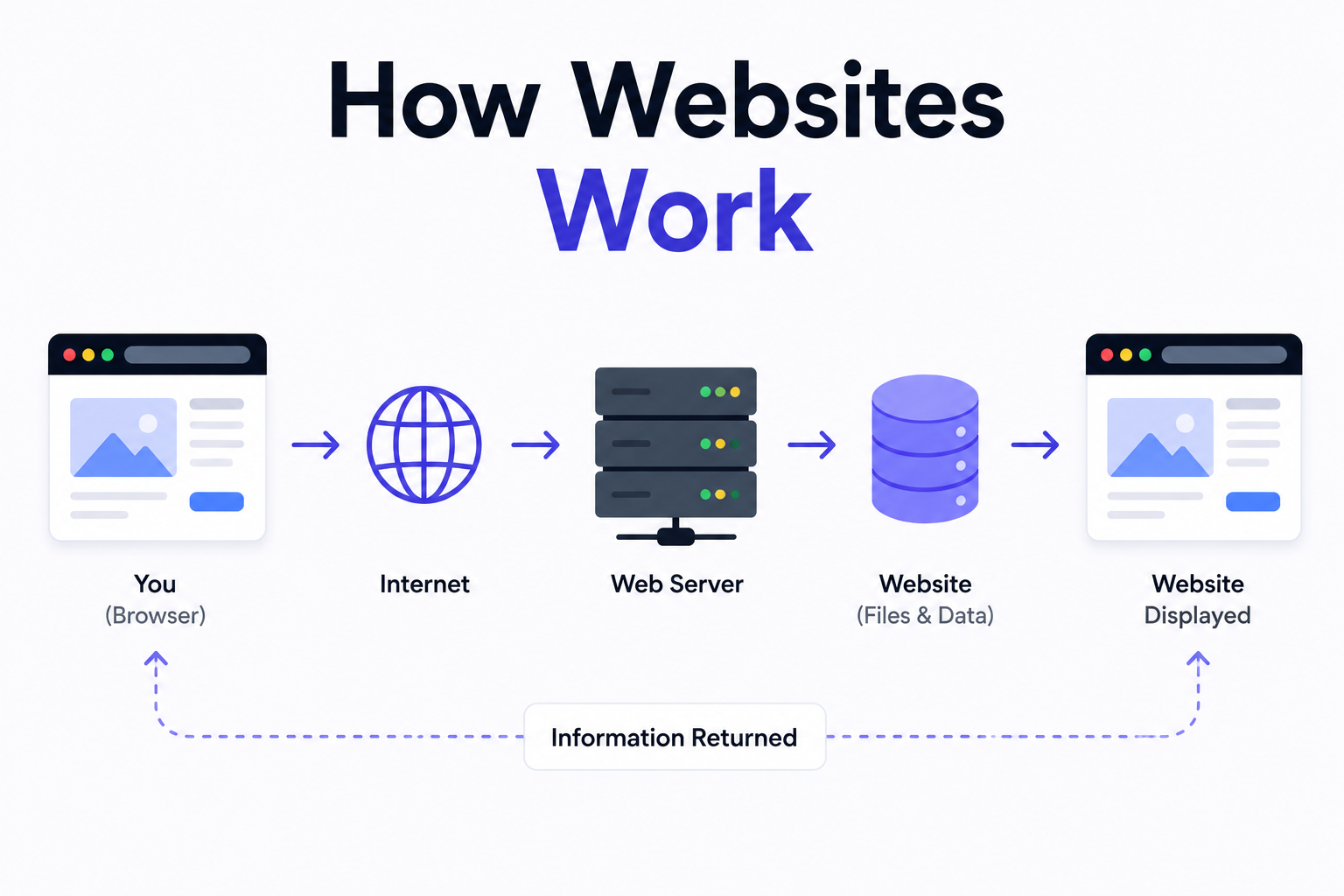
How Websites Work: DNS, Servers, Browsers
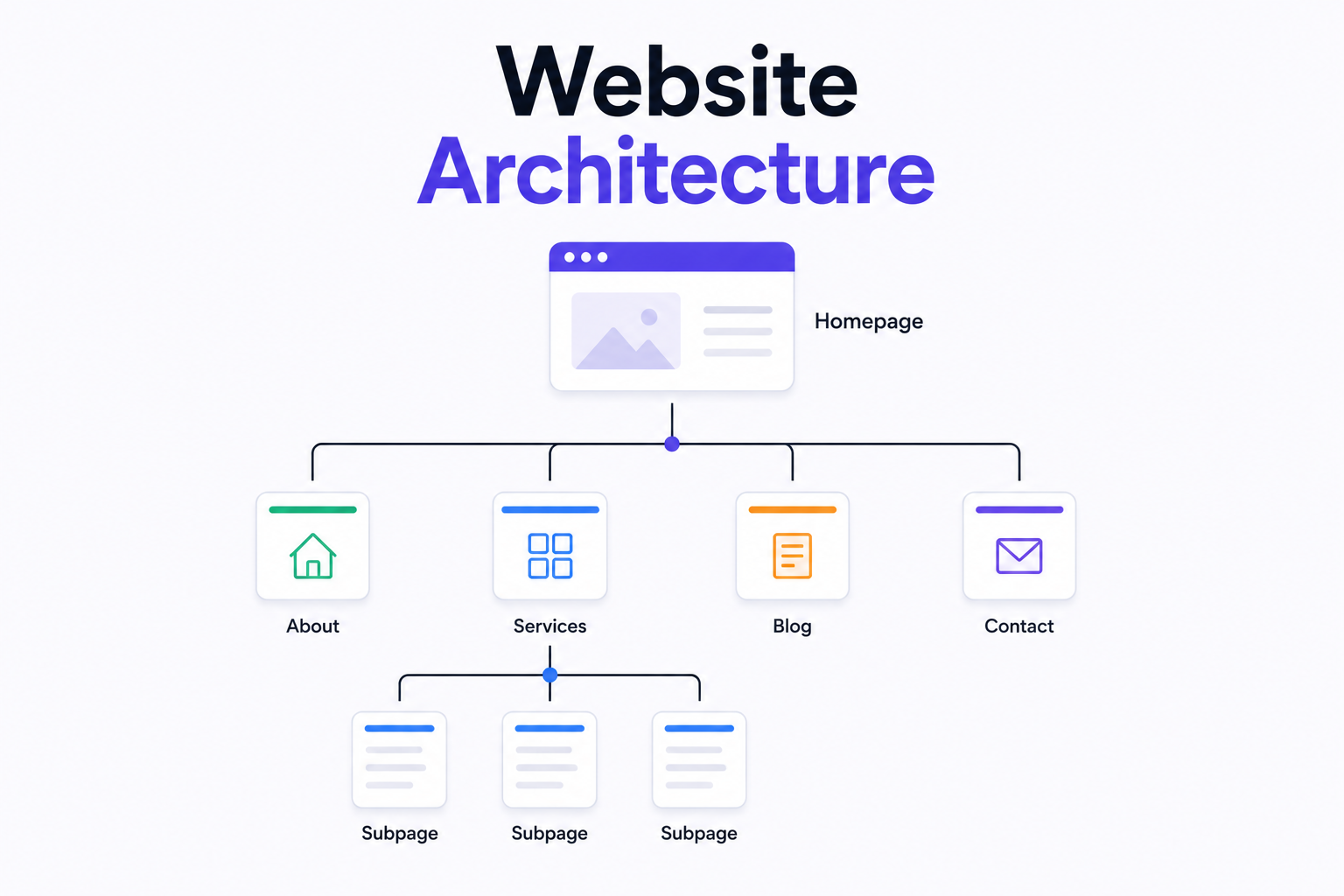
What is Website Architecture? Best Practices