One of the most common points of confusion for anyone learning web development is understanding which programming languages and frameworks belong to the frontend, which belong to the backend, and which can operate on both sides. The question comes up constantly — is Python a frontend or backend language? Where does Java fit? Is PHP frontend or backend? What about Node.js, Django, or PHP?
The confusion is understandable. The web development ecosystem has dozens of languages, frameworks, and tools, each with its own position in the stack. Some belong exclusively to one side. Others can technically operate on both but are used almost entirely on one in practice. A handful genuinely straddle the line. This guide gives you a clear, specific answer for every major language and framework people commonly ask about, along with the context that explains why each sits where it does.
The Fundamental Distinction: Frontend vs Backend
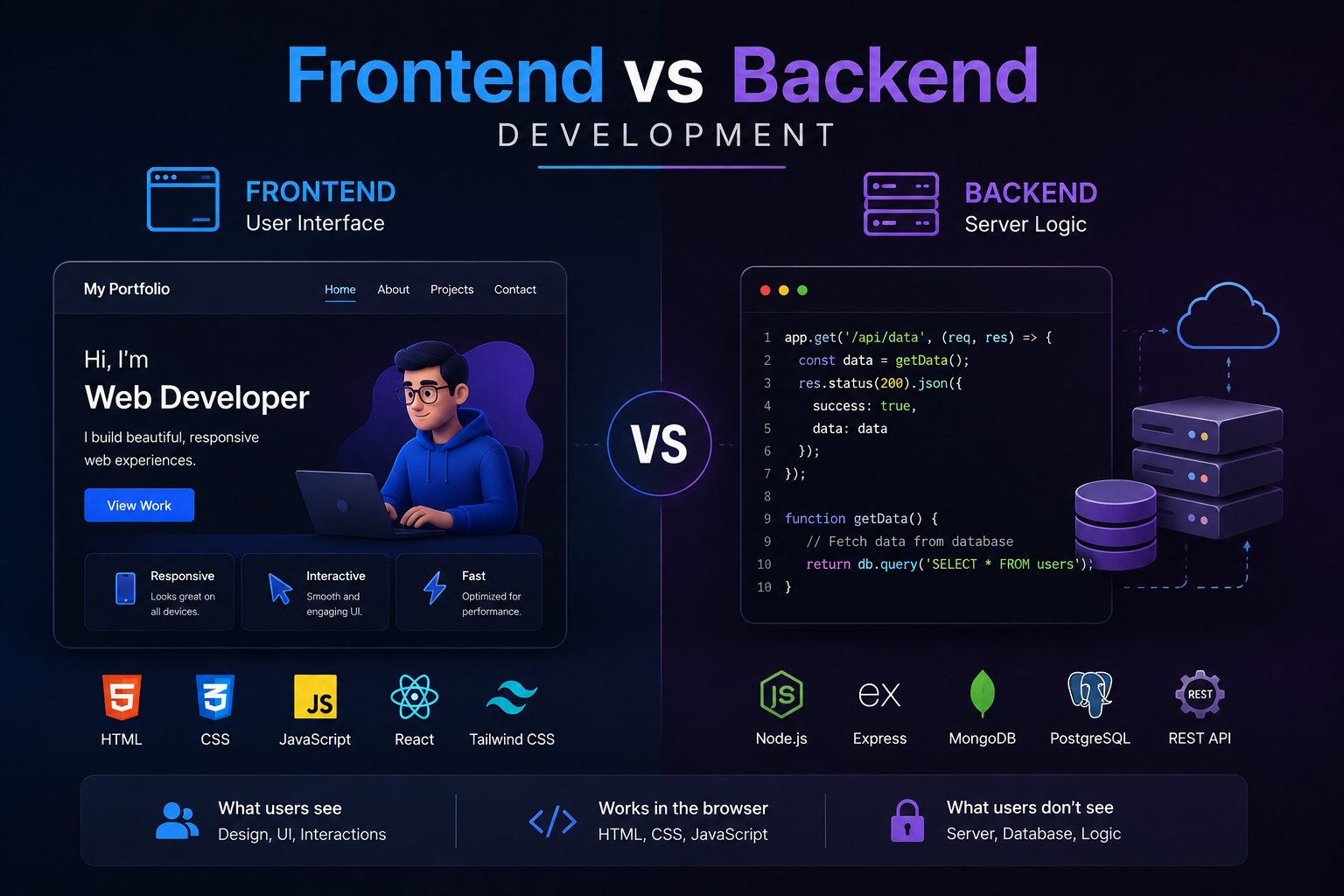
Before classifying individual languages, the distinction itself needs to be precise. Frontend code runs in the user's browser. It is responsible for everything the user sees and interacts with — the layout, the buttons, the animations, the forms, and the visual response to user actions. Backend code runs on a server, away from the user's device entirely. It handles data storage and retrieval, business logic, authentication, and the processing that happens behind the scenes before a response is sent back to the browser.
This distinction is architectural rather than arbitrary. Browsers can execute JavaScript natively — they have a JavaScript engine built in. They cannot execute Python, Java, Ruby, or PHP. That single fact explains why JavaScript is the only language that runs natively in the browser and therefore the only language that is genuinely frontend in the traditional sense. Every other language used in web development runs on the server side, making it a backend technology by definition — regardless of what it is used to build.
Front end code languages are therefore a short list: HTML, CSS, and JavaScript. Everything else — Python, Java, PHP, Ruby, Go, Rust, C# — is a backend language when used in web development. The frameworks built on top of those languages are similarly classified. Django is a Python web framework, so it is backend. Spring is a Java web framework, so it is backend. Laravel is a PHP framework, so it is backend. The framework inherits the classification of its underlying language.
Server-Side Programming Languages: What They Are and Why They Matter
Server-side programming languages, also called backend languages or server languages, are languages that execute on a web server rather than in a user's browser. When a user requests a web page or makes an API call, the server executes the relevant code, processes the request, queries any required data, and returns a response. The user's browser never executes this code directly.
The distinction matters architecturally because server-side code has access to resources the browser cannot touch: databases, file systems, environment variables containing API keys and secrets, other internal services, and the raw computing power of the server itself. Server-side code is also hidden from end users, which is why business logic, authentication systems, payment processing, and data validation are all implemented server-side rather than in frontend JavaScript where they could be inspected or manipulated.
The Most Widely Used Server-Side Languages in Web Development
Python is one of the most widely used server-side languages globally, favoured for its readable syntax and extensive library ecosystem covering web development, data processing, and machine learning integration. PHP remains one of the most deployed server-side languages in existence, powering the majority of content management systems including WordPress. Java dominates in enterprise backend environments where performance, type safety, and long-term maintainability are priorities. Node.js brings JavaScript to the server side, allowing teams to use a single language across the full stack. Ruby, Go, Rust, and C# are all server-side languages with strong ecosystems and active production use across different parts of the industry.
What Server-Side Languages Have in Common
All server-side languages share the characteristic that they cannot run directly in a browser. They require a server environment: a runtime (like Node.js for JavaScript, the JVM for Java), a web server (like Nginx to receive HTTP requests), and typically a database driver to connect to storage. They produce output, typically HTML, JSON, XML, or binary data, that is sent to the browser over HTTP. The browser processes that output as frontend content, never knowing or caring what server-side language generated it.
Front End Code Languages: The Complete Picture
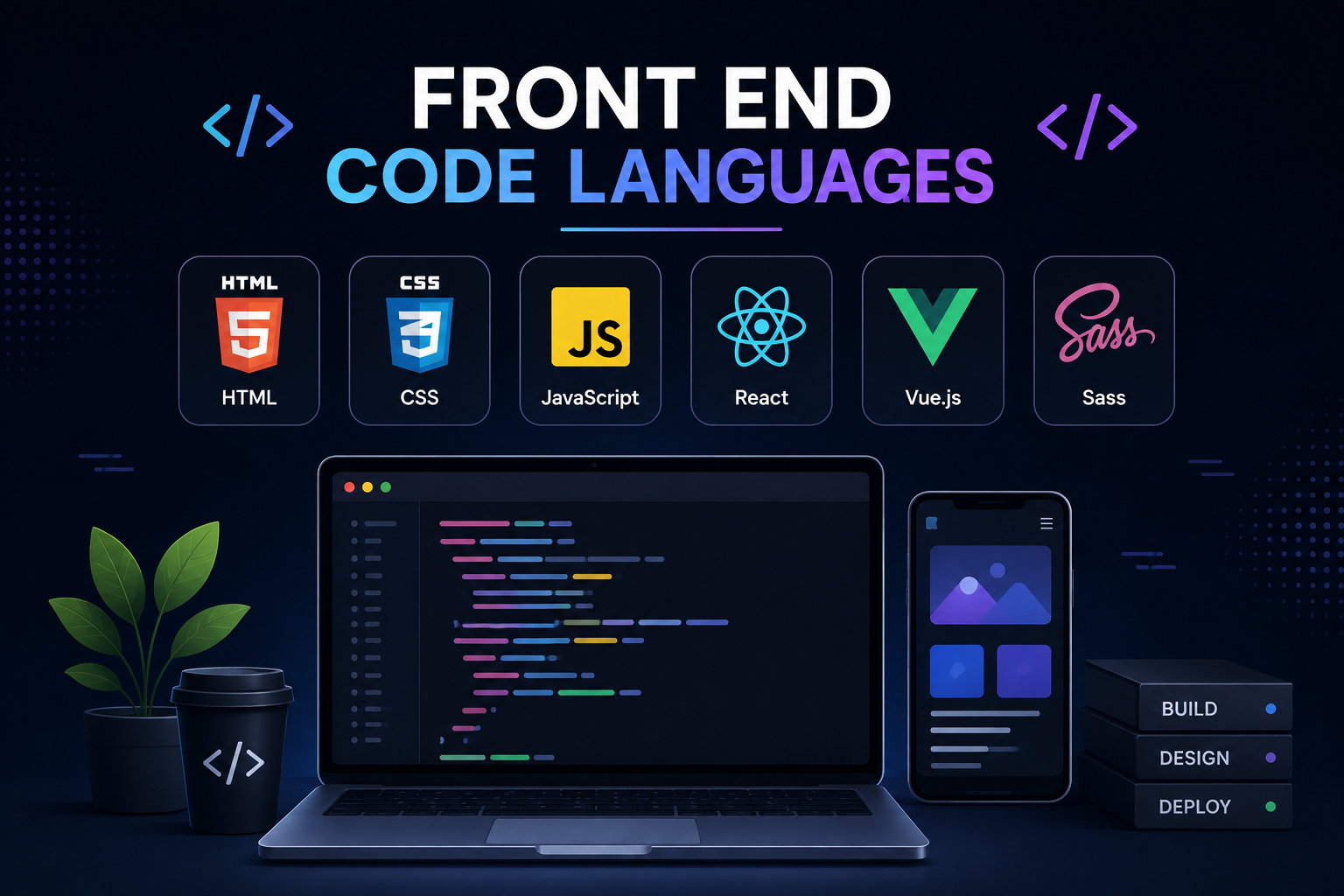
Frontend coding languages are the technologies that browsers understand and render directly. There are exactly three foundational ones, and everything else in the frontend ecosystem is built on top of them.
HTML
HTML (HyperText Markup Language) is not technically a programming language — it is a markup language that defines the structure and content of a web page. Every piece of text, image, heading, link, form, and table on a webpage exists because an HTML element declares it. Browsers parse HTML to construct the Document Object Model, which is the internal representation of the page that CSS and JavaScript then manipulate. HTML is always frontend — it has no backend application whatsoever in web development.
CSS
CSS (Cascading Style Sheets) is also not a programming language in the traditional sense — it is a styling language that controls the visual presentation of HTML elements. Colours, fonts, spacing, layout, animations, and responsive behaviour across screen sizes are all controlled through CSS. Like HTML, CSS is exclusively a frontend technology. Sass, Less, and PostCSS are preprocessors and processing tools that compile to standard CSS, so they are also frontend tools by extension.
JavaScript
JavaScript is the only genuine programming language that runs natively in browsers, which makes it the core frontend programming language by definition. It adds interactivity, dynamic content updates, user input handling, and communication with backend APIs to web pages. TypeScript, which is JavaScript with a static type system compiled down to JavaScript before being served to the browser, is also a frontend language — though as discussed later in this guide, JavaScript has expanded significantly beyond the frontend through Node.js.
Frontend frameworks and libraries — React, Vue.js, Angular, Svelte, and SolidJS — are all JavaScript-based. They are frontend technologies because they are written in JavaScript and run in the browser. The components, hooks, directives, and templates these frameworks use all compile to or execute as JavaScript in the browser environment.
Language / Technology Frontend or Backend Runs In Primary Role HTML Frontend Browser Page structure and content CSS Frontend Browser Visual styling and layout JavaScript Frontend (and Backend via Node.js) Browser / Server Interactivity, logic, APIs TypeScript Frontend (and Backend via Node.js) Browser / Server (compiles to JS) Type-safe JavaScript development React Frontend Browser UI component library Vue.js Frontend Browser Progressive UI framework Angular Frontend Browser Enterprise UI framework Svelte Frontend Browser (compiles to vanilla JS) Compiled UI framework
Frontend Languages and Frameworks: Complete List for Developers
The following is a complete list of frontend languages, frameworks, libraries, and tools used in production web development. This reference is organised by category so developers can see both the foundational technologies and the ecosystem built on top of them.
Foundational Frontend Languages
These three technologies are the only ones browsers understand natively. Every other frontend technology compiles to or depends on these.
HTML, CSS, and JavaScript are the three foundational frontend languages. HTML defines page structure. CSS controls visual presentation. JavaScript adds interactivity and handles communication with backend APIs.
Frontend Frameworks and Libraries (JavaScript-based)
All of these run in the browser and are classified as frontend technologies because they are built on JavaScript. React is a component-based UI library maintained by Meta, used for building interactive interfaces and single-page applications. Vue.js is a progressive framework suited for both simple enhancements and full single-page applications. Angular is a full-featured framework maintained by Google, preferred in enterprise frontend development. Svelte compiles components to vanilla JavaScript at build time, producing smaller bundles than runtime frameworks. SolidJS is a performance-focused alternative to React that avoids the virtual DOM for faster updates. Nuxt.js is the Vue-based full stack framework, which includes a server layer but its core purpose is Vue frontend delivery. Remix is a React-based framework with a server layer, classified as full stack.
CSS Tools and Languages
Sass and SCSS are CSS preprocessors that compile to standard CSS, adding variables, nesting, and mixins. PostCSS processes CSS through plugins and is used widely in production build pipelines. Tailwind CSS is a utility-first CSS framework that generates atomic CSS classes used directly in HTML markup.
TypeScript
TypeScript is a typed superset of JavaScript that compiles to plain JavaScript. It is used on both the frontend and backend wherever JavaScript is used. Most modern React, Vue, and Angular projects use TypeScript rather than plain JavaScript.
Backend Languages and Frameworks: Complete List for Web Developers
Backend languages are server-side technologies that run on a server rather than in the browser. This list covers every major backend language and framework used in web development, including those that generate frequent classification questions.
Backend Languages
Python runs on servers through frameworks like Django, Flask, and FastAPI. It does not run in browsers. Java runs on servers through Spring Boot and other enterprise frameworks. It does not run in browsers. PHP runs on web servers and generates HTML output sent to browsers. WordPress, Laravel, and Drupal are all PHP-based. Ruby runs on servers through Rails and Sinatra. It does not run in browsers. Go, also called Golang, is a compiled language designed for high-performance backend systems and APIs. C# runs on servers through the ASP.NET Core framework and is the primary Microsoft-stack backend language. Rust is increasingly used for backend systems programming where performance is critical.
Backend Frameworks
Laravel is a PHP framework for building web applications and REST APIs. It is entirely a backend technology. Django is a Python framework that runs on servers. FastAPI is a Python framework optimised for building APIs with automatic documentation. Spring Boot is a Java framework for enterprise backend systems. Express.js is a minimal Node.js framework for building backend APIs. NestJS is a TypeScript-based Node.js framework for structured backend applications. Ruby on Rails is a full-featured web framework for rapid backend development.
Is Laravel Backend or Frontend?
Laravel is a backend framework. It is built on PHP, which is a server-side language, and operates entirely on the server. Laravel handles routing, authentication, database queries through its Eloquent ORM, API endpoints, and application logic. It has no capability to run in a browser. Some Laravel applications use Blade templates to render HTML on the server, and others use Laravel purely as an API backend with a separate React or Vue frontend. In both cases, Laravel itself is backend technology.
Is Nuxt.js Frontend or Backend?
Nuxt.js is technically a full stack framework built on Vue.js and Node.js. Its primary purpose is delivering Vue.js frontend applications with server-side rendering for better performance and SEO. The server layer in Nuxt handles rendering and can be used to write server routes and API endpoints, but the majority of Nuxt development is frontend-focused. In most team contexts, Nuxt developers are considered frontend developers who work in Vue. If the question is specifically about what runs in the browser versus on the server, Nuxt spans both, similar to how Next.js spans both in the React ecosystem.
Is SQL Frontend or Backend?
SQL is a backend technology. It is a query language used to interact with relational databases, which run on servers entirely separate from the browser. SQL is never executed in a browser and has no frontend application. Frontend code cannot connect to a SQL database directly in a properly built web application. Instead, the frontend sends requests to a backend API, which executes SQL queries against the database and returns the results. MySQL, PostgreSQL, and SQLite are the most commonly used SQL databases in web development, all of which are backend infrastructure components.
Is Python Frontend or Backend?
Python is a backend language. It does not run in browsers and has no frontend application in standard web development. When Python is used to build web applications, it runs on a server, processes requests, applies business logic, interacts with databases, and returns responses — all of which are backend operations. The browser never executes Python code directly; it only receives the HTML, CSS, and JavaScript that the Python server has generated or returned.
Python is one of the most widely used backend languages in the world, valued for its readable syntax, extensive standard library, and the breadth of its ecosystem. It is particularly dominant in data-intensive backend environments, machine learning integrations, and API development. Companies including Instagram, Pinterest, Spotify, and Dropbox have built significant portions of their backend infrastructure on Python.
There is one technical exception worth noting: WebAssembly-based tools like Pyodide can run Python in the browser, and frameworks like Brython compile Python to JavaScript. These are niche use cases used primarily in education and scientific computing contexts rather than production web development. For all practical purposes in standard web development, Python is a backend language.
Is Django Frontend or Backend?
Django is a backend framework. It is built on Python, which is a backend language, and it operates exclusively on the server side. Django handles URL routing, request processing, database interaction through its ORM (Object-Relational Mapper), authentication, form validation, and the generation of HTML responses that are sent to the browser. None of this happens in the browser — all of it happens on the server before anything reaches the user.
Django does have a templating system that generates HTML, which can create confusion. When Django renders a template — inserting dynamic data into an HTML structure and returning it to the browser — it is doing so on the server side. The browser receives finished HTML, not a Django template. The template rendering is backend work; what the browser receives and displays is the frontend output of that backend process.
In modern architectures, Django is frequently used as a pure API backend — serving JSON responses to a separate React or Vue.js frontend rather than rendering HTML templates at all. In this configuration, Django REST Framework is the standard tool for building the API layer. This usage pattern makes Django's backend classification even clearer: it is providing data and business logic, while the frontend framework handles everything the user sees.
FastAPI is a more recent Python web framework that has gained significant traction for API-focused backends due to its performance advantages and automatic API documentation generation. Like Django, it is entirely a backend technology.
Is Java Frontend or Backend?
Java is a backend language in web development. Despite being one of the most widely used programming languages in the world, Java has no role in frontend web development. Browsers do not execute Java. The era of Java applets — small Java programs that ran inside a browser plugin — ended over a decade ago as browsers removed plugin support and security concerns mounted. Modern web development has no use for Java in the browser.
On the backend, Java is enormously prevalent, particularly in enterprise environments. Spring and Spring Boot are the dominant Java web frameworks, powering backend systems at organisations including LinkedIn, Netflix, Amazon, and a significant proportion of the global banking and financial services industry. Java's strengths in this context are its performance at scale, its robust type system, its mature ecosystem of enterprise libraries, and the decades of production hardening behind its virtual machine.
Front end Java is not a meaningful concept in web development. If you encounter the term, it is either being used loosely to describe a Java developer working on the frontend team (meaning they contribute to API contracts that frontend developers consume), or it is referring to something outside standard web development entirely.
Kotlin, which runs on the Java Virtual Machine and is fully interoperable with Java, is increasingly preferred for new Java ecosystem backend development. On Android, Kotlin is the official language — but Android development is mobile app development rather than web frontend development, so Kotlin remains a backend-adjacent technology rather than a web frontend one.
Is PHP Frontend or Backend?
PHP is a backend language. It runs on the server and has no capability to execute in a browser. PHP was specifically designed for server-side web development — its name originally stood for Personal Home Page tools before being retroactively redefined as PHP: Hypertext Preprocessor. When a PHP file is requested, the server executes the PHP code, generates HTML output, and sends that HTML to the browser. The browser receives and renders HTML; it never sees or executes any PHP.
PHP powers an enormous portion of the web. WordPress, which runs approximately 43% of all websites globally as of 2024, is built on PHP. Drupal, Joomla, Magento, and WooCommerce are all PHP-based. Laravel, the most popular modern PHP framework, has revitalised PHP development with an expressive syntax, a mature ecosystem, and tooling that makes PHP competitive with more recently designed languages for API and web application development.
The confusion around PHP's classification sometimes arises because PHP is so tightly integrated with HTML in many codebases — PHP files often contain a mixture of PHP logic and HTML markup, and developers switch between writing HTML and PHP within the same file. This intermingling is a PHP pattern, not a sign that PHP has any frontend capability. The HTML in those files is output that the server sends to the browser; the PHP is the server-side logic that generates it.
Is Node.js Frontend or Backend?
Node.js is a backend runtime environment. It is not a language — it is a runtime that allows JavaScript to be executed outside the browser, on a server. Before Node.js existed, JavaScript was exclusively a frontend language confined to the browser. Node.js, released in 2009, changed this by providing a way to run JavaScript on the server side, which opened the door to using JavaScript across the entire web development stack.
When people ask whether Node.js is frontend or backend, the answer is backend — but the nuance is that it brings a frontend language (JavaScript) into a backend context. This is precisely what makes Node.js significant: it enables developers who know JavaScript to write backend code without learning a different language. Express.js, Fastify, NestJS, and Hapi are all Node.js backend frameworks used to build APIs and web servers.
Back end JavaScript via Node.js is now a mainstream approach used by companies including Netflix, Uber, LinkedIn, and PayPal for high-concurrency API services. Node.js excels at I/O-bound tasks — handling many simultaneous connections efficiently — which makes it particularly well-suited for real-time applications, chat systems, streaming services, and API gateways. It is less suited than Go or Java for CPU-intensive computational work, where its single-threaded event loop becomes a constraint.
Language / Framework Frontend or Backend Common Use Cases Notable Users Python Backend APIs, data processing, ML integration Instagram, Spotify, Dropbox Django Backend Web apps, REST APIs, CMS platforms Disqus, Mozilla, Pinterest Java Backend Enterprise systems, microservices LinkedIn, Netflix, Amazon PHP Backend CMS, e-commerce, web apps WordPress, Facebook (legacy), Wikipedia Node.js Backend APIs, real-time apps, streaming Netflix, Uber, LinkedIn, PayPal Ruby on Rails Backend Web apps, SaaS products GitHub, Shopify, Basecamp Go (Golang) Backend High-performance APIs, microservices Google, Cloudflare, Uber C# / .NET Backend Enterprise web apps, Windows-stack systems Stack Overflow, Microsoft products Laravel Backend (PHP framework) Web apps, REST APIs, e-commerce Widely used across SaaS and agency work Spring Boot Backend (Java framework) Enterprise APIs, microservices Banking, insurance, large enterprise
The Special Case of JavaScript: Backend Too
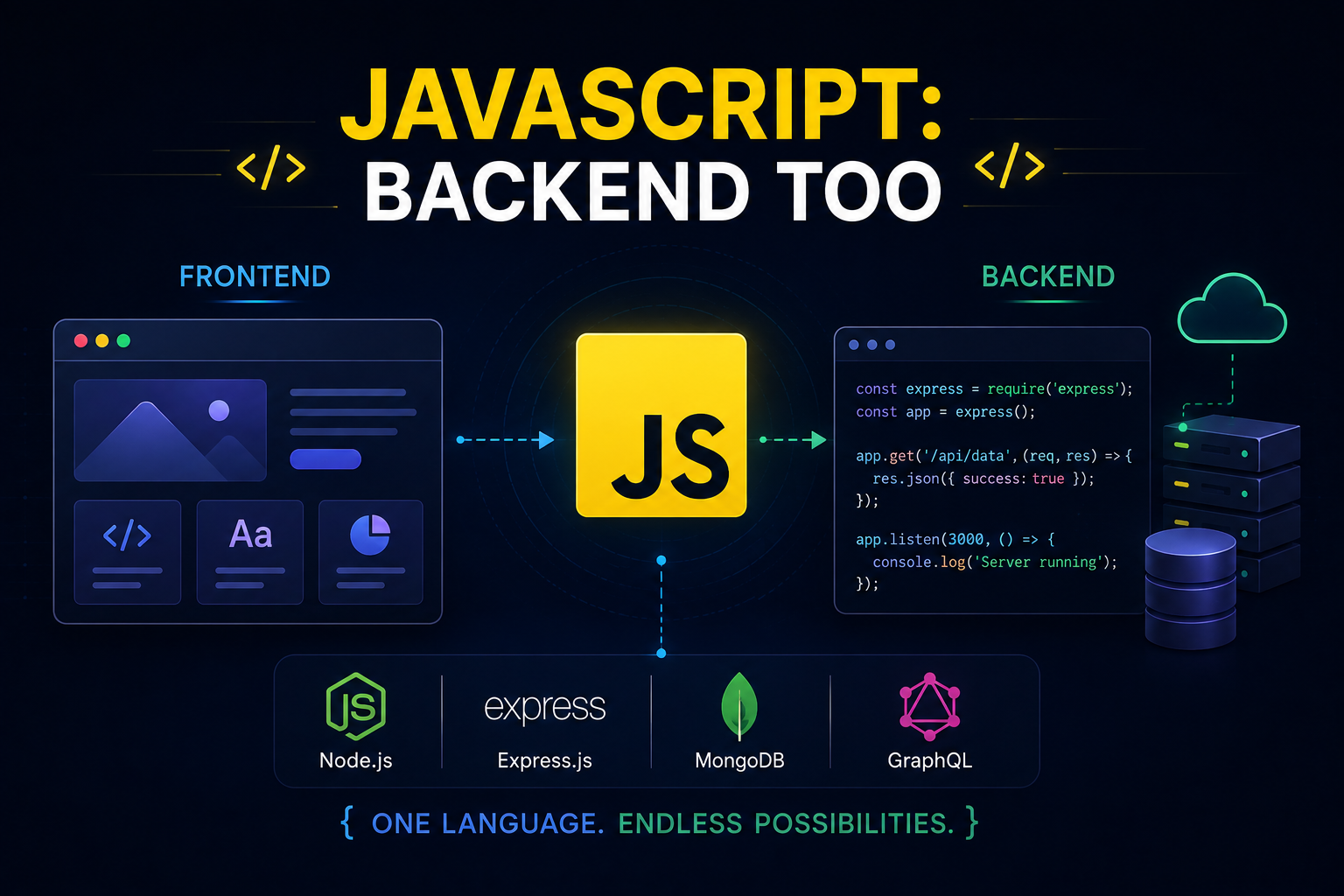
JavaScript occupies a unique position in web development because it is the only language that operates natively on both sides of the stack. In the browser it is the frontend programming language. Via Node.js on the server it becomes a backend language. This dual capacity is what enables the full stack JavaScript developer path — a single language used end to end across a complete web application.
When someone refers to back end JavaScript, they mean JavaScript running in a Node.js environment on the server. Express.js is the most widely used Node.js framework for building backend APIs — it is minimal, unopinionated, and gives developers direct control over routing and middleware. NestJS takes a more structured approach inspired by Angular, using TypeScript and decorators to create maintainable large-scale backend applications. Fastify has gained popularity as a performance-optimised alternative to Express for high-throughput API services.
The emergence of frameworks like Next.js has blurred this distinction further in full stack contexts. Next.js allows React components to be rendered on the server (Server-Side Rendering and React Server Components) and includes API routes that function as lightweight backend endpoints, all within a single JavaScript project. A developer writing a Next.js application is simultaneously writing frontend components and backend logic in the same codebase and often in the same file — which is what makes Next.js genuinely a full stack framework rather than just a frontend one.
Backend Databases: Where Data Lives
A back end database is the persistent storage layer of a web application. Databases are exclusively backend infrastructure — they are accessed by server-side code, never directly by the browser. The frontend never connects to a database directly in a properly architected application; it makes requests to a backend API, which queries the database and returns data in a format the frontend can use.
Relational databases store data in structured tables with defined relationships between them. PostgreSQL is the most widely recommended relational database for new projects due to its feature completeness, standards compliance, and strong performance. MySQL is still widely used, particularly in WordPress and legacy web applications. SQLite is a file-based relational database used primarily in development environments and mobile applications where a full database server is unnecessary.
Non-relational databases — broadly called NoSQL databases — store data in formats other than tables. MongoDB stores data as JSON-like documents, making it natural to work with in JavaScript environments. Redis stores data as key-value pairs in memory, making it extremely fast and well-suited to caching, session storage, and real-time features. Cassandra is designed for high-write, distributed workloads where data needs to be written and read across multiple geographic regions simultaneously.
Database Type Best For Works Well With PostgreSQL Relational Most web applications, complex queries Django, Rails, Laravel, Node.js MySQL Relational WordPress, legacy web apps PHP, WordPress, Laravel MongoDB Document (NoSQL) Flexible schemas, JavaScript stacks Node.js, Express, Next.js Redis Key-Value (In-Memory) Caching, sessions, real-time features Any backend language or framework SQLite Relational (File-Based) Development, mobile apps, small projects Django, Rails, most frameworks Cassandra Wide-Column (NoSQL) High-write, distributed, global scale Java, Python backends at scale
Backend Technology Beyond Databases and Languages
Back end technology encompasses more than the language and database layer. A complete backend system for a modern web application involves several additional categories of infrastructure, each serving a specific function in how the application processes and delivers data.
Web servers handle the lowest-level concern of receiving HTTP requests and passing them to the application. Nginx and Apache are the two most widely deployed web servers. Nginx in particular is used not just as a web server but as a reverse proxy that sits in front of an application server, handling SSL termination, load balancing, and static file serving before requests reach the application code.
Authentication and authorisation systems control who can access what in an application. JSON Web Tokens (JWT) and OAuth 2.0 are the predominant standards for API authentication in modern applications. Services like Auth0 and Clerk provide authentication as a managed service, which many teams adopt to avoid building and maintaining their own authentication systems.
Message queues and background job systems handle work that does not need to happen synchronously with a user request — sending emails, generating reports, processing uploads, syncing with third-party services. RabbitMQ, Redis-based queues, and cloud services like AWS SQS are common choices for this layer. Without a job queue, these operations either block the request-response cycle and make the application feel slow, or they fail silently when the synchronous execution path encounters an error.
Cloud platforms — AWS, Google Cloud, and Microsoft Azure — provide the infrastructure on which all of this runs. Compute services (EC2, Cloud Run, Azure App Service), managed database services (RDS, Cloud SQL), object storage (S3, GCS), and content delivery networks are all backend infrastructure components that a complete web application relies on. DevOps practices and tools like Docker, Kubernetes, Terraform, and CI/CD pipelines manage how backend systems are deployed, scaled, and maintained.
Frontend Backend Middleware: The Layer Between Them
Middleware sits between the frontend and the backend, handling requests and responses as they pass through the system. In web development, middleware refers to software that processes requests before they reach the application code or after the application code has generated a response, adding functionality such as authentication checking, request logging, rate limiting, data transformation, and error handling.
In a Node.js or Express application, middleware functions are added to the request-response pipeline using a simple pattern where each function receives the request object, the response object, and a next function to pass control to the following middleware. An authentication middleware might check for a valid JWT token on every protected API route before the route handler executes. A logging middleware might record the method, path, and response time for every request passing through the server.
In a Next.js application, the Middleware API allows code to run before a request reaches a page or API route, enabling use cases like redirecting unauthenticated users before a page renders, A/B testing by serving different versions to different users, geolocation-based content delivery, and bot detection. This middleware executes at the network edge rather than on the origin server, making it extremely fast.
API gateways are a form of infrastructure-level middleware in larger systems, sitting in front of multiple backend services and handling concerns like authentication, rate limiting, request routing to the correct microservice, response caching, and protocol translation. Kong, AWS API Gateway, and Nginx used as a reverse proxy are common implementations.
Full Stack Frameworks: Where the Line Blurs
A category of frameworks exists specifically to blur the frontend/backend boundary by handling both within a unified development experience. These are worth understanding separately because they do not fit neatly into either classification.
Next.js is the most widely adopted of these. It is built on React (frontend) but includes server-side rendering, API routes, server actions, and React Server Components that execute on the server (backend). A Next.js application is simultaneously a frontend React application and a Node.js backend, deployed as a single unit. Nuxt.js does the same for Vue.js. SvelteKit does it for Svelte. Remix is another React-based full stack framework that emphasises server-rendering and progressive enhancement.
These frameworks do not replace the need for a separate backend in every case — applications with complex business logic, multiple client types (web and mobile), or large teams with specialised frontend and backend developers often still benefit from a separate API backend. But for many projects, a full stack framework provides everything needed in a single, cohesive development and deployment unit.
Framework Classification Based On Frontend Layer Backend Capability Next.js Full Stack React + Node.js React components API routes, Server Components, SSR Nuxt.js Full Stack Vue + Node.js Vue components Server routes, SSR SvelteKit Full Stack Svelte + Node.js Svelte components Server load functions, API endpoints Remix Full Stack React + Node.js React components Loaders, actions, server rendering Django + React Separated Full Stack Python + JavaScript React frontend Django REST API backend
Quick Reference: Every Major Language Classified
For anyone who wants a fast, scannable reference without reading through the full explanations above, the following table classifies every language and technology commonly asked about in web development contexts.
Technology Classification One-Line Reason HTML Frontend Rendered by the browser to define page structure CSS Frontend Interpreted by the browser to style HTML elements JavaScript Both (Frontend natively, Backend via Node.js) Only language that runs natively in browsers; also runs on servers via Node.js TypeScript Both (compiles to JavaScript) Superset of JavaScript; used wherever JavaScript is used Python Backend Does not run in browsers; executes on servers only Django Backend Python web framework; runs on server, not in browser Java Backend No browser execution; powers enterprise server-side systems PHP Backend Server-side scripting language; browsers only receive its HTML output Node.js Backend Server runtime for JavaScript; not a browser technology Ruby / Rails Backend Server-side language and framework; no browser execution Go Backend Compiled server language; used for high-performance APIs C# / .NET Backend Microsoft stack server language; no browser execution SQL Backend Database query language; executed on database servers only GraphQL Backend (API layer) Query language for APIs; defined and resolved on the server
Related Services
Understanding where each language sits in the stack is the foundation for building or hiring across it effectively. Munix Studio's development services span the full stack — from browser-side React and Next.js frontend engineering to Python, Node.js, and PHP backend systems:
Dedicated Developers — Frontend specialists, backend engineers, and full stack developers available on a dedicated basis across React, Node.js, Python, PHP, and more — matched precisely to your stack requirements.
Website Development — Full stack web development spanning frontend React and Next.js interfaces through to backend API and database architecture — no gaps across the stack.
App Development — Mobile and web application development across frontend and backend layers, with technology selection matched to your application's specific performance, scalability, and integration requirements.
DevOps and Cloud — Backend infrastructure setup including server configuration, database management, deployment pipelines, and cloud hosting across AWS, Google Cloud, and Vercel — the layer that keeps every technology in the stack running in production.
Frequently Asked Questions
Ready to Get Started?
Dedicated Developers
Frontend specialists, backend engineers, and full stack developers across React, Node.js, Python, PHP, and more — matched precisely to your technology stack and project requirements.
Explore Dedicated DevelopersWebsite Development
Full stack web development spanning React and Next.js frontend interfaces through to backend API and database architecture — no gaps across the stack.
Explore Website DevelopmentApp Development
Mobile and web application development with technology selection matched to your application's specific performance, scalability, and integration requirements.
Explore App DevelopmentDevOps and Cloud
Backend infrastructure covering server configuration, database management, deployment pipelines, and cloud hosting — the layer that keeps every technology in production.
Explore DevOps and CloudRelated Articles
What is Website Development? The Complete Guide for Beginners
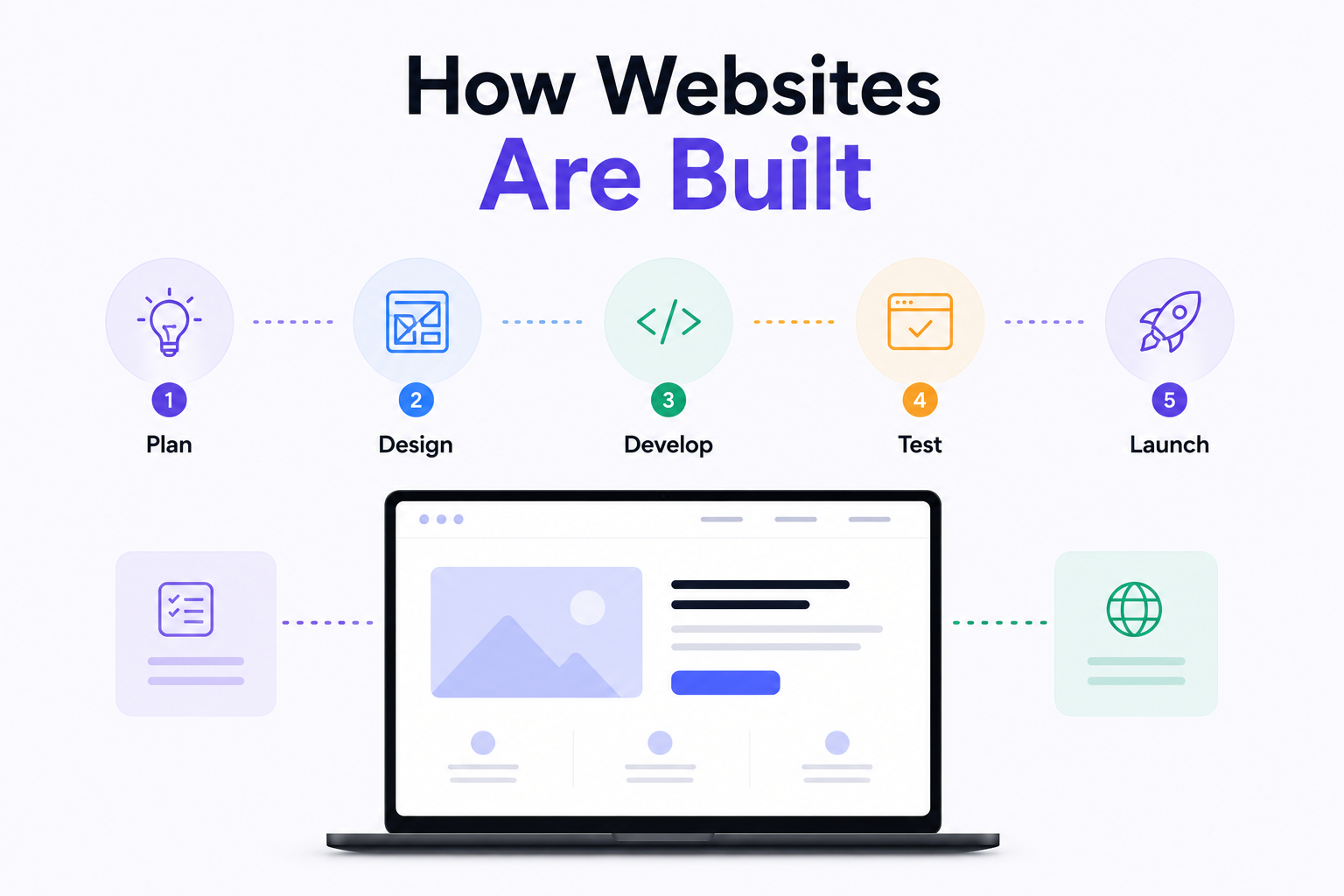
How Are Modern Websites Built in 2026?

Website Development Process & Life Cycle : Complete Guide
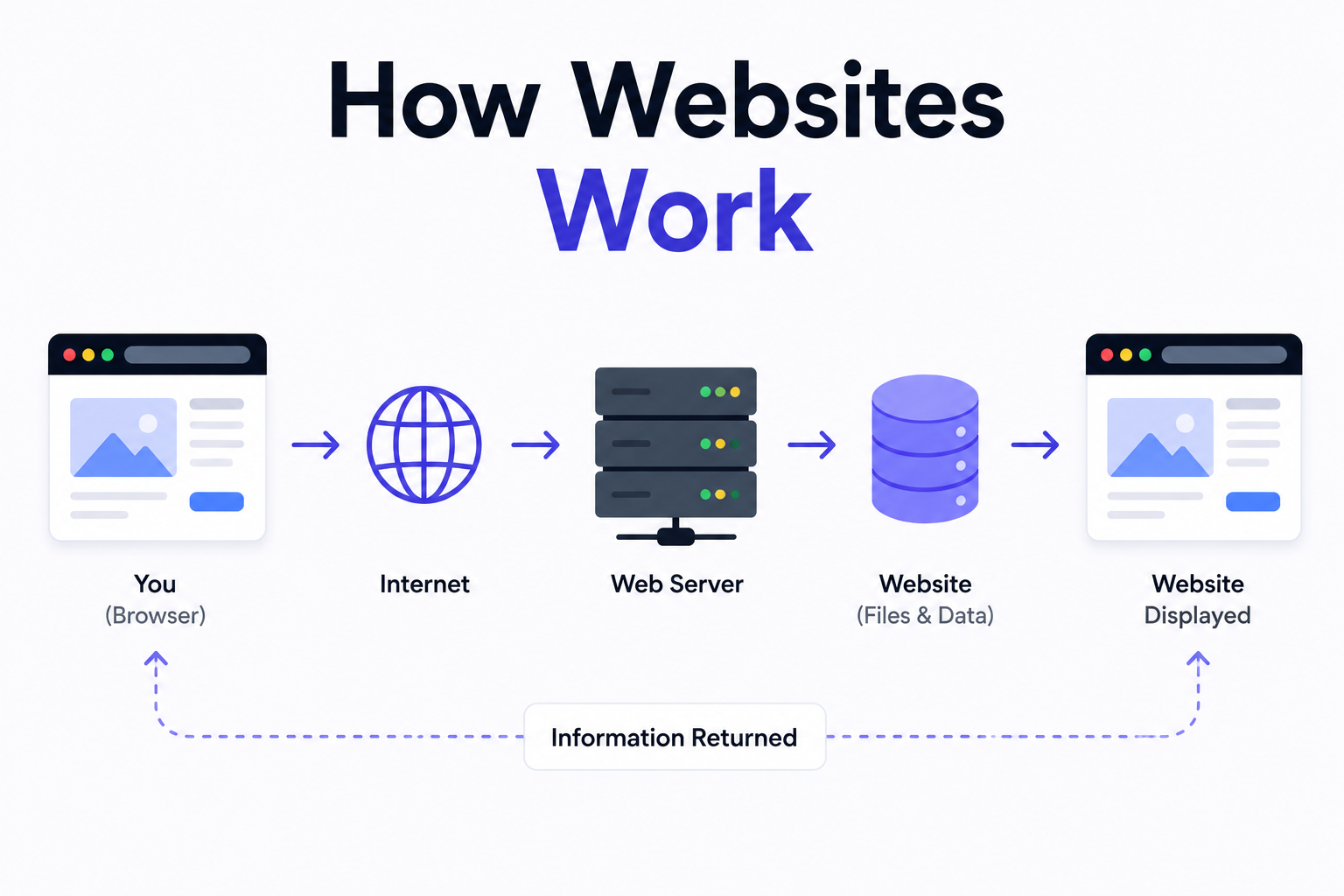
How Websites Work: DNS, Servers, Browsers
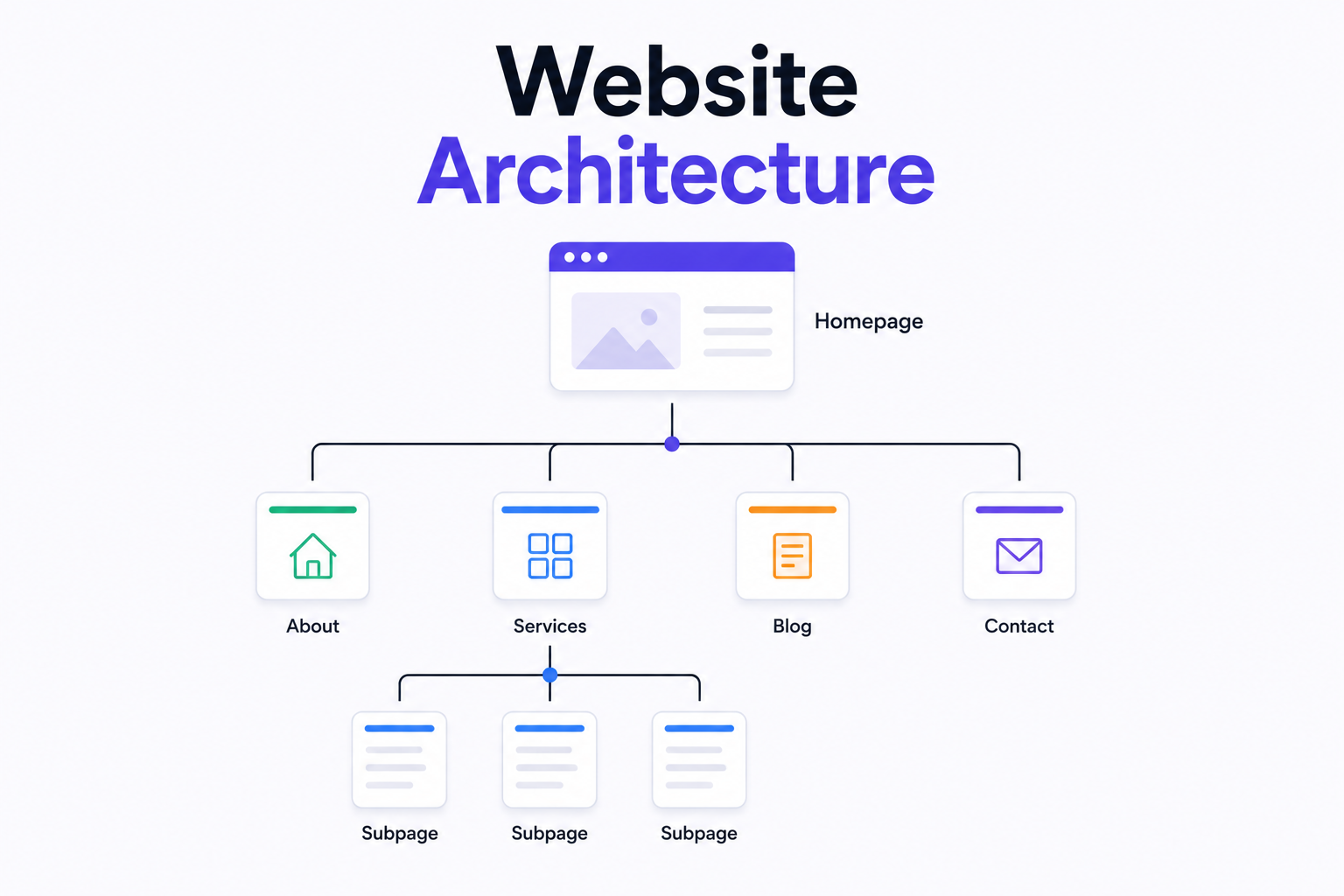
What is Website Architecture? Best Practices