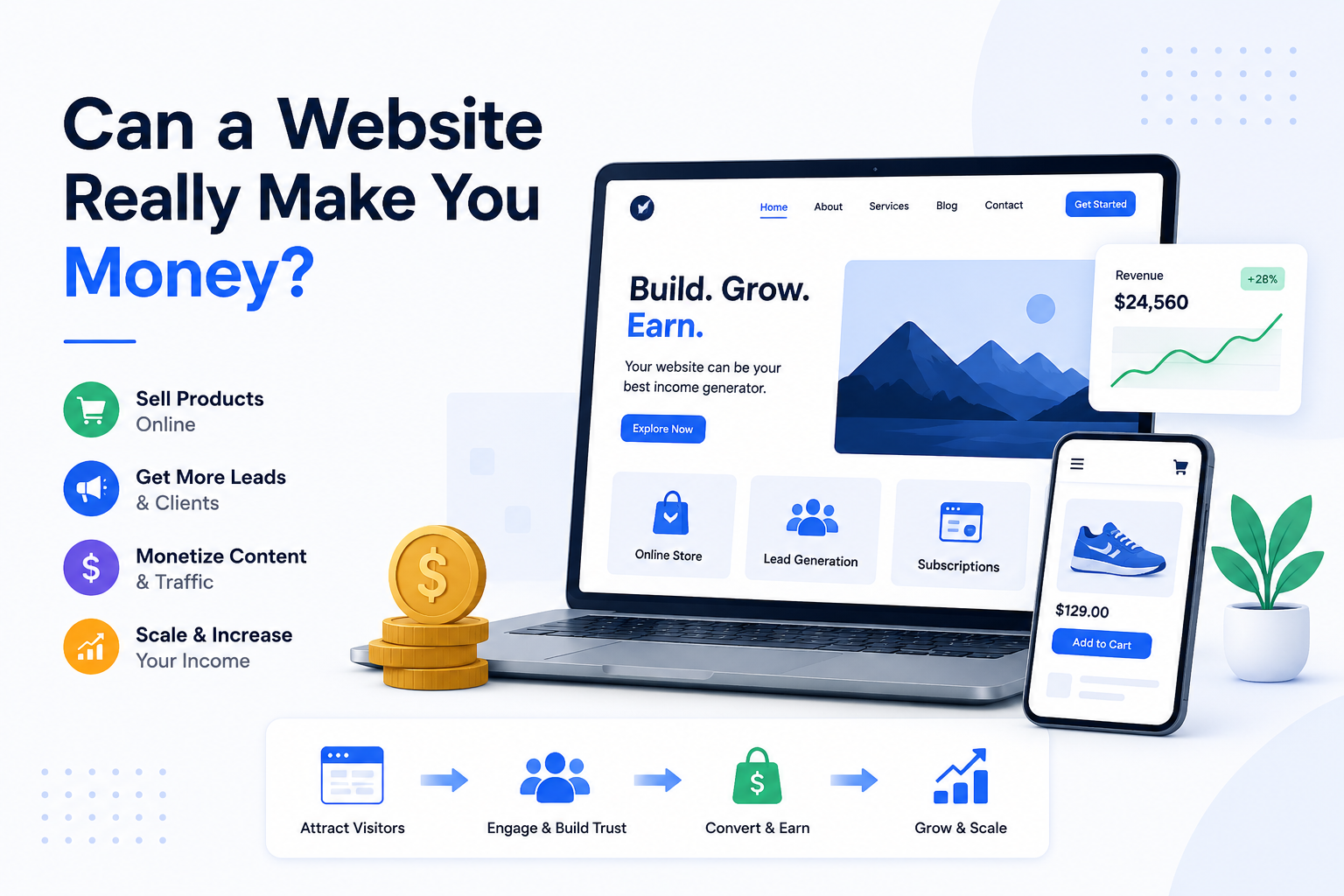
Can a Website Really Make You Money?
The short answer is yes, but the longer answer requires being specific about what kind of website, what kind of money, and over what timeframe. Websites that generate meaningful income are not accidents. They are the result of deliberate decisions about audience, monetisation model, content strategy, and technical execution made before a single page goes live. The websites that fail to generate income are almost always those where the expectation of revenue was present but the architecture to produce it was not.
There are people earning a few hundred dollars a month from a simple affiliate blog. There are others running websites that generate seven figures annually through ecommerce, SaaS subscriptions, or advertising on high-traffic content platforms. The range is wide because the approaches are fundamentally different. This guide treats both ends of that spectrum honestly and helps you understand which path is realistic for your situation, your skills, and the time you are willing to invest.
Step 1: Choose How Your Website Will Make Money
Before anything else, the monetisation model needs to be decided. This decision shapes everything that follows: what pages the site needs, what content to publish, what technology to build on, and what metrics indicate whether the site is working. Trying to figure out monetisation after the site is built is one of the most common reasons websites generate traffic without income. The model and the architecture need to be designed together, not sequentially.
Model How You Earn Traffic Needed Startup Cost Ceiling Affiliate marketing Commission per referred sale Medium Low High Display advertising Revenue per thousand page views High Very low Medium Selling digital products Direct sales, near 100% margin Low to medium Medium Very high Ecommerce Product sales minus fulfilment costs Medium Medium Very high SaaS subscription Recurring monthly or annual fees Medium High Highest Freelance or agency Client fees from inbound enquiries Very low Low Capacity-limited Online courses Course enrolment fees, high margin Low to medium Medium High Membership site Recurring access fees Medium Medium High
The models are not mutually exclusive. Many successful money-making websites combine two or three complementary streams. An affiliate content site might also sell a digital product to its email list and carry display advertising for passive income on high-traffic pages. The important discipline is to start with one primary model, build the site around that model until it is generating income, and then layer in secondary streams rather than trying to serve all of them from the start.
Alternative Path: Make Money Building Websites for Clients
Clarify the fork explicitly: "This guide mostly covers building one website that earns passive/recurring revenue. If your goal is to earn money by building websites for other people, the path looks different" — this sentence alone helps disambiguate intent for both the reader and search engines.
Skills required to start (HTML/CSS/JS basics, or no-code tools like Webflow/WordPress if going the no-code freelance route)
How freelancers actually get paid: per-project vs. retainer vs. productized packages (e.g., "$500 landing page" vs. "$2,000/month website management retainer")
Where to find first clients: Upwork/Fiverr for early portfolio building, local businesses, referrals, cold outreach — and note the trade-off (marketplaces = lower rates, faster start; direct outreach = higher rates, slower start)
Realistic income ranges by experience level (e.g., beginner $300–800/site, intermediate $1,500–5,000/site, agency-level retainers) — keep this honest like the rest of your FAQ tone
Pricing models table: hourly vs. fixed-price vs. value-based, with pros/cons of each
One or two sentences bridging back: "If you eventually want to stop trading time for client work and build an income-generating asset of your own, the model below is the one to follow" — this naturally funnels into Step 2 and also justifies internal linking to your Web Development service page
Step 2: Pick a Niche With Real Commercial Potential
The niche is the specific topic, audience, or problem space the website serves. Picking the wrong niche is one of the most common reasons money-making websites fail before they reach profitability. A niche that sounds interesting but has no commercial search demand, no affiliate programs, and no audience willing to pay for products or services produces content that gets read but never converts.
A good niche for a money-making website has four characteristics working simultaneously. There is genuine search demand from an audience actively looking for information or solutions. There are commercial products, services, or affiliate programs relevant to that audience. The competition is not so entrenched that a new site has no realistic path to ranking. And there is enough topic depth to sustain a publishing schedule of fifty or more articles without the content becoming repetitive or thin.
Niche Validation Checklist
Validation Check How to Verify Pass Condition Search demand exists Semrush or Ahrefs keyword research 30+ distinct keywords with monthly volume Affiliate programs available Search ShareASale, Impact, Amazon Associates At least 3 relevant programs with decent commission Competition is beatable Check DA of top 10 ranking sites per keyword Some results from DA under 40 sites Content depth possible Manually brainstorm 50 article topics 50 distinct, non-repetitive topics found easily Audience buys things Check if products and services are actively sold Multiple paid offerings exist in the space Evergreen potential Check Google Trends over 5 years Stable or growing trend, not seasonal only Creator has expertise or interest Self-assessment Can write or direct content with authority
Step 3: Choose a Domain and Build on the Right Stack
The domain name is the first impression the site makes in search results and the permanent address of the digital asset being built. Short, brandable, and memorable domains consistently outperform long keyword-stuffed ones because they are easier to type, share, and remember. A .com extension is the default for English-language sites targeting a global audience. Register the domain as soon as the niche is validated because waiting introduces risk of someone else taking the name.
The platform decision matters more than most beginners expect. The technology stack determines page speed, SEO flexibility, how easily the site scales, and how much it costs to operate over time. The table below compares the most common options honestly.
Platform Best For SEO Control Speed Scalability Long-term Cost Next.js (custom) Any serious money-making site Full Excellent Unlimited Lowest WordPress (self-hosted) Blogs, content sites Good with plugins Variable Medium Medium Shopify Ecommerce only Limited Good Medium High subscription Squarespace / Wix Brochure sites, portfolios Poor Poor under load Hits ceiling fast Compounding subscriptions Webflow Design-heavy content sites Good Good Medium Medium subscription
For a website where making money is the primary objective, Next.js built on a custom stack is the strongest long-term foundation. Full SEO control, superior page speed scores that compound into better organic rankings, and no monthly platform subscription eating into margins all contribute to a better return on the build investment over a two to three year horizon. For a first website where validation speed matters more than optimisation, WordPress on managed hosting is a reasonable starting point, with a migration plan built in once the model is proven.
Can You Create a Website for Free and Still Make Money?
Direct, honest answer up front (matches your existing tone): yes to start, but free tiers cap you fast — echo the "Squarespace/Wix hits ceiling fast" point you already make elsewhere so it's consistent
Name the actual free options people mean when they search this: WordPress.com free plan, Google Sites, Wix free tier, Carrd — briefly, what each is good/bad for
The real constraint: free plans usually block custom domains, monetisation features (ads, some affiliate networks require a real domain), and professional credibility — this is the honest "fix" your Step 9 mistakes-table style already uses
A clear recommendation: free tools are fine for validating a niche/testing an idea for a few weeks, but a domain + basic hosting (cite a realistic low cost, e.g. under $100/year) should happen before serious content investment, since migrating later costs more than starting right
Tie back to your niche validation section (Step 2) — free-tier testing period fits logically before committing to the stack decision
Step 4: Design the Site Around the Revenue Action
Every page on a money-making website should have a primary action it is trying to get the visitor to take. That action is determined by the monetisation model. On an affiliate site, the action is clicking a tracked affiliate link. On an ecommerce site, it is adding a product to the cart. On a service site, it is submitting an enquiry form. Design that is built backward from that action, placing it clearly at the points in the page where visitor intent is highest, converts significantly better than design that places the revenue action as an afterthought at the bottom of the page.
Page Design by Monetisation Model
Affiliate content site — The review or comparison article is the revenue page. The affiliate link should appear early in the content, again near any product comparison table, and once more at the conclusion. A clearly visible summary box near the top of best-of articles with the top recommendation and a direct affiliate link captures the visitors who have already decided and do not need to read the full article before clicking.
Ecommerce site — Product pages are the revenue pages. High-quality imagery, a clear price and availability indicator, social proof from verified purchasers, and a prominent add-to-cart button above the fold are the four non-negotiable elements. Every click required between landing and checkout is an opportunity for the visitor to change their mind.
Service or freelance site — The contact or booking page is the revenue page. The homepage needs to answer the three questions a prospective client is asking within the first few seconds: what do you do, who do you do it for, and why should I choose you. Every page should carry a persistent call to action that leads to the contact or booking flow.
Digital product or course site — The sales page is the revenue page. Long-form sales pages that cover the problem, the solution, the transformation, the specific deliverables, social proof, and the offer with pricing convert better than short pages for higher-priced products because the visitor needs more information to justify the spend. The checkout should be as frictionless as technically achievable.
Advertising-supported content site — Every article is a revenue page because ad revenue is generated per page view. The design priority is session depth: getting visitors to read more pages per visit through strong internal linking, related article recommendations, and content that creates enough trust that the reader wants more from the same source.
Step 5: Drive Traffic Through Organic Search
Traffic is the prerequisite for income. A money-making website with no visitors makes no money regardless of how well it is designed or how carefully the monetisation model was chosen. Organic search through Google is the most cost-effective traffic source for most website models because it generates visits without a per-click cost and compounds over time as authority accumulates. This is why SEO is not optional for a website that is meant to generate sustainable income.
The foundation of organic search success for a new money-making website is keyword research that identifies the specific queries the target audience is making and the realistic competitive landscape for each one. A new site with no domain authority cannot rank for broad, high-competition keywords regardless of content quality. Starting with long-tail, low-competition keywords that have genuine search volume and working outward as authority builds is the proven approach for getting early organic traffic without waiting two years to compete on harder terms.
SEO Priorities at Each Stage of Site Growth
Growth Stage Primary SEO Focus Expected Timeline Launch (0 to 3 months) Technical SEO foundations, Core Web Vitals, initial keyword targeting on 10 to 20 articles Minimal traffic, Google indexing site Early growth (3 to 9 months) Content volume, long-tail keyword targeting, internal linking structure Early rankings on low-competition terms Authority building (9 to 18 months) Link building, topical authority through cluster content, commercial page optimisation Growing traffic, early revenue signals Scaling (18 months plus) Competing on harder keywords, content updates, expanding into adjacent topics Consistent traffic and income compounding
Step 6: Publish Content That Earns Its Traffic
Content is the engine of most money-making websites. The content needs to do two things simultaneously: rank in search engines and convert the visitors it attracts into some form of revenue action. Content that ranks but does not convert generates traffic statistics without income. Content that converts well but never ranks generates nothing because nobody finds it.
Google's quality guidelines have become increasingly specific about what earns rankings. The E-E-A-T framework, which stands for Experience, Expertise, Authoritativeness, and Trustworthiness, is the lens through which Google evaluates whether content deserves to rank. Content written from first-hand experience consistently outperforms content assembled from other websites. Named authors with verifiable credentials outperform anonymous publishing. Specific, accurate detail outperforms vague generality. These are not suggestions for gaming an algorithm. They are descriptions of what genuinely useful content looks like, and they apply whether the site is about personal finance, home improvement, software reviews, or any other niche.
Content That Makes Money vs Content That Just Gets Traffic
Content Type Search Intent Revenue Potential Publish Priority Best [product] for [use case] Commercial investigation Very high First [Product A] vs [Product B] Commercial investigation Very high First [Product] review Commercial investigation High First How to [do specific thing] Informational Medium via internal links Second What is [concept] Informational Low direct, builds authority Third News and trending topics Informational Low, short lifespan Opportunistic
Step 7: Build an Email List From the First Visitor
An email list is the only audience asset on a money-making website that belongs entirely to the owner. Organic search rankings can drop with an algorithm update. Social media reach can be cut by a platform policy change. An email list of engaged subscribers is a direct communication channel that no third party controls and that generates revenue independently of search traffic.
The most effective email list building starts from day one, not after the site reaches a traffic milestone. A lead magnet, which is a specific, tangible piece of value offered in exchange for an email address, converts a dramatically higher proportion of visitors than a generic newsletter signup prompt. The lead magnet should solve a specific problem the target audience has and be directly related to the niche. A template, a checklist, a short guide, a tool, or a mini email course all work well depending on the niche. Once the list exists, it becomes the fastest way to generate revenue from a new product launch, a sponsored email, or a promotional campaign without depending on search rankings for every income event.
Step 8: Track Revenue-Connected Metrics
Tracking the right metrics is the difference between knowing the site is growing and knowing it is becoming more profitable. Page views and session counts are useful context but they do not reveal whether the site is moving toward its income goals. The metrics worth tracking are those that sit between traffic and revenue.
Earnings per thousand visitors (EPMV) — This is the single most useful metric for most money-making websites. It captures total revenue divided by total visitors, expressed per thousand, which allows meaningful comparison across different traffic volumes and different time periods. Improving EPMV means the site is extracting more value from the same audience.
Affiliate click-through rate — The percentage of visitors on a given page who click an affiliate link. A low CTR on a commercial page indicates a placement, relevance, or trust problem that is costing income regardless of traffic volume.
Conversion rate by page — Which specific pages are converting visitors into buyers, subscribers, or enquirers at the highest rates. These are the pages to update, expand, and build internal links toward from the rest of the site.
Organic keyword ranking positions — Tracking rankings for target commercial keywords over time reveals whether the SEO strategy is working and identifies pages that are close to ranking in a position where significantly more traffic is available.
Email list growth and open rate — A growing list with a healthy open rate above thirty percent is a leading indicator of future revenue capacity from direct audience monetisation.
Step 9: Avoid the Mistakes That Kill Income Potential
Most websites that fail to make money do so for predictable reasons. Understanding these failure patterns before building eliminates the most common sources of wasted effort.
Mistake Why It Kills Income The Fix Publishing without keyword research Content nobody searches for generates no organic traffic Validate every article topic in Semrush or Ahrefs before writing Only publishing informational content Traffic without commercial intent does not convert Prioritise commercial investigation content from day one Ignoring page speed Slow pages rank lower and bounce at higher rates Build on a performant stack and audit Core Web Vitals regularly Picking a niche with no commercial intent Readers with no buying intent generate traffic but no income Validate monetisation potential before committing to niche Expecting results within 3 months Abandoning the site before organic traffic compounds Plan for a 12 to 18 month horizon and track leading indicators Building on a platform that limits SEO Platform constraints cap organic growth permanently Build on a custom stack with full technical SEO control Not building an email list Losing every visitor permanently after the first visit Install email capture with a lead magnet from day one
How We Work
At Munix Studio, every money-making website project begins with a revenue architecture session where we define the monetisation model, validate the niche, plan the content and SEO strategy, and design the conversion architecture before a single line of code is written. We do not build websites and then ask how they will make money. We start with the income model and work backwards to the technical and content foundations that support it.
Our development team builds money-making websites on React and Next.js with Core Web Vitals optimised from launch, SEO architecture built into the URL structure and page templates, monetisation integrations configured before the first article is published, and analytics tracking the metrics that connect traffic to revenue. Every project is delivered ready to generate income, not ready to begin the income planning process.
Build Your Money-Making Website With Munix Studio
A website that makes money is built differently from one that simply looks good. At Munix Studio we design and build revenue-focused websites with the technical performance, conversion architecture, and SEO foundations that turn organic traffic into sustainable income.
Website Development — Custom money-making websites built on React and Next.js with monetisation integrations, conversion-optimised page templates, and technical SEO built in from day one.
SEO Optimization — Keyword research, content architecture, and on-page SEO strategy designed to drive the qualified organic traffic that money-making websites depend on to generate income.
UI/UX Design — Conversion-first design that places revenue actions at exactly the right moments in the visitor journey and removes the friction that prevents browsers from becoming buyers.
Digital Marketing — Paid and organic marketing campaigns that drive qualified traffic to your money-making website while your long-term SEO asset builds in the background.
Maintenance and Support — Ongoing content updates, performance monitoring, and technical audits to keep your money-making website ranking, converting, and compounding revenue over time.
Frequently Asked Questions
Ready to Get Started?
Website Development
Custom money-making websites built on React and Next.js with monetisation integrations, conversion-optimised templates, and technical SEO foundations built in from day one.
Explore Website DevelopmentSEO Optimization
Keyword research, content architecture planning, and on-page SEO strategy designed to drive the qualified organic traffic that money-making websites need to generate consistent income.
Explore SEO OptimizationUI/UX Design
Conversion-first design that places revenue actions at the right moments in the visitor journey and removes every unnecessary point of friction between landing and earning.
Explore UI/UX DesignDigital Marketing
Paid and organic marketing strategies that drive qualified traffic to your money-making website from launch while your long-term organic search asset compounds in the background.
Explore Digital MarketingMaintenance and Support
Ongoing content updates, performance monitoring, Core Web Vitals auditing, and technical support to keep your website ranking, converting, and growing its income over time.
Explore Maintenance and SupportRelated Articles
What is Website Development? The Complete Guide for Beginners
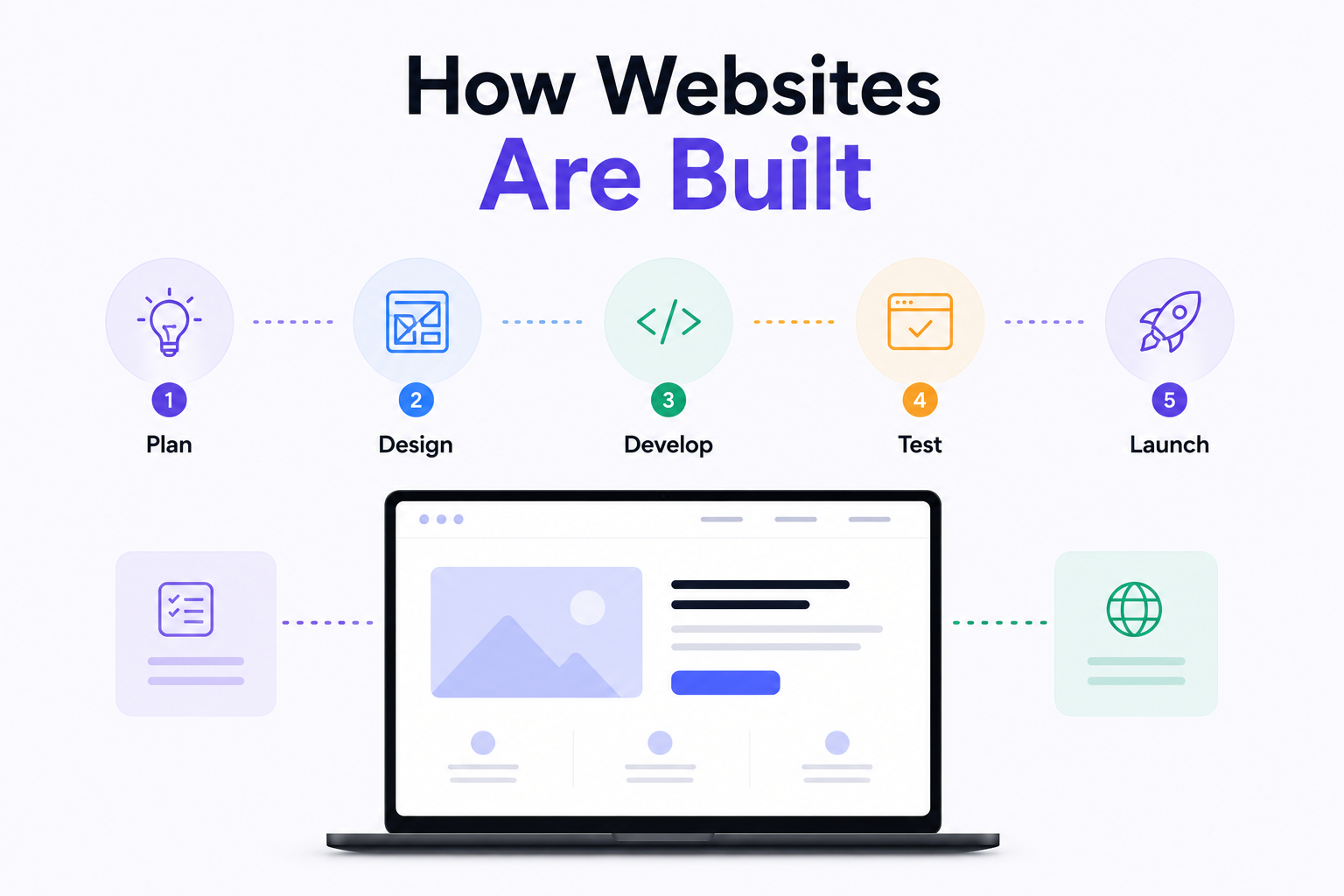
How Are Modern Websites Built in 2026?
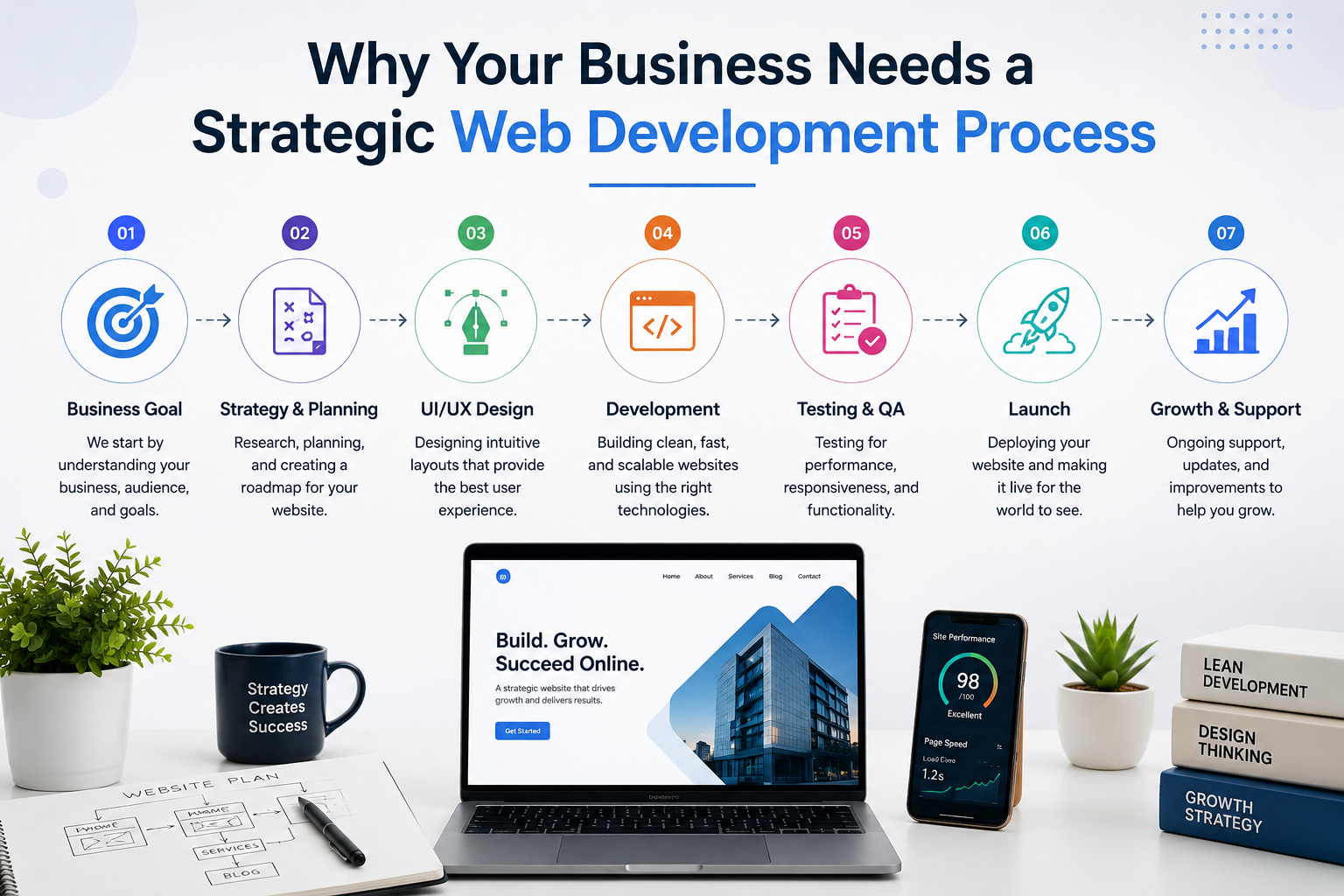
Website Development Process & Life Cycle : Complete Guide
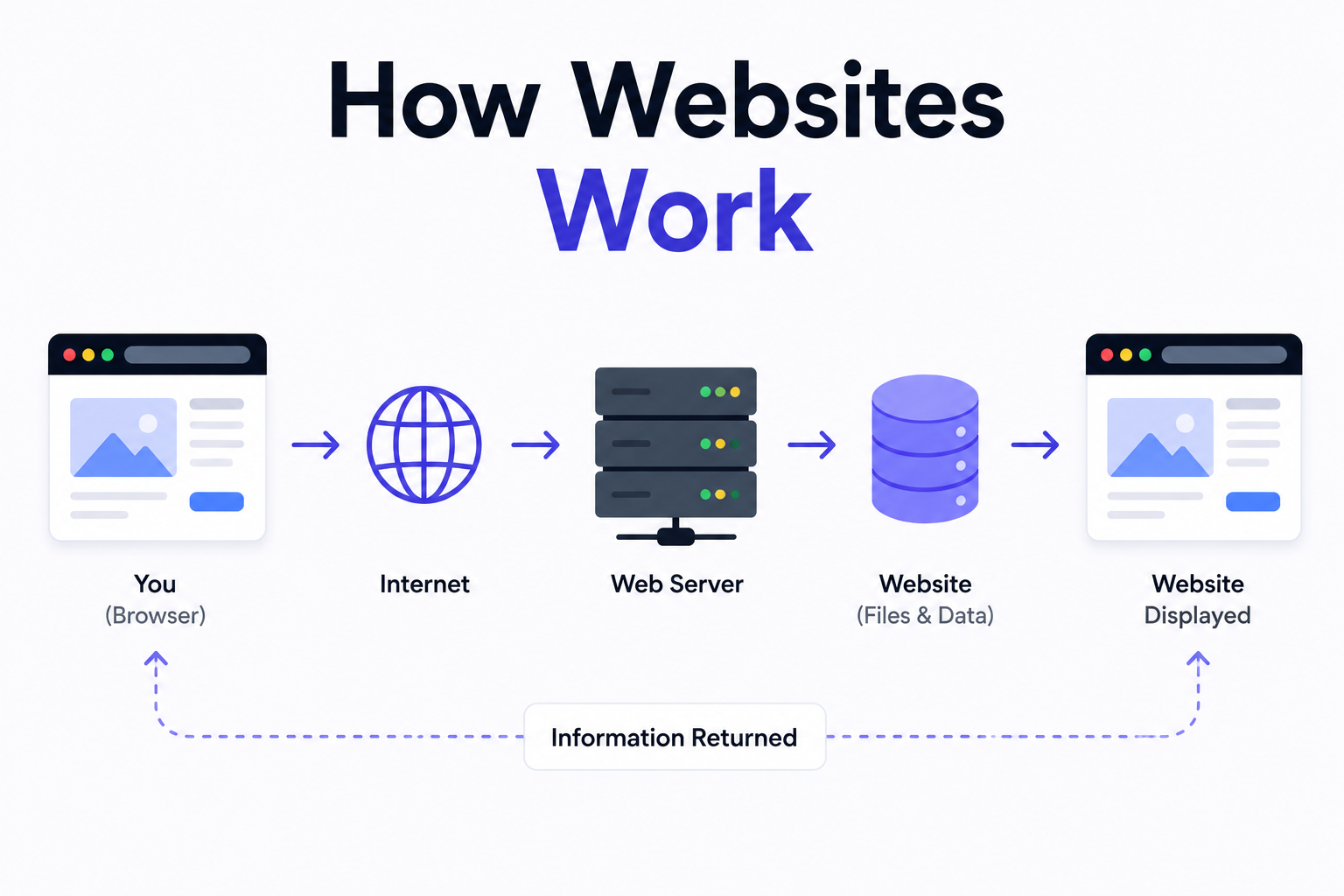
How Websites Work: DNS, Servers, Browsers
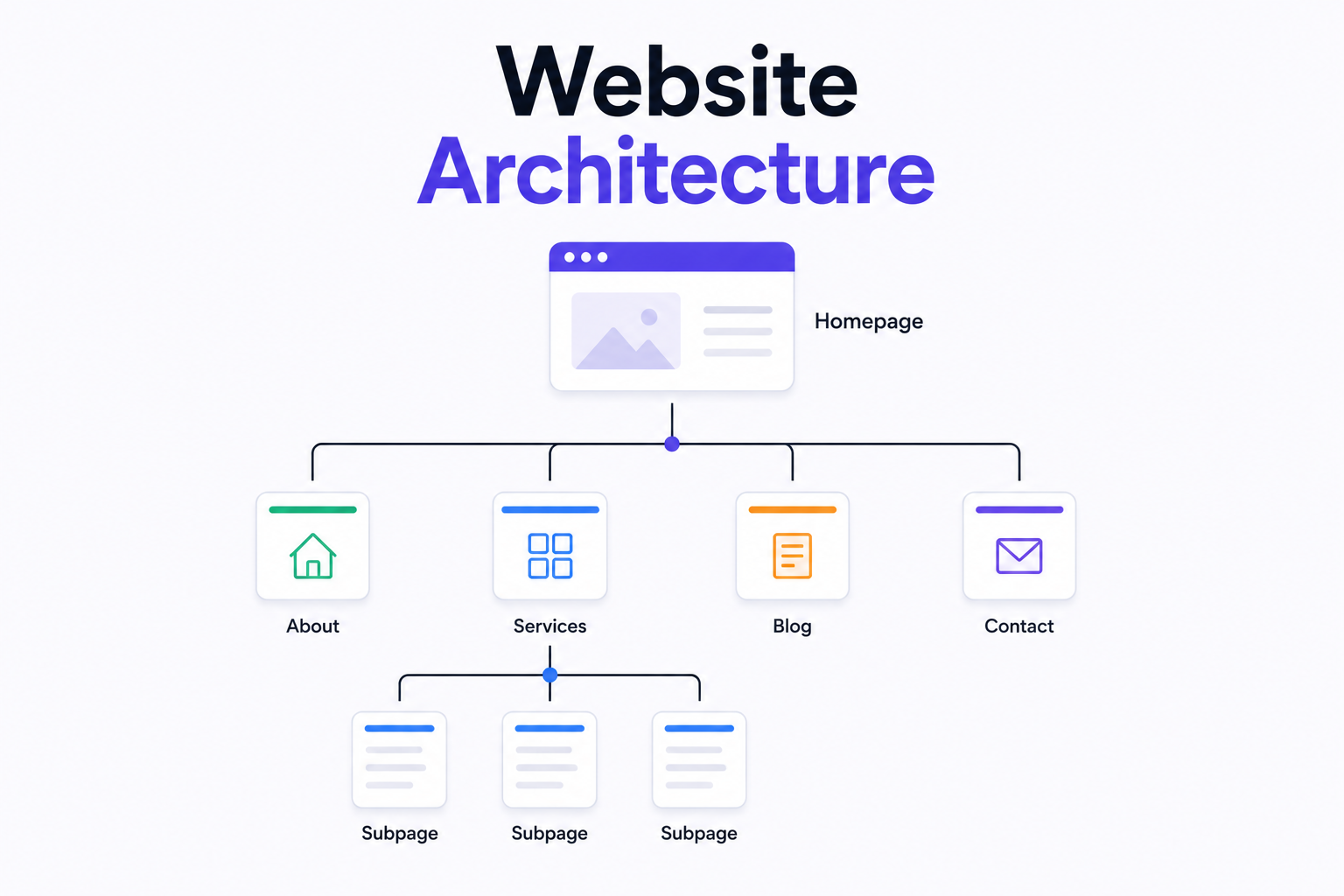
What is Website Architecture? Best Practices