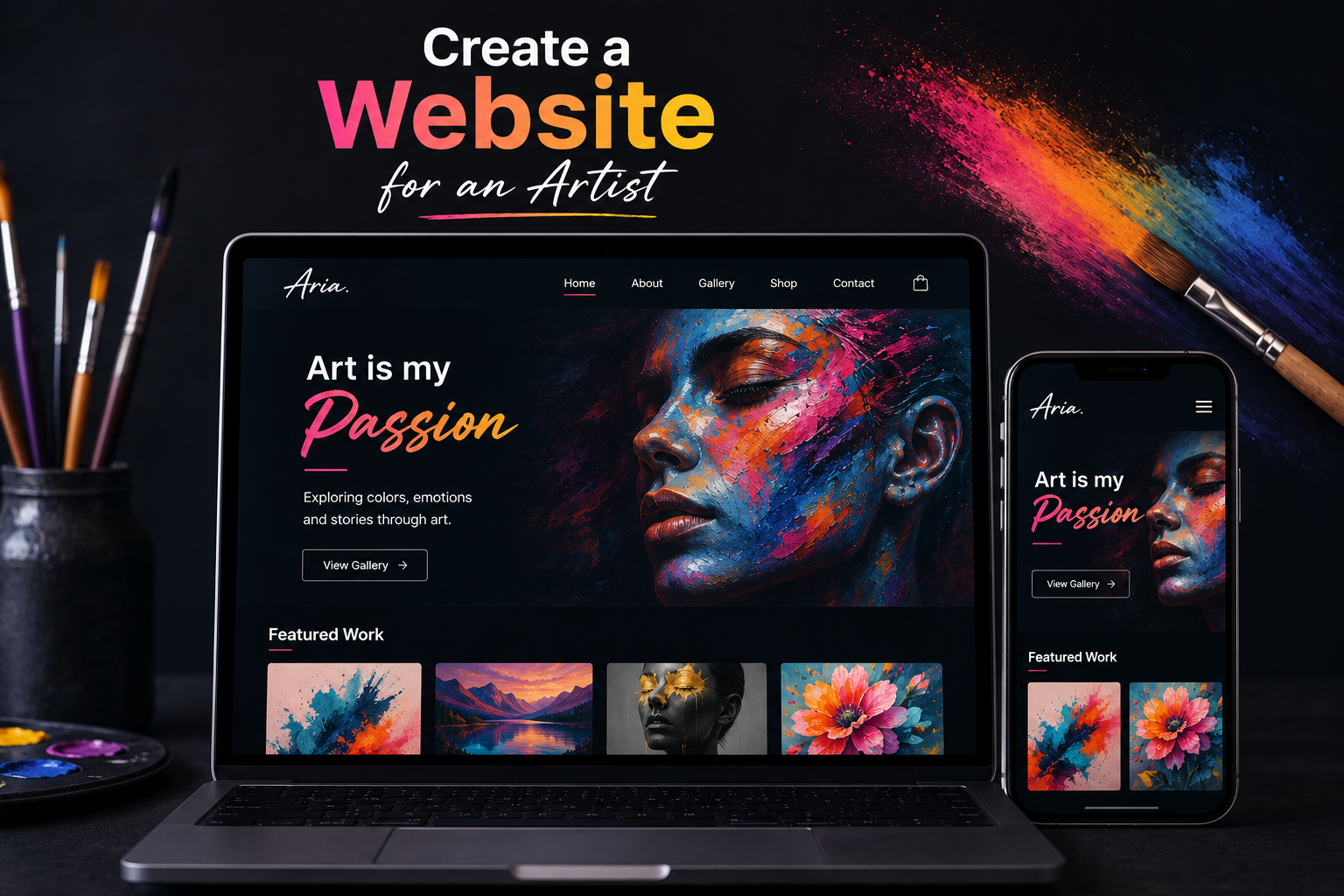
Social media has made it easier than ever for artists to share work, but it has also made it easier than ever to disappear. Algorithms change, platforms lose relevance, and accounts get restricted without warning. An artist's website is the one place on the internet that belongs entirely to them — no feed, no competing posts, no platform rules deciding who sees what. It is where serious collectors browse, where editorial clients verify credibility, and where the work can finally be seen at full resolution without a compression algorithm flattening every brushstroke.
This guide walks through the full process of building an artist website properly: what pages to include, which features matter for different types of artists, how to present work in a way that converts interest into sales or commissions, and what separates a portfolio that impresses from one that simply exists.
Why Every Artist Needs a Dedicated Website
The argument for having a dedicated website is not sentimental — it is practical. A website is the only channel where an artist controls the complete viewing experience, from the size of the images to the typography of the captions to the music playing in the background if they choose. That control matters when the work itself is the product being sold or commissioned.
Gallery directors, art fair curators, editorial art directors, and private collectors all use an artist's website as the primary reference point when evaluating whether to work with them. A well-built website communicates seriousness and professionalism in a way that an Instagram profile, however beautifully curated, simply cannot. It signals that the artist treats their practice as a business.
There is also a discoverability argument that most artists overlook. Google can index an artist's website, meaning someone searching for "abstract oil paintings for sale" or "portrait commissions UK" can find a specific artist through organic search. That kind of discovery happens entirely outside social media and continues working whether or not the artist posts anything new that week.
Understanding What Type of Artist Website You Need
Not all artist websites serve the same purpose, and the structure of the site should follow the artist's primary goal. A fine art painter selling originals needs a different website architecture than a graphic designer seeking commercial clients, which is different again from a muralist building a reputation for public commissions. Before any design decisions are made, the site's primary function should be defined.
Artist Type Primary Goal Key Pages Needed Essential Feature Fine Art / Painter Sell originals and prints Gallery, Shop, About, Exhibitions E-commerce / Enquiry form Illustrator / Graphic Artist Attract commercial clients Portfolio, Services, Contact, Client Work Categorised portfolio Photographer Bookings and print sales Portfolio, Services, Shop, Blog Fast image loading Sculptor / Installation Artist Gallery representation, commissions Works, CV, Press, Contact High-res image zoom Muralist / Public Artist Commission enquiries Projects, Process, About, Contact Project case studies Digital / NFT Artist Collector community, drops Gallery, Blog, Links, Newsletter Marketplace integrations
How to Create an Artist Website: Step-by-Step
Everything in this guide goes deep on one specific aspect of building an artist website. This section lays out the order those pieces fit into, from a blank domain to a finished, discoverable site.
Step 1: Define your website's primary goal. Using the artist-type table above, decide whether the site's main job is selling originals, attracting commercial clients, booking sessions, or building a collector community. This decision shapes every choice that follows.
Step 2: Register your own domain. Buy a domain in your professional name rather than relying on a free subdomain from a portfolio platform (such as a .squarespace.com or .myportfolio.com address). A domain you own outright is portable — you can move platforms later without losing your web address, your accumulated search visibility, or the professional credibility of a proper .com. See the domain and branding section later in this guide for naming conventions.
Step 3: Choose your platform. Match your technical comfort, budget, and ambitions to a platform using the comparison table further down this guide — Format or Cargo for the fastest, most image-focused setup with real limitations on growth; Squarespace for a reasonable middle ground; a custom-built site for serious commercial or institutional ambition.
Step 4: Curate and prepare your portfolio images. Before building anything, select the 20 to 40 strongest works covered in this guide's FAQ, and prepare high-resolution source files alongside compressed, web-optimised versions in WebP format for fast loading.
Step 5: Build your core pages. Work through the essential pages covered in this guide in order of importance for your goal: Portfolio or Gallery first, then About, then Contact, then CV/Exhibitions or Shop depending on your artist type.
Step 6: Set up your sales or enquiry mechanism. Decide between an enquire-to-buy model for original works, full e-commerce for prints and editions, or automated digital delivery for downloadable work, as covered in this guide's e-commerce section, and test the entire flow before launch.
Step 7: Build in basic SEO from the start. Write descriptive alt text for every artwork image, give each page a unique, keyword-relevant title and description, and submit your finished site to Google Search Console so indexing begins promptly.
Step 8: Test across devices before announcing the launch. Check your portfolio grid, image loading speed, and contact or enquiry form on both desktop and mobile — a broken mobile experience undermines the professionalism the whole site is meant to convey.
Step 9: Connect your website to your social media presence. Update every social media bio with your new domain, and make it a habit going forward to link back to the relevant website page — a specific artwork, an exhibition announcement — rather than only your homepage.
Each of these steps is covered in much greater depth in the sections that follow — this sequence exists to show how they connect before working through any one of them in detail.
Core Pages Every Artist Website Needs
Regardless of discipline or goal, most artist websites share a set of essential pages. The specifics of each will vary, but the structure below forms a solid foundation for almost any creative practice.
Portfolio or Gallery
The portfolio is the centrepiece of any artist website and deserves the most careful thought. The temptation is to show everything — years of work across every medium and style — but restraint produces better results. Curate the portfolio to show the work that best represents where you are now and where you want to go. If you work across multiple series or disciplines, organise the gallery into categories so visitors can navigate to what interests them.
Image quality on the portfolio page is non-negotiable. Display work at the largest size the design allows. Use a high-resolution image zoom feature so visitors can examine detail. Each piece should have a title, medium, dimensions, and year at minimum. For works available for sale, price or an enquire button should be visible without requiring a click into a separate page.
About Page
The about page is where an artist's voice should come through most clearly. It should explain who the artist is, what drives their practice, the themes or questions they are working with, and their background in a way that reads as a genuine statement rather than a CV summary. A short, well-written artist statement alongside a professional photograph of the artist at work or in the studio makes this page significantly more engaging. Gallery directors in particular read artist statements carefully — this page contributes directly to whether they consider an enquiry worthy of attention.
CV or Exhibitions Page
For fine artists and those seeking institutional representation, a CV page listing exhibitions, awards, residencies, publications, and collections is standard. Present this in reverse chronological order, formatted cleanly. Collectors and curators use this page to assess an artist's exhibition history and institutional credibility. Keep it current — an outdated CV with nothing added in two years sends a quiet but clear signal.
Contact Page
A contact page should make it genuinely easy to reach the artist or their studio. A simple form with fields for name, email, and message is sufficient for most purposes. If you accept commissions, add a few qualifying questions — medium preference, budget range, timeline — to filter enquiries and set expectations upfront. Display your location city, social media links, and any gallery representation so visitors have multiple points of reference.
Shop or Enquire Page
If the artist sells work directly, a shop page is essential. Original works, limited edition prints, merchandise, and digital downloads each have different fulfilment requirements and pricing models. The simplest approach for original works is an enquire-to-buy model where availability and pricing are discussed after initial contact. For prints and merchandise, a proper e-commerce setup with cart functionality, secure checkout, and shipping options is required.
Choosing the Right Platform or Development Approach

The platform decision for an artist website involves a different set of trade-offs than for a typical business site. Image presentation quality, loading speed for large files, and the ability to create a visually distinctive experience all matter more here than they do for a service company's website.
Platform Image Quality Control E-commerce Custom Design SEO Capability Squarespace Good Basic Template only Limited Format / Cargo Excellent Minimal Limited Poor WordPress Good (with plugins) Strong (WooCommerce) Theme-limited Strong Shopify Good Excellent Theme-limited Moderate Custom Built (React / Next.js) Complete control Fully custom Unlimited Full
Portfolio-focused platforms like Format and Cargo are popular among photographers and fine artists because they handle image presentation beautifully out of the box. The limitation is that they are built around a single use case and offer almost no SEO capability, no meaningful e-commerce, and no flexibility to grow beyond their predefined structure. An artist who wants to sell work, attract collectors through Google, and build a genuinely distinctive brand will outgrow these platforms quickly.
Squarespace sits in a more comfortable middle ground and remains popular for artist websites because its default templates handle image-heavy layouts reasonably well. It handles hosting, SSL, and basic SEO automatically, which reduces the technical burden. The ceiling, however, is real. You cannot meaningfully customise beyond the template structure, your page speed is constrained by Squarespace's infrastructure, and your site looks like thousands of other Squarespace artist websites.
A custom-built website is the right choice for any artist with serious commercial or institutional ambitions. Built on a modern stack like React or Next.js, a custom site can present images exactly as the artist intends, load at speeds that keep visitors engaged, and be structured for maximum SEO performance. The upfront investment is higher, but the result is a site that reflects the artist's work honestly rather than approximating it through someone else's template.
Image Presentation: The Most Critical Technical Decision
For an artist website, image quality and loading speed are in tension with each other. High-resolution images that do justice to the work are large files. Large files load slowly. A slow-loading portfolio page loses visitors before they see the work it was built to showcase.
The solution is a combination of modern image formats and responsive delivery. Serving images in WebP format instead of JPEG or PNG reduces file size by 25 to 35 percent at equivalent visual quality. Using a content delivery network (CDN) ensures images are served from a server geographically close to the visitor, reducing transfer time. Implementing lazy loading means images below the fold are not downloaded until the visitor scrolls to them, keeping initial page load times fast.
For portfolio grids, use lower-resolution thumbnails that expand to full resolution on click or zoom. This gives visitors an immediate visual impression of the work while deferring the heavy file transfer until they have indicated genuine interest in a specific piece. Next.js handles this elegantly through its built-in Image component, which automates format conversion, responsive sizing, and lazy loading without additional configuration.
Selling Art Online: E-Commerce Considerations
Artists who want to sell work directly from their website face a different set of decisions than those using it purely as a portfolio. The e-commerce requirements depend heavily on what is being sold and at what price point.
Original Works
Selling original artworks online works best through an enquiry model for works above a certain price threshold — typically anything over a few hundred pounds or dollars. A button that reads "Enquire About This Work" rather than "Add to Cart" keeps high-value pieces in a sales conversation rather than a transactional checkout. This allows the artist to discuss condition, provenance, shipping logistics, and payment terms directly with the buyer, which is appropriate for significant purchases and builds the kind of relationship that leads to repeat collecting.
Prints and Editions
Limited edition prints benefit from a proper e-commerce setup with cart functionality, secure checkout through Stripe or PayPal, and automated receipt and shipping notification emails. Displaying edition sizes clearly — "Edition of 50, 12 remaining" — creates scarcity signals that drive purchase decisions. Integrate with a print-on-demand fulfilment partner like Printful or Prodigi to handle printing and shipping without requiring the artist to manage inventory.
Digital Downloads
Digital art files, printable downloads, and brush packs have no fulfilment cost and can be sold through automated delivery after checkout. Platforms like Gumroad handle this cleanly for artists who want to sell digital products without building a full e-commerce system. For artists with a custom-built site, Stripe's payment API combined with a secure file delivery mechanism handles this natively.
SEO for Artist Websites
Most artists do not think about SEO until someone tells them their website does not appear in search results. By that point, months of missed discovery have already passed. Building SEO into an artist website from the start is far easier than retrofitting it later.
Image Alt Text
Google cannot see images — it reads the text associated with them. Every artwork image on the site should have a descriptive alt text that includes the artwork title, medium, and any relevant descriptive terms. Instead of alt="painting1.jpg", use alt="Abstract oil painting on canvas, blue and ochre, 80x100cm". This improves both search visibility and accessibility for visitors using screen readers.
Keyword-Targeted Page Titles and Descriptions
Each page of the website should have a unique meta title and description that includes terms potential visitors are actually searching for. An artist who paints portraits on commission should have a page titled something like "Portrait Commission Artist — Oil Paintings on Canvas" rather than just their name. Most people who discover an artist through Google do not yet know their name — they are searching for a style, medium, or subject matter.
Blog or Journal
A regularly updated blog or studio journal creates additional indexable content and gives search engines more reason to visit the site frequently. Posts about the making of specific works, material choices, exhibition experiences, or creative process questions all attract search traffic from people with genuine interest in the art world. This content also gives collectors a deeper connection to the artist's practice, which is one of the strongest drivers of purchasing decisions.
Design Principles for Artist Websites
The design of an artist website should serve the work, not compete with it. This sounds obvious, but it is easy to get wrong. A heavily animated homepage with competing visual elements pulls attention away from the art itself. White space, restrained typography, and a limited colour palette derived from the work create an environment where the art can speak clearly.
Typography choice matters more on an artist website than on most other site types because the text — artist statements, work descriptions, exhibition history — carries as much weight as the images. Choose one or two typefaces that feel appropriate to the work's aesthetic. A ceramicist's site might use a humanist serif that evokes craft and tradition. A street artist's site might use a bold geometric sans-serif. Avoid the generic web font combinations that appear on a thousand other sites.
Mobile responsiveness is not optional. Over half of web traffic is now mobile, and a portfolio that displays beautifully on desktop but breaks into misaligned columns on a phone signals carelessness. Test the portfolio grid, navigation, and contact form across multiple screen sizes before launch.
Advantages and Drawbacks of Artist Website Platforms
Platform Advantages Drawbacks Squarespace Quick setup, polished templates, hosting included Template ceiling, limited SEO, generic look Format Beautiful image display, artist-focused interface Weak SEO, minimal e-commerce, platform lock-in WordPress Strong SEO, flexible, WooCommerce for selling Requires maintenance, plugin conflicts, generic themes Shopify Excellent for selling prints and merchandise Not designed as a portfolio, monthly fees, limited blog Custom Built Complete control, unique design, full SEO, scalable Higher upfront cost, requires development team
Domain Name and Branding Considerations
An artist's domain name is part of their professional identity and should be chosen carefully. The artist's full name as a .com domain is the cleanest option and the easiest to remember when mentioned in press coverage, gallery notes, or verbal conversation. If the name is common and the .com is taken, adding "studio," "art," or "works" as a suffix — such as sarahkarimstudio.com — keeps things professional. Avoid numbers, hyphens, or creative spellings that create confusion when communicated aloud.
The domain name should match the name the artist uses professionally. Using a business name domain when all press and exhibition materials reference the artist's personal name creates a disconnect that undermines trust. Consistency across the domain, social media handles, and any printed materials is worth the effort to establish from the start.
Related Services
Building an artist website that presents work beautifully, performs well in search, and converts visitors into collectors or clients requires a team that understands both design and development. Munix Studio works with creative professionals to build websites that serve their practice at the level their work deserves.
Website Development — Custom artist websites and portfolio platforms built with optimised image delivery, e-commerce integration, and full SEO capability.
UI/UX Design — Portfolio design that frames your work with the visual clarity and restraint it deserves, across desktop and mobile.
Graphic and Branding — Artist identity design including typography, colour systems, and visual language that carry consistently from your website to printed materials.
SEO Optimization — Search visibility for artists — from image alt text and page structure to keyword targeting that helps collectors and clients find your work.
Maintenance and Support — Ongoing website updates, performance monitoring, and technical support so your portfolio stays current and your site stays fast.
Frequently Asked Questions
Ready to Get Started?
Website Development
Custom-built artist websites and portfolio platforms with optimised image delivery, e-commerce for art sales, and technical SEO built in from the start.
Explore Website DevelopmentUI/UX Design
Portfolio and gallery page design that presents artwork with the visual clarity and restraint it deserves, across every screen size.
Explore UI/UX DesignGraphic and Branding
Artist identity design — typography, colour systems, and visual language that carry consistently from your website to printed materials and exhibition collateral.
Explore Graphic and BrandingSEO Optimization
Search optimisation for artist websites including image alt text, page structure, and keyword targeting that helps collectors and clients find your work through Google.
Explore SEO OptimizationMaintenance and Support
Ongoing portfolio updates, performance monitoring, and technical support that keeps your artist website fast, current, and professionally maintained.
Explore Maintenance and SupportRelated Articles
What is Website Development? The Complete Guide for Beginners
How Are Modern Websites Built in 2026?

Website Development Process & Life Cycle : Complete Guide
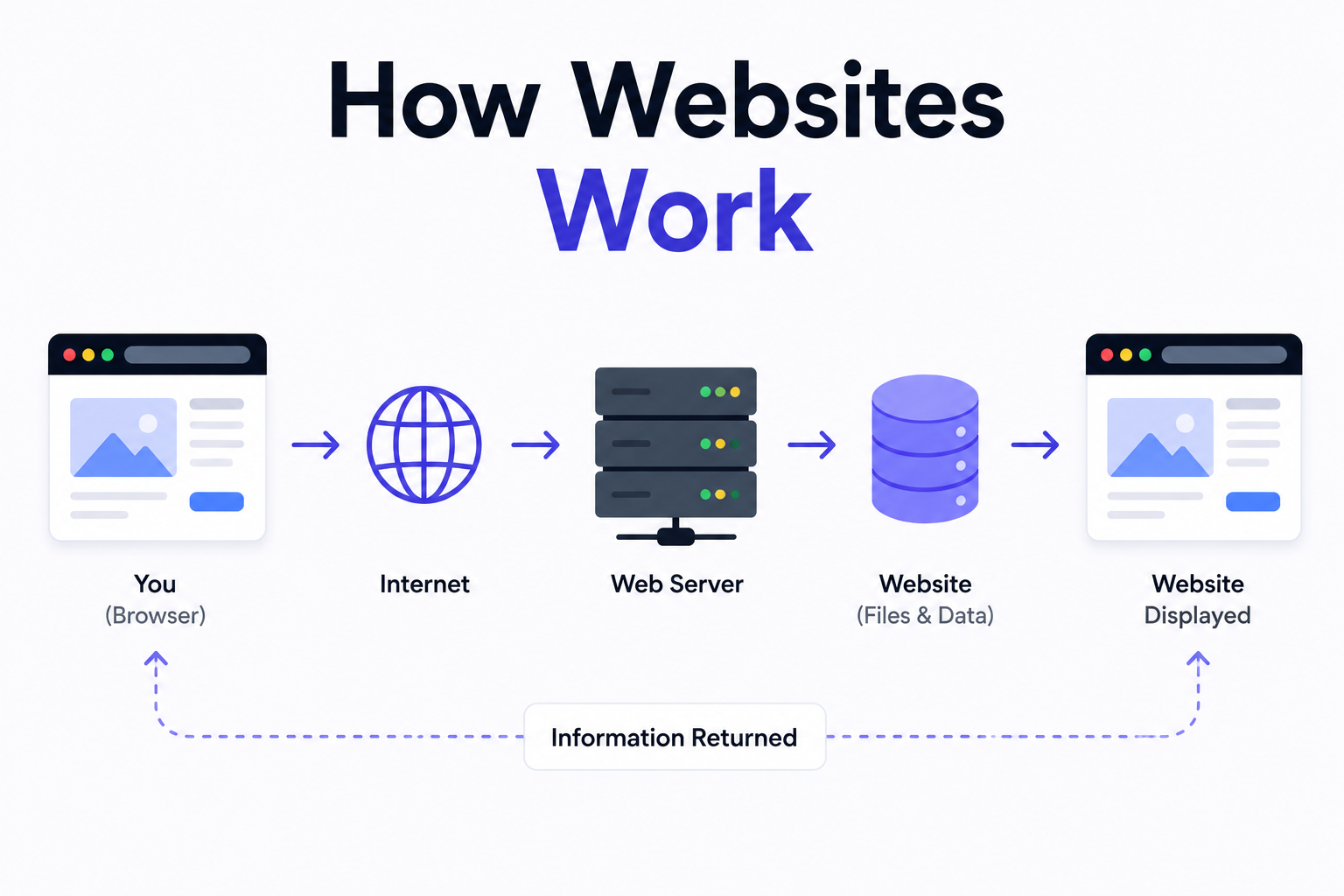
How Websites Work: DNS, Servers, Browsers
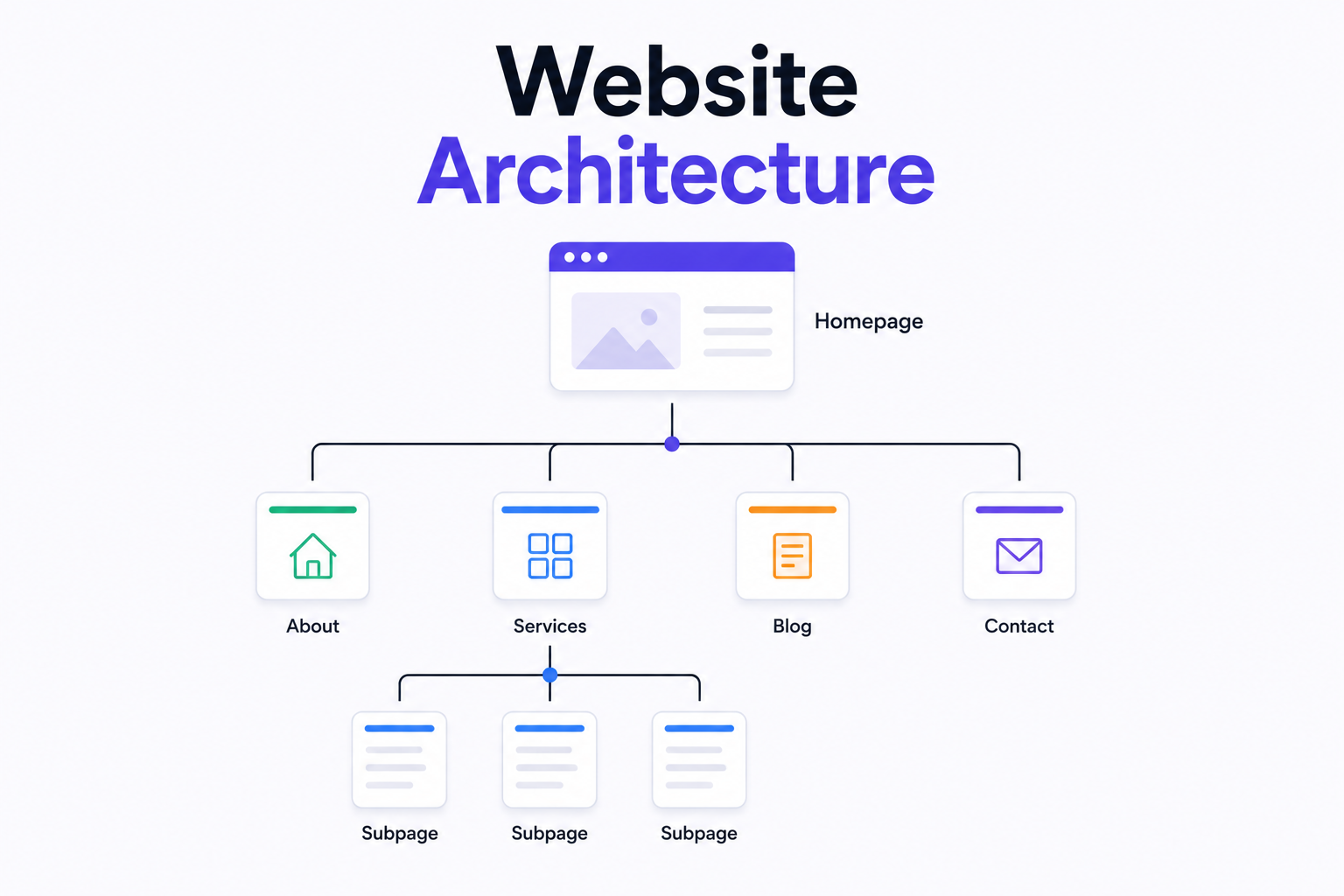
What is Website Architecture? Best Practices