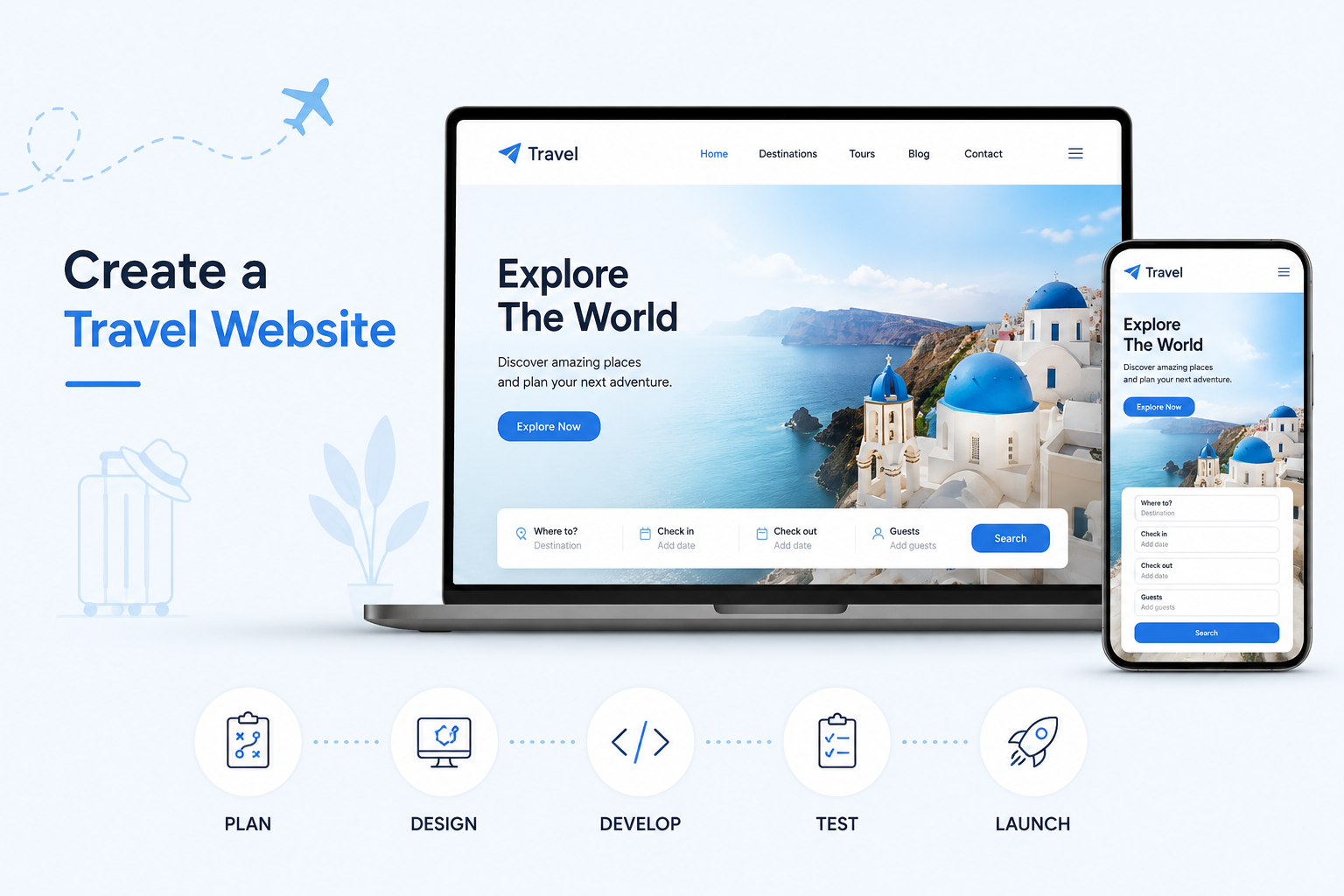
Why Your Travel Business Needs a Dedicated Website
Travel is one of the most competitive industries online. Millions of searches happen every day from people planning holidays, researching destinations, comparing tours, and looking for travel services that match their specific interests and budget. If your travel business does not have a well-built, well-optimized website, you are invisible to that audience at the exact moment they are ready to book.
A travel website serves several distinct purposes simultaneously. It needs to inspire visitors with compelling destination content and imagery. It needs to inform them with accurate and useful details about the experiences, packages, or services on offer. And it needs to convert that inspiration and information into bookings or enquiries through a seamless and trustworthy process. Getting all three right at the same time is what separates travel websites that generate consistent revenue from those that attract traffic but fail to convert it.
This guide covers every step involved in creating a travel website that does exactly that, from defining your audience and planning your structure through to the technical build, content strategy, and ongoing search optimization that keeps bookings coming in.
Step 1: Define Your Niche and Target Audience
Travel is an enormous category that encompasses everything from budget backpacking to ultra-luxury private jet experiences. The websites that perform best in travel search are almost always those that serve a specific niche clearly rather than trying to appeal to every type of traveller simultaneously. A site that positions itself as the definitive resource for family holidays in Southeast Asia will outperform a generic travel site in that specific search space every time, because its content, its design, and its entire proposition are built around one audience with one set of needs.
Defining your niche before anything is built shapes every decision that follows. It determines which destinations and experiences the site covers, what tone the content is written in, which search queries the site targets, and what the booking or enquiry process looks like. A honeymoon travel specialist and an adventure tour operator need completely different websites despite both operating in the travel industry.
Step 2: Plan Your Website Structure
A travel website needs a page structure that serves both inspiration and decision making at different stages of the visitor journey. Some visitors arrive knowing exactly where they want to go and are looking for specific package details and pricing. Others arrive with a vague desire to travel and need content that helps them narrow down their options. A well-structured site serves both of these visitors without confusing either one.
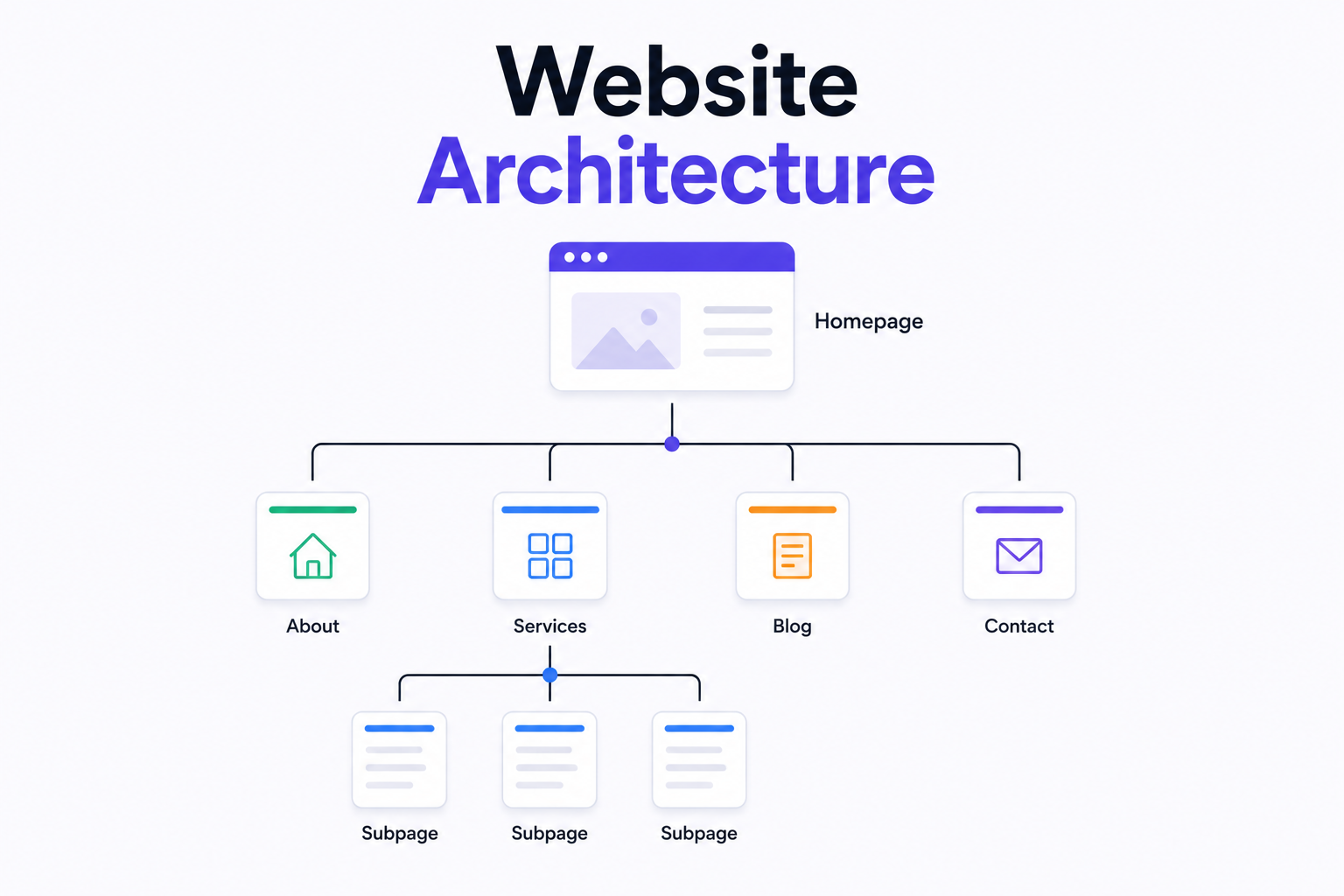
The core pages a travel website needs include a homepage that immediately communicates what the site offers and inspires visitors to explore further, destination pages for each location covered, individual tour or package pages with full details and booking functionality, a blog or travel guide section for destination-specific content that attracts organic search traffic, an about page that builds trust in the business, and a contact or booking enquiry page with a simple and reassuring process.
Destination pages deserve particular attention in the planning phase. Each destination should have its own dedicated page rather than being grouped into a generic destinations overview. Individual destination pages rank independently in search for location-specific queries, which is one of the most valuable sources of organic traffic for travel websites. A well-written destination page covering practical information, highlights, best times to visit, and the specific tours or packages available in that location serves both the user and the search engine effectively.
Step 3: Choose the Right Technology
Travel websites are among the most technically demanding types of websites to build well. They are image-heavy by nature, often requiring galleries of high-resolution destination photography on every page. They frequently need booking or reservation functionality that connects to availability systems and payment processors. And they need to perform exceptionally well on mobile because a significant proportion of travel research and booking happens on smartphones.
Building on React and Next.js addresses all of these requirements directly. Built-in image optimization handles high-resolution travel photography efficiently, serving images in modern formats at the correct size for each device without manual intervention. Server-side rendering ensures destination and package pages load fast and are indexed properly by search engines, which is critical for the destination- specific organic search traffic that most travel businesses depend on. And the component-based architecture makes it straightforward to build and maintain complex booking flows without the instability that comes with plugin-dependent WordPress builds.
Step 4: Build Booking and Enquiry Functionality
Booking functionality is the commercial heart of a travel website. The specific implementation depends on the type of travel business. A tour operator with fixed departure dates needs a real-time availability system where visitors can check dates, see remaining places, and complete a booking with payment in a single session. A bespoke travel agency that tailors itineraries for individual clients needs a consultation request flow that collects enough information to start a meaningful conversation rather than a self-service booking engine.
Regardless of the model, the booking or enquiry process needs to feel reassuring and professional at every step. Travellers are committing significant sums of money and trusting the business with important experiences. Any friction, confusion, or technical issue in the booking flow directly costs the business revenue. This is why the booking experience deserves the same level of design and engineering attention as the rest of the site rather than being treated as a functional afterthought.
Step 5: Design for Inspiration and Conversion
Travel websites live and die on the quality of their visual presentation. Destination photography is the single most powerful conversion tool available to a travel business online, and the design of the website needs to be built around showcasing that photography at its best. Large full-width images, immersive hero sections, and clean layouts that let the destinations speak for themselves consistently outperform cluttered designs that compete with the imagery for attention.
Beyond inspiration, the design needs to support the decision-making process with clear and accessible information. Pricing presented transparently, availability shown clearly, inclusions and exclusions listed without ambiguity, and trust signals like reviews, accreditations, and booking guarantees displayed prominently all reduce the hesitation that prevents interested visitors from completing a booking.
Step 6: Optimize for Search Engines
SEO for travel websites operates at two levels. Destination and experience-specific content targets the informational queries that travellers search during the research phase of their planning process. Package and booking pages target the commercial queries from people who are ready to book. A complete travel website SEO strategy covers both levels, using informational content to build authority and attract early-stage researchers, and commercial page optimization to convert those who are ready to commit.
Destination pages are the most important SEO asset on a travel website. Each destination page should be comprehensive enough to genuinely answer the questions a traveller has when researching that location, covering practical information like best times to visit, visa requirements, getting around, and what to expect, alongside the specific tours and experiences the business offers there. Pages with this level of depth consistently outrank thin promotional pages in destination-specific searches.
A travel blog compounds the site's search visibility over time by targeting the long-tail queries that destination pages alone cannot cover. Articles like itinerary guides, packing lists, budget breakdowns, and destination comparisons attract organic traffic from travellers in the early planning phase and build the site's overall topical authority in the destinations it covers.
Step 7: Build Trust Throughout the Site
Trust is the most critical conversion factor on a travel website. Visitors are being asked to hand over significant amounts of money for experiences that have not happened yet and cannot be returned if they disappoint. Every element of the site that reduces uncertainty and builds confidence directly increases the conversion rate.
Genuine reviews and testimonials from past travellers with specific details about their experience carry significantly more weight than star ratings alone. Displaying ATOL protection, ABTA membership, or equivalent consumer protection credentials prominently reassures visitors that their money is protected. A clear and fair cancellation and refund policy removes one of the most common sources of hesitation in the booking decision. And transparent contact information with real human support options available signals that there is a reliable business behind the website.
Step 8: Monitor Performance and Improve Continuously
A travel website requires consistent attention after launch to maintain its competitive position in search and to improve its conversion performance over time. Monitoring which destination pages are generating the most organic traffic and which package pages are converting best provides the data needed to make informed decisions about where to invest content and development effort next.
Seasonal content updates keep destination pages current and relevant throughout the year. New blog posts targeting emerging destination trends and traveller questions expand the site's search footprint continuously. And regular technical audits ensure the booking flow, payment integration, and overall site performance remain at the standard that both users and search engines expect.
Build Your Travel Website With Munix Studio
At Munix Studio we build custom travel websites that inspire visitors, handle bookings seamlessly, and rank for the destination and experience queries your ideal travellers are searching for. Every project is built around your specific niche, your audience, and the outcomes that matter most to your travel business.
Website Development — Custom travel websites built on React and Next.js with booking functionality, destination pages, and performance optimized image handling built in.
UI/UX Design — Immersive, destination-first design that inspires visitors and guides them seamlessly from browsing to booking.
SEO Optimization — Destination and experience-specific SEO that gets your travel website ranking for the queries your ideal travellers are already searching for.
App Development — Mobile travel applications with booking, itinerary management, and real-time availability for travel businesses that need a native app experience.
Maintenance and Support — Ongoing content updates, booking system maintenance, and performance monitoring to keep your travel website competitive year round.
Frequently Asked Questions
Ready to Get Started?
Website Development
Custom travel websites built on React and Next.js with booking functionality, destination pages, and performance-optimized image handling from day one
Explore Website DevelopmentUI/UX Design
Immersive destination-first design that inspires visitors and guides them seamlessly from initial browsing through to completing a booking.
Explore UI/UX DesignSEO Optimization
Destination and experience-specific SEO strategy that gets your travel website ranking for the queries your ideal travellers are already searching for.
Explore SEO OptimizationApp Development
Mobile travel applications with booking, itinerary management, and real-time availability for travel businesses that need a native app experience alongside their website.
Explore App DevelopmentMaintenance and Support
Ongoing content updates, booking system maintenance, and performance monitoring to keep your travel website competitive and converting throughout the year.
Explore Maintenance and SupportRelated Articles
What is Website Development? The Complete Guide for Beginners
How Are Modern Websites Built in 2026?

Website Development Process & Life Cycle : Complete Guide
How Websites Work: DNS, Servers, Browsers
What is Website Architecture? Best Practices