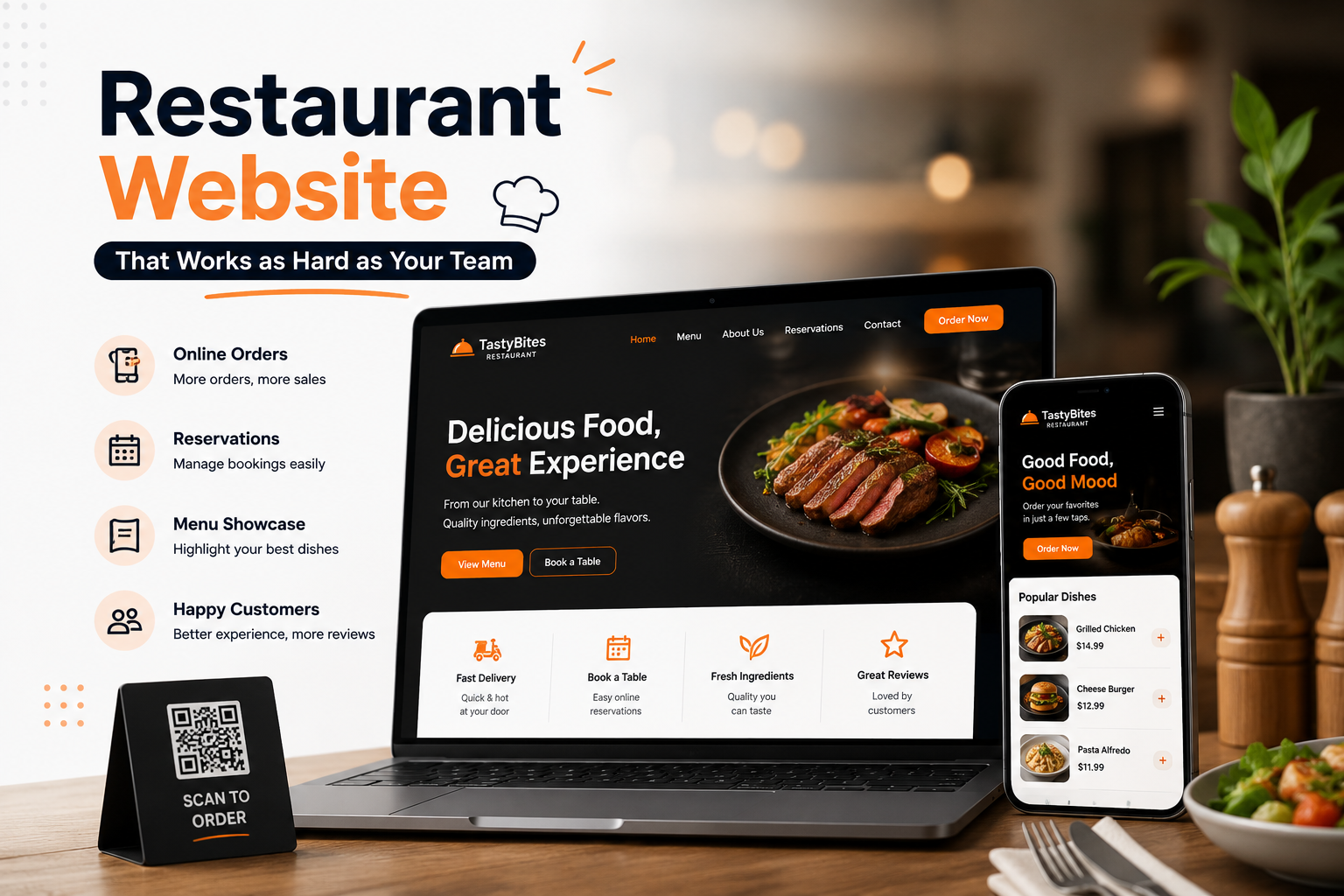
Why Every Restaurant Needs a Website That Works as Hard as Your Team
When someone decides they want to eat out, their next move is almost always a search. They search for a cuisine type, a restaurant name they heard about, or simply the best restaurants near them right now. In that moment, your website is either working for you or against you. A strong restaurant website gets you found, makes an immediate impression, and converts that interest into a reservation, an online order, or a walk-in. A weak one sends the customer to a competitor who made the effort to get it right.
The restaurants that fill covers consistently are not always the ones with the best food. They are the ones that make it easiest to discover them, understand what they offer, and take action. A professionally built website is the foundation of that advantage. It works around the clock, handles reservations while you sleep, showcases your menu to people who have never heard of you, and builds the kind of first impression that makes someone choose your restaurant over every other option in their search results.
This guide covers every step involved in building a restaurant website that attracts local diners, communicates your offering compellingly, and drives the reservations, orders, and footfall that keep your tables full.
Step 1: Define Your Restaurant's Identity and Audience
A restaurant website that tries to appeal to everyone appeals to no one. The most effective restaurant websites have a clear sense of who the restaurant is for and what makes it distinctly worth visiting. A neighbourhood bistro with a seasonal menu needs a completely different website from a fast-casual chain, a fine dining destination, a family-friendly pub kitchen, or a street food concept that also does private events. Each of these identities demands different visual design, different tone of voice, different page structure, and different conversion priorities.
Before any design or development work begins, be clear about your restaurant's identity, the audience it serves, and the primary actions you want the website to drive. For most restaurants, the priority hierarchy is: reservations first, online ordering second if applicable, private dining or events enquiries third, and general brand awareness and discovery throughout. Every page of the site should be built around moving visitors toward one of these actions, not simply presenting information passively.
Step 2: Plan a Structure Built Around Reservations and Discovery
A restaurant website does not need to be large to perform well, but it does need to be structured so that every visitor can find what they came for in seconds. People visiting a restaurant website want to see the menu, check the location and opening hours, understand the atmosphere and price point, and book a table or place an order. Any structure that makes any of these actions difficult is costing the restaurant revenue.
The core pages a restaurant website requires include a homepage that immediately communicates the restaurant's identity, cuisine, location, and a clear call to action to reserve or order, a menu page that is well-designed, easy to read on mobile, and kept current at all times, a reservations page or integrated booking widget that allows visitors to book directly without leaving the site, an about page that tells the story of the restaurant and the people behind it, a gallery of real food and atmosphere photography, a private dining or events page if the restaurant takes group bookings or hosts functions, and a contact page with address, opening hours, parking information, and a map.
The reservation call to action should be present on every page of the site, not just the reservations page. A visitor who arrives on the menu page and decides they want to book should not have to navigate away to find the booking option. A persistent reservation button in the navigation or a floating booking widget ensures that the path from interest to confirmed reservation is never more than one click away regardless of which page a visitor is on.
Step 3: Choose Technology That Handles Traffic and Bookings Reliably
Restaurant websites have specific technical demands that general-purpose website builders often handle poorly. They carry a significant volume of high-resolution food and interior photography that can devastate page load times if not handled correctly. They need to integrate with reservation systems and potentially online ordering platforms without friction or visual inconsistency. And they need to perform flawlessly on mobile, where the majority of restaurant searches and bookings now happen, often while the customer is already out and deciding where to eat.
Building on React and Next.js addresses all of these demands directly. Built-in image optimisation serves restaurant photography at the correct size and format for each device, keeping pages fast even when they carry extensive visual content. Server-side rendering ensures every page is fully indexed by search engines, which is critical for the local organic visibility that drives new diners to the site. Reservation system integrations with platforms like OpenTable, ResDiary, or SevenRooms can be embedded cleanly into a custom-built site while maintaining full design consistency rather than redirecting guests to a third-party booking page with different branding and a different user experience. And a headless CMS integration allows restaurant staff to update the menu, change opening hours, add specials, and publish events without needing developer access for routine operational updates.
Step 4: Build a Reservation and Ordering Experience That Converts
The reservation flow is the most commercially critical part of a restaurant website. Every step of friction in the booking process reduces the number of covers the site generates from the same volume of traffic. A guest who encounters a slow, confusing, or visually inconsistent booking experience abandons the attempt and either calls, which costs staff time, or chooses a competitor whose site made it easier.
An effective online reservation experience is fast, mobile-friendly, and requires the minimum number of steps to confirm a booking. Date, time, party size, and contact details are all that should be required for a standard reservation. Special requests and dietary requirements can be captured in a single optional text field rather than a lengthy form. A clear confirmation with the booking details and a reminder option reduces no-shows and gives guests confidence that their reservation has been received and recorded correctly.
For restaurants offering online ordering for delivery or collection, the ordering experience needs the same level of attention. A clean, well-organised menu with clear photography, easy item customisation, a simple checkout, and reliable order confirmation creates the kind of experience that builds repeat ordering behaviour. Restaurants that get online ordering right build a direct revenue channel that is significantly more profitable than third-party delivery platforms that take substantial commission on every order.
Step 5: Lead With Food Photography That Sells
Food photography is the single most powerful conversion tool a restaurant website has. A prospective diner who sees a compelling image of a dish they want to eat is already halfway to making a reservation. A site with beautiful, appetite-inducing photography of real dishes from the actual menu converts at a dramatically higher rate than one that relies on stock imagery or low-quality phone photographs taken in poor lighting.
Investing in a professional food photographer for a half-day shoot is one of the highest-return investments a restaurant can make in its digital presence. The images produced serve the website, social media, Google Business Profile, delivery platform listings, and any print or digital advertising simultaneously. The marginal cost of using those images across multiple channels makes the original investment even more efficient over time.
Beyond food photography, images of the dining room, bar, private dining spaces, and outdoor areas give prospective guests a clear sense of the atmosphere and whether it is right for the occasion they are planning. A couple booking a birthday dinner and a group of colleagues looking for a post-work venue need to see different things to be convinced. A well-curated gallery that showcases multiple aspects of the dining experience serves both.
Step 6: Build Trust With Reviews and Social Proof
Restaurant choices are social decisions. Diners rely heavily on the opinions of other guests when deciding where to eat, which is why review platforms like Google, TripAdvisor, and Yelp carry so much weight in restaurant discovery. A restaurant website that surfaces genuine positive reviews from these platforms directly on the site reinforces the credibility that prospective diners are looking for confirmation of at the point they are making their decision.
Press coverage, food critic mentions, and industry awards should be featured prominently if the restaurant has them. A quote from a well-known publication or a recognition from a respected food guide carries significant influence with certain dining audiences, particularly for destination dining occasions where the stakes of choosing the wrong restaurant feel higher. Even smaller local recognition such as a regional food award or a mention in a local publication adds credibility that stock claims of quality can never provide.
Step 7: Optimize for Local Search to Fill Your Tables Organically
Local SEO is the most valuable organic marketing channel for the vast majority of restaurants. The queries that drive new diners to restaurant websites are almost always location-specific: restaurants near me, Italian restaurant in a specific neighbourhood, best Sunday roast in a particular town. Appearing prominently in these searches generates a consistent flow of new covers from people who are actively looking for somewhere to eat and ready to make a decision.
A fully optimised Google Business Profile is the foundation of local restaurant SEO. Accurate opening hours, the correct address and phone number, a complete list of cuisines and dining attributes, high-quality photographs updated regularly, and a consistent strategy for generating genuine guest reviews all contribute directly to how prominently the restaurant appears in local search results and in Google Maps. For many restaurants, Google Business Profile optimisation delivers more new covers per hour invested than any other marketing activity.
On the website itself, page titles, meta descriptions, and on-page content should include the restaurant's cuisine type, location, and the key phrases prospective diners search for. A structured data markup for restaurants allows Google to display rich results including opening hours, price range, and cuisine type directly in search results, which increases click-through rates from local searches significantly. Fast page speed, clean mobile experience, and consistent business information across all online directories round out the technical foundations that local restaurant SEO is built on.
Step 8: Capture Private Dining and Events Revenue
Private dining and events bookings represent some of the highest-value revenue a restaurant generates, yet many restaurant websites do a poor job of capturing this demand. A group organiser searching for a private dining venue for a corporate dinner, a birthday celebration, or a wedding reception is making a high-value, high-intent search. A well-built private dining page that describes the available spaces, capacities, catering options, and pricing clearly, and makes it easy to submit an enquiry, converts this high-value demand efficiently.
Private dining pages should include photographs of the spaces set for events, specific capacity information for different room configurations, details of the menus and packages available, and a dedicated enquiry form that collects the information needed to respond with a specific proposal. Ranking for local private dining and venue hire searches is significantly easier than ranking for general restaurant searches because the competition is lower and the commercial intent is higher, making private dining SEO one of the most efficient growth opportunities for restaurants with suitable spaces.
Step 9: Keep Your Menu and Information Current at All Times
Nothing damages a restaurant's credibility with a prospective diner faster than arriving at the table to discover that a dish they specifically came to eat is no longer on the menu, or visiting during hours listed on the website only to find the restaurant closed. Outdated menus and incorrect opening hours are among the most common complaints in restaurant reviews and among the most preventable causes of poor first impressions.
A CMS that makes updating the menu, changing opening hours, and publishing seasonal specials a simple and fast task for restaurant staff rather than a development request is not a convenience. It is an operational necessity for a restaurant that takes its digital presence seriously. Every change to the menu, every seasonal update, every holiday hours adjustment should be reflected on the website the same day it takes effect, not when someone finally remembers to contact the web developer.
Step 10: Monitor Performance and Optimise for More Covers
A restaurant website requires ongoing attention after launch to maintain its local search rankings and improve its reservation conversion rate over time. Tracking which pages generate the most reservation completions, where visitors drop off in the booking flow, which search queries are driving the most traffic, and how the site performs on mobile versus desktop provides the data needed to make targeted improvements that directly increase covers and orders.
Seasonal content updates, new menu photography when dishes change, event pages for special occasions and holiday menus, and regular Google Business Profile updates all keep the restaurant visible, current, and relevant in local search throughout the year. Technical audits ensure the reservation system, ordering integration, and overall site performance remain at the standard that both guests and search engines expect from a professional restaurant operation.
How We Work
At Munix Studio, every restaurant website project begins with a discovery phase where we take the time to understand your concept, your audience, your competitive landscape, and the specific commercial outcomes you need the site to deliver. We define the page structure, plan the local SEO strategy, and map the guest journey from search result to confirmed reservation before a single design decision is made.
Our design team builds a visually compelling experience that captures your restaurant's identity and makes prospective diners want to visit before they have even read the menu. Our development team builds the site on a fast, performant stack with reservation integration, online ordering capability if required, CMS access for your team, and local SEO foundations built in from the first page. We test thoroughly before launch and remain available for ongoing support as your restaurant grows and your digital presence evolves alongside it.
Build Your Restaurant Website With Munix Studio
At Munix Studio we design and build restaurant websites that rank in local search, showcase your food and atmosphere compellingly, and convert visitors into reservations and orders. Every project is built around your concept, your diners, and the revenue outcomes that matter most to your restaurant.
Website Development — Custom restaurant websites built on React and Next.js with reservation integration, online ordering capability, CMS access, and local SEO built in from day one.
UI/UX Design — Visually compelling, appetite-first design that captures your restaurant's identity and guides every visitor naturally toward booking a table or placing an order.
SEO Optimization — Local SEO strategy that gets your restaurant ranking for the cuisine and location-specific searches your ideal diners are already making.
App Development — Mobile ordering and loyalty applications for restaurants that want to build a direct ordering channel and repeat visit behaviour outside of third-party delivery platforms.
Maintenance and Support — Ongoing menu updates, seasonal content, and technical support to keep your restaurant website current, fast, and converting throughout the year.
Frequently Asked Questions
Ready to Get Started?
Website Development
Custom restaurant websites built on React and Next.js with reservation integration, online ordering capability, CMS access for your team, and local SEO built in from day one.
Explore Website DevelopmentUI/UX Design
Visually compelling, appetite-first design that captures your restaurant's identity and guides every visitor naturally toward booking a table or placing an order.
Explore UI/UX DesignSEO Optimization
Local SEO strategy that gets your restaurant ranking for the cuisine and location-specific searches your ideal diners are already making in your area.
Explore SEO OptimizationApp Development
Mobile ordering and loyalty applications for restaurants that want to build a direct ordering channel and repeat visit behaviour outside of third-party delivery platforms.
Explore App DevelopmentMaintenance and Support
Ongoing menu updates, seasonal content, and technical support to keep your restaurant website current, accurate, and converting throughout the year.
Explore Maintenance and SupportRelated Articles
What is Website Development? The Complete Guide for Beginners
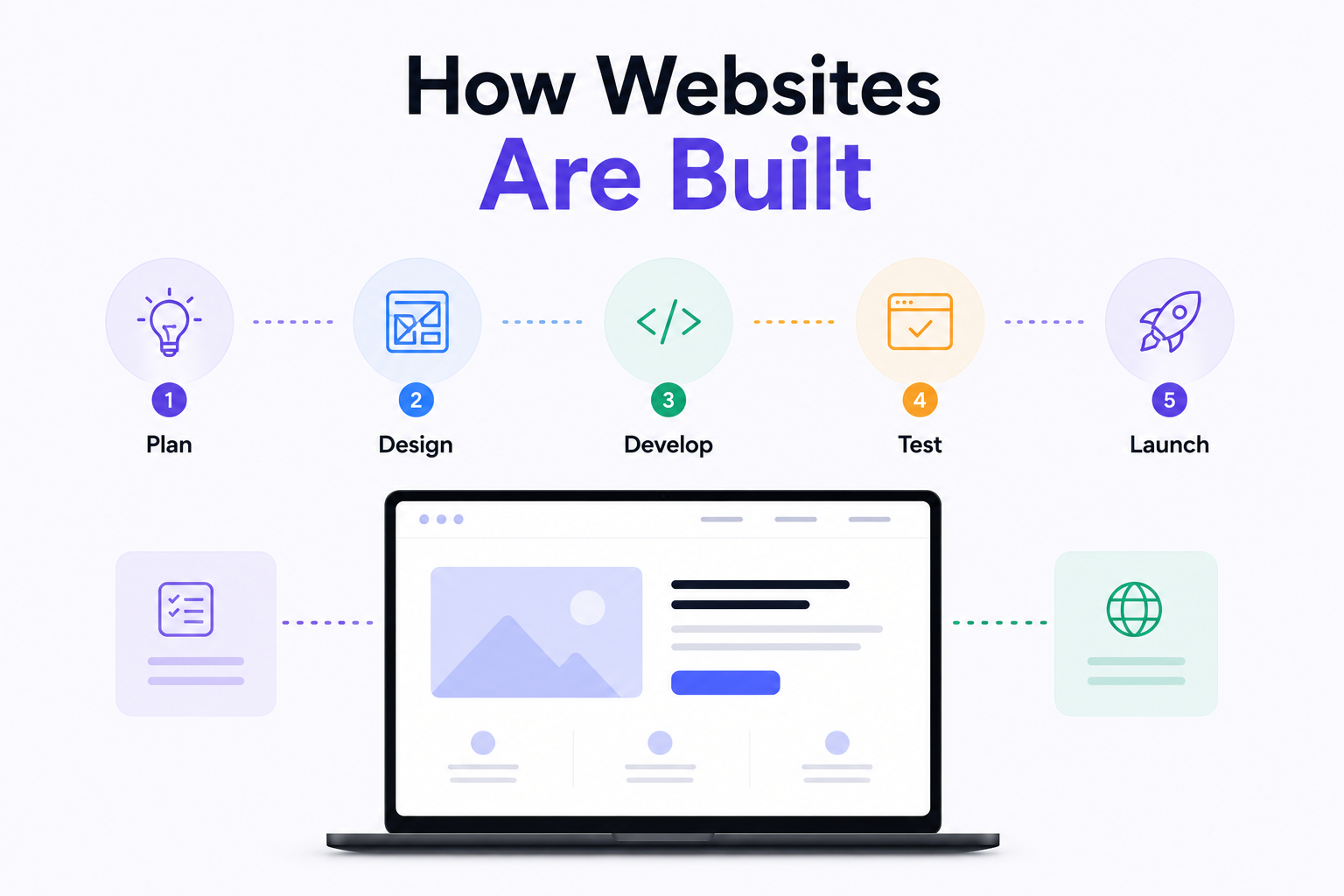
How Are Modern Websites Built in 2026?

Website Development Process & Life Cycle : Complete Guide
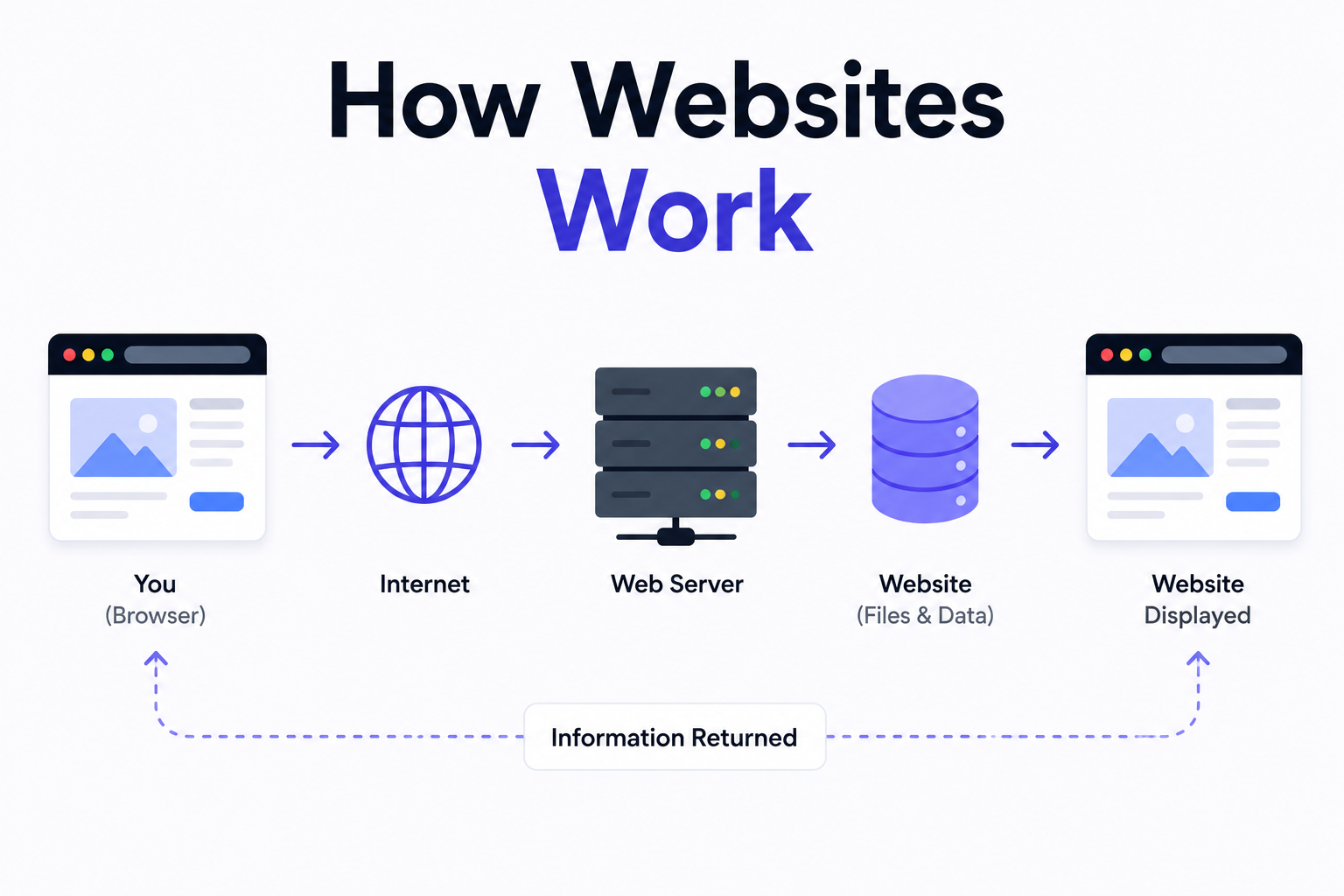
How Websites Work: DNS, Servers, Browsers
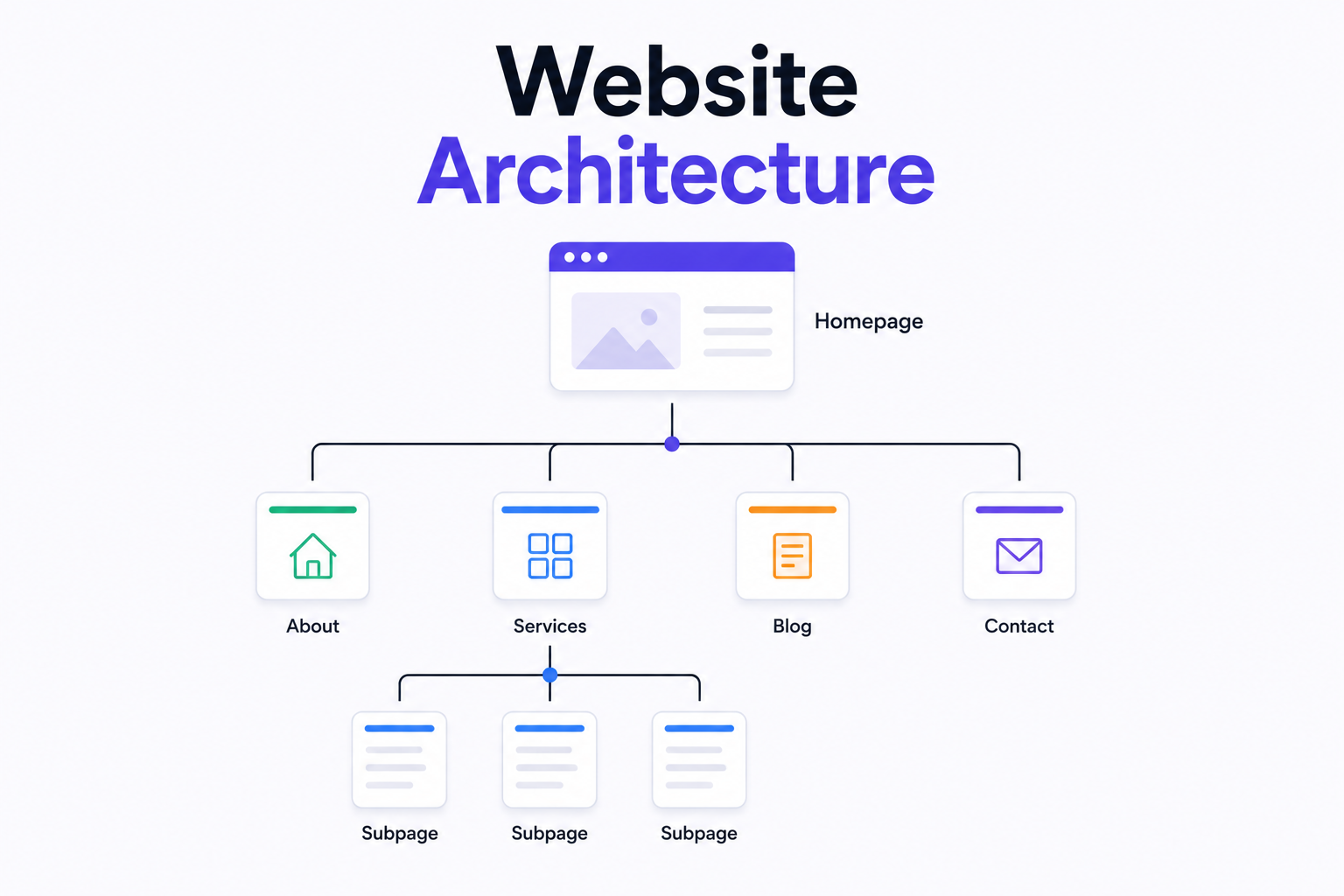
What is Website Architecture? Best Practices