Why Real Estate Professionals Need a Dedicated Website
The property market has moved online faster than almost any other industry. Buyers begin their search on the internet months before they ever walk through a door, and sellers evaluate agents based on their digital presence before making contact. If your real estate business does not have a professional, well-structured website, you are losing potential clients to competitors who do, often before those clients have any idea who you are.
A real estate website serves multiple purposes simultaneously. It needs to showcase available properties in a way that is easy to browse and visually compelling. It needs to build trust in the agent or agency through professional presentation, credentials, and results. And it needs to be optimized for local search so that buyers and sellers in your target market can find you when they are actively looking for representation or listings.
This guide covers every step involved in creating a real estate website that goes beyond a basic online brochure and actually functions as a consistent source of qualified leads for your business.
Step 1: Define Your Target Audience and Market
Real estate is inherently local and highly segmented. Before any design or development begins, you need a clear picture of exactly who the website is built for. Are you targeting first-time buyers in a specific city, luxury property investors, commercial property tenants, landlords looking for management services, or a combination of these? Each audience has different needs, different search behaviors, and different trust signals that influence their decision to make contact.
Defining your audience upfront shapes every decision that follows, from how the homepage is written and what properties are featured, to which search queries the site is optimized for and what the consultation request process looks like. A website built for a luxury property firm in Dubai looks and functions very differently from one built for a residential lettings agency in Manchester, even though both operate in real estate.
Step 2: Plan Your Website Structure and Core Pages
A real estate website needs a thoughtfully planned structure that serves buyers, sellers, landlords, and tenants in different sections without creating confusion. The most effective approach separates these audiences into distinct navigation paths so each visitor finds content relevant to their situation quickly.
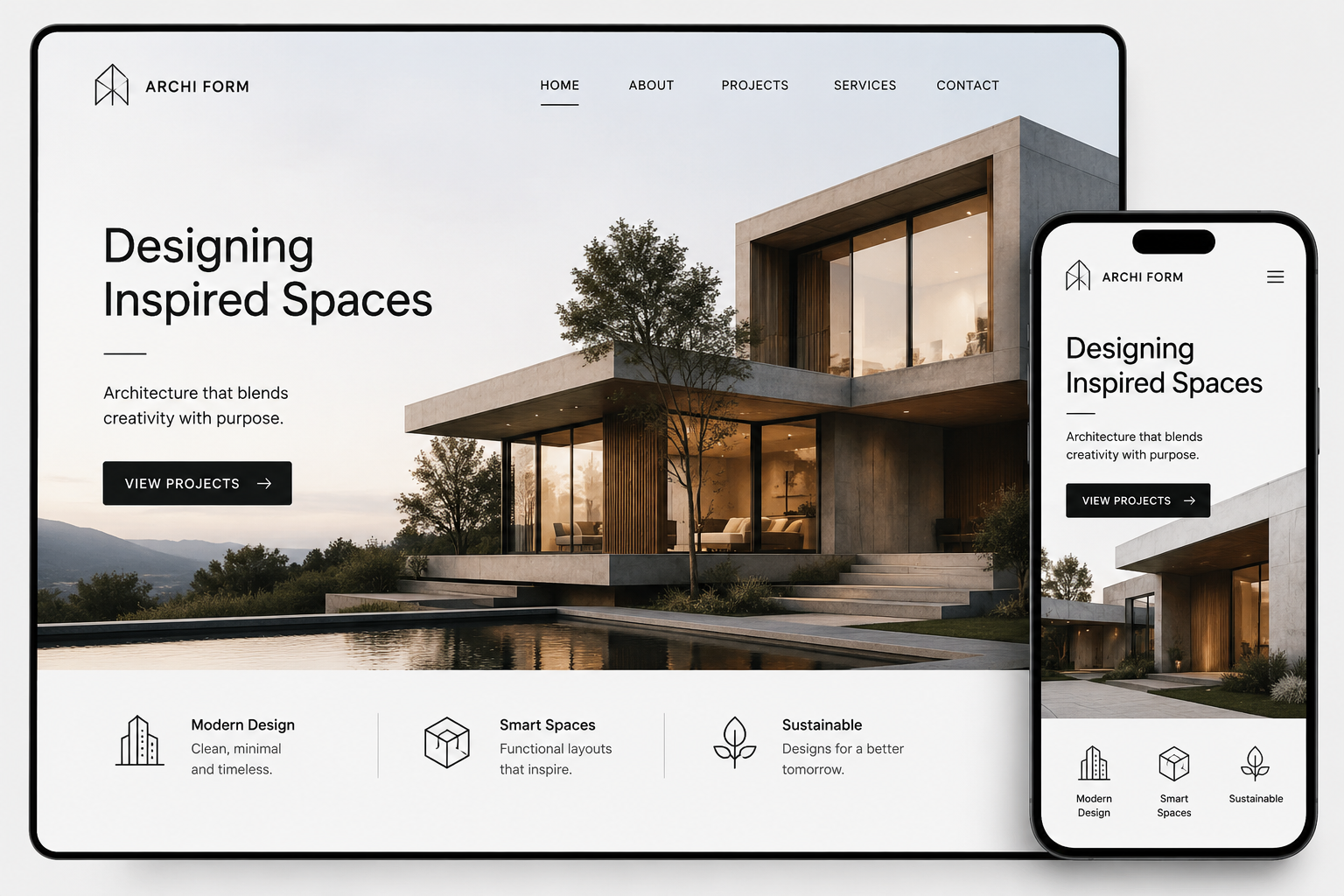
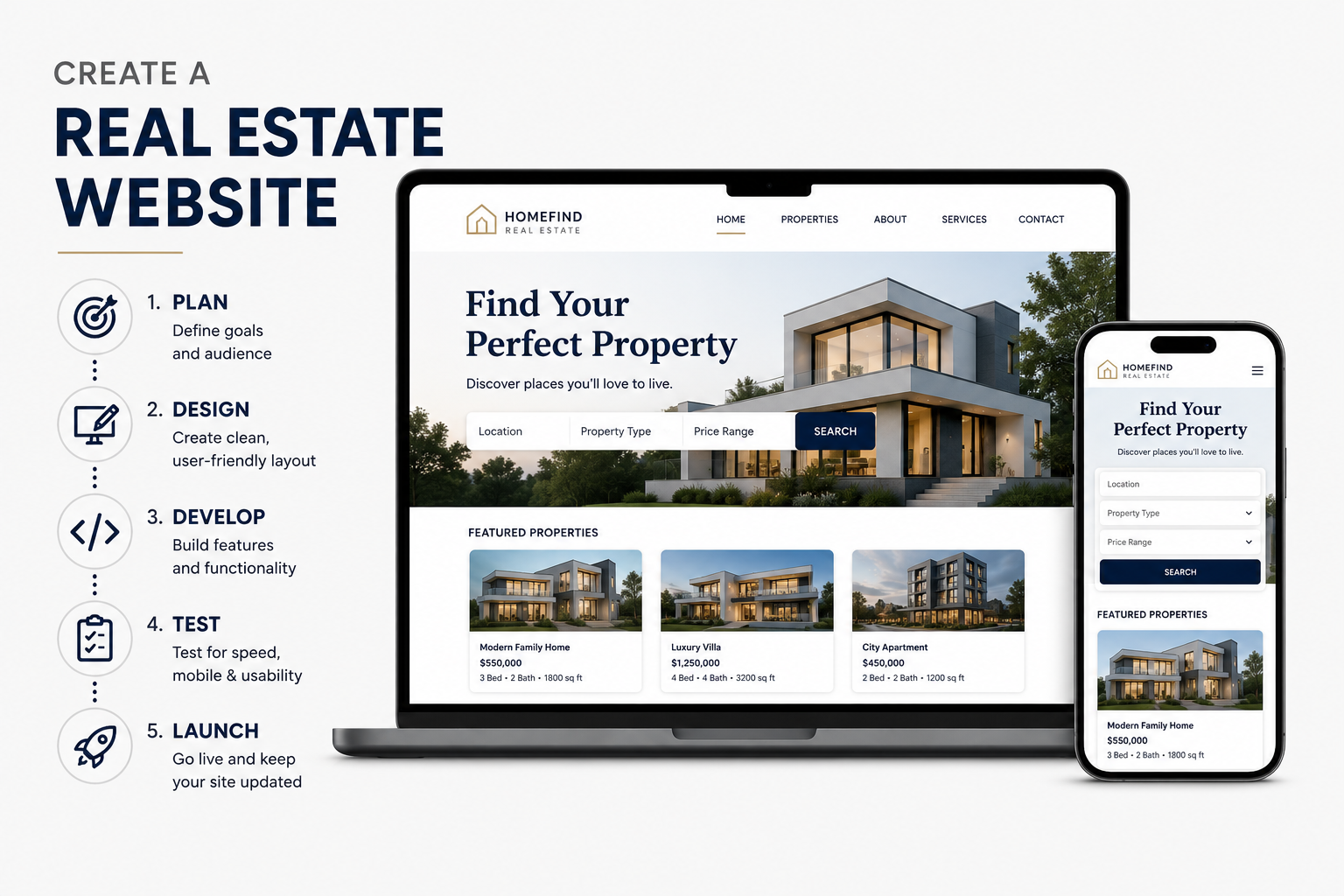
The core pages every real estate website needs include a homepage with a prominent property search feature, a property listings section with individual pages for each listing, a services section covering buying, selling, lettings, and any specialist services offered, an about page that profiles the team and communicates the firm's experience and track record, a blog section for local market content and property guides, and a contact page with a clear and simple enquiry form.
Individual property listing pages deserve particular attention. Each listing needs its own dedicated URL, high quality photography, a detailed description, key property specifications, a map showing the location, and a direct contact or viewing request form. These pages also rank independently in search results for specific property queries, so their content and structure has real SEO value beyond just presenting the listing.
Step 3: Choose the Right Technology Stack
The technology choices behind a real estate website have a significant impact on performance, scalability, and the user experience of browsing and searching listings. Many agents start with off-the-shelf real estate platforms or WordPress plugins, which can get something functional online quickly. But these solutions consistently hit limitations as the business grows and requirements become more specific.
A real estate website with a database of hundreds or thousands of listings needs a backend built to handle that volume efficiently. Search and filter functionality needs to be fast and intuitive. Property pages need to load quickly despite containing multiple high-resolution images. And the entire system needs to be manageable by the agency team through an admin interface without requiring technical knowledge.
Building on React and Next.js for the frontend, with a robust backend database like PostgreSQL for property data, gives real estate businesses a foundation that handles all of these requirements without compromise. Server-side rendering through Next.js means property pages load fast and are indexed properly by search engines, which is critical for the local and property-specific SEO that drives qualified traffic to real estate websites.
Step 4: Build Property Search and Filter Functionality
Property search is the most critical feature of any real estate website from a user experience perspective. Visitors arrive with specific requirements in mind, whether that is a three-bedroom house within a certain price range in a particular area, or a commercial unit of a specific size in a business district. If they cannot filter listings quickly and intuitively to find what matches their criteria, they leave and find a site that lets them do it.
Effective property search functionality includes filters for property type, price range, number of bedrooms and bathrooms, location, size, and availability status. Map-based search is increasingly expected by users and adds significant usability for buyers who are focused on specific neighborhoods or proximity to particular amenities. Results pages should load instantly as filters are applied rather than requiring a full page reload, which requires careful frontend engineering to implement properly.
Step 5: Design for Visual Impact and Trust
Real estate is a visual industry. The quality of the photography on a listing page directly influences how seriously a buyer takes the property and how much time they spend on the site. The design of the website itself needs to showcase that photography at its best, which means clean layouts, generous whitespace, and minimal visual clutter that would compete with the property images for attention.
Trust signals are equally important in real estate because the transactions involved are among the largest financial decisions most people make in their lives. Client testimonials and reviews with specific details about the experience carry significantly more weight than generic star ratings. Displaying the number of properties sold or let, average time on market, and any industry awards or accreditations all contribute to the sense that the firm has a strong track record worth trusting.
Step 6: Optimize for Local SEO
Local SEO is the single most important traffic channel for most real estate websites. Buyers and sellers searching for agents and listings are almost always looking within a specific geographic area. Ranking well for searches like "estate agents in Manchester" or "homes for sale in Austin" requires a combination of on-page content optimization, Google Business Profile management, and consistent NAP citations across directories.
Location-specific pages are one of the most effective local SEO tactics for real estate websites. Creating dedicated pages for each area the firm operates in, with genuine content about the local property market, neighborhood characteristics, and recent sales data, gives the site multiple entry points for location-based searches. Each of these pages can rank independently for its specific geographic query, compounding the site's overall local search visibility over time.
Property schema markup applied to listing pages helps search engines understand and display property information more richly in search results. This can increase click-through rates from search without requiring any improvement in ranking position, which effectively multiplies the value of whatever search visibility the site already has.
Step 7: Set Up Lead Capture Throughout the Site
A real estate website that attracts traffic but fails to capture contact information from interested visitors is missing its primary business function. Lead capture needs to be built into the site at multiple points rather than limited to a single contact page that many visitors never reach.
Viewing request forms on individual property pages capture buyers at the moment of highest interest. Valuation request forms on the homepage and seller- focused pages capture potential vendors. Newsletter signup forms on blog content capture early-stage researchers who are not yet ready to make contact but are interested enough to stay connected. Each of these touchpoints collects qualified leads at different stages of the buyer and seller journey.
Step 8: Integrate With Property Portals and CRM Systems
Most real estate businesses list properties on major portals like Rightmove, Zoopla, or Zillow in addition to their own website. Setting up a system where listings can be managed in one place and automatically synced to the website and external portals saves significant time and eliminates the risk of listings being out of date across different platforms.
CRM integration connects lead capture forms on the website directly to the team's client management system, ensuring no enquiry is missed and every lead is followed up in a timely and organized way. For real estate businesses handling significant volumes of enquiries, this kind of integration transforms the website from a passive marketing tool into an active part of the sales workflow.
Build Your Real Estate Website With Munix Studio
At Munix Studio we build custom real estate websites that handle property listings, advanced search functionality, lead capture, and local SEO from a single well-engineered platform. Every project is built around your specific market, your audience, and the outcomes that matter most to your business.
Website Development — Custom real estate websites with property search, listing management, and lead capture built on a fast and scalable modern stack.
UI/UX Design — Property-first design that showcases listings beautifully and guides buyers and sellers toward taking action at every stage of their journey.
SEO Optimization — Local SEO strategy and implementation that gets your real estate website ranking for the searches buyers and sellers in your market are already making.
App Development — Mobile applications for real estate businesses that need property search, viewing bookings, and client communication available on iOS and Android.
Maintenance and Support — Ongoing management to keep listings current, integrations running smoothly, and the site performing at its best after launch.
Frequently Asked Questions
Ready to Get Started?
Website Development
Custom real estate websites with property search, listing management, and lead capture built on a fast and scalable modern stack.
Explore Website DevelopmentUI/UX Design
Property-first design that showcases listings beautifully and guides buyers and sellers toward taking action at every stage of their journey.
Explore UI/UX DesignSEO Optimization
Local SEO strategy and on-page optimization that gets your real estate website ranking for the searches buyers and sellers in your market are already making.
Explore SEO OptimizationApp Development
Mobile applications for real estate businesses that need property search, viewing bookings, and client communication available on iOS and Android.
Explore App DevelopmentMaintenance and Support
Ongoing management to keep listings current, integrations running smoothly, and the site performing at its best long after launch.
Explore Maintenance and SupportRelated Articles
What is Website Development? The Complete Guide for Beginners
How Are Modern Websites Built in 2026?

Website Development Process & Life Cycle : Complete Guide
How Websites Work: DNS, Servers, Browsers
What is Website Architecture? Best Practices