Why Your Nonprofit Needs a Purpose-Built Website
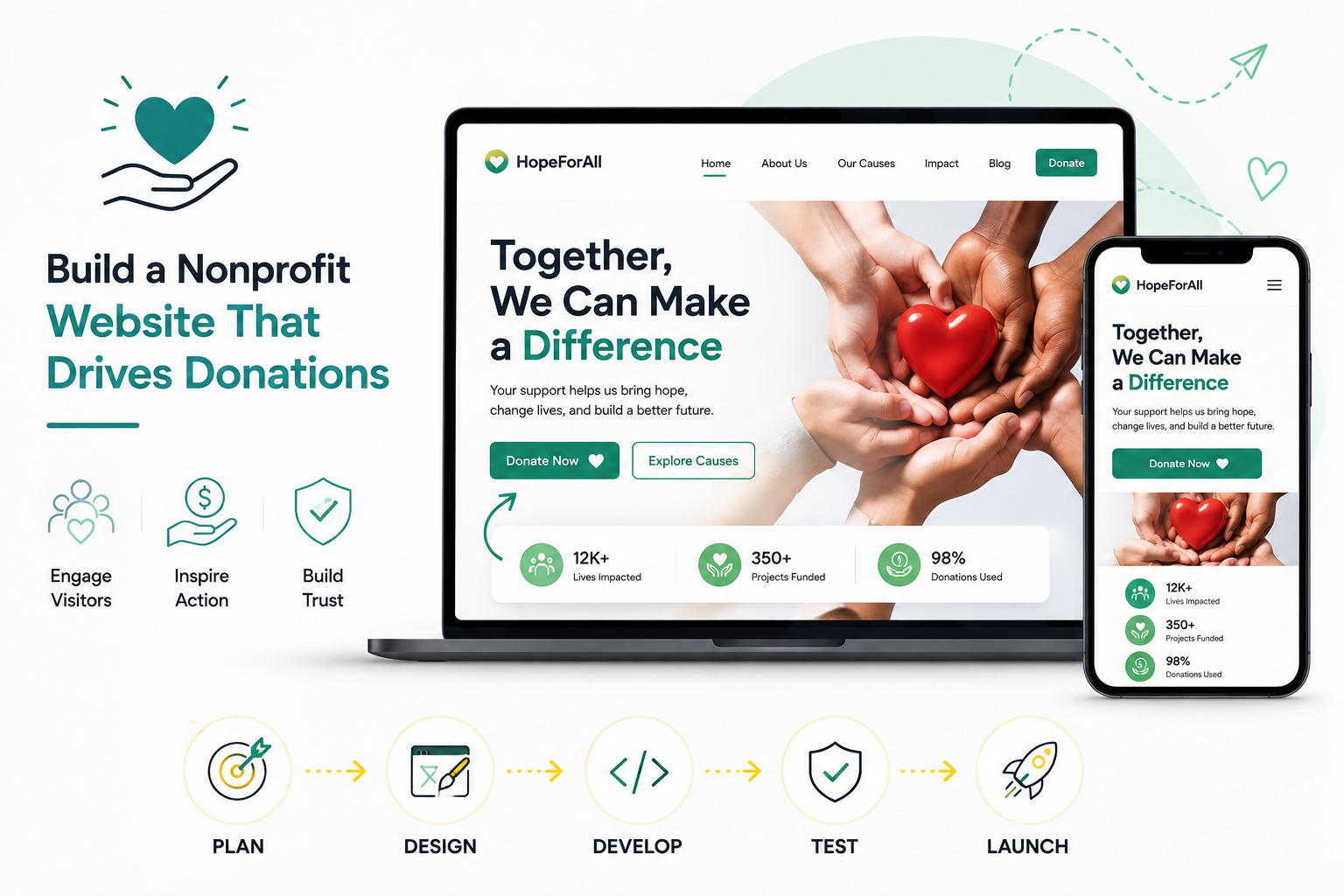
A nonprofit organisation exists to create change. Whether that means funding medical research, protecting the environment, supporting vulnerable communities, or advocating for policy reform, the mission is what drives everything. But a mission without visibility is a mission without momentum. In today's digital landscape, a nonprofit website is the single most important tool an organisation has for communicating its cause, building credibility with donors, and converting the interest of supporters into real funding and action.
Most potential donors research a nonprofit online before committing any money. They want to understand what the organisation does, how donations are used, what impact has already been achieved, and whether the organisation is credible and accountable. A weak website fails all of these tests before a single word of content is read. A strong nonprofit website answers every one of these questions clearly and guides visitors naturally toward donating, volunteering, or spreading the word.
This guide covers every stage of building a nonprofit website that performs, from defining your audience and planning the structure through to the content, donation functionality, SEO, and ongoing improvements that keep supporters engaged and giving over time.
Step 1: Define Your Audience and Their Motivations
Nonprofit websites serve multiple distinct audiences simultaneously, and understanding each one is essential before a single page is designed. Individual donors who give personally motivated gifts behave differently from corporate sponsors looking for partnership opportunities. Volunteers searching for hands-on involvement need different information than grant-making foundations evaluating organisational credibility. A nonprofit website that tries to speak to all of these audiences with identical messaging ends up speaking clearly to none of them.
Understanding your primary audience shapes every decision about the site's structure, content, and calls to action. An organisation focused on individual giving needs emotional storytelling, simple donation flows, and impact reporting front and centre. One that relies heavily on institutional funding needs rigorous programme documentation, financial transparency, and governance credentials displayed prominently. Most nonprofits serve a mix of both, which means the architecture needs to serve each audience without creating confusion or friction for either.
Step 2: Plan Your Website Structure
A nonprofit website needs a clear and logical page structure that guides different visitors toward the actions that matter most to the organisation. The most important pages a nonprofit site requires include a homepage that communicates the mission immediately and compels visitors to explore further, an about page that covers the organisation's story, leadership, values, and governance, a programmes or work page that explains what the organisation does and how it creates impact, an impact page or section backed by real data and stories, a donation page with a frictionless giving process, a volunteer or get involved page for non-monetary supporters, a news or blog section for updates and storytelling, and a contact page that makes it easy for donors and partners to reach the right person.
The navigation should reflect the most important journeys a visitor is likely to take. Donate and Get Involved should be accessible from every page, not buried in a menu dropdown. The homepage should function as an immediate orientation tool that communicates what the organisation does, why it matters, and what a visitor can do to help, within the first few seconds of arriving.
Step 3: Choose the Right Technology
The technology stack that powers a nonprofit website needs to balance performance, ease of content management, and long-term cost efficiency. Nonprofits often have lean internal teams and limited technical resources, which means the platform needs to be reliable and manageable without requiring ongoing developer support for routine content updates.
Building on React and Next.js with a headless CMS gives nonprofits the best of both worlds. The frontend delivers fast, fully optimised pages that rank well in search and load quickly on any device, while the CMS gives non-technical staff a simple interface for updating content, publishing stories, and posting campaign updates without touching any code. Server-side rendering ensures every page is fully indexable by search engines, which is critical for the organic visibility that helps nonprofits reduce their dependence on paid advertising. The result is a site that performs like a professional digital product and operates like a manageable internal tool.
Step 4: Build a Donation Experience That Converts
The donation flow is the most commercially critical part of a nonprofit website, and it deserves the same level of design and engineering attention as any other conversion-critical element on a commercial site. A donation page that is slow, confusing, or visually inconsistent with the rest of the site creates doubt at exactly the moment a visitor is ready to commit. That doubt translates directly into lost donations.
An effective donation page offers a simple and fast form with pre-set donation amounts alongside a custom amount option, gives donors the choice between one-time and recurring giving, provides reassurance through security indicators and transparent information about how funds are used, and completes in as few steps as possible. Recurring giving options are particularly valuable because they convert one-time supporters into reliable monthly contributors, which provides the predictable revenue that allows nonprofits to plan and operate effectively.
Platforms like Stripe, PayPal Giving Fund, and dedicated nonprofit payment processors like Donorbox can be integrated into a custom- built site to handle payment processing securely while maintaining full design consistency across the donation experience. This approach gives you the security and reliability of established payment infrastructure with none of the visual disruption that comes from redirecting donors to a third-party branded page.
Step 5: Lead With Stories and Impact
Donors give to people and outcomes, not to organisations. The content strategy of a nonprofit website needs to reflect this by leading with human stories and concrete impact data rather than organisational descriptions and programme lists. A story about a specific individual whose life was changed by the organisation's work is exponentially more persuasive than a paragraph explaining what the programme does in general terms.
Impact reporting gives donors the evidence they need to justify continued giving. Statistics presented visually, progress updates tied to specific campaigns, and before-and-after narratives from beneficiaries all serve as powerful proof points that the organisation does what it says and uses donations responsibly. Publishing annual impact reports as accessible web content rather than downloadable PDFs makes this evidence more visible and more likely to be found by new visitors through organic search.
Step 6: Design for Trust at Every Touchpoint
Trust is the foundation of every donation decision. Visitors who do not trust a nonprofit will not give to it, regardless of how compelling the cause is or how professional the site looks. Building trust through the design and content of a nonprofit website requires deliberate attention to the signals that matter most to donors.
Charity registration numbers and regulatory credentials should be displayed clearly, typically in the footer and on the about page. Financial transparency through published accounts or annual reports demonstrates accountability to donors and funders. Named leadership and board members with photographs humanise the organisation and confirm that real, accountable people are responsible for how donations are used. Testimonials from beneficiaries, partner organisations, and long-term donors provide social proof that the organisation has a track record worth supporting.
The visual design of the site also contributes significantly to perceived trust. A clean, professional, and well-maintained site signals that the organisation is competent and takes its digital presence seriously. Outdated design, broken elements, and inconsistent branding undermine credibility even when the underlying work of the organisation is exceptional.
Step 7: Optimize for Search Engines
Organic search is one of the most cost-effective acquisition channels available to nonprofits, because every visitor who finds the site through Google represents an interested supporter reached without advertising spend. Investing in SEO reduces long-term dependence on paid promotion and builds a sustainable source of new supporters month after month.
Nonprofit SEO operates at two levels. Programme and cause pages target the informational queries that people search when they are interested in a topic and looking for organisations working on it. Blog and news content targets the broader long-tail queries related to the cause that bring early-stage readers into contact with the organisation for the first time. Both levels work together to build topical authority in the cause area the nonprofit operates in, which compounds over time as more content is published and more pages begin to rank.
Technical SEO matters equally. Page speed, mobile performance, structured data markup for nonprofit organisations, and a clean internal linking structure all contribute to how well individual pages rank and how efficiently Google crawls the site. A technically sound site gives well-written content the best possible chance of reaching the audience it was written for.
Step 8: Enable Volunteering and Community Involvement
Not every supporter is in a position to donate money, but many are willing to contribute time, skills, or connections. A nonprofit website that only asks for financial contributions misses a significant portion of the people who want to help. A dedicated Get Involved section that explains volunteering opportunities, skills-based contribution options, and community events gives non-donors a clear and accessible entry point into the organisation.
Volunteer sign-up forms should be simple and fast to complete. Explaining what the volunteer experience involves, what time commitment is expected, and what impact volunteers make removes the uncertainty that prevents interested people from taking the next step. Volunteers who have a positive experience with the organisation often become financial donors over time, making volunteer recruitment a valuable long-term giving strategy as well as an operational one.
Step 9: Monitor Performance and Improve Continuously
A nonprofit website is not a finished product after launch. It requires consistent attention to maintain its effectiveness and improve its performance over time. Tracking which pages generate the most donation conversions, where visitors drop off in the donation flow, which content attracts the most organic traffic, and how different audiences behave on the site provides the data needed to make improvements that actually move the numbers that matter.
Regular content updates keep the site current and give returning supporters a reason to come back. Campaign pages for specific fundraising drives should be created, promoted, and retired in a planned cycle that aligns with the organisation's fundraising calendar. And technical audits ensure the donation flow, form submissions, and overall site performance remain at the standard that both users and search engines expect.
How We Work
At Munix Studio, every nonprofit website project begins with a discovery phase where we take the time to understand your cause, your audience, your fundraising goals, and the specific outcomes you need the site to deliver. We do not apply a template and call it done. We plan the architecture, map the donor journeys, and define the content strategy before a single line of code is written.
From there, our design team builds a visual identity and page structure that reflects your mission and speaks clearly to your supporters. Our development team builds the site on a modern, performant stack with donation integration, CMS access for your team, and SEO built in from the start. We test everything rigorously before launch and remain available for ongoing support as your organisation and digital presence grow together.
Build Your Nonprofit Website With Munix Studio
At Munix Studio we design and build nonprofit websites that communicate your mission with clarity, convert visitors into donors and volunteers, and rank organically for the cause-related searches your audience is already making. Every project is built around your specific goals, your supporters, and the impact you are working to create.
Website Development — Custom nonprofit websites built on React and Next.js with donation integration, CMS access, and performance optimized from day one.
UI/UX Design — Mission-first design that builds immediate trust with donors and guides every visitor clearly toward taking action.
SEO Optimization — Cause-specific SEO that gets your nonprofit ranking organically for the searches your ideal supporters are already making.
App Development — Mobile applications for nonprofits that need donation functionality, volunteer management, and supporter engagement in a native app experience.
Maintenance and Support — Ongoing content updates, donation flow monitoring, and technical support to keep your nonprofit website performing at its best year round.
Frequently Asked Questions
Ready to Get Started?
Website Development
Custom nonprofit websites built on React and Next.js with donation integration, CMS access for your team, and SEO foundations built in from the very first page.
Explore Website DevelopmentUI/UX Design
Mission-first design that builds immediate credibility with donors, communicates your cause clearly, and guides every visitor toward taking meaningful action.
Explore UI/UX DesignSEO Optimization
Cause-specific SEO strategy that gets your nonprofit website ranking organically for the searches your ideal supporters and donors are already making.
Explore SEO OptimizationApp Development
Mobile applications for nonprofits that need donation functionality, volunteer management, and community engagement tools in a native app experience alongside their website.
Explore App DevelopmentMaintenance and Support
Ongoing content updates, donation flow monitoring, and performance support to keep your nonprofit website converting visitors into supporters throughout the year.
Explore Maintenance and SupportRelated Articles
What is Website Development? The Complete Guide for Beginners
How Are Modern Websites Built in 2026?
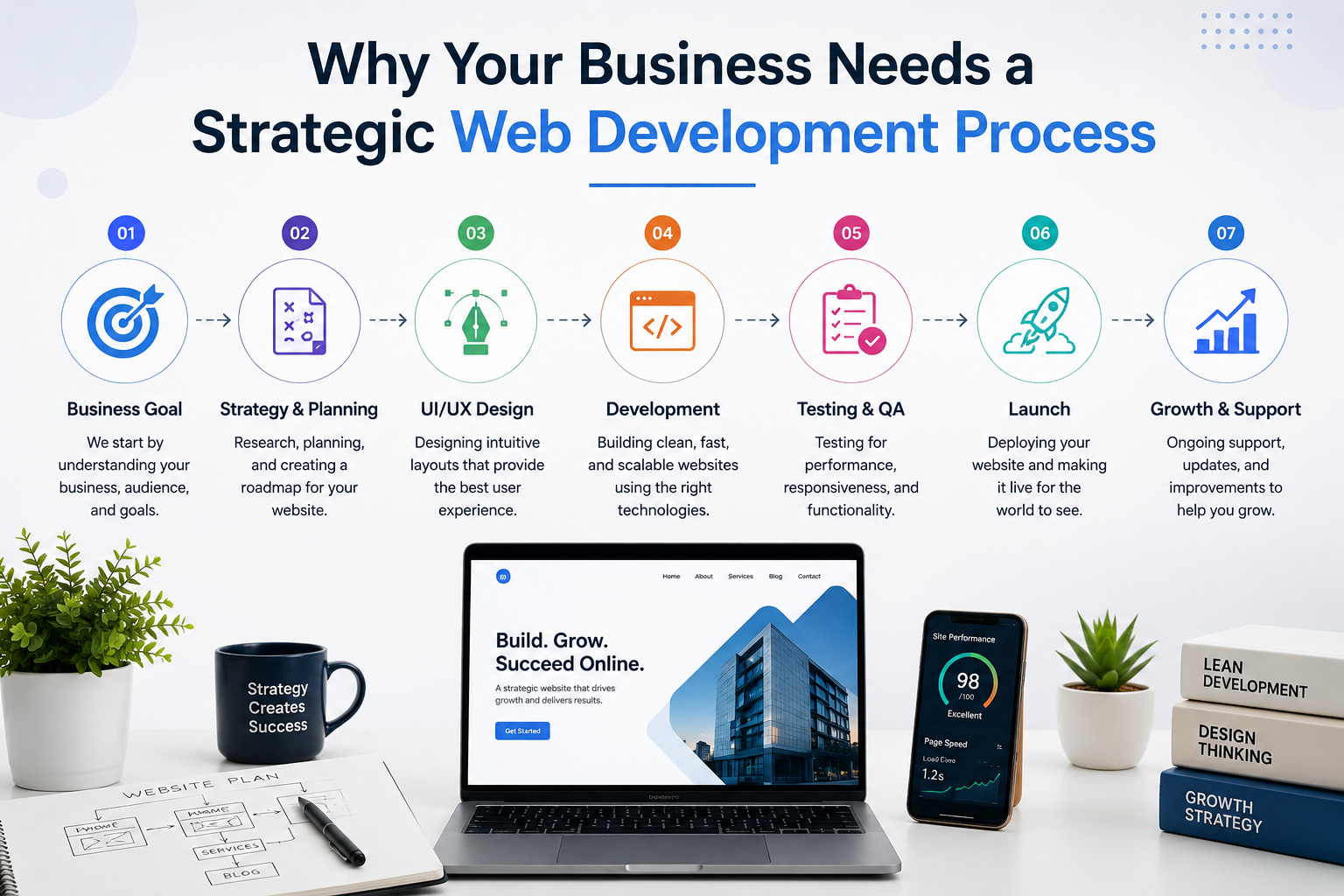
Website Development Process & Life Cycle : Complete Guide
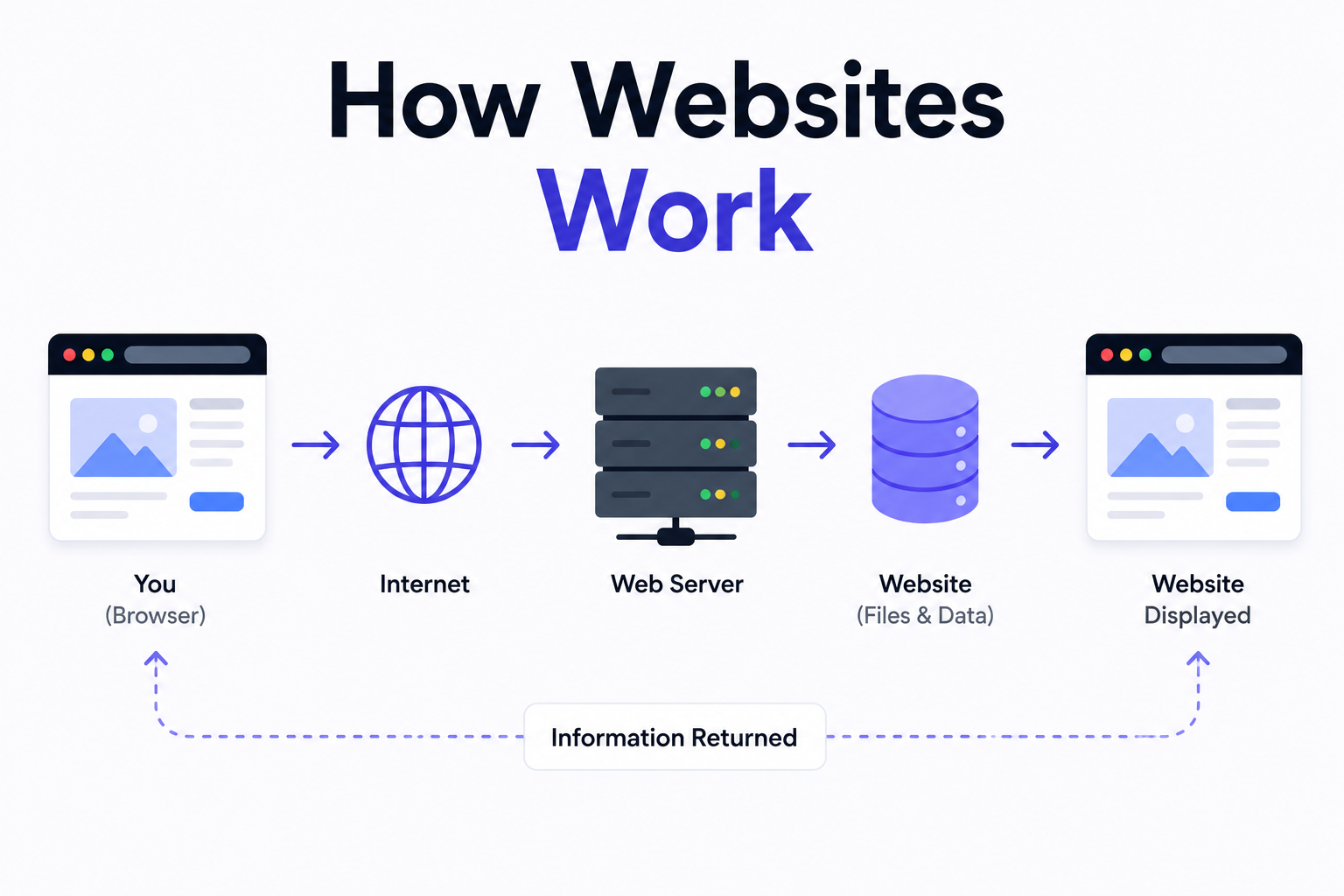
How Websites Work: DNS, Servers, Browsers
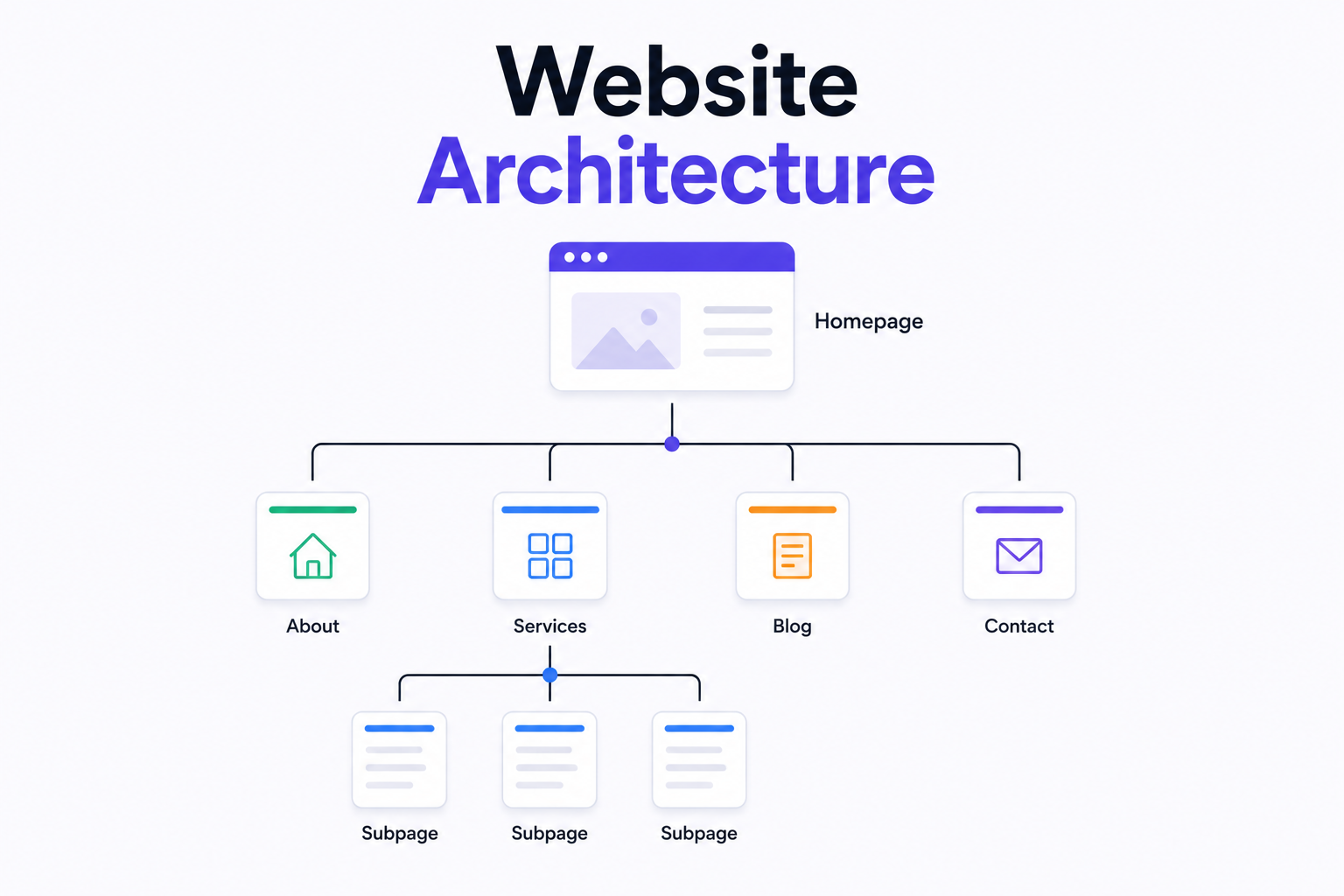
What is Website Architecture? Best Practices