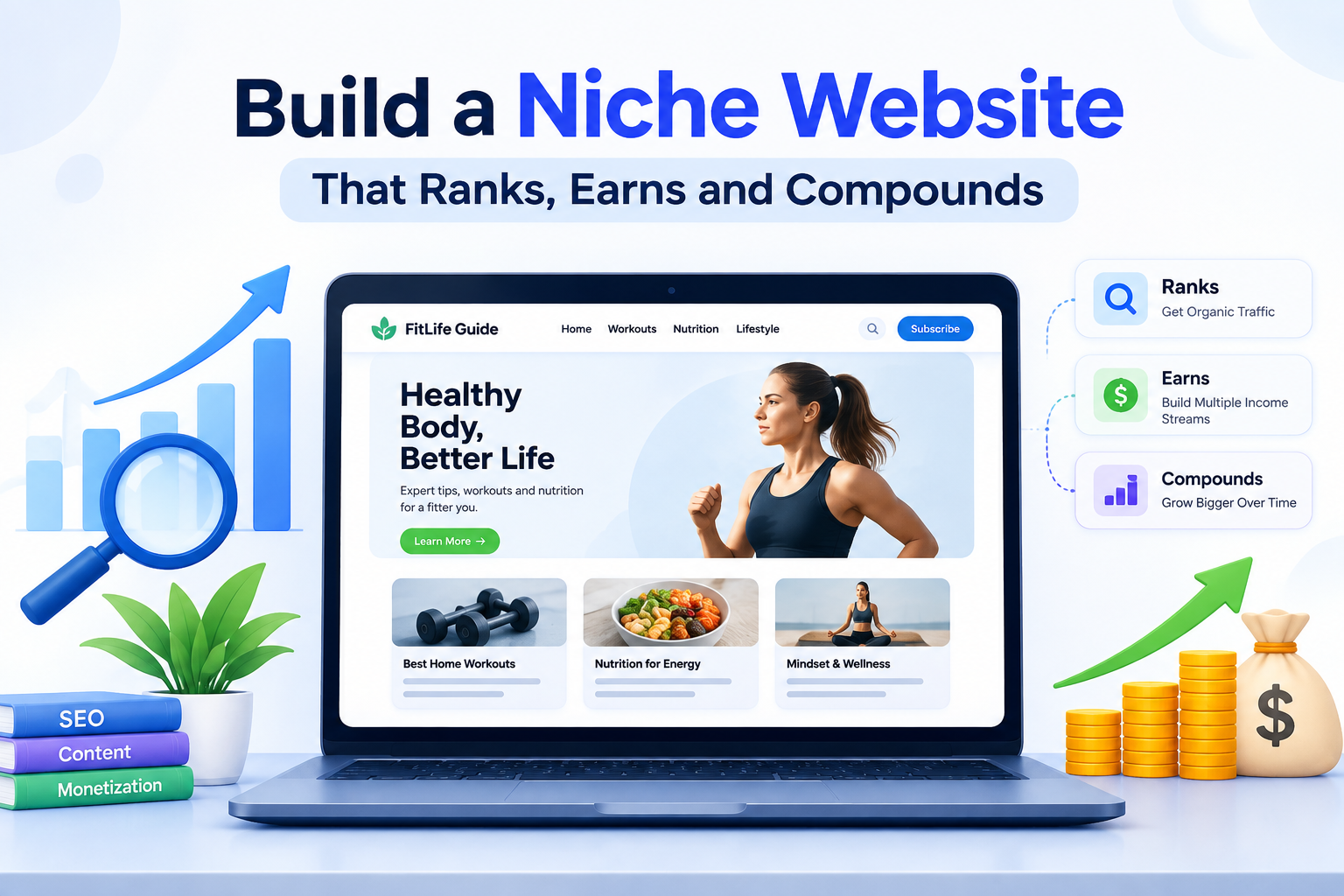
What Is a Niche Website and Why Build One?
A niche website is a content-driven web property focused on a specific, well-defined topic, audience, or interest area rather than trying to cover a broad general subject. Instead of writing about fitness in general, a niche website might cover strength training for women over forty. Instead of covering personal finance, it might focus exclusively on financial independence for teachers. Instead of reviewing all consumer electronics, it might specialise in mechanical keyboards for programmers. The narrower and more precisely defined the focus, the easier it is to become the authoritative source for that audience.
Niche websites are one of the most accessible and scalable digital business models available because they combine low startup costs with compounding returns. A well-executed niche website generates organic search traffic that grows month over month as more content is published and more authority is accumulated in the topic area. That traffic can be monetised through multiple channels simultaneously, including affiliate commissions, display advertising, digital product sales, memberships, and sponsored content. And because the authority is domain-specific, it is significantly harder for competitors to displace than a generalist site that has no particular depth in any area.
Building a niche website that achieves this position requires strategic niche selection, a content architecture that search engines can understand and reward, technically sound implementation, and the editorial consistency to publish genuinely useful content over an extended period. This guide covers every stage of that process from the initial niche selection decision through to the technical build, SEO strategy, monetisation, and ongoing growth.
Step 1: Select a Niche With the Right Characteristics
Niche selection is the most consequential decision in the entire niche website project. A well-chosen niche makes every subsequent decision easier and gives the site a realistic path to authority and revenue. A poorly chosen niche, one that is too broad, too competitive, too small, or insufficiently monetisable, produces years of effort with limited return regardless of how well the site is built or how consistently content is published. Spending significant time on niche validation before a single page is written is the highest-return investment in the project.
Characteristic What to Look For Red Flags Search demand Consistent monthly search volume across multiple related queries Negligible volume or purely trend-dependent spikes Competition level Existing sites with weak content, low authority, or poor UX Top results dominated by high-DA publishers and media brands Monetisation potential Affiliate programs, products, or services audiences actively buy No clear commercial intent or low-value affiliate options Content depth possible Enough subtopics to publish 50 to 200 articles without repetition Topic exhausted in under 20 articles Audience specificity Clearly defined reader with specific needs and problems Vague audience that could be anyone Creator expertise Genuine knowledge or strong interest enabling authoritative content No connection to the topic, purely opportunistic Evergreen potential Topics that remain relevant and searchable year after year Highly trend-dependent with rapid obsolescence YMYL risk Low to medium YMYL sensitivity manageable with quality content High YMYL (medical, legal, financial) requiring verified credentials
YMYL stands for Your Money or Your Life, a classification Google uses for topics where low-quality or inaccurate content could directly harm readers' health, finances, or safety. Medical, legal, and financial niches fall into this category and face significantly higher quality thresholds in Google's ranking evaluation. New niche sites without established E-E-A-T signals (Experience, Expertise, Authoritativeness, and Trustworthiness) face a much harder path to ranking in high-YMYL niches than in lower-sensitivity categories.
Step 2: Validate the Niche Before Building
Selecting a niche based on intuition alone is a significant risk. Validation using actual search data, competitive analysis, and monetisation research before investing in a domain, hosting, and content production is the practice that separates niche sites that achieve profitability from those that stall after six months of effort because the fundamentals were never confirmed.
Keyword research validation — Use Ahrefs, Semrush, or a free alternative like Ubersuggest to confirm that the niche contains a sufficient volume of searchable queries across multiple intent types. Look for at least thirty to fifty distinct keyword opportunities with meaningful search volume before committing. The keyword research at this stage does not need to be exhaustive but should be sufficient to confirm that there is a real and sustainable search audience for the topic.
Competitive gap analysis — Search for the top ten keywords in the niche and analyse the sites that are currently ranking. Look at their domain authority, content depth, publishing frequency, and backlink profiles. Identify the specific weaknesses in the existing coverage: outdated information, thin content, poor user experience, missing subtopics, or a failure to serve the specific audience the niche site will target. Those gaps are the opportunities.
Monetisation confirmation — Before committing to the niche, confirm that viable monetisation paths exist. Search for affiliate programs in the niche on platforms like ShareASale, Impact, and Amazon Associates. Check display advertising RPM estimates for the topic category on publisher forums. Identify whether the audience buys digital products, courses, memberships, or physical goods that could support a product line later.
Content feasibility check — Generate a preliminary content outline of fifty to one hundred article topics within the niche without repetition. If this exercise is difficult or produces topics that feel forced, the niche may be too narrow to sustain a content operation at the volume required for meaningful organic search growth.
Step 3: Choose a Domain and Set Up Hosting
The domain name of a niche website contributes less to SEO than it did a decade ago, but it still matters for brand identity, memorability, and the first impression it makes on visitors arriving from search results. A domain that clearly reflects the topic area without being so keyword-stuffed that it looks spammy strikes the right balance. A .com extension is strongly preferable for English-language sites targeting a global or US audience. For country-specific niche sites, the relevant ccTLD provides an additional local ranking signal.
Domain Consideration Recommended Approach Avoid Length Short, memorable, under 15 characters ideally Long hyphenated keyword strings Brandability Something that sounds like a brand, not a keyword Exact match domains that look spammy History New registration with clean history Expired domains with spam or penalty history Extension .com for global, ccTLD for country-specific Obscure TLDs with no established trust Expandability Name that allows topic expansion without rebrand Names that lock the site into a single subtopic
For hosting, a niche website built on Next.js and deployed on Vercel provides the page speed, global CDN delivery, and technical SEO foundations that give the content the best possible chance of ranking. Page speed is a confirmed ranking signal and a direct conversion factor. A niche website that loads slowly loses a significant proportion of its organic traffic before those visitors read a single word of the content it took considerable effort to produce.
Step 4: Build a Content Architecture Before Publishing
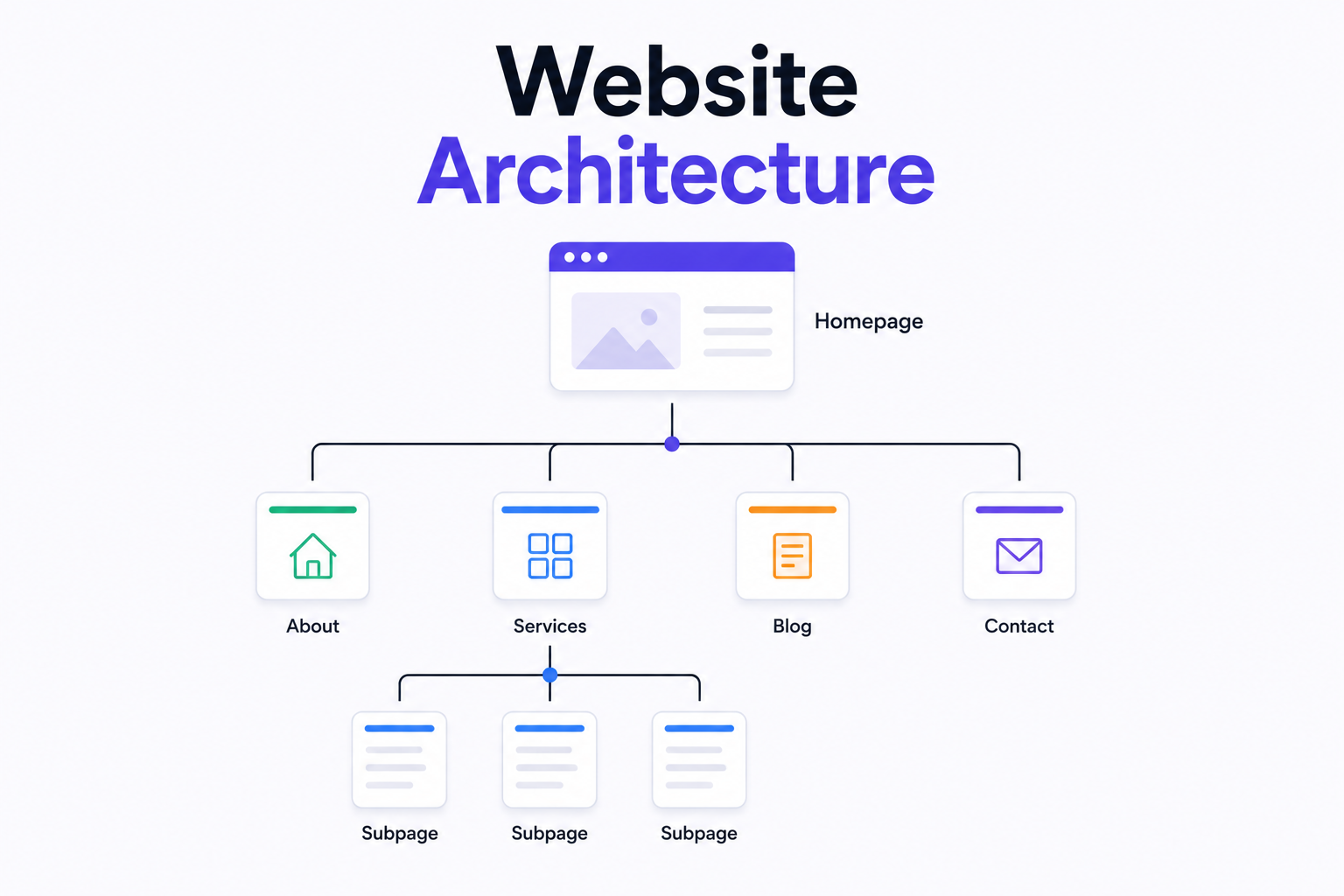
Content architecture is the structural plan that defines how the site's topics relate to each other, which pages target which queries, and how the internal linking connects them in a way that builds topical authority efficiently. Publishing content without a content architecture produces a collection of disconnected articles that individually rank for low-volume queries but collectively fail to signal to search engines that the site is an authoritative source on the topic. With a content architecture, the same volume of content compounds into authority that lifts every page's ranking potential.
The most effective content architecture for niche websites is the topic cluster model. Each topic cluster consists of a pillar page that comprehensively covers a broad topic at a high level and a set of cluster pages that cover specific subtopics in depth, each linking back to the pillar and to related cluster pages. The pillar page targets a high-volume head keyword. The cluster pages target more specific long-tail queries that demonstrate depth in the subtopic and collectively reinforce the topical authority of the pillar.
Content Type Purpose Target Keyword Type Typical Length Pillar page Broad topic authority hub High-volume head keyword 3,000 to 6,000 words Cluster article Deep coverage of a specific subtopic Long-tail informational query 1,500 to 3,000 words Comparison page Captures versus and alternative queries Commercial investigation intent 2,000 to 4,000 words Best-of roundup Affiliate and commercial review content Best X for Y queries 2,500 to 5,000 words Individual review Deep evaluation of a specific product or service Brand name plus review 1,500 to 3,000 words How-to guide Instructional content serving process queries How to X queries 1,000 to 2,500 words Definition or explainer Informational content for early-funnel awareness What is X queries 800 to 1,500 words
Step 5: Choose the Right Technology Stack
The technology stack for a niche website needs to prioritise page speed, SEO capability, ease of content management for ongoing publishing, and long-term maintainability. The stack should not require significant developer involvement for routine content operations once the site is live.
Layer Option A Option B Best For Framework Next.js (recommended) Astro Next.js for dynamic features, Astro for pure content CMS Sanity (headless) Contentful or Prismic Sanity for flexibility, Contentful for structured editorial teams Hosting Vercel Netlify Both excellent, Vercel preferred for Next.js Analytics Google Analytics 4 Plausible or Fathom GA4 for depth, Plausible for privacy-first simplicity Email ConvertKit Beehiiv or MailerLite ConvertKit for automation, Beehiiv for newsletter-first Affiliate tracking Pretty Links or custom redirects Lasso Lasso for affiliate-heavy sites with product displays Schema markup Custom implementation in Next.js JSON-LD via metadata API Custom implementation gives full control per page type
Niche Website Builders: No-Code and Beginner-Friendly Alternatives
The technology stack described above is the right choice for a niche website intended to scale into a serious, long-term digital asset with custom functionality and full technical control. It is not the right starting point for everyone. A significant number of niche website builders — particularly those testing a niche before committing significant budget, or those without any development background — are better served starting on a no-code or templated platform, then migrating to a custom build later if the site proves its traffic and revenue potential.
WordPress remains the most practical no-code starting point for a niche website, and it is not a downgrade so much as a different tradeoff: faster to launch, cheaper to run, and manageable without any coding knowledge, in exchange for less granular control over performance than a custom Next.js build offers. Paired with a lightweight, SEO-focused theme such as GeneratePress, Kadence, or Astra, and plugins purpose-built for content and affiliate sites — Rank Math or Yoast for on-page SEO, WP Product Review or Lasso for structured comparison and review content — WordPress can support the exact topic-cluster content architecture described in Step 4 without requiring a developer at any point.
Wix and Squarespace sit a step further toward simplicity, trading SEO flexibility and content scalability for an even lower technical barrier. Both are reasonable for a niche website testing a topic with a small initial content library, but neither handles the volume of interlinked, cluster-based content that a mature niche site eventually needs as gracefully as WordPress does, and migrating away from either platform later is more disruptive than migrating away from WordPress.
Step 6: Produce Content That Genuinely Earns Its Ranking
Content quality is the single most important ranking factor for a niche website, and it has become more so as Google's Helpful Content updates have progressively reduced the ranking potential of thin, generic, and AI-generated content that provides no genuine value beyond what is already available from a hundred competing pages. Content that ranks in competitive niches today is content that provides something the searcher cannot easily find anywhere else.
The characteristics of content that earns and holds rankings in a competitive niche are specific and consistent across categories. It is written by or with the involvement of someone with genuine experience in the topic, not just research from other websites. It covers the topic more thoroughly than competing pages by addressing the questions readers actually have rather than the questions that are easiest to answer. It is updated when information changes rather than left to become stale. And it provides a perspective, recommendation, or conclusion rather than presenting all sides neutrally and leaving the reader without a clear takeaway.
First-hand experience — Google's E-E-A-T framework explicitly includes Experience as a quality signal. Content written from personal use of products, direct involvement in a topic, or lived experience in the subject area consistently outperforms content assembled from secondary research. For product reviews and comparisons, this means actually using the product. For how-to guides, it means having genuinely done the thing being described.
Original data and insights — Survey results, original research, data analysis, or unique perspectives that cannot be found elsewhere earn backlinks naturally, which are still one of the strongest ranking signals available. A single data-driven piece of original research can generate more backlinks than twenty generic informational articles.
Comprehensive coverage — Content that exhausts the topic, addressing every significant question a reader might have in a single well-organised page, reduces the need for readers to return to the search results for additional information. This pogo-sticking behaviour is a negative engagement signal. Content that keeps readers on the page is content that search engines continue to rank.
Clear authorship — Named authors with real credentials, professional biographies, and verifiable experience in the topic area contribute to the E-E-A-T signals that Google uses to evaluate content quality in many niches. Anonymous content is increasingly at a disadvantage relative to content from identifiable experts in the topic area.
Step 7: Execute On-Page SEO on Every Article
On-page SEO is the set of optimisations applied to each individual page that helps search engines understand what the page covers, which queries it should rank for, and how it relates to other pages on the site. Executing on-page SEO consistently across every article is one of the highest-leverage activities on a niche website because the cumulative effect of well-optimised pages compounds into significantly better site-wide ranking performance over time.
Element Best Practice Common Mistake Title tag Primary keyword near the start, under 60 characters, compelling to click Keyword stuffing or truncation in search results Meta description 160 characters, includes keyword naturally, clear value proposition Left empty or duplicated across pages H1 tag One per page, contains primary keyword, matches search intent Multiple H1s or H1 that does not match title tag URL structure Short, descriptive, keyword-inclusive, no stop words Auto-generated slugs with dates or random strings Internal links 3 to 5 relevant internal links per article with descriptive anchor text Generic anchor text like click here or read more Image alt text Descriptive, keyword-relevant where natural, not keyword stuffed Empty alt attributes or generic filenames Schema markup Article schema with author, date, and breadcrumb on all posts No schema or incorrect implementation Content freshness Updated date reflects genuine content update, not cosmetic refresh Changing the date without updating content
Step 8: Build Backlinks Through Genuine Value
Backlinks remain one of the most powerful ranking signals available, and for a new niche website without an established domain authority, acquiring quality backlinks is the primary lever for accelerating ranking growth beyond what content quality alone can achieve. The most sustainable link building strategies for niche websites are those that earn links by creating genuine value rather than manipulating link placement through paid schemes or low-quality outreach.
Original research and data — Publishing surveys, studies, or original data analysis that other writers in the niche need to reference generates editorial backlinks from relevant, high-authority sources without active outreach. A single well-executed data piece can generate dozens of high-quality backlinks over its lifetime.
Digital PR — Pitching genuinely newsworthy angles, unique data points, or expert commentary on trending topics in the niche to journalists and newsletter writers who cover the category generates editorial coverage and backlinks from authoritative publications without paying for placement.
Guest publishing — Writing substantive guest articles for established publications in or adjacent to the niche, with a natural link back to relevant content on the niche site, builds authority steadily without the risk profile of link exchange schemes.
Resource link building — Identifying resource pages, link roundups, and curated lists in the niche where the site's best content would genuinely be a useful addition and reaching out to the page owners with a specific and relevant pitch converts at a higher rate than generic outreach and produces more relevant links.
Community participation — Becoming a genuinely useful contributor to the communities where the niche audience gathers, such as subreddits, forums, Facebook groups, and Discord servers, builds brand recognition and generates referral traffic that often converts into natural backlinks from community members who share useful content.
Step 9: Monetise Through Multiple Complementary Channels
A niche website that depends on a single revenue stream is vulnerable to changes in that stream that are beyond the owner's control. Affiliate program terms change. Display advertising rates fluctuate significantly with economic cycles. A Google algorithm update can reduce organic traffic, which directly reduces ad revenue, within days. Building multiple complementary revenue streams that are not all correlated with the same traffic source or commercial relationship is the practice that converts a niche website from a fragile income source into a resilient digital asset.
Revenue Stream How It Works Traffic Required Margin Affiliate commissions Earn percentage of referred sales Medium — 10k+ monthly sessions Very high Display advertising RPM-based ad network revenue High — 50k+ for premium networks Medium Digital products Ebooks, templates, courses, tools Low — even 1k sessions can convert Very high Membership or subscription Recurring access to premium content Medium with highly engaged audience High, recurring Sponsored content Paid articles or product features Medium with niche-relevant audience High Email newsletter Sponsored sends to subscriber list Depends on list size, not traffic High with engaged list Consulting or services Offer expertise built through the site Very low — even small audiences convert Very high
The recommended sequencing for most niche websites is to implement affiliate marketing from the first piece of commercial content published, add display advertising once the traffic threshold for a premium network like Mediavine or Raptive is reached, and introduce a digital product or membership once the email list has grown to a size where a launch would be commercially meaningful. This sequence builds revenue at each growth stage without requiring significant additional infrastructure investment until the audience has demonstrated its value.
Step 10: Build an Email List From Day One
An email list is the only audience asset on a niche website that is fully owned and immune to algorithm changes. Organic search traffic can disappear with a Google update. Social media reach is subject to platform algorithm changes and policy shifts. An email list of people who have actively chosen to hear from the site is a direct communication channel that no third party can reduce or remove.
Starting list building from the first day of traffic is significantly more valuable than waiting until the site has significant traffic to implement it. Every visitor who does not subscribe and is not retargeted through email represents a lost relationship that cost traffic acquisition effort to create. A lead magnet that provides a specific, tangible piece of value relevant to the niche audience, such as a checklist, a template, a short guide, or a resource list, converts a significantly higher proportion of visitors into subscribers than a generic newsletter signup prompt. The email list then becomes the primary channel for new content promotion, product launches, and sponsored content monetisation as the site grows.
How We Work
At Munix Studio, every niche website project begins with a strategy phase where we validate the niche, plan the content architecture, define the monetisation model, and design the technical foundation before a single page is built. We treat the pre-build decisions as the most important investment in the project because the quality of those decisions determines the ceiling of everything the site can achieve.
Our development team builds niche websites on Next.js with a headless CMS for editorial publishing, structured data configured per content type, page speed optimised from day one, and email list integration built into the core design. Every niche site is delivered with a content architecture document, an on-page SEO template for the editorial team, and the technical foundations needed to scale from launch to a high-traffic, multi-revenue-stream digital asset.
Build Your Niche Website With Munix Studio
At Munix Studio we design and build niche websites on technically excellent foundations with content architectures engineered for topical authority, monetisation built in from day one, and the speed and SEO capability that gives well-written content the best possible chance of ranking and compounding. Every project is built around your niche, your audience, and the long-term asset value you are building.
Website Development — Custom niche websites built on Next.js with headless CMS, structured data, affiliate link management, email integration, and Core Web Vitals optimised from launch.
UI/UX Design — Content-first design that presents articles clearly, guides readers naturally toward affiliate links and email signup, and builds the visual trust that keeps audiences returning.
SEO Optimization — Niche SEO strategy covering content architecture planning, on-page optimisation templates, structured data implementation, and topical authority building across the full content cluster.
App Development — Companion tools, calculators, and interactive resources that extend the niche site's value proposition, generate backlinks naturally, and create additional monetisation opportunities.
Maintenance and Support — Ongoing content refresh, technical audits, Core Web Vitals monitoring, and affiliate link management to keep your niche website ranking, earning, and growing over time.
Frequently Asked Questions
Ready to Get Started?
Website Development
Custom niche websites built on Next.js with headless CMS, structured data, affiliate link management, email list integration, and Core Web Vitals optimised from the very first page.
Explore Website DevelopmentUI/UX Design
Content-first design that presents articles clearly, guides readers naturally toward affiliate links and email signup, and builds the visual trust that keeps niche audiences returning.
Explore UI/UX DesignSEO Optimization
Niche SEO strategy covering content architecture planning, on-page optimisation templates, structured data, and topical authority building across the full content cluster.
Explore SEO OptimizationApp Development
Companion tools, calculators, and interactive resources that extend the niche site's value proposition, earn backlinks naturally, and create additional monetisation opportunities.
Explore App DevelopmentMaintenance and Support
Ongoing content refresh, technical audits, Core Web Vitals monitoring, and affiliate link management to keep your niche website ranking, earning, and compounding over time.
Explore Maintenance and SupportRelated Articles
What is Website Development? The Complete Guide for Beginners
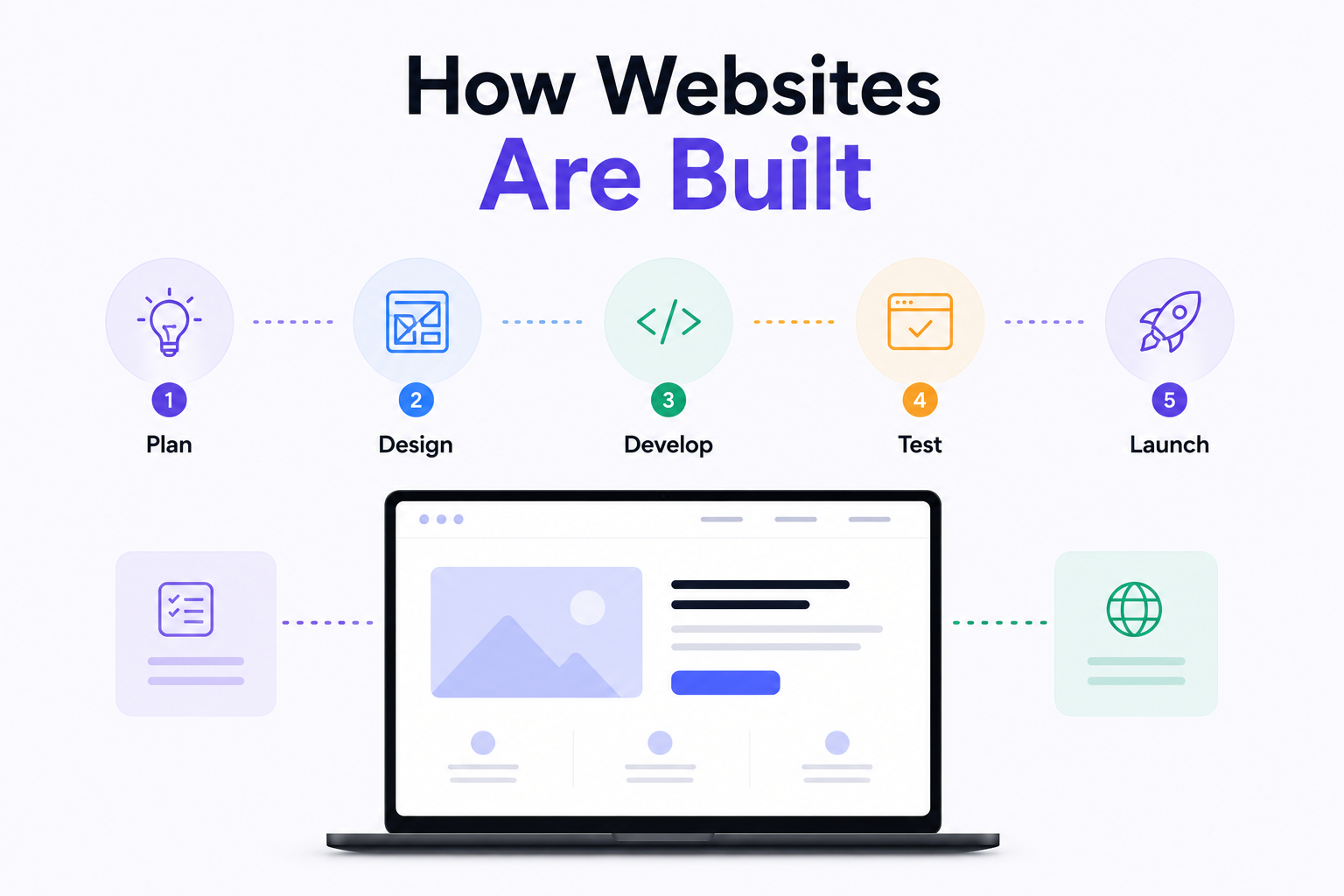
How Are Modern Websites Built in 2026?

Website Development Process & Life Cycle : Complete Guide
How Websites Work: DNS, Servers, Browsers
What is Website Architecture? Best Practices