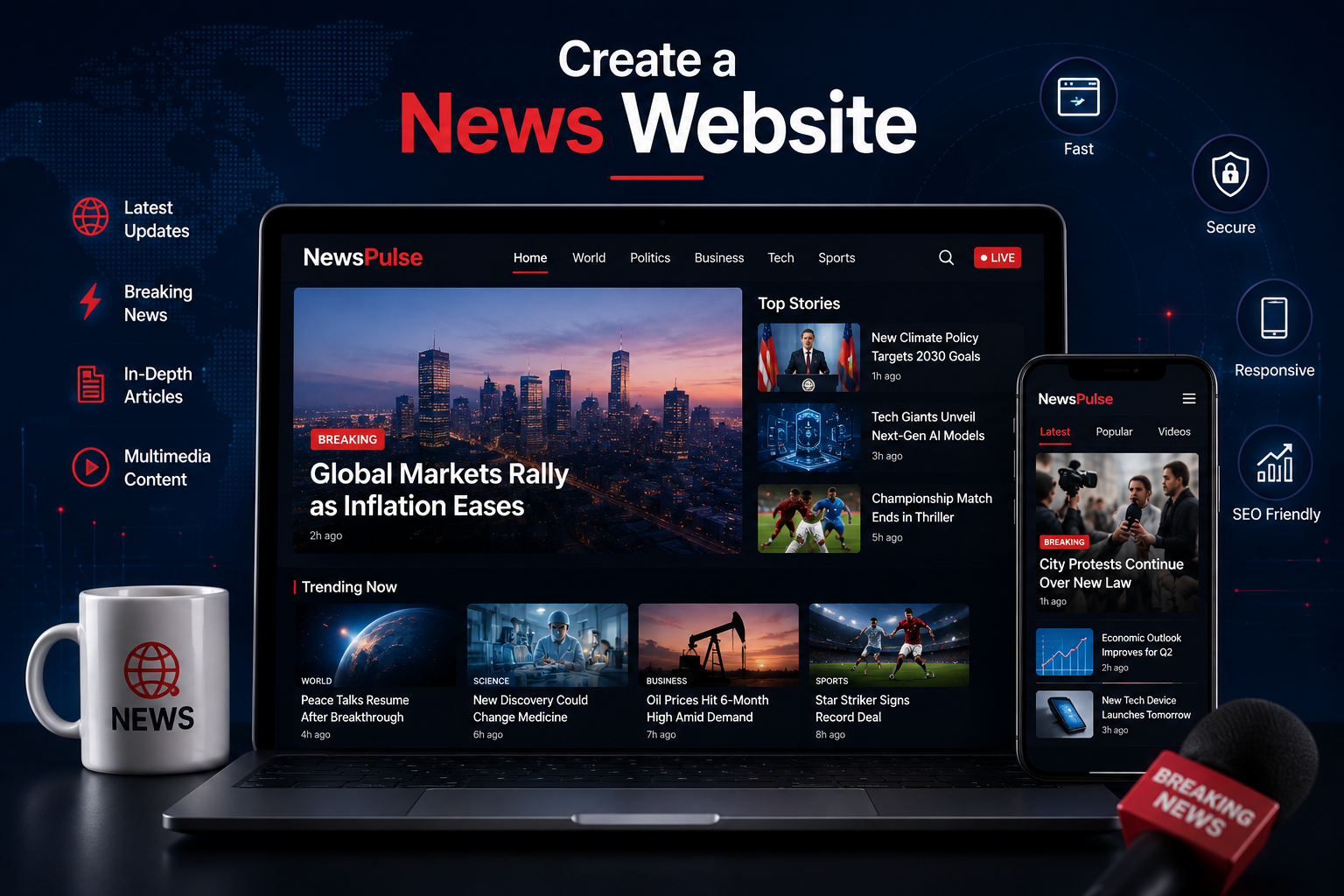
Building a news website is a fundamentally different challenge from building a portfolio or a business landing page. News platforms are high-frequency content environments where hundreds or thousands of articles are published, indexed, and accessed simultaneously. They demand a well-thought-out architecture, a reliable content management system, fast load times, and a clear editorial workflow. Getting any of these wrong does not just create a poor user experience — it can actively destroy your search rankings and reader retention before you've built an audience.
This guide walks through everything involved in news website development: from choosing the right technical foundation to designing the editorial interface, optimizing for speed, and building the monetization layer. Whether you are launching a local news outlet, a niche vertical publication, or a full-scale news portal, the core principles remain the same.
Understanding What a News Website Actually Needs
Most people underestimate the technical complexity of a news site. On the surface it looks simple: a homepage, some category pages, individual articles. In practice, a news website must handle high and unpredictable traffic volumes, especially when a story breaks. It needs a CMS that multiple editors and journalists can use simultaneously without conflicts. It requires a taxonomy system sophisticated enough to connect related stories, tag topics, surface trending content, and generate automatic category feeds.
Search engine optimization is not optional on a news platform — it is the primary distribution channel. Google News and Discover drive enormous referral traffic to publishers who meet the technical and editorial bar. That means implementing news sitemaps, structured data for articles, proper canonicalization, and fast Core Web Vitals scores. A slow news website is a dead news website from a traffic standpoint.
Beyond technical requirements, the design layer matters more than most new publishers realize. Readers decide within seconds whether a news site feels credible. Typography, visual hierarchy, image handling, and category navigation all contribute to that first impression. This is why investing in proper UI/UX design from the start pays off in reader retention and returning visitor rates.
Choosing the Right Technical Stack
The technical stack decision shapes everything that comes after it. There are broadly three approaches: using a traditional WordPress-based setup, adopting a headless CMS with a modern frontend framework, or building a fully custom system. Each has a different cost, flexibility, and performance profile.
WordPress vs Headless CMS vs Custom Development
WordPress powers a large share of online news publications, including major outlets, because it has a mature ecosystem of plugins, themes, and editorial tools. For small to medium publishers, it remains a practical option. The limitation is performance at scale: a heavily plugged WordPress site under breaking news traffic can buckle without significant server investment and caching infrastructure.
Headless CMS platforms like Sanity, Contentful, or Strapi decouple the content management layer from the frontend delivery layer. Your editors work in the CMS backend while your frontend, built in Next.js or a similar framework, fetches and renders content through an API. This architecture delivers significantly better performance because the frontend can be statically generated or server-rendered with fine-grained caching control. The tradeoff is higher initial development complexity and cost.
Custom development gives you full control over every aspect of the system. This is the right choice for news portals that need complex features like real-time updates, live blogging, user subscriptions, paywall logic, or deep editorial workflow management. It requires more upfront investment but eliminates the ongoing constraint of working within someone else's platform architecture.
Approach Best For Performance Scalability Cost WordPress Small to mid-size publications Moderate Limited without heavy optimization Low to Medium Headless CMS + Next.js Growing publishers, SEO-focused portals High Excellent Medium Custom Development Large portals, complex features Highest Unlimited High
Why Next.js Works Especially Well for News
Next.js has become a strong choice for news website development because it supports multiple rendering strategies within the same application. Evergreen articles can be statically generated at build time for maximum speed. Breaking news pages can use Incremental Static Regeneration to refresh content every few seconds without a full rebuild. Live blogs or real-time pages can be server-rendered on demand. This flexibility is rare in a single framework and directly addresses the varied content lifecycle of a news publication.
Paired with a headless CMS, Next.js also makes it straightforward to implement Google's recommended structured data for news articles, enabling eligibility for Top Stories carousel placement in search results — one of the highest-traffic positions in Google Search.
Core Features Every News Website Must Have
Feature planning for a news portal is not about adding everything you can think of. It is about identifying the minimum set of features that deliver a complete editorial and reader experience, then building them well rather than building everything poorly. The following features form the non-negotiable foundation of any serious news platform.
Category and Tag Architecture
News content must be organized so readers can navigate by topic, region, or format. A well-designed taxonomy uses categories for broad sections like Politics, Business, or Technology, and tags for specific topics, people, organizations, and events. Every tag and category page should be indexable by search engines and should aggregate related content automatically. This creates an internal linking structure that distributes SEO authority across the site and keeps readers engaged beyond the first article they click.
Article Templates and Rich Media Support
Not all news content is a standard text article. Modern news portals publish photo essays, video reports, live blogs, data-driven explainers, and long-form investigations alongside breaking news. Your CMS and frontend templates need to support all of these formats without forcing editors into awkward workarounds. Each format also benefits from its own structured data markup, which improves how the content appears in search results.
Search Functionality
On-site search is a retention tool as much as a navigation feature. Readers who cannot find older coverage leave. A good news site search indexes article content, filters by date and category, surfaces related articles, and returns results fast. For larger portals, integrating a dedicated search service like Elasticsearch or Algolia is significantly more capable than the default search built into most CMS platforms.
Newsletter and Notification Systems
Email newsletters remain one of the most valuable distribution channels in digital media. Direct subscribers are an audience you own, independent of algorithm changes on Google or social platforms. Building a newsletter signup flow into your news website from day one, connected to an email service provider, is one of the highest-return infrastructure decisions you can make. Push notifications via web push APIs can complement this for breaking news scenarios.
Author Profiles and Bylines
Google's E-E-A-T framework (Experience, Expertise, Authoritativeness, Trustworthiness) is particularly relevant to news content. Dedicated author profile pages with bios, credentials, and links to their published work help establish credibility with both readers and search engines. Author schema markup signals to Google that real, identifiable people stand behind the content, which matters increasingly for news-related queries.
News Website Architecture and Database Design
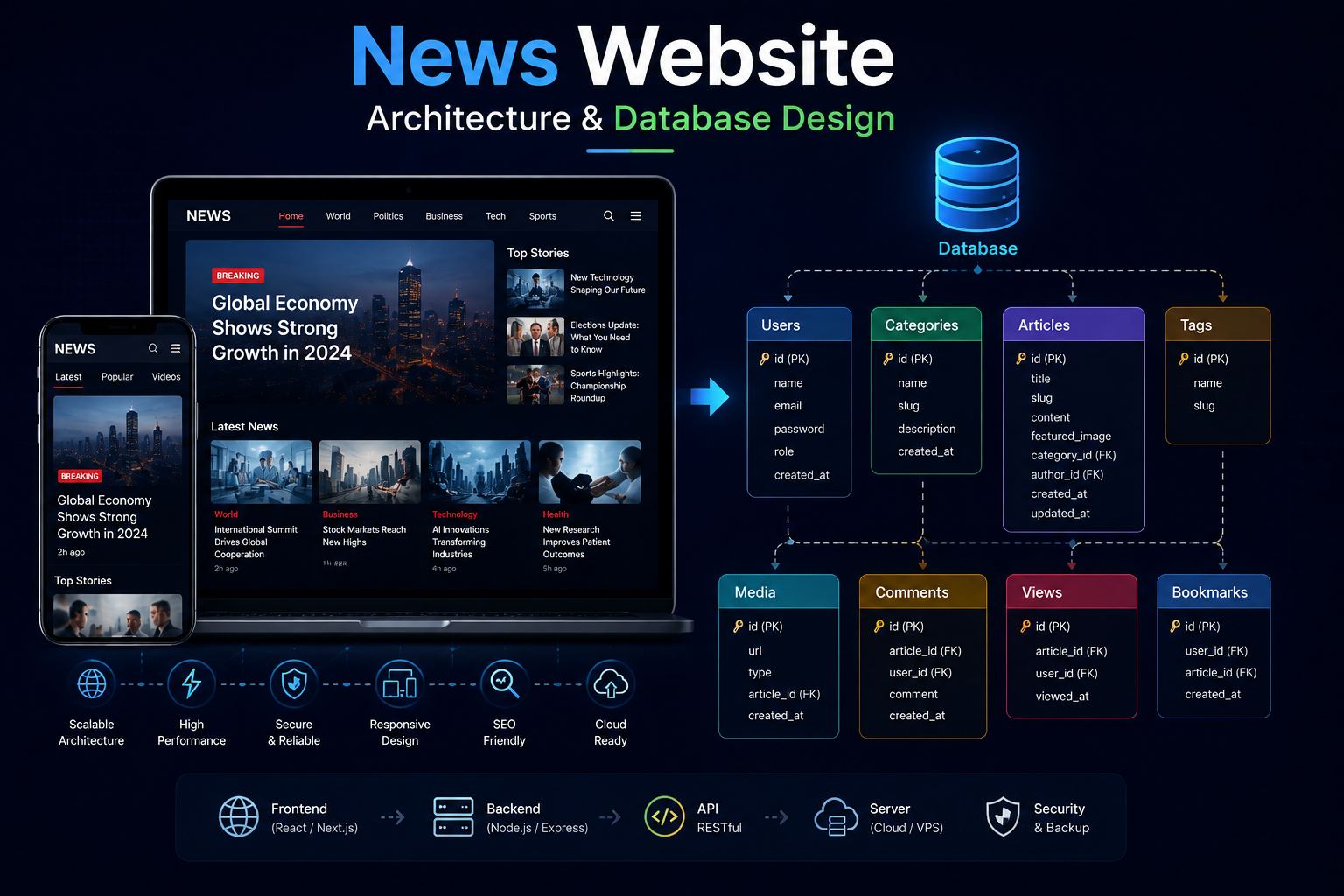
The backend architecture of a news portal must be designed for read-heavy workloads. Millions of article views generate far more read requests than write requests, so database design and caching strategies need to reflect this ratio. PostgreSQL is a solid relational database choice for structured content relationships, while a Redis caching layer can serve frequently accessed article data without hitting the database on every request.
Content delivery networks are non-negotiable for news websites with a geographically distributed audience. Cloudflare, AWS CloudFront, and Fastly all serve static assets and cached pages from edge locations close to the reader, dramatically reducing load times. For a breaking news scenario where traffic can spike from thousands to millions of requests within minutes, CDN-level caching is what keeps the site online.
Image handling deserves particular attention. News images are high-volume and high-file-size by nature. Implementing a media pipeline that automatically compresses, converts to modern formats like WebP or AVIF, and serves responsively sized images based on the viewer's device is essential for Core Web Vitals compliance and bandwidth cost management.
SEO for News Websites: What's Different
SEO for a news website operates on a shorter time horizon than SEO for most other content types. News articles compete for traffic within hours of publication. Speed of indexing, freshness signals, and the quality of structured data all directly influence whether your article appears in Google News or the Top Stories carousel before competitor coverage does.
News Sitemaps
A news sitemap is a specialized XML sitemap that tells Google about recently published articles, typically within the last 48 hours. Unlike standard sitemaps, news sitemaps include publication date, title, and language metadata. They are a direct signal to Googlebot to crawl and index new content quickly. Any serious news website should generate and automatically update its news sitemap on every article publication.
Article Structured Data
Implementing NewsArticle or Article schema markup on every article page communicates directly to Google what the content is, who wrote it, when it was published, and when it was last updated. This markup is one of the eligibility requirements for Top Stories placement and enables rich results in search. It should be implemented server-side and included in the initial HTML response, not injected by client-side JavaScript.
Core Web Vitals for News
Metric What It Measures Good Threshold Common News Site Problem LCP Largest content element load time Under 2.5s Unoptimized hero images INP Interaction responsiveness Under 200ms Heavy ad scripts blocking main thread CLS Visual layout stability Under 0.1 Ads and embeds without reserved space
Advertising is one of the primary culprits behind poor Core Web Vitals on news websites. Display ad networks inject third-party scripts that compete with page content for resources. Managing this requires careful ad slot implementation with reserved space dimensions, lazy loading below-the-fold ads, and asynchronous script loading for all third-party tags.
Designing the News Reading Experience
The reading experience on a news website is a product decision, not just a visual one. How articles are laid out, how related content is surfaced, how ads are integrated without destroying readability, and how the site behaves on mobile all determine whether a reader stays for one article or ten.
Mobile traffic consistently accounts for over 60% of news consumption across most publishers. This means mobile design should be the primary design constraint, not an afterthought applied to a desktop layout. Typography must be large enough to read without zooming, paragraph lengths should be shorter than on desktop, and navigation must be accessible with a thumb without menus that require precise tapping.
Dark mode support has shifted from a luxury to an expected feature. Major outlets including The Guardian, BBC News, and The New York Times all offer dark mode experiences. Implementing a CSS-based theme system that respects the user's system preference using prefers-color-scheme is a relatively small development effort with a measurable impact on reader satisfaction and time on page during evening hours.
Monetization Options for News Websites
Revenue diversification is one of the defining challenges in digital publishing. Relying solely on display advertising is increasingly fragile as ad rates fluctuate with market conditions and ad blockers reduce impression counts. The most sustainable news businesses combine multiple revenue streams built into the platform architecture from the start.
Display Advertising
Google AdSense is the entry point for most new publishers, but it delivers low RPMs (revenue per thousand impressions) by itself. As traffic grows, joining a premium ad network like Mediavine, AdThrive, or Ezoic significantly increases ad revenue for the same traffic volume. These networks have minimum traffic requirements, so the goal during early growth is to hit those thresholds.
Subscription and Membership Models
Subscription paywalls require building user account systems, payment processing integration, and content access control into the platform. Hard paywalls restrict all content to subscribers. Metered paywalls allow a set number of free articles before requiring registration or payment. Freemium models keep most content free while restricting premium analysis, newsletters, or archives. Each model has different conversion dynamics and requires different technical implementation in the CMS and frontend.
Sponsored Content and Native Advertising
Sponsored content published directly on the news platform, clearly labeled as such per advertising standards, can generate substantially higher CPMs than programmatic display ads. This requires a separate content workflow in the CMS for branded content, appropriate disclosure labels in the article template, and the ability to exclude sponsored content from editorial feeds while still making it searchable.
Monetization Model Revenue Potential Technical Complexity Best Suited For Display Ads Low to Medium Low High-traffic general news Subscriptions High High Niche, specialist publications Sponsored Content Medium to High Medium Industry-focused verticals Email Newsletters Medium Low Engaged, loyal audiences
Hosting, DevOps, and Deployment for News Portals
Infrastructure decisions for a news website carry real consequences. An outage during a major news event is not just a technical problem — it is an audience and credibility problem. News websites need deployment pipelines that allow rapid content and code updates without downtime, autoscaling infrastructure that responds to traffic spikes automatically, and monitoring systems that alert on performance degradation before readers notice.
Cloud platforms like AWS, Google Cloud, and Vercel (specifically suited for Next.js deployments) all provide the infrastructure primitives needed for a resilient news platform. The choice between them is less important than how they are configured: auto-scaling groups, load balancers, database replicas for read traffic, and a properly tuned CDN layer make the difference between a site that survives a traffic spike and one that crashes.
CI/CD pipelines are particularly valuable in news environments because editorial teams often need content workflow changes deployed rapidly. A build and deployment pipeline that runs automated tests and deploys on every merge to main means development teams can ship safely without the risk of manual deployment errors at critical moments.
How Munix Studio Approaches News Website Development
At Munix Studio, we build news portals as serious publishing infrastructure rather than content websites with extra features. Our development process starts with the content model — mapping out how articles, categories, authors, media, and metadata relate to each other before writing a line of frontend code. Getting this foundation right is what enables every performance, SEO, and editorial workflow decision downstream.
We work primarily with Next.js frontends connected to headless CMS backends for news projects, because this architecture delivers the best balance of editorial flexibility, performance, and SEO control. For clients who need maximum customization — custom editorial workflows, subscription paywalls, real-time live blogging, or multi-language publishing — we build fully custom backend systems designed around their specific operational requirements.
News website development is one area where template solutions consistently fall short. The performance requirements, SEO specificity, and editorial workflow demands of a serious news publication are simply not well served by off-the-shelf themes. A custom-built platform gives your editorial team tools that actually fit how they work, rather than forcing them to adapt to what a theme designer imagined.
Related Services
Building a news website draws on a range of capabilities beyond core development. The following Munix Studio services are directly relevant to launching and growing a successful news platform:
Website Development — Custom news portal development built on Next.js with scalable architecture, headless CMS integration, and performance-first engineering.
UI/UX Design — News-focused interface design covering article layouts, homepage hierarchy, mobile reading experience, and dark mode implementation.
SEO Optimization — Technical SEO for news platforms including news sitemaps, structured data implementation, Core Web Vitals optimization, and Google News eligibility audits.
DevOps and Cloud — Infrastructure setup for high-traffic news publishing including autoscaling, CDN configuration, CI/CD pipelines, and uptime monitoring.
Maintenance and Support — Ongoing platform maintenance, security updates, performance monitoring, and feature development as your publication grows.
Digital Marketing — Audience growth strategy including social distribution, newsletter marketing, and paid traffic for new news publications building their reader base.
Frequently Asked Questions
Ready to Get Started?
Website Development
Custom news portal development engineered for high-traffic publishing, with headless CMS integration, scalable Next.js architecture, and performance built into every layer.
Explore Website DevelopmentUI/UX Design
News-focused interface design covering article page layouts, homepage content hierarchy, mobile reading experience, and editorial navigation systems.
Explore UI/UX DesignSEO Optimization
Technical SEO tailored for news platforms including structured data, news sitemaps, Core Web Vitals optimization, and Google News eligibility audits.
Explore SEO OptimizationDevOps and Cloud
Cloud infrastructure designed for news publishing demands including autoscaling for traffic spikes, CDN setup, CI/CD pipelines, and uptime monitoring.
Explore DevOps and CloudMaintenance and Support
Ongoing support for live news platforms covering security updates, performance monitoring, CMS maintenance, and iterative feature development.
Explore Maintenance and SupportDigital Marketing
Audience growth and distribution strategy for news publications including social media, newsletter marketing, and paid traffic campaigns.
Explore Digital MarketingRelated Articles
What is Website Development? The Complete Guide for Beginners
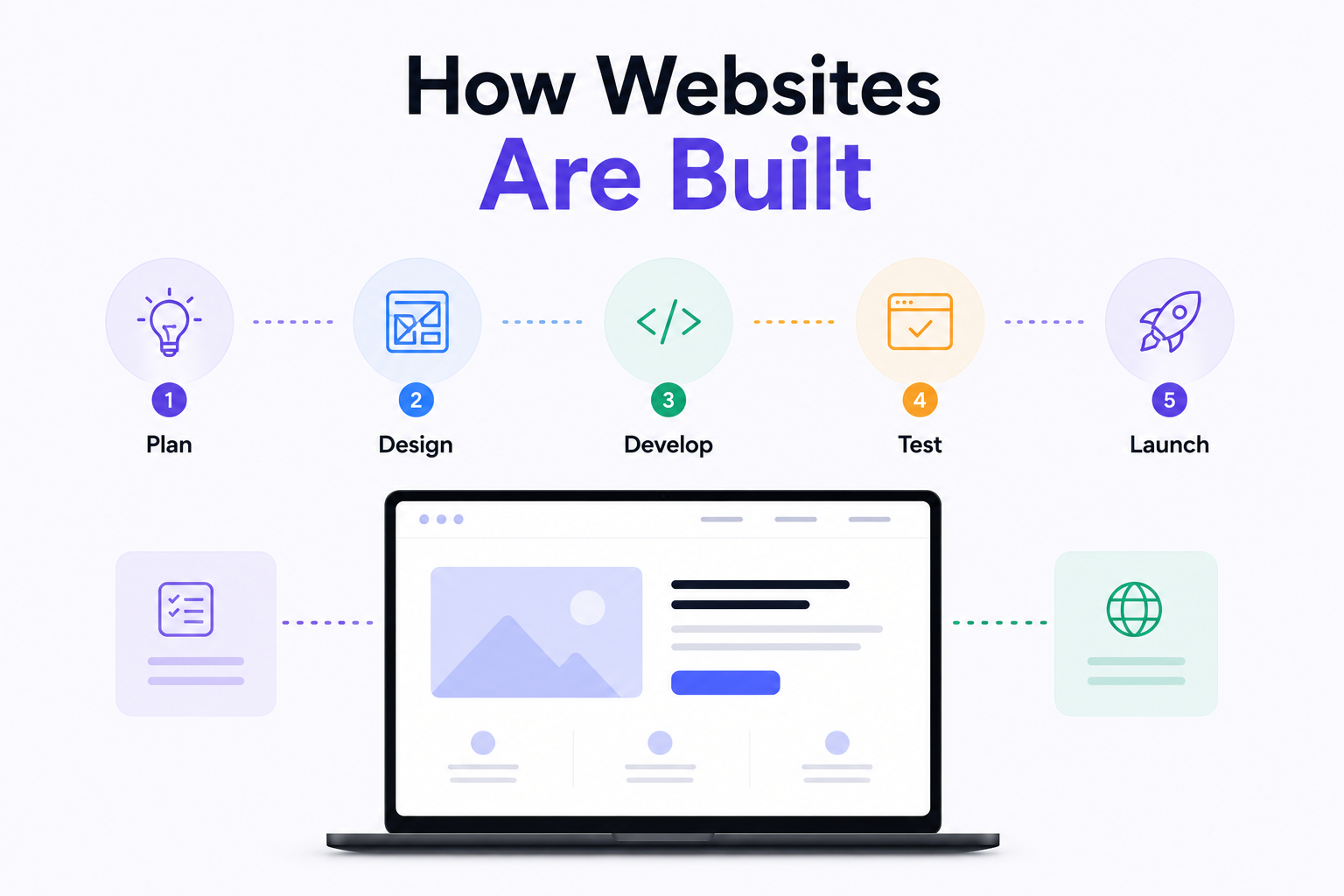
How Are Modern Websites Built in 2026?

Website Development Process & Life Cycle : Complete Guide
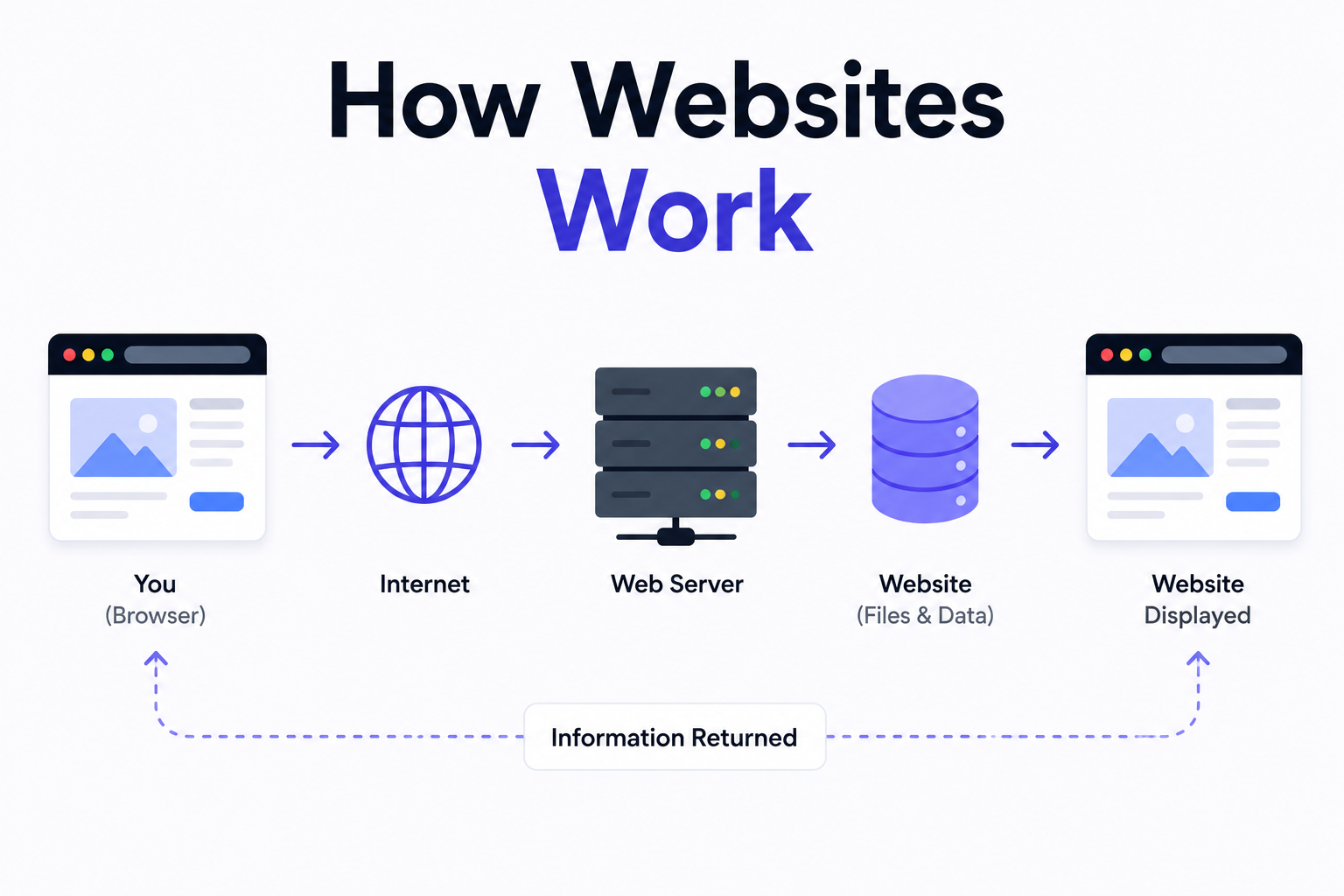
How Websites Work: DNS, Servers, Browsers
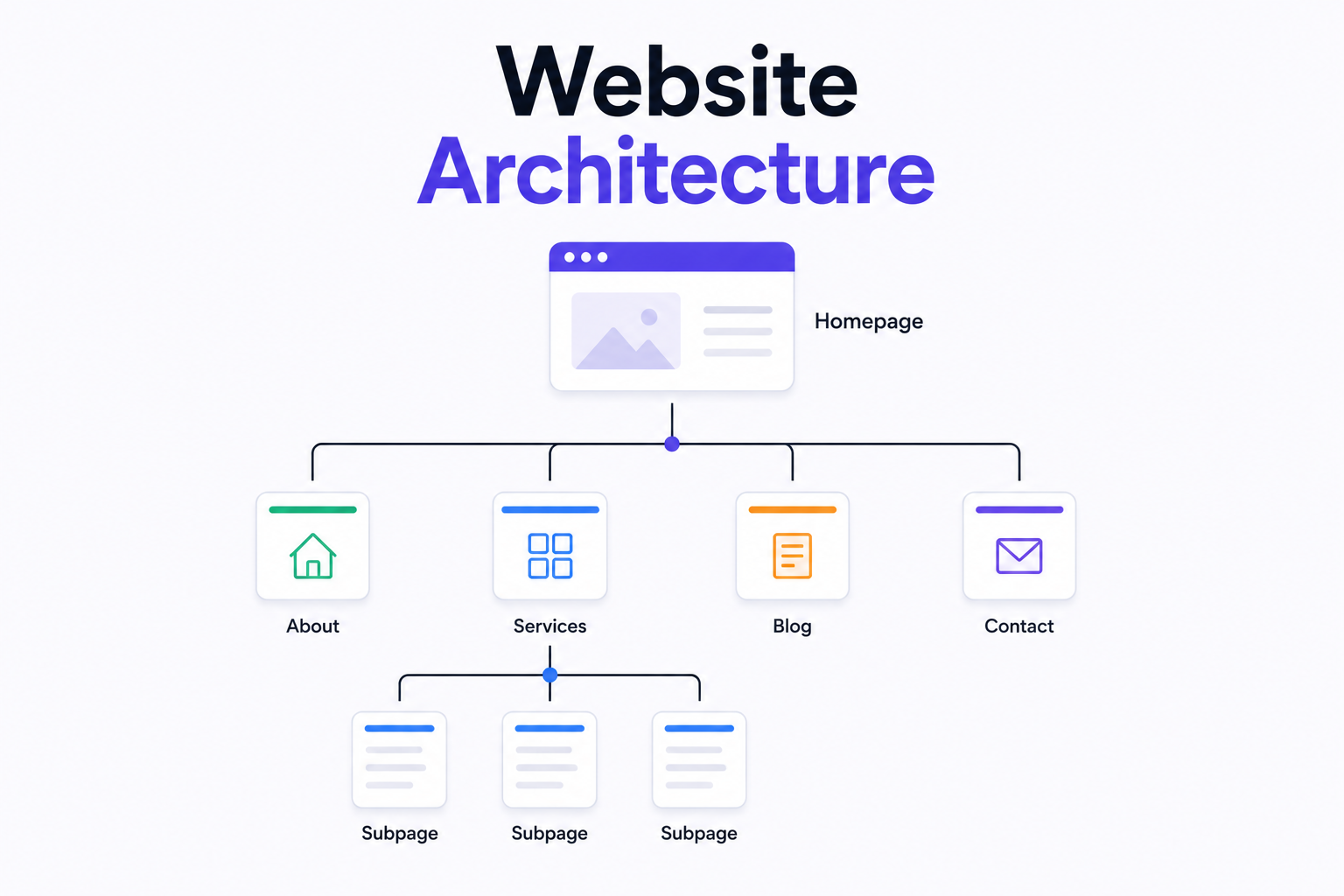
What is Website Architecture? Best Practices