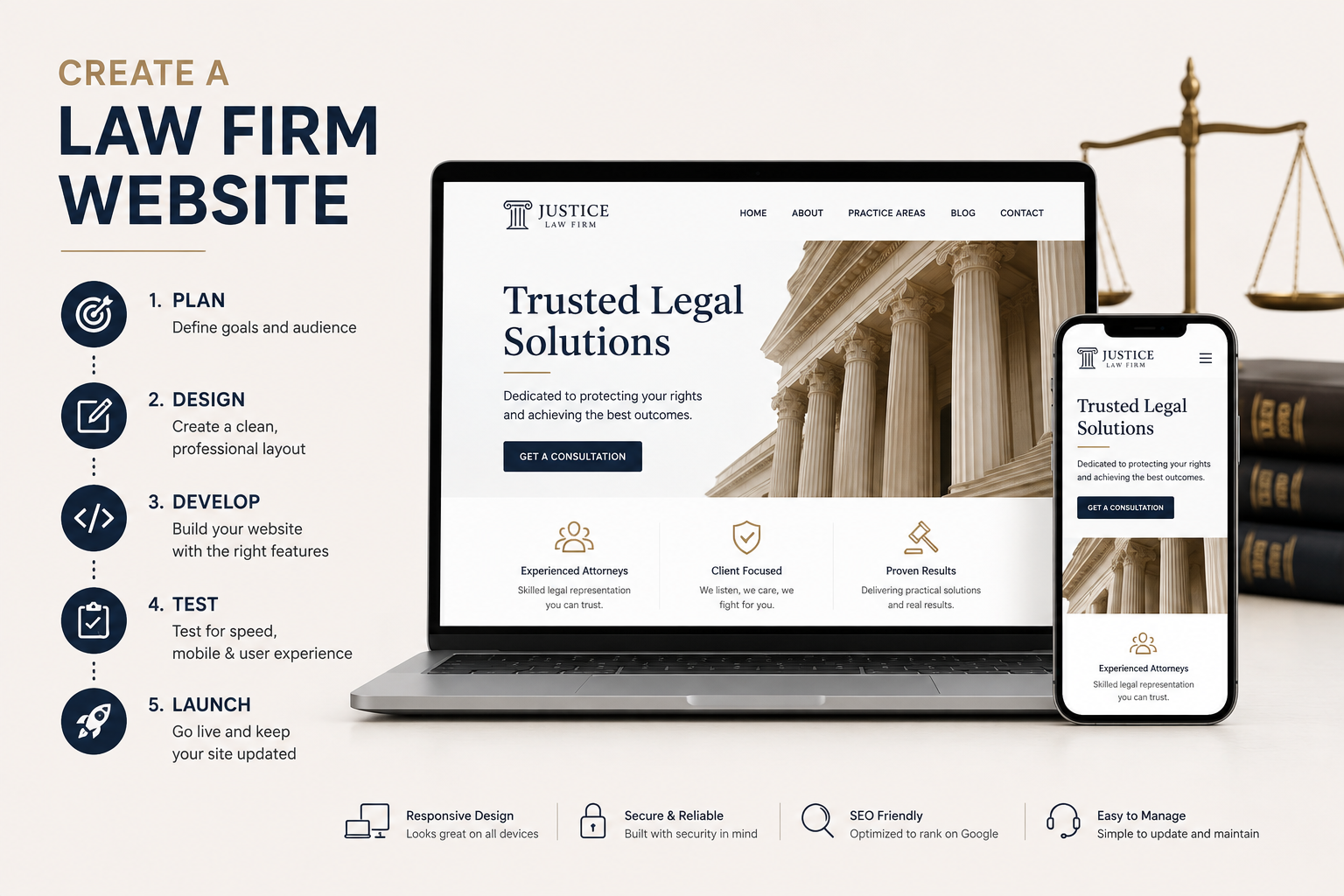
Why Your Law Firm Needs a Professional Website
When a potential client faces a legal problem, the first thing most of them do is search online. They are not flipping through directories or waiting for a referral. They are typing a query into Google and evaluating the first few results they see. If your law firm does not have a professional, well-optimized website, you are invisible to that person at the exact moment they are ready to hire someone.
The reality in 2026 is that your website is your most important business development tool. Research consistently shows that younger generations, who now represent a significant portion of legal clients, evaluate a firm's website before making contact, even when they have received a personal referral. A poorly built or outdated website signals that the firm is behind the times, which is not the impression any attorney wants to make.
This guide walks through everything involved in creating a law firm website that does its job properly. Not just one that exists, but one that ranks in search results, communicates credibility immediately, and turns visitors into consultation requests consistently.
Step 1: Define the Purpose and Goals of Your Website
Before anything is designed or built, the most important step is defining what the website is supposed to accomplish. For most law firms, the primary goal is generating consultation requests from qualified potential clients. But within that broad goal, there are more specific questions worth answering before the project begins.
Which practice areas does the firm want to be known for? Who is the ideal client in terms of case type, geography, and situation? Are there specific practice areas the firm wants to grow, and should the website reflect that by giving those areas more prominent placement? Answering these questions before design begins ensures the entire site is built around the outcomes that actually matter to the firm rather than around generic legal website conventions.
Step 2: Plan Your Website Structure and Pages
A law firm website needs a clear, logical structure that serves both users and search engines. The most effective approach is to give each practice area its own dedicated page rather than grouping everything under a single services page. A client searching for a family law attorney and a client searching for a criminal defense attorney have very different needs. Combining their content on one page produces a page that serves neither well.
A well-structured law firm website typically includes a homepage, individual practice area pages for each service offered, an about page that introduces the attorneys, a results or case studies section, a blog or resource section for educational content, and a contact page with a clear consultation request form. Each of these sections serves a different stage of the client decision-making process, and all of them are necessary for a complete and effective site.
Internal linking between practice area pages and supporting blog content is equally important. When each page links to related content across the site, it builds topical authority that signals to Google that the firm is a comprehensive resource on the legal topics it covers, not just a thin promotional site.
Step 3: Choose the Right Technology for Your Law Firm Website
The technology behind your website determines its performance, security, and long-term flexibility. Many law firms default to WordPress or legal-specific platforms, and for smaller practices with limited budgets, these can work as a starting point. However, they come with trade-offs that become more significant as the firm grows.

WordPress sites require constant plugin updates and carry security vulnerabilities that need active management. Legal-specific platforms lock firms into templates that are difficult to differentiate from competitors using the same system. For firms that are serious about their digital presence and want a website that genuinely stands out and performs at the highest level, a custom-built site on a modern stack like React and Next.js delivers significantly better results in terms of speed, security, and design flexibility.
Page speed is particularly important for law firm websites because legal keywords are among the most competitive in paid and organic search. Google uses page speed as a direct ranking factor, and a slow site that ranks briefly will struggle to maintain its position against faster competitors. Building on a performance-first technology stack from the beginning avoids the costly and disruptive process of migrating to a better platform later.
Step 4: Design for Trust and Credibility
Legal clients are making high-stakes decisions. They are looking for a firm they can trust with matters that significantly affect their lives. The design of your website communicates trustworthiness before a single word is read. A clean, professional design with clear navigation, consistent branding, and high-quality imagery tells visitors immediately that the firm is organized, credible, and serious about its practice.
Trust signals need to be visible throughout the site, not just on a dedicated testimonials page. Attorney profiles with professional photographs, bar admission details, and notable case results build confidence at every stage of the visitor's journey. Client testimonials and reviews displayed on practice area pages reinforce credibility precisely where a prospective client is evaluating whether to make contact.
Contact information should be prominently displayed on every page, not just the contact page. A phone number in the header, a consultation request form embedded on practice area pages, and clear calls to action throughout the site ensure that a visitor who is ready to reach out never has to search for how to do so.
Step 5: Write Content That Serves Clients and Ranks in Search
Content is the foundation of a law firm website's search performance. Google applies higher quality standards to legal content because it falls under what the search engine classifies as Your Money or Your Life content. This means thin, generic practice area descriptions will not rank. The content needs to be genuinely informative, accurate, and written with the potential client's actual concerns in mind.
Each practice area page should be long enough to cover the topic with real depth, typically between 1,500 and 2,500 words for core pages. This is not about padding content to hit a word count. It is about covering the questions a prospective client actually has: what the legal process involves, how long it takes, what it costs, what factors affect the outcome, and what the firm specifically does to handle these cases.
A blog section compounds the site's search visibility over time. Each well-written blog post targeting a specific question that potential clients search for creates another entry point into the site from Google. Firms that publish consistently and strategically see significantly more organic traffic growth than firms with static websites because every new article expands the range of searches the site can appear for.
Step 6: Optimize Your Law Firm Website for SEO
SEO for a law firm website operates on two levels. On-page SEO covers the elements within each page itself, including the title tag, meta description, heading structure, keyword placement, internal links, image alt text, and URL structure. Every page on the site needs these elements handled correctly before it has a realistic chance of ranking for competitive legal keywords.
Local SEO is particularly critical for law firms because most legal clients want representation within a specific geographic area. Optimizing for local search means incorporating city and region-specific keywords into practice area pages and blog content, maintaining an accurate and complete Google Business Profile, and ensuring the firm's name, address, and phone number are consistent across every online directory and platform where the firm is listed.
Schema markup is another layer that many law firm websites overlook. Adding attorney schema, legal service schema, and local business schema to the site's code helps search engines display richer information about the firm directly in search results, including reviews, contact information, and practice areas. This increases the visibility and click-through rate of the firm's listings without requiring any improvement in rankings.
Step 7: Ensure Your Website Is Secure and Mobile Optimized
Legal clients frequently search for attorneys on mobile devices, often in stressful situations where they need help quickly. A website that is difficult to navigate on a phone, loads slowly on mobile, or requires zooming and horizontal scrolling to read creates immediate friction at exactly the wrong moment. Mobile optimization is not a secondary consideration for law firm websites. It is a primary one.
Security is equally non-negotiable. Potential clients share sensitive personal information through contact forms and consultation request submissions. An SSL certificate ensuring HTTPS encryption is the baseline. Beyond that, the hosting environment, form handling, and any client portal features need to be built and maintained with data security as a priority. A security breach on a law firm website creates professional and reputational consequences that go well beyond typical business data incidents.
Step 8: Launch, Monitor, and Improve Over Time
Launching the website is the beginning of the process, not the end. A law firm website needs ongoing attention to maintain and improve its search performance. This includes monitoring rankings and traffic through Google Search Console and Analytics, updating content when practice areas or laws change, adding new blog posts consistently, and conducting regular technical audits to catch and fix issues before they affect performance.
The firms that build sustainable pipelines of inbound client inquiries through their websites are the ones that treat their site as a long-term asset requiring ongoing investment, not a one-time project to be forgotten after launch. The initial investment in a properly built and optimized site compounds over time as rankings improve, traffic grows, and the site's authority in search increases with each passing month.
Build Your Law Firm Website With Munix Studio
At Munix Studio we build professional websites for law firms and service businesses that need to rank in search, communicate credibility, and convert visitors into clients. Every project starts with a clear strategy and ends with a fast, secure, custom-built site that works for your firm around the clock.
Website Development — Custom law firm websites built on React and Next.js, engineered for speed, security, and long-term search performance.
UI/UX Design — Professional, trust-focused design that communicates credibility and guides potential clients toward making contact.
SEO Optimization — On-page and local SEO built into the site from day one so your firm ranks for the searches your ideal clients are already making.
Maintenance and Support — Ongoing updates, security monitoring, and performance management so your site stays secure and competitive after launch.
Frequently Asked Questions
Ready to Get Started?
Website Development
Custom law firm websites built on React and Next.js, engineered for speed, security, and the search performance that competitive legal markets demand.
Explore Website DevelopmentUI/UX Design
Professional, trust-focused design that communicates credibility from the first impression and guides potential clients toward booking a consultation.
Explore UI/UX DesignSEO Optimization
On-page and local SEO built into your law firm website from day one so your firm ranks for the searches your ideal clients are already making.
Explore SEO OptimizationMaintenance and Support
Ongoing security monitoring, content updates, and performance management to keep your law firm website competitive long after launch.
Explore Maintenance and SupportRelated Articles

What is Website Development? The Complete Guide for Beginners

How Are Modern Websites Built in 2026?

Website Development Process & Life Cycle : Complete Guide
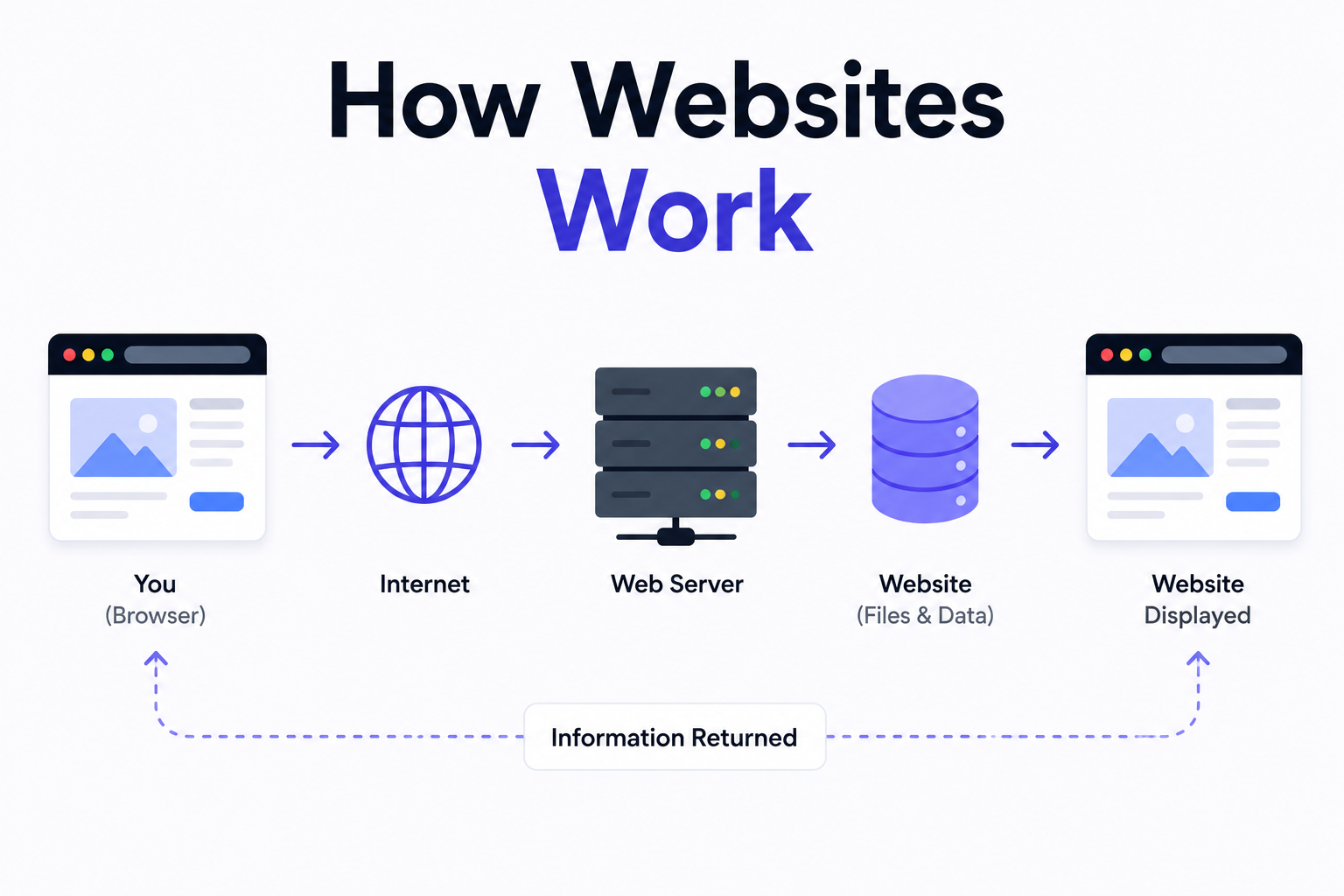
How Websites Work: DNS, Servers, Browsers
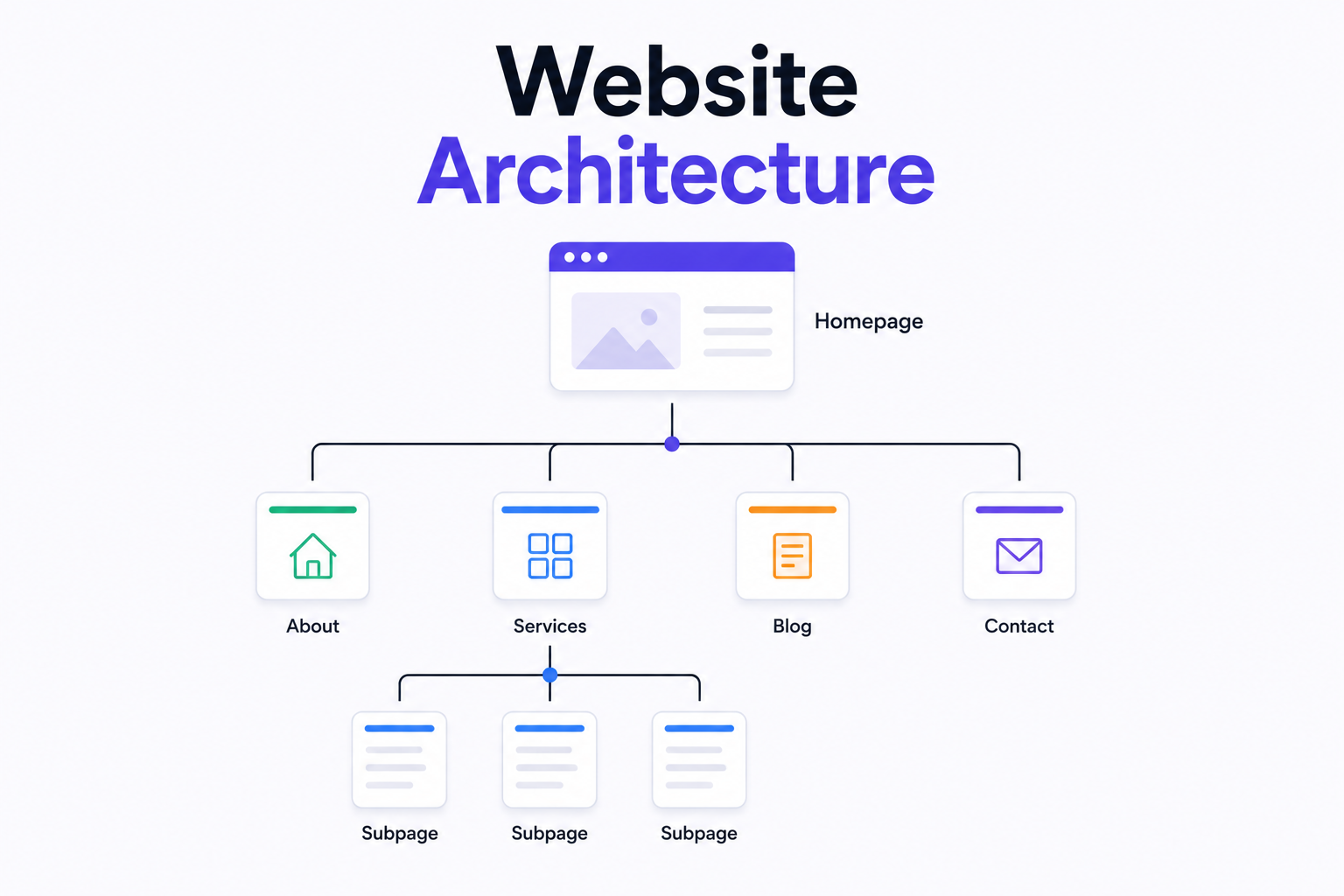
What is Website Architecture? Best Practices