What Is a Job Board Website?
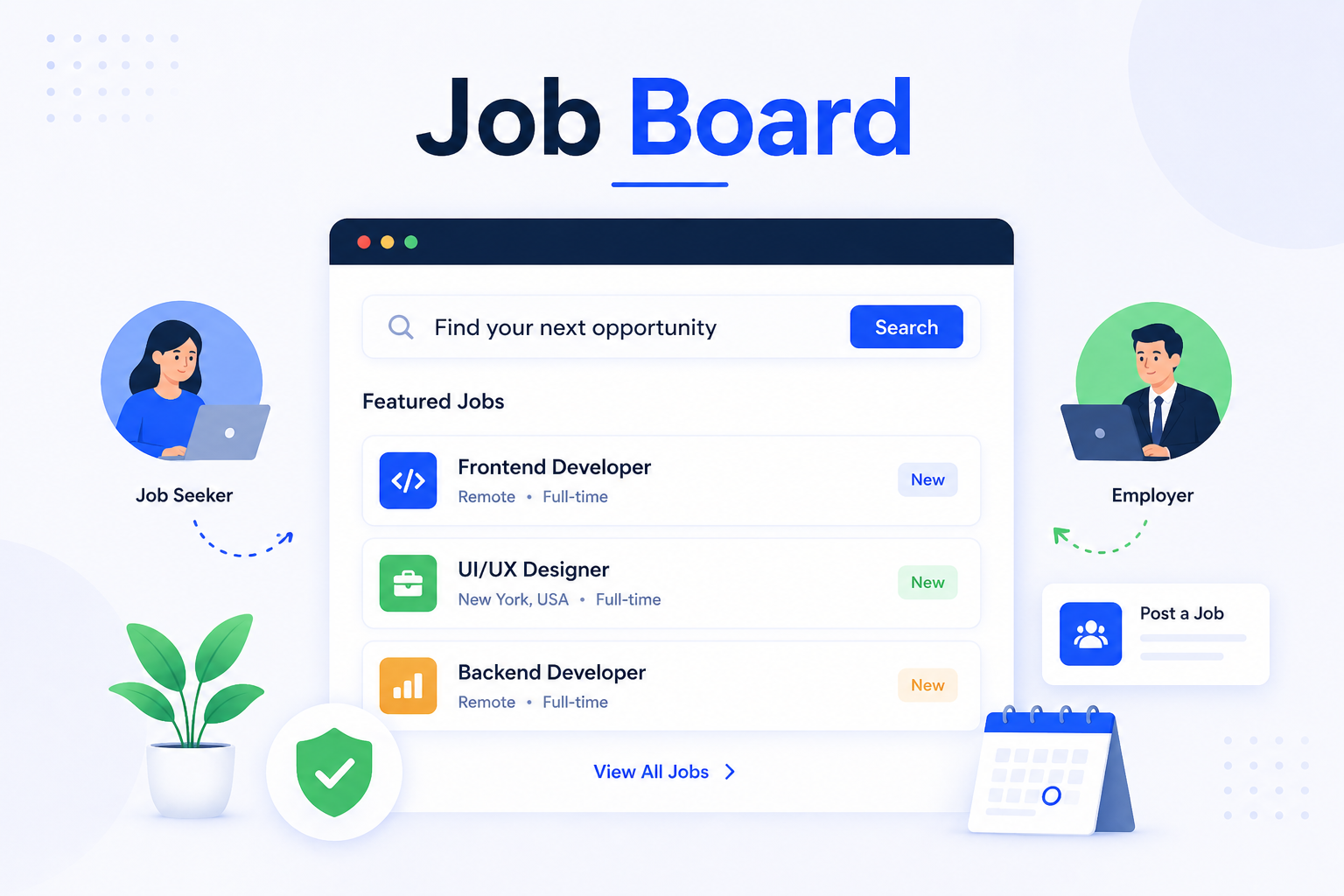
A job board website is a platform that connects employers looking to hire with candidates looking for work. Employers post job listings describing open positions, requirements, and compensation. Candidates search and filter those listings, submit applications, and in some cases create profiles that employers can search directly. The platform facilitates this connection and typically generates revenue by charging employers to post listings, charging for premium features, or taking a placement fee when a hire is made.
Job boards are one of the most proven business models on the internet. Indeed, LinkedIn, Glassdoor, and AngelList have all built significant businesses on the job board model. But the opportunity is not limited to large generalist platforms. Niche job boards serving specific industries, roles, or geographies consistently outperform general boards for both employers and candidates within their niche because the relevance of every listing is higher and the audience on both sides is more qualified.
This guide covers everything involved in building a job board website from scratch, including the features required on both sides of the platform, the technology decisions involved, monetization strategies, and how to attract your first employers and candidates before you have an established brand.
Types of Job Board Websites
Not all job boards work the same way or serve the same market. Understanding which type of job board you are building shapes every decision about features, design, monetization, and go-to-market strategy.
Job Board Type Focus Examples Competition Level General job board All industries and roles Indeed, LinkedIn, Reed Extremely high Industry niche board Specific sector such as tech, legal, healthcare, creative Wellfound, Mediabistro, Health eCareers Moderate Remote work board Location-independent roles only We Work Remotely, Remote.co Moderate Local or regional board Jobs within a specific city or region City-specific job platforms Low to moderate Diversity and inclusion board Roles at companies with strong DEI commitments Diversify Tech, PowerToFly Low to moderate Freelance and contract board Short-term and project-based work Toptal, PeoplePerHour, Contra Moderate
Step 1: Choose Your Niche and Define Both Sides of Your Market
Building a general job board that competes with Indeed or LinkedIn is not a viable strategy for a new platform. These are entrenched giants with millions of listings and decades of brand recognition. The opportunity for a new job board business in 2026 lies in serving a specific niche better than any general platform can. A niche job board that deeply understands its audience on both the employer and candidate side, curates its listings more carefully, and builds community around a specific professional identity consistently outperforms general boards for employers and candidates within that niche.
Choosing your niche requires understanding where there is genuine unmet demand. Look for industries or role types where employers consistently struggle to find qualified candidates through general boards, where candidates feel underserved by the generic listings and application experience on major platforms, or where a specific type of work arrangement like remote, part-time, or contract is not well-served by existing options. The intersection of employer frustration and candidate frustration with existing solutions is where niche job boards find their strongest product- market fit.
Step 2: Plan the Features Your Job Board Needs
A job board serves two distinct user groups with different needs, different workflows, and different success metrics. Employers need efficient tools for posting and managing listings, reviewing applications, and communicating with candidates. Candidates need powerful search and filtering, a streamlined application process, and tools for managing and tracking their job search activity.
The core features on the employer side include a company registration and profile system, a job listing creation tool with fields for role title, description, requirements, compensation, location, and work arrangement, an application management dashboard where incoming applications can be reviewed and sorted, a candidate communication system for scheduling interviews and sending status updates, and a billing system for purchasing listing credits or subscription plans.
On the candidate side the essential features are a job search with filters for role type, location, salary range, experience level, and work arrangement, individual job listing pages with full details and a clear application pathway, a candidate profile or resume builder that can be submitted with applications, a saved jobs feature for tracking interesting listings, job alert notifications that email or notify candidates when new listings matching their criteria are posted, and an application history dashboard for tracking where they have applied and the current status of each application.
Feature For Priority MVP or Later Job listing creation and management Employers Critical MVP Job search with filters Candidates Critical MVP Application submission system Candidates Critical MVP Application management dashboard Employers Critical MVP Company profile pages Employers High MVP Candidate profile and resume upload Candidates High MVP Job alert email notifications Candidates High Post-MVP Saved jobs and application tracking Candidates High Post-MVP Candidate database search for employers Employers Medium Post-MVP In-platform messaging Both Medium Post-MVP
Step 3: Choose the Right Technology Stack
The technology stack for a job board needs to handle several specific requirements well. Search and filtering across potentially thousands of listings needs to be fast and accurate. The application submission process needs to handle file uploads reliably. Email notifications need to be delivered reliably and at scale. And the admin layer needs to give the platform operator visibility and control over listings, users, and payments without requiring developer intervention for routine operations.
Approach Time to Launch Scalability Customization SEO Performance WordPress with job board plugin Fast Poor at scale Moderate Moderate No-code platforms Very fast Limited Very limited Poor Custom built (React, Next.js, Node.js, PostgreSQL) 3 to 5 months Excellent Full control Excellent
SEO is particularly important for job boards because individual job listing pages and company profile pages can rank independently in search engines for highly specific queries. A custom build on Next.js with server-side rendering ensures every listing page is indexed properly and loads fast, which gives the platform a compounding organic traffic advantage over time that plugin-based and no-code solutions cannot match.
Step 4: Build a Monetization Strategy
Job boards have several proven monetization models, and most mature platforms combine more than one. The right combination depends on the niche, the volume of listings, and whether the platform positions itself as a premium service or a high-volume commodity.
Revenue Stream How It Works Best For Typical Price Range Pay per listing Employers pay per job posted All board types $50 to $500 per listing Employer subscription Monthly fee for unlimited or bundled postings High-volume hiring companies $200 to $2,000 per month Featured listings Premium placement at top of search results Competitive role categories $50 to $200 per listing upgrade Resume database access Employers pay to search candidate profiles Boards with strong candidate base $300 to $1,500 per month Employer branding packages Enhanced company profiles and sponsored content Large employers competing for talent $500 to $5,000 per month
Step 5: Design for Both Employers and Candidates
Job board design needs to serve two distinct audiences whose needs and mental models are quite different. Employers arrive at a job board focused on efficiency. They need to post a listing quickly, review incoming applications without friction, and communicate with promising candidates without leaving the platform. Any extra steps in the posting or management workflow reduce the likelihood they return to post again.
Candidates arrive focused on discovery and confidence. They need to find relevant listings quickly through effective search and filtering, understand each role clearly from a well-structured listing page, and feel confident that applying is a worthwhile use of their time. Listing pages that omit salary information, have vague role descriptions, or require excessive information before allowing an application consistently see lower application rates regardless of how relevant the role is.
Mobile optimization is non-negotiable for a job board. A significant proportion of job searching happens on mobile devices, particularly the initial discovery phase where candidates are browsing listings casually. An application process that works seamlessly on mobile, including the ability to upload a resume from cloud storage rather than requiring a file upload from a computer, removes one of the most common friction points in mobile job applications.
Step 6: Optimize for SEO From Day One
Search engine optimization is the most important long-term traffic channel for a job board because job seekers overwhelmingly use Google as their starting point for finding opportunities. A job board whose listing pages rank well in Google for specific role and location searches generates organic candidate traffic at zero ongoing cost, which dramatically improves the economics of the platform compared to one that relies entirely on paid acquisition.
Each job listing page needs a unique, descriptive URL that includes the role title and location. The page title and meta description should be generated automatically from the listing data in a format that matches how candidates search for those roles. Structured data markup using JobPosting schema tells Google exactly what the page contains and enables the listing to appear in Google's Jobs search feature, which displays prominently at the top of results for job-related queries and generates significant additional organic traffic for boards that implement it correctly.
Step 7: Solve the Cold Start Problem
Like any two-sided platform, a job board faces the challenge of attracting both employers and candidates before either side has a compelling reason to be there. An empty job board with no listings offers no value to candidates. A board with no candidates offers no value to employers. Breaking this deadlock requires a deliberate strategy for seeding one side of the market before actively recruiting the other.
The most practical approach for most niche job boards is to aggregate listings from public sources to populate the board with genuine content before launching to employers directly. This gives candidates something valuable to browse from day one and demonstrates to prospective employer clients that the board is active. Once a base of candidate traffic is established through SEO and content marketing, that traffic data becomes a compelling sales tool for convincing employers to pay for direct listings.
Offering free listings to the first cohort of employers in exchange for genuine feedback and a willingness to be referenced as early clients reduces the barrier to initial adoption significantly. Early employer clients who have a positive experience become the social proof that convinces subsequent employers to pay for listings without needing a free trial.
Advantages and Drawbacks of Building a Job Board
Advantages
Recurring revenue potential through employer subscriptions that generate predictable monthly income as the platform grows its employer base.
Strong SEO opportunity since individual listing pages target highly specific job-related search queries that generate significant organic traffic without ongoing advertising spend.
Network effects develop as more listings attract more candidates, which makes the platform more attractive to employers, which generates more listings in a compounding cycle.
Multiple revenue streams available including listing fees, subscriptions, featured placements, resume access, and employer branding packages that diversify income as the platform matures.
Niche positioning creates defensibility since a job board deeply embedded in a specific professional community is difficult for general competitors to displace once established.
Drawbacks
The cold start problem is significant since neither employers nor candidates have a reason to use the platform until the other side is already present in meaningful numbers.
Job listings have a short natural lifespan since roles are filled and listings expire, requiring a constant flow of new listings to keep the platform fresh and useful for returning candidates.
Aggregation competition from large general boards that scrape and republish listings can reduce the uniqueness of the inventory advantage that niche boards rely on.
Quality control requires ongoing moderation to prevent fraudulent listings, spam applications, and employer behavior that damages the candidate experience and the platform's reputation within its niche.
Build Your Job Board With Munix Studio
Building a job board that works well for both employers and candidates requires a platform that handles dual-sided user management, fast search and filtering, file uploads, email notifications, payment processing, and SEO- optimized listing pages in a single well- engineered system. At Munix Studio we build custom job board platforms designed to scale from launch through to a mature business with thousands of listings and a large two-sided user base.
Website Development — Custom job board platforms built on React, Next.js, and Node.js with employer dashboards, candidate profiles, job search, and application management built to scale.
App Development — Native mobile applications for iOS and Android that give candidates a seamless job search and application experience and employers mobile access to their listing and application management tools.
UI/UX Design — Dual-sided interface design covering the employer posting and management experience alongside the candidate discovery and application journey optimized for conversion on both sides.
SEO Optimization — Job board SEO strategy including JobPosting schema markup, listing page optimization, and content strategy that drives organic candidate traffic from Google search without paid advertising spend.
DevOps and Cloud — Scalable cloud infrastructure that handles search queries across large listing volumes, file storage for resumes and attachments, and email delivery at the scale a job board requires.
Maintenance and Support — Ongoing platform management covering listing moderation tools, payment system monitoring, performance optimization, and feature additions as the platform grows and requirements evolve.
Frequently Asked Questions
Ready to Get Started?
Website Development
Custom job board platforms built on React, Next.js, and Node.js with employer dashboards, candidate profiles, job search, and application management built to scale from launch.
Explore Website DevelopmentApp Development
Native mobile applications for iOS and Android giving candidates a seamless job search experience and employers mobile access to their listing and application management tools.
Explore App DevelopmentUI/UX Design
Dual-sided interface design covering the employer posting and management experience alongside the candidate discovery and application journey optimized for conversion on both sides.
Explore UI/UX DesignSEO Optimization
Job board SEO including JobPosting schema markup, listing page optimization, and content strategy that drives organic candidate traffic from Google without paid advertising spend.
Explore SEO OptimizationDevOps and Cloud
Scalable cloud infrastructure handling search queries across large listing volumes, file storage for resumes, and email delivery at the scale a growing job board requires.
Explore DevOps and CloudMaintenance and Support
Ongoing platform management covering listing moderation tools, payment monitoring, performance optimization, and feature additions as the platform grows and requirements evolve.
Explore Maintenance and SupportRelated Articles
What is Website Development? The Complete Guide for Beginners
How Are Modern Websites Built in 2026?
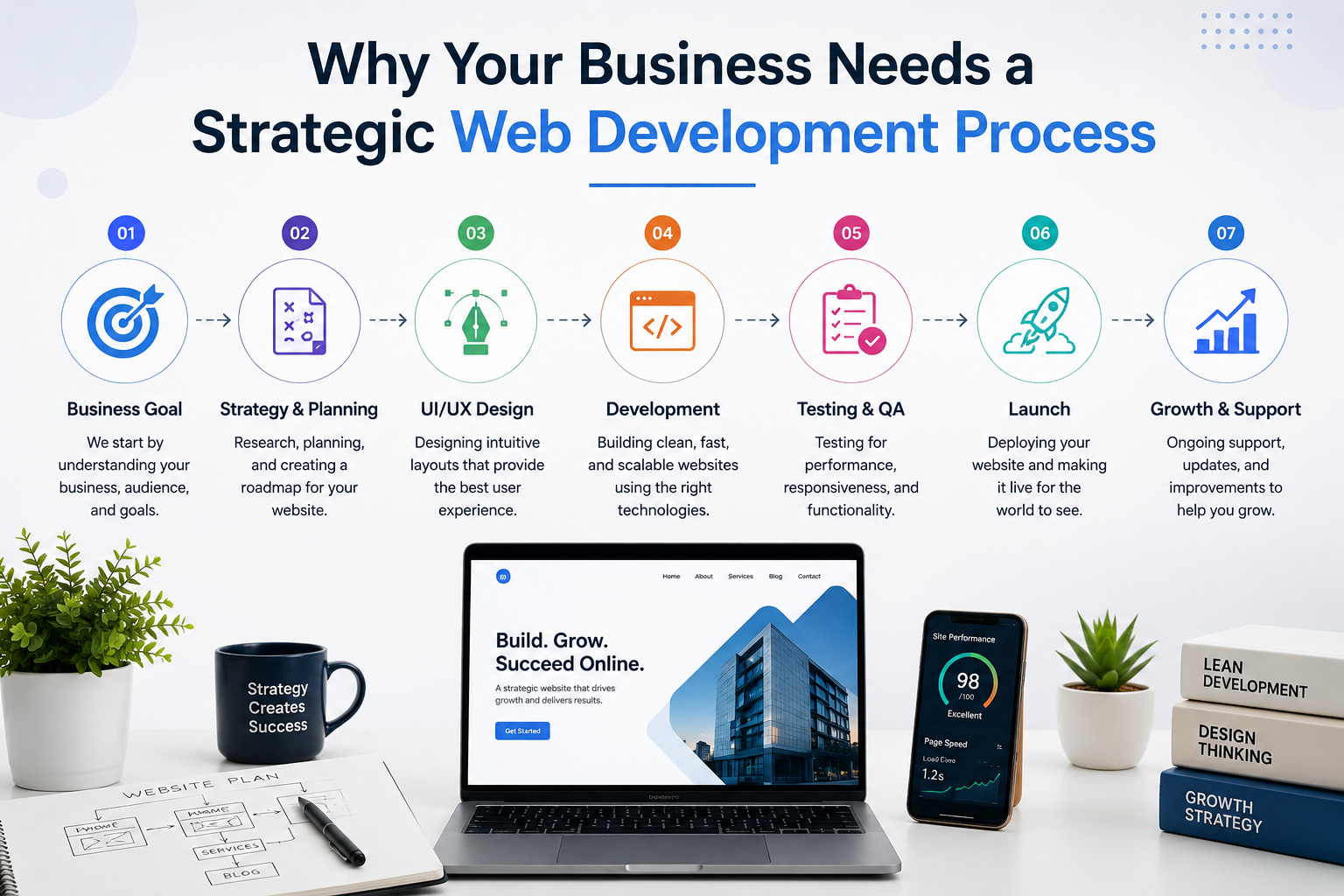
Website Development Process & Life Cycle : Complete Guide
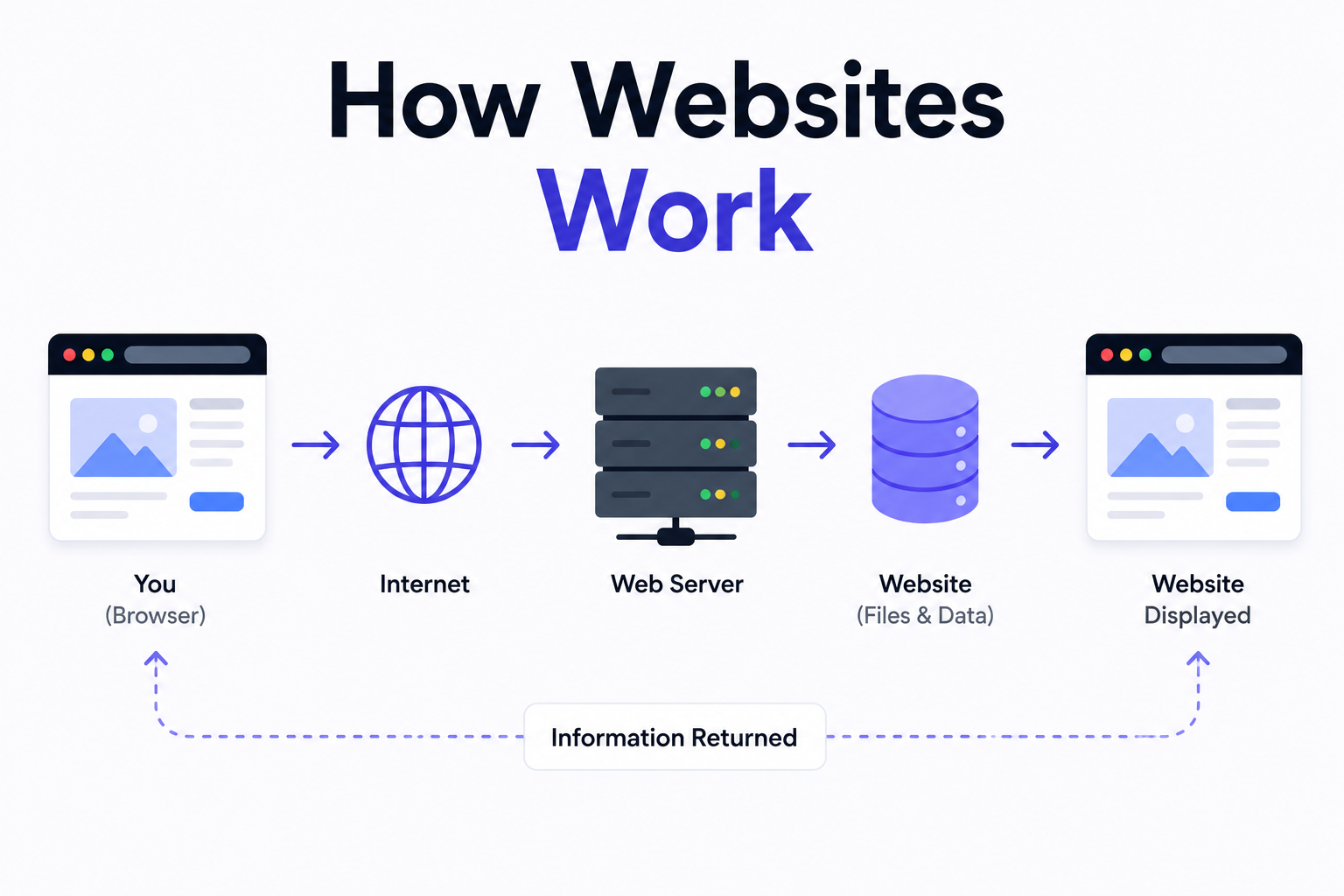
How Websites Work: DNS, Servers, Browsers
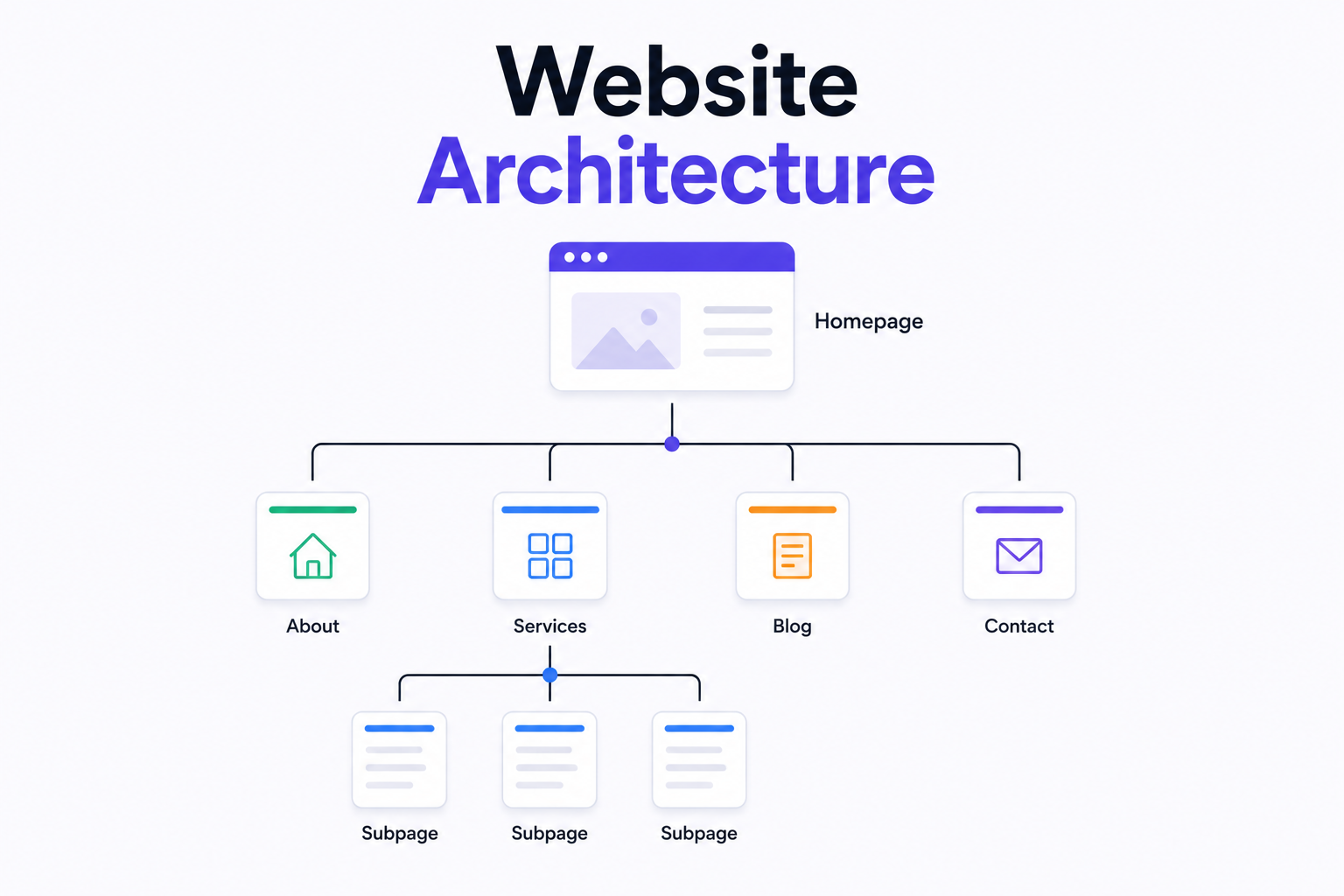
What is Website Architecture? Best Practices