Every year, billions of dollars are raised online for causes ranging from personal medical emergencies to large-scale nonprofit campaigns. GoFundMe alone has facilitated over $30 billion in donations since its launch. But behind every successful fundraising campaign is a website that earns trust quickly, removes friction from the giving process, and tells a story compelling enough to turn a visitor into a donor. Building that kind of website requires more than picking a template and adding a donate button.
This guide covers everything you need to know about creating a fundraising website — from defining your goals and choosing your technical approach to the specific design principles and features that determine whether visitors give or leave.
What Makes a Fundraising Website Different
A fundraising website is not a standard informational site with a payment form bolted on. Its entire purpose is conversion — turning visitors into donors. Every design decision, every piece of copy, and every technical choice either supports that goal or works against it. The stakes are high because donor trust is fragile. A slow-loading page, a payment form that looks insecure, or a vague explanation of where the money goes can kill a donation that was moments away from happening.
The best fundraising websites combine emotional storytelling with transparent impact reporting and a giving experience that feels safe and simple. Charity: Water is a frequently cited example — their site leads with specific stories, uses photography that puts donors face to face with the people they are helping, and shows exactly how funds are allocated. That level of clarity and humanity is the standard worth aiming for, regardless of whether your campaign is for a nonprofit, a community project, or an individual in need.
Step 1 — Define Your Campaign and Audience
Before any technical work begins, you need a clear answer to three questions: what are you raising money for, who are you asking to give, and what does success look like? A campaign for a local school playground has a different audience, tone, and urgency than a campaign for disaster relief or a startup seeking community investment. Your website's messaging, design, and even its technical requirements all follow from these answers.
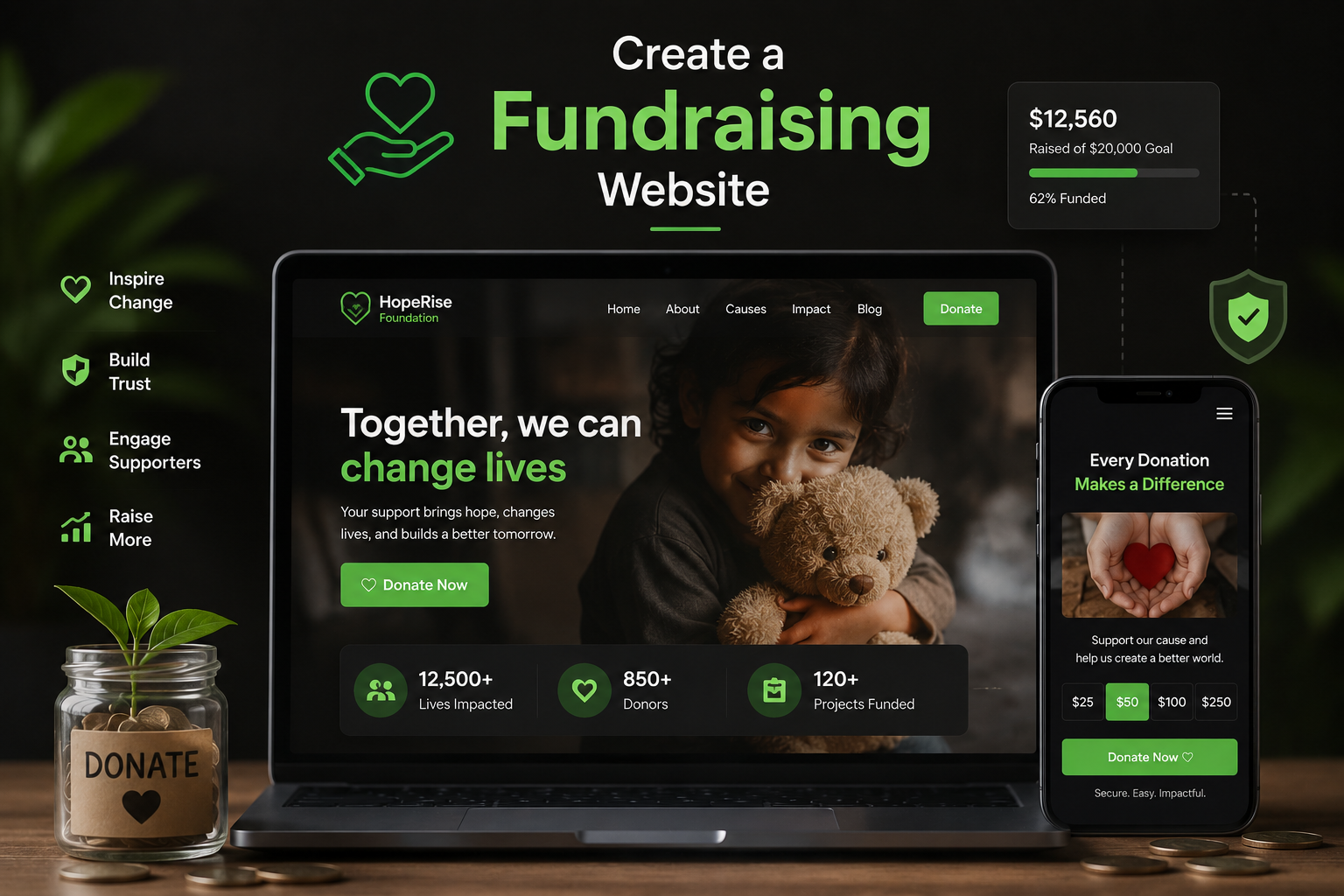
Define a specific funding goal and a deadline if one exists. Campaigns with a clear target and a time element consistently outperform open-ended ones. People respond to progress — seeing that a campaign is 65% funded creates urgency that a vague "help us raise money" message never will. Your site should display this progress prominently and update it in real time.
Step 2 — Choose Your Development Approach
The fundraising website market offers three broad paths: dedicated fundraising platforms, general website builders with donation plugins, and custom-built websites. Each has a different profile of cost, control, and capability.
Comparing Your Options
Approach Best For Key Limitation Transaction Fees GoFundMe / JustGiving Personal campaigns, quick setup No brand control, donors leave your site 0–5% platform fee plus payment fees WordPress + GiveWP Nonprofits wanting some flexibility Plugin limitations, maintenance overhead Payment processor fees only Squarespace / Wix Small campaigns, non-technical teams Limited donation features, poor SEO control Monthly subscription plus payment fees Custom Built Site Organisations running ongoing campaigns Higher upfront investment Payment processor fees only, no platform cut
For a one-off personal campaign with a short timeline, a platform like GoFundMe is entirely reasonable — the trade-off of losing brand control is acceptable when speed matters most. For any organisation running recurring fundraising, building a donor base, or needing to present a professional, trusted identity, a custom website is the right investment. You keep every penny that is not taken by the payment processor, you own your donor data, and you can build the exact experience your campaign needs rather than fitting your story into someone else's template.
Step 3 — Plan the Pages Your Site Needs
A fundraising website does not need to be large. In fact, the most effective ones are focused and lean. Every page should move the visitor closer to donating or sharing the campaign. Extra pages that do not serve that purpose add navigation complexity without adding value.
Page Purpose Must Include Homepage Hook and orient visitors Campaign headline, progress bar, donate CTA, story summary About / Our Story Build trust and emotional connection The people or cause behind the campaign, photos, credibility signals Donate Page Convert visitors to donors Preset amounts, custom amount, recurring option, secure payment form Impact / How Funds Are Used Answer the donor's biggest question Fund allocation breakdown, specific outcomes per donation amount Updates / Blog Keep donors engaged post-donation Progress reports, milestones reached, thank you messages Thank You Page Confirm and deepen the relationship Confirmation message, share prompts, next steps
Step 4 — Design Principles That Drive Donations
Fundraising website design is conversion design. Every visual decision should reduce hesitation and increase the likelihood that a visitor will click donate. This is an area where following instincts can lead you wrong — what feels visually interesting is not always what converts best.
Lead with a Human Story, Not Statistics
Research consistently shows that people donate more in response to a specific individual's story than to aggregate statistics. The identifiable victim effect is well documented in behavioural economics — a photo of one child in need generates more giving than a report about thousands of children in the same situation. Your homepage hero section should lead with a face and a name, not a headline about the scale of the problem. Statistics can follow, but they should support the story rather than lead it.
Use a Visible Progress Indicator
A progress bar showing funds raised against the goal is one of the highest-impact elements you can put on a fundraising page. It creates social proof — others are giving — and it creates urgency when the campaign is close to its target. Update it in real time if your technical setup allows. Even updating it daily maintains the momentum that drives additional donations.
Design the Donation Form for Minimum Friction
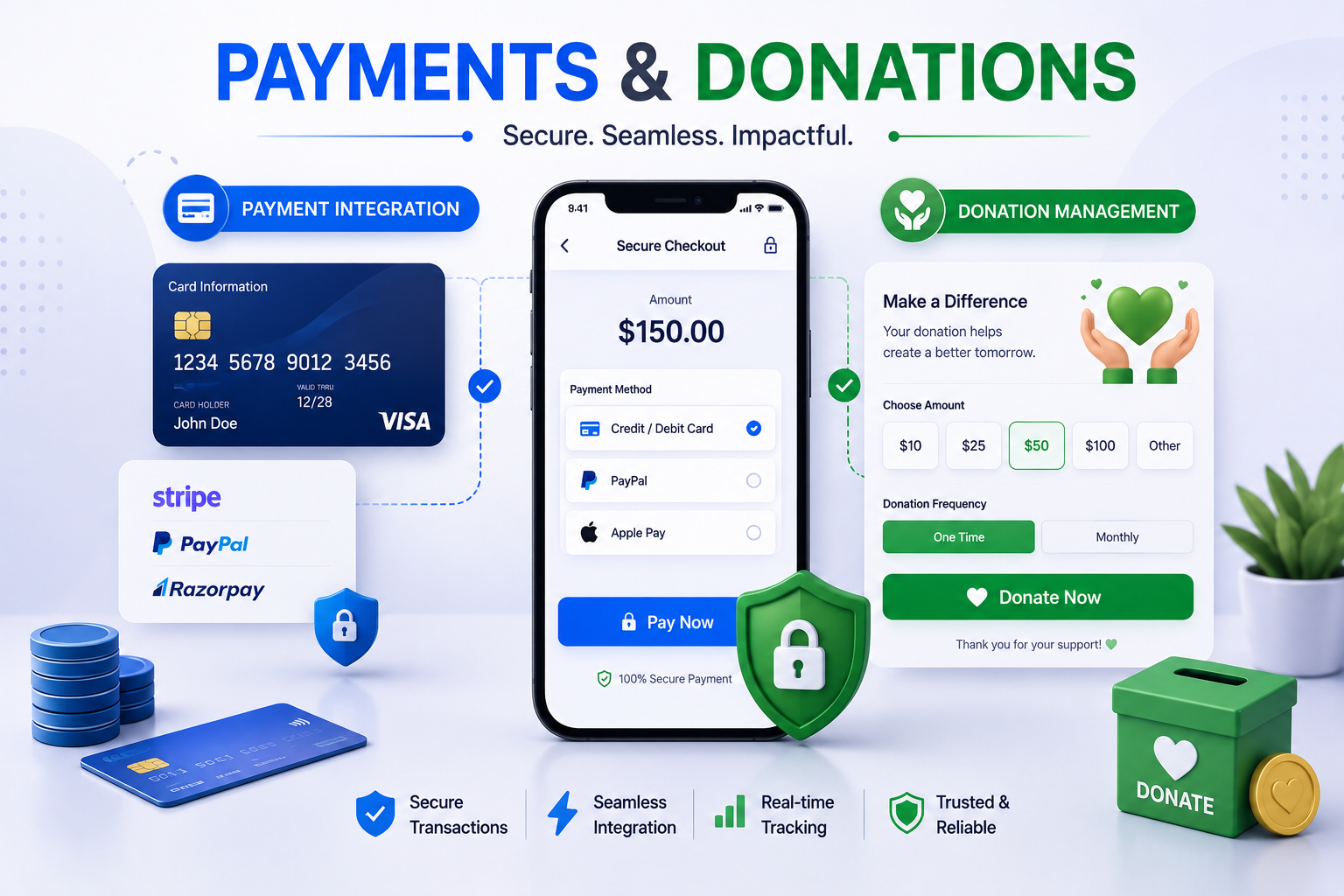
The donation form itself is where campaigns are won or lost. Every additional field you ask a donor to fill in reduces completion rates. Ask only for what you genuinely need: name, email, payment details, and optionally a message. Offer preset donation amounts — typically three or four options — because most donors do not know what is appropriate and will default to the middle option. Make the donate button large, high contrast, and unmissable. Label it clearly with something like "Donate Now" or "Give Today" rather than a generic "Submit."
Communicate Security at Every Step
Donor hesitation at the payment stage is almost always about trust. Display security badges, SSL indicators, and the logos of recognised payment processors like Stripe or PayPal near your donation form. A brief line of copy stating that the transaction is encrypted and secure helps. These signals feel obvious, but their absence is the thing donors notice.
Step 5 — Payment Integration and Donation Management
Choosing the right payment processor is a critical decision. For fundraising sites, the main options are Stripe, PayPal, and dedicated nonprofit payment platforms like Donorbox or Chargebee. Each has different fee structures, features, and levels of customisation.
Platform Transaction Fee Recurring Giving Custom Integration Stripe 2.9% + $0.30 Yes Excellent API PayPal 1.99% for nonprofits Yes Limited flexibility Donorbox 1.5% platform + processor fee Yes Embed only GiveWP Processor fee only Yes (premium) WordPress only
Stripe is the strongest choice for custom-built fundraising websites. Its API is comprehensive, it supports one-time and recurring donations natively, and it gives you complete control over the payment experience. Your donors never see Stripe's interface — the entire transaction happens within your branded site. For organisations registered as nonprofits, both Stripe and PayPal offer discounted rates that are worth applying for before launch.
Always offer recurring giving as an option. Monthly donors are far more valuable to any fundraising campaign than one-time donors of the same amount. A donor who gives $25 once is worth $25. A donor who commits to $25 per month is worth $300 per year, and they are far more likely to increase their giving over time. Making recurring giving the default-selected option — with one-time giving as an alternative — can noticeably increase the percentage of donors who choose it.
Step 6 — Essential Features for Fundraising Websites
Beyond the donation form, several features consistently improve fundraising outcomes on well-built sites.
Features That Directly Impact Donation Rates
Real-time progress bar showing funds raised and percentage of goal reached.
Preset donation amounts with context, such as "$50 provides clean water for one family for a month."
Social sharing buttons on the donation confirmation page to turn donors into advocates.
Email receipt sent automatically after every donation with a personalised thank you message.
A donor wall or recent activity feed showing that others are giving, which reinforces social proof.
Features That Build Long-Term Donor Relationships
A donor portal where recurring donors can manage their giving, update payment details, and access giving history.
A campaign updates section that keeps donors informed about how their money is being used.
Email newsletter integration so donors can be added to an ongoing communication list with their consent.
Tax receipt generation for donations above the threshold where receipts are required in your jurisdiction.
Step 7 — SEO for Fundraising Websites
Most fundraising campaigns rely on social media and direct outreach to drive traffic, which means they stop working the moment the campaign stops promoting actively. SEO gives your fundraising website a traffic channel that works passively. Someone searching for "help for wildfire victims in [region]" or "donate to children's literacy programs" can find your campaign through search, long after your last social post.
The updates section of your website is the most powerful SEO tool available to a fundraising site. Regular posts about campaign milestones, how funds have been deployed, and stories from beneficiaries give search engines fresh content to index and give donors reasons to return. Each update page can target its own set of keywords related to your cause, creating a compounding traffic asset over time.
Make sure every page has a unique meta title and description. Your homepage title should include the name of your cause and a geographic reference if it is locally focused. Your donate page title should include a clear action phrase. Page load speed matters considerably for fundraising sites — a one-second delay in load time can reduce conversions by up to 7%, and the stakes on a fundraising site are higher than on most.
Step 8 — Launch and Promote Your Fundraising Site
A fundraising website needs traffic to raise money, and in the early days that traffic almost always comes from active promotion rather than organic search. Plan your launch alongside a coordinated outreach effort across email, social media, and any press or community connections you have. The first 48 hours of a fundraising campaign are often the most critical — early momentum signals credibility to later visitors.
Seed your campaign with a small number of donations before making it public if possible. A campaign at 0% funded feels unproven. A campaign that opens publicly at 15 to 20% funded — thanks to donations from board members, close supporters, or the founding team — immediately feels viable. This is standard practice in nonprofit fundraising and significantly affects the conversion rate of new visitors.
After launch, keep the site active. Post updates when milestones are reached. Send emails to donors when significant progress happens. Share stories from beneficiaries. The campaigns that plateau are almost always the ones that go quiet after the initial push. Sustained engagement, even through brief weekly updates, keeps donations coming in throughout the campaign period.
Related Services
A fundraising campaign page has one job: convert visitor intent into a completed donation before they lose momentum. Munix Studio builds campaign sites with frictionless donation flows, preset amount options, and Stripe or PayPal integration configured for trust at the exact moment donors are deciding.
Website Development — Campaign-focused donation sites with minimal-field checkout and Stripe or PayPal integration built in.
UI/UX Design — Design built around urgency and trust signals — progress bars, security badges, and preset donation tiers.
SEO Optimization — Campaign page optimization to capture search traffic during the active fundraising window.
Digital Marketing — Campaign promotion across social media, email, and paid channels to drive the early momentum that fundraising campaigns depend on at launch.
Maintenance and Support — Ongoing technical support to keep your donation forms working, your payment integrations secure, and your site performing at full speed throughout the campaign.
Frequently Asked Questions
Ready to Get Started?
Website Development
Custom fundraising websites with secure payment integration, real-time progress tracking, and donor management tools built specifically to convert visitors into committed supporters.
Explore Website DevelopmentUI/UX Design
Conversion-focused design for fundraising campaigns that builds immediate donor trust, minimises form friction, and creates a giving experience that feels safe and compelling from first click to confirmation.
Explore UI/UX DesignSEO Optimization
Search optimisation that builds a passive discovery channel for your cause, helping people who care about your mission find your campaign through search long after the initial launch push.
Explore SEO OptimizationDigital Marketing
Campaign promotion across social media, email, and paid advertising to drive the early momentum and sustained visibility that fundraising campaigns depend on throughout their run.
Explore Digital MarketingMaintenance and Support
Ongoing technical support to keep your donation forms processing correctly, your payment integrations secure, and your site loading fast so nothing technical stands between a donor and their gift.
Explore Maintenance and SupportRelated Articles
What is Website Development? The Complete Guide for Beginners
How Are Modern Websites Built in 2026?

Website Development Process & Life Cycle : Complete Guide
How Websites Work: DNS, Servers, Browsers
What is Website Architecture? Best Practices