What Is a Directory Website?
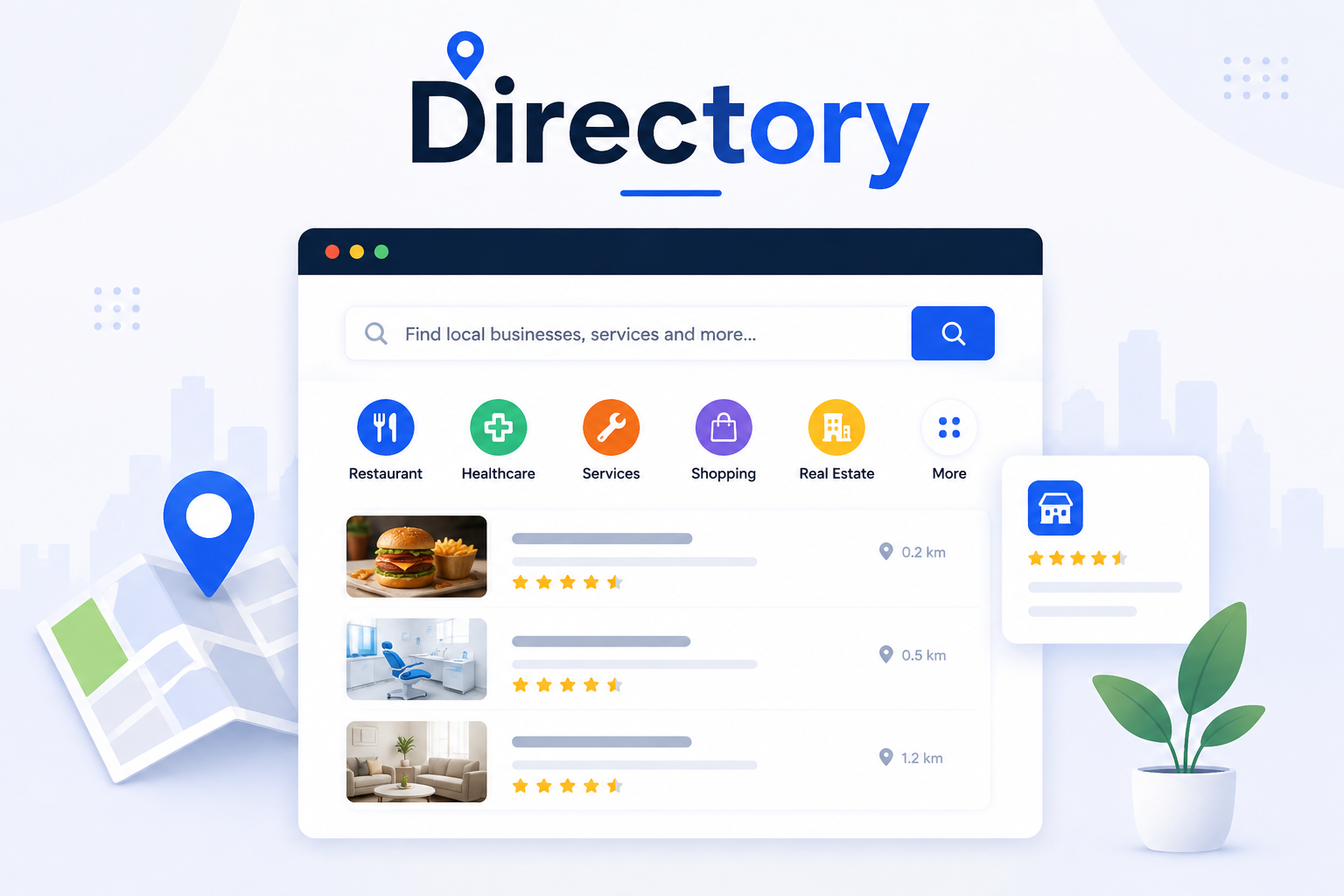
A directory website is a platform that organizes and presents listings of businesses, people, services, or resources within a specific category or geographic area. Users visit the directory to search, browse, and find what they are looking for. The businesses or individuals listed either submit their own information or are added by the directory operator. Yelp, TripAdvisor, Clutch, and Houzz are all directory businesses at their core, each dominating a specific niche by becoming the most trusted and comprehensive reference within it.
Directory websites are one of the most enduringly successful business models on the internet because they solve a fundamental and universal problem: helping people find what they need. Every industry, profession, and geographic market has a version of this problem, which means the opportunity to build a valuable directory is essentially unlimited for founders willing to go deep on a specific niche rather than broad on a general one.
The business model is also attractive because directory websites compound in value over time. Each new listing makes the directory more useful to searchers. More searchers make the directory more valuable to listers. This network effect, combined with the strong SEO properties of well-structured directory listing pages, means that a well-built niche directory becomes increasingly difficult to displace once it achieves a critical mass of quality listings and organic traffic.
This guide covers everything involved in creating a directory website from scratch, including the types of directories worth building, the features required, the technology stack decisions, monetization strategies, and how to build initial listing volume before you have an established audience.
Types of Directory Websites
Directory websites take many different forms depending on what is being listed and who the primary audience is. Understanding which type of directory you are building shapes every decision about features, content structure, monetization, and go-to-market approach.
Directory Type What Is Listed Examples Primary Revenue Model Business directory Local or niche businesses Yelp, Google Business, Yell Paid listings, featured placement Professional directory Individuals in a profession Clutch, Avvo, Bark Lead fees, subscriptions Review directory Products or services with user reviews TripAdvisor, G2, Trustpilot Advertising, premium profiles Resource directory Tools, links, or educational resources Product Hunt, AlternativeTo Sponsored listings, affiliate Event directory Events within a niche or region Eventbrite, Meetup Listing fees, ticket commissions Real estate directory Properties for sale, rent, or lease Rightmove, Zillow, Zoopla Agent subscriptions, listing fees Niche industry directory Businesses or professionals in one specific sector Houzz, Healthgrades, Clutch Premium profiles, lead fees
Step 1: Choose Your Niche and Define Your Audience
The single most important decision in building a directory website is choosing the right niche. General directories that try to list everything for everyone are dominated by incumbents like Google, Yelp, and TripAdvisor that have spent decades and billions of dollars building their market position. A new directory cannot compete on breadth. It can only win by going deeper on a specific niche than any general platform is willing to go.
A good niche for a directory has several characteristics. There is a clearly identifiable audience on the searcher side with a specific recurring need that the directory addresses. There is a meaningful supply of businesses, professionals, or resources to list that is not already comprehensively covered by an existing authoritative directory. The niche is specific enough that the directory can genuinely claim to be the most complete and trustworthy resource within it, but large enough that the addressable market justifies the investment in building and maintaining the platform.
A directory for vetted sustainable fashion brands, a directory of independent financial advisors in a specific region, a directory of halal-certified restaurants across a country, or a directory of web development agencies by specialization and technology stack are all examples of niches with a clear audience, meaningful supply, and insufficient existing coverage to make a new entrant irrelevant from day one.
Step 2: Plan Your Listing Structure and Data Model
The data model behind your directory is the foundation of everything else. Every field that a listing contains, every filter that users can apply, and every category that organizes the content flows from the decisions made about what information each listing holds. Getting this right before development begins prevents the expensive structural changes that come from adding fields or restructuring categories after listings are already populated.
A typical business directory listing contains a name, description, category, subcategory, location, contact information, website URL, operating hours, images, pricing information where relevant, tags for additional filtering, a review and rating section, and a verified status indicator. The exact fields depend on the niche. A restaurant directory needs cuisine type, dietary options, and seating capacity. A professional services directory needs qualifications, years of experience, and service area. A software tools directory needs pricing model, integrations, and supported platforms.
Category structure deserves particular care. A flat list of categories works for small directories but becomes unwieldy as the listing count grows. A hierarchical category structure with parent categories and subcategories allows users to navigate progressively from broad to specific and gives search engines a clear topical structure to index. Each category page in a well-structured directory becomes an independently rankable page that attracts organic traffic for category-level search queries.
Step 3: Plan the Core Features Your Directory Needs
A directory website needs to serve two distinct groups: the people and businesses who submit and manage listings, and the users who search and browse the directory to find what they need. Both groups need a seamless experience and both will leave if the platform creates friction in their respective workflows.
Feature For Priority MVP or Later Listing submission form Listers Critical MVP Listing management dashboard Listers Critical MVP Search with keyword and filters Searchers Critical MVP Individual listing pages Searchers Critical MVP Category and subcategory pages Searchers Critical MVP Admin moderation panel Operator Critical MVP Review and rating system Searchers High MVP Payment and billing system Listers High MVP Map integration Searchers High for local directories MVP for local Claimed listing verification Listers Medium Post-MVP Email alerts for new listings Searchers Medium Post-MVP Analytics dashboard for listers Listers Medium Post-MVP
Step 4: Choose the Right Technology Stack
Directory websites are deceptively complex to build well. The combination of dynamic listing pages that need to be indexed by search engines, fast search and filter functionality across potentially thousands of listings, image handling for listing photos, map integrations for location- based directories, payment processing for paid listings, and a dual-sided user management system creates a technical scope that off-the-shelf solutions consistently struggle to handle as the platform grows.
Approach Launch Speed SEO Performance Scalability Customization WordPress with directory plugin Fast Moderate Poor at scale Moderate No-code platforms Very fast Poor Very limited Very limited Custom built (React, Next.js, Node.js, PostgreSQL) 3 to 5 months Excellent Excellent Full control Headless CMS with custom frontend 2 to 3 months Excellent Good Moderate
SEO performance is the most important technical consideration for a directory website because organic search traffic is the primary growth channel for most directories. Next.js with server-side rendering ensures every listing page and category page loads fast and is indexed correctly by Google, which is what separates directories that grow their organic traffic compoundingly from those that plateau once their initial audience is exhausted.
Step 5: Build a Monetization Strategy
Directory websites have several proven monetization models and most successful platforms combine multiple revenue streams rather than relying on a single source. The right combination depends on the niche, the volume of listings, and whether the directory positions itself as a premium curated resource or a high-volume comprehensive one.
Revenue Model How It Works Best For Paid listings Listers pay a one-time or annual fee to appear in the directory Most directory types Freemium listings Basic listing free, premium features paid Directories needing high listing volume first Featured placement Listers pay for top positioning in search results and category pages High-competition categories Subscription tiers Monthly or annual plans with different feature levels Professional service directories Lead generation fees Listers pay per qualified enquiry received through the directory Service provider directories Advertising Display ads or sponsored content served to searchers High-traffic directories with broad audiences Affiliate commissions Commission earned when searchers click through and convert on listed sites Software, tools, and product directories
Step 6: Design for Search, Discovery, and Trust
The design of a directory website needs to serve discovery above all else. Users arrive knowing what category of thing they are looking for but not always which specific listing they want. The design needs to make the path from arrival to finding the right listing as short and frictionless as possible, through effective search functionality, logical category navigation, and listing pages that give users enough information to make a confident decision.
Search functionality is the most used feature on most directory websites. It needs to be fast, tolerant of imprecise queries, and supported by filters that allow progressive narrowing of results without requiring users to restart their search each time a filter is applied. Filters should reflect the most meaningful dimensions of the niche. A restaurant directory filters by cuisine, price range, dietary options, and neighborhood. A developer agency directory filters by technology stack, project size, industry specialization, and location.
Trust signals on listing pages are what convert browsers into enquiries. Reviews and ratings from verified users carry the most weight, followed by the completeness and quality of the listing information itself. A listing with a thorough description, professional images, complete contact information, and a track record of positive reviews will consistently outperform a sparse listing in the same category regardless of how established the listed business actually is. The platform's design should make it easy for listers to create complete listings and actively incentivize doing so.
Step 7: Optimize for SEO From the Ground Up
Search engine optimization is the primary growth engine for most directory websites, and the structural decisions made during development determine how well the directory performs in organic search for years after launch. Directory websites have a natural SEO advantage in that they generate enormous volumes of indexable content through their listings and category pages, each of which can rank independently for specific search queries. The challenge is ensuring that the platform's architecture allows Google to discover, crawl, and index all of that content efficiently.
Each individual listing page needs a unique URL that is descriptive and consistent with the site's URL structure. Page titles and meta descriptions should be generated automatically from listing data in formats that match real search queries. Structured data markup using LocalBusiness, Organization, or other relevant schema types helps Google understand the content of each listing page and can enable rich results in search that significantly improve click-through rates.
Category pages are among the most valuable SEO assets on a directory website. A category page for "web development agencies in London" targeting that exact search query will rank for it far more effectively than any single listing page can. Each category page needs unique introductory content that goes beyond a simple list of filtered listings, giving Google enough textual content to understand and index the page properly. Category pages with only a list of listings and no supporting content are consistently outranked by competitors whose category pages include genuine informational value.
Step 8: Build Initial Listing Volume
An empty directory delivers no value to anyone. Getting the first wave of listings onto the platform before launching publicly is one of the most important pre-launch activities for any directory business. There are several practical approaches to seeding initial listing volume without waiting for organic submissions.
Manually creating listings from publicly available information is the most direct approach. For a business directory, this means researching businesses in your niche and creating basic listing pages for them using information from their own websites, Google Business profiles, and other public sources. These listings can then be claimed and upgraded by the businesses themselves once they discover the directory and see the value of having a more complete presence on it.
Offering free listings for a defined period to early adopters reduces the barrier to submission significantly and builds social proof that attracts subsequent listers who are unwilling to be the first to pay. Once a critical mass of quality listings is established and organic traffic begins generating visible enquiries for listers, converting free listings to paid becomes significantly easier.
Advantages and Drawbacks of Building a Directory Website
Advantages
Strong natural SEO properties since individual listing pages and category pages generate large volumes of indexable content that compound in organic search value over time as the listing count grows.
Network effects develop as more listings attract more searchers, which makes listings more valuable, which attracts more listers in a compounding cycle that becomes increasingly difficult for competitors to disrupt.
Multiple monetization models are available simultaneously, including paid listings, featured placements, lead fees, subscriptions, advertising, and affiliate commissions, which diversifies revenue as the platform matures.
User-generated content through reviews and listing submissions continuously improves the directory without requiring proportional increases in operator effort, making the model highly scalable once established.
Strong defensibility once a directory achieves authority in its niche since the combination of listing volume, review history, and organic search rankings creates a moat that takes years for competitors to replicate.
Drawbacks
Significant upfront effort is required to build initial listing volume before the platform delivers enough value to attract organic submissions and paying listers.
Ongoing moderation is necessary to maintain quality and prevent spam listings, fake reviews, and outdated information from degrading the user experience and the directory's credibility.
Monetization takes time to build since listers are only willing to pay for visibility on a directory that demonstrably delivers traffic and enquiries, which requires establishing organic search presence first.
Data freshness is a permanent operational challenge since business information changes constantly and outdated listings erode the trust that makes a directory valuable to searchers.
Build Your Directory Website With Munix Studio
A directory website that performs well in organic search, handles large listing volumes efficiently, and delivers a seamless experience to both listers and searchers requires a platform built with the right architecture from the start. At Munix Studio we build custom directory platforms on React, Next.js, and Node.js with the search functionality, listing management, payment processing, and SEO structure that serious directory businesses require from day one.
Website Development — Custom directory platforms built on React, Next.js, and Node.js with listing management, category structure, search functionality, and payment processing built to scale from launch.
UI/UX Design — Directory-specific interface design covering the listing submission experience, search and filter journey, listing page layout, and the trust signals that convert searchers into enquiries.
SEO Optimization — Directory SEO strategy including structured data markup, category page optimization, URL structure planning, and content strategy that turns listing and category pages into compounding organic traffic assets.
DevOps and Cloud — Scalable cloud infrastructure that handles search queries across large listing databases, image storage, and the performance requirements of a directory platform at scale.
Maintenance and Support — Ongoing platform management covering listing moderation tools, database performance, feature additions, and the operational support a live directory platform requires after launch.
Frequently Asked Questions
Ready to Get Started?
Website Development
Custom directory platforms built on React, Next.js, and Node.js with listing management, category structure, search functionality, and payment processing built to scale from launch.
Explore Website DevelopmentUI/UX Design
Directory-specific interface design covering listing submission, search and filter journeys, listing page layout, and the trust signals that convert searchers into enquiries.
Explore UI/UX DesignSEO Optimization
Directory SEO strategy including structured data markup, category page optimization, and content strategy that turns listing and category pages into compounding organic traffic assets.
Explore SEO OptimizationMaintenance and Support
Ongoing platform management covering listing moderation tools, database performance, feature additions, and operational support a live directory platform requires after launch.
Explore Maintenance and SupportRelated Articles
What is Website Development? The Complete Guide for Beginners
How Are Modern Websites Built in 2026?
Website Development Process & Life Cycle : Complete Guide
How Websites Work: DNS, Servers, Browsers
What is Website Architecture? Best Practices