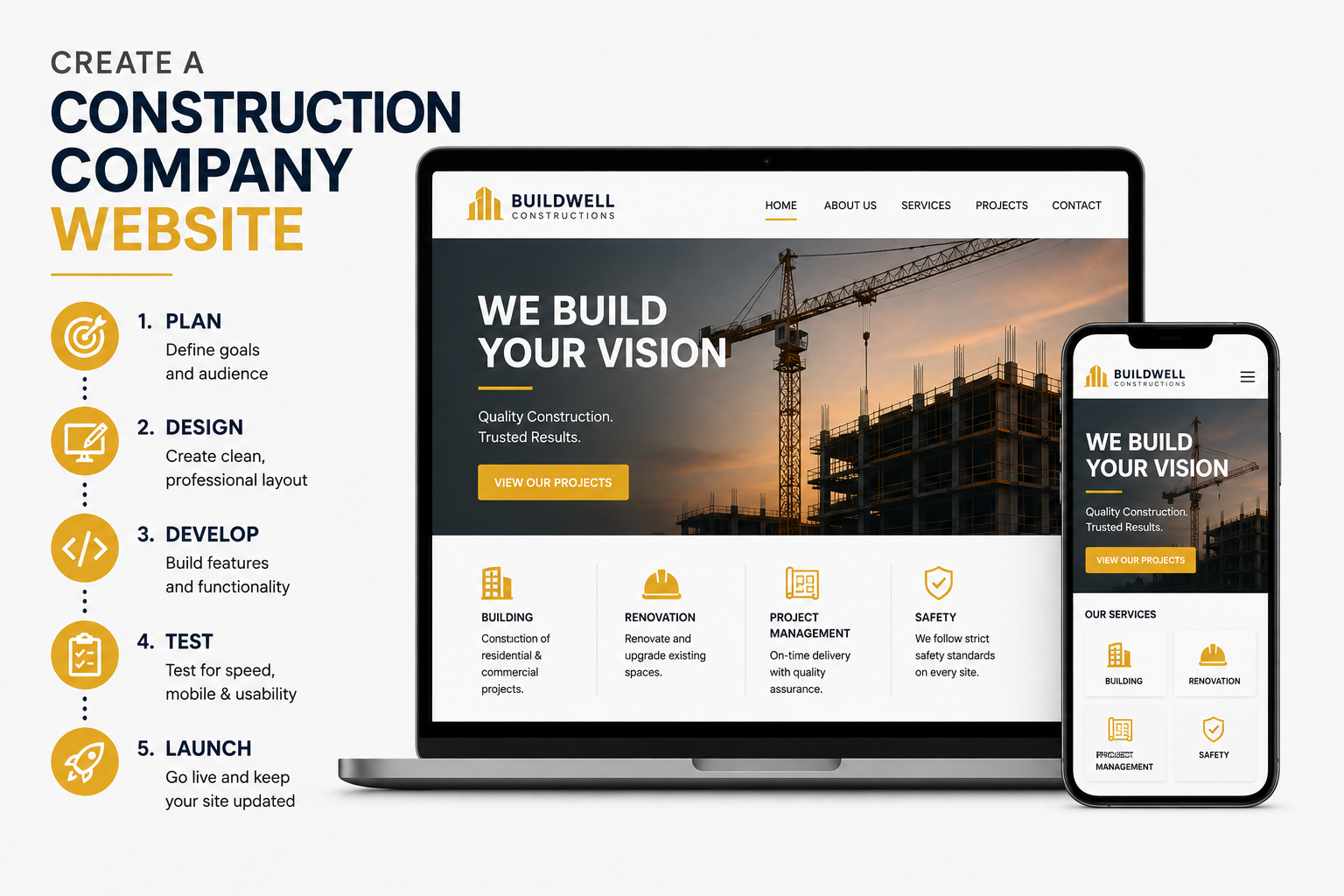
Why Construction Companies Need a Professional Website
Construction is one of the last industries where many businesses still rely almost entirely on word of mouth and personal referrals. While referrals remain valuable, they represent a ceiling on growth that a well-built website removes. In 2026, property developers, commercial clients, and homeowners looking for construction services search online first. If your company does not appear in those results with a professional, credible presence, the work goes to a competitor who does.
A construction company website serves a different purpose from most business websites. It is less about selling a product and more about demonstrating capability, reliability, and track record. Clients commissioning construction work are making significant financial commitments and taking on real risk. The job of your website is to reduce that perceived risk by showing clearly what you have built, who you have worked for, and why your company is the right choice for their project.
This guide covers every step involved in creating a construction company website that does exactly that, from the initial planning and structure through to the technical build, content strategy, and ongoing search optimization that keeps enquiries coming in consistently.
Step 1: Define Your Services and Target Clients
Construction covers an enormous range of specializations. A company that handles large commercial builds operates in a completely different market from one that focuses on residential extensions, fit-outs, groundworks, or specialist restoration. The website needs to be built around the specific services your company offers and the specific clients you want to attract, not around a generic description of construction services that could apply to anyone.
Before the project begins, define which service areas the site will cover and which types of clients represent your ideal work. A residential builder targeting high-value home renovation clients needs a very different tone, visual style, and content focus than a commercial contractor targeting property developers. Getting this clarity upfront ensures every decision made during the design and build process serves the right audience.
Step 2: Plan the Pages Your Website Needs
A construction company website needs a clear and logical page structure that allows visitors to quickly find information relevant to their project. The most effective approach gives each major service its own dedicated page rather than grouping everything under a single services overview. Separate pages allow each service to rank independently in search results and allow you to speak directly to the specific concerns of clients looking for that particular type of work.
The core pages a construction website needs include a homepage that immediately communicates what the company does and the calibre of its work, individual service pages for each construction specialism, a projects section showcasing completed work with photographs and project details, an about page covering the company's history, team, accreditations, and values, a testimonials or client section with genuine reviews and case outcomes, and a contact page with a clear project enquiry form.
The projects section is arguably the most important part of a construction website and the one that most companies underinvest in. Each project page should include before and after photography where possible, a description of the brief and the challenges involved, the scale and duration of the project, the materials and methods used, and ideally a client quote. This level of detail transforms a simple portfolio into a compelling body of evidence that builds genuine confidence in prospective clients.
Step 3: Choose the Right Technology for Your Build
Many construction companies default to basic WordPress sites built on industry templates, and while these can get something online quickly, they rarely deliver the performance or visual quality that a serious construction business needs. Construction websites are image-heavy by nature. Project photography is central to the entire purpose of the site. A technology stack that cannot handle high-resolution images efficiently will produce a slow site regardless of how well everything else is optimized.
Building on React and Next.js solves this problem directly. Next.js has built-in image optimization that automatically converts images to modern formats, serves them at the correct size for each device, and lazy loads them so the page is fast even when it contains dozens of high-resolution project photographs. This is not a minor performance improvement. For a construction company whose website lives or dies on the quality of its visual presentation, the difference between a slow and a fast image-heavy site is the difference between visitors staying and visitors leaving immediately.
Step 4: Design for Credibility and Project Quality
The design of a construction company website should reflect the quality standard of the work the company produces. A company that builds premium residential properties should have a website that feels premium. A company specializing in large-scale commercial construction should have a website that feels substantial and authoritative. The visual tone of the site communicates the calibre of the company before a prospective client reads a single line of copy.
Accreditations, certifications, and industry memberships should be prominently displayed throughout the site, not buried in a footer or hidden on an about page. For clients commissioning significant construction work, these credentials are important reassurances that the company operates to professional standards and carries appropriate insurances. Displaying them prominently removes a source of doubt that might otherwise prevent a visitor from making contact.
Health and safety credentials, environmental certifications, and any specialist qualifications relevant to the company's work deserve their own visible section. For commercial clients and property developers, these are not optional details. They are frequently part of the evaluation criteria for contractor selection and need to be easily found on the website.
Step 5: Write Content That Ranks and Converts
Content on a construction company website needs to serve two purposes at the same time. For search engines, it needs to be detailed, structured around relevant keywords, and comprehensive enough to demonstrate genuine expertise on the topics it covers. For potential clients, it needs to address the questions and concerns they actually have when evaluating a construction company, not just describe the services in general terms.
Each service page should cover what the service involves, the types of projects the company handles within that service area, the process a client goes through from initial enquiry to project completion, and what makes the company's approach to that service distinctive. This level of depth signals to Google that the page is a genuinely useful resource, not a thin promotional page, which is what separates pages that rank from those that do not.
A blog section adds significant long-term value to a construction website. Articles covering topics like planning permission guides, material cost comparisons, how to choose a contractor, and construction timeline expectations attract prospective clients who are in the early stages of planning a project. These visitors are not yet ready to request a quote, but they are exactly the audience you want building familiarity with your brand before they are.
Step 6: Optimize for Local Search
Construction is fundamentally a local business. Clients hire contractors who can physically reach their site, which means local SEO is the most important traffic channel for most construction company websites. Ranking well for searches like "construction company in Birmingham" or "commercial builders in Manchester" requires a deliberate and sustained approach to local search optimization.
This means incorporating location-specific keywords naturally throughout service pages and project descriptions, maintaining a complete and optimized Google Business Profile, building consistent citations across relevant industry directories, and earning genuine reviews from satisfied clients that are visible on both the website and Google. Each of these elements contributes to local search visibility in a way that compounds over time as the site's overall authority grows.
Creating dedicated location pages for each area the company serves is one of the highest-impact local SEO strategies available to construction businesses operating across multiple towns or regions. Each location page targets the specific geographic search queries for that area and can rank independently, multiplying the company's local search footprint significantly without requiring any additional advertising spend.
Step 7: Make It Easy to Request a Quote
The most important conversion action on a construction website is the project enquiry or quote request. Every design decision, every piece of content, and every navigation choice should ultimately serve the goal of making it as easy as possible for an interested visitor to take that step. If the path from landing on the site to submitting an enquiry involves too many clicks, too many form fields, or any friction at all, you will lose a significant proportion of visitors who had genuine interest in working with you.
The quote request form should be simple. Name, contact details, project type, approximate budget range, and a description field is typically all that is needed at the initial enquiry stage. Asking for too much information upfront increases the abandonment rate significantly. The goal of the form is to open a conversation, not to qualify the lead exhaustively before the first contact has even been made.
Call to action buttons linking to the quote request form should appear on every service page and project page, not just on the contact page. A visitor who has just finished reading about your commercial fit-out work and is impressed by what they have seen should be able to submit an enquiry from exactly where they are without having to navigate to a separate contact page to do so.
Step 8: Maintain and Improve After Launch
A construction company website requires ongoing attention after launch to maintain and build on its search performance. Adding new completed projects regularly keeps the portfolio current and gives search engines fresh content to index. Updating service pages when the company expands its capabilities ensures the site accurately represents what the business currently offers. And regular technical audits catch performance and security issues before they affect the site's visibility or user experience.
The construction companies that generate a consistent flow of inbound project enquiries through their websites are the ones that treat the site as a living business asset rather than a static brochure. Every new project added, every new blog post published, and every technical improvement made compounds the site's authority and search performance over time.
Build Your Construction Company Website With Munix Studio
At Munix Studio we build professional websites for construction companies and trade businesses that need to showcase their work compellingly, rank in local search, and generate consistent project enquiries. Every site is custom built around your specific services, your target clients, and the outcomes that matter most to your business.
Website Development — Custom construction company websites built on React and Next.js, optimized for fast image loading, local SEO, and consistent project enquiry generation.
UI/UX Design — Project-focused design that showcases your construction work at its best and builds the credibility that converts visitors into enquiries.
SEO Optimization — Local SEO strategy that gets your construction company ranking for the project and location specific searches your ideal clients are making.
Graphic and Branding — Brand identity design that ensures your website, proposals, and site signage all communicate the same level of professionalism and quality.
Maintenance and Support — Ongoing updates, project additions, and performance monitoring to keep your site current and competitive after launch.
Frequently Asked Questions
Ready to Get Started?
Website Development
Custom construction company websites built on React and Next.js, optimized for fast image loading, local search performance, and consistent project enquiry generation.
Explore Website DevelopmentUI/UX Design
Project-focused design that showcases your construction work compellingly and builds the credibility that turns visitors into genuine enquiries.
Explore UI/UX DesignSEO Optimization
Local SEO strategy and implementation that gets your construction company ranking for the project-specific and location-specific searches your ideal clients are already making.
Explore SEO OptimizationGraphic and Branding
Brand identity design that ensures your website, proposals, and site materials all communicate the same level of quality and professionalism consistently.
Explore Graphic and BrandingMaintenance and Support
Ongoing project additions, content updates, and performance monitoring to keep your construction website current and competitive long after launch.
Explore Maintenance and SupportRelated Articles
What is Website Development? The Complete Guide for Beginners
How Are Modern Websites Built in 2026?
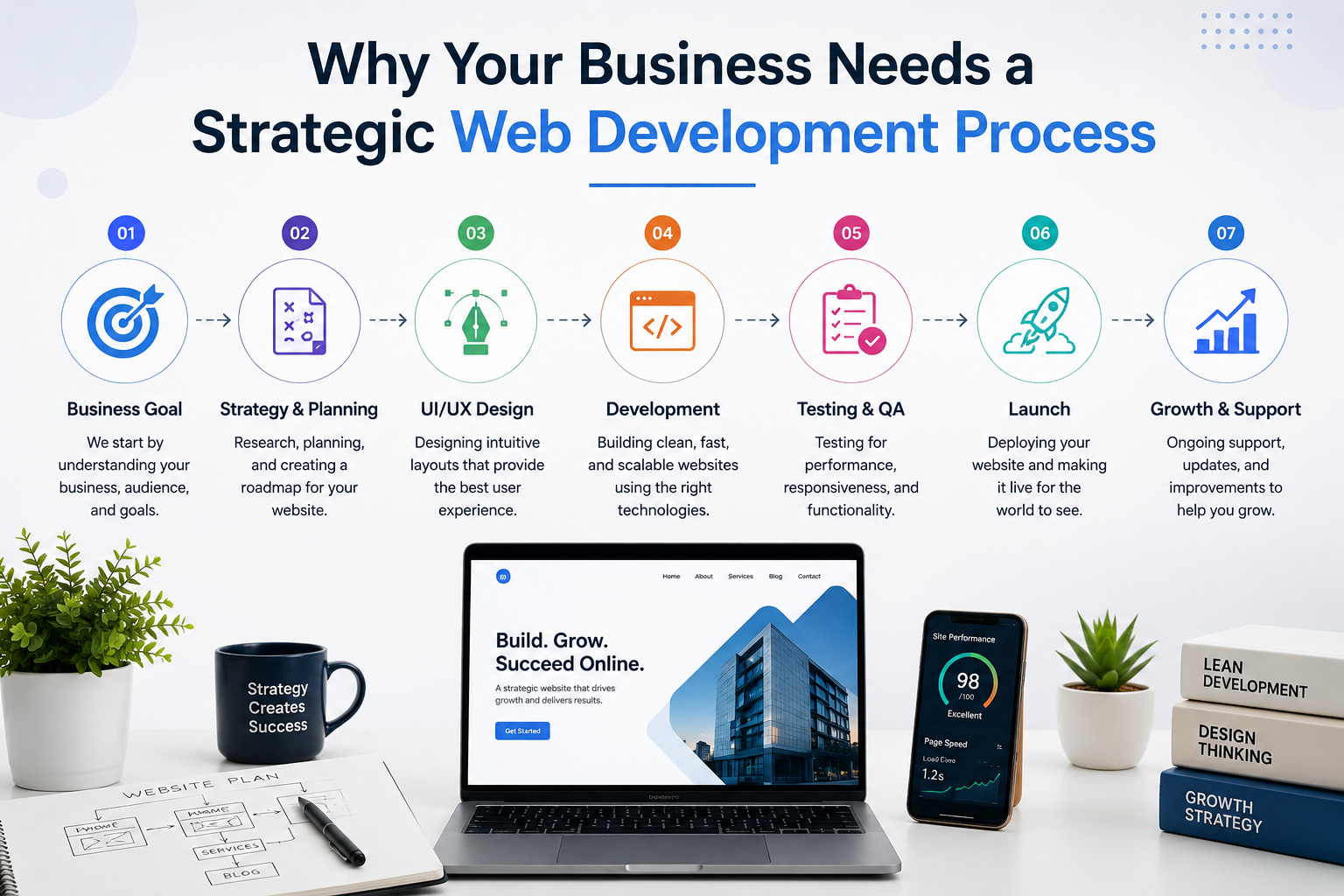
Website Development Process & Life Cycle : Complete Guide
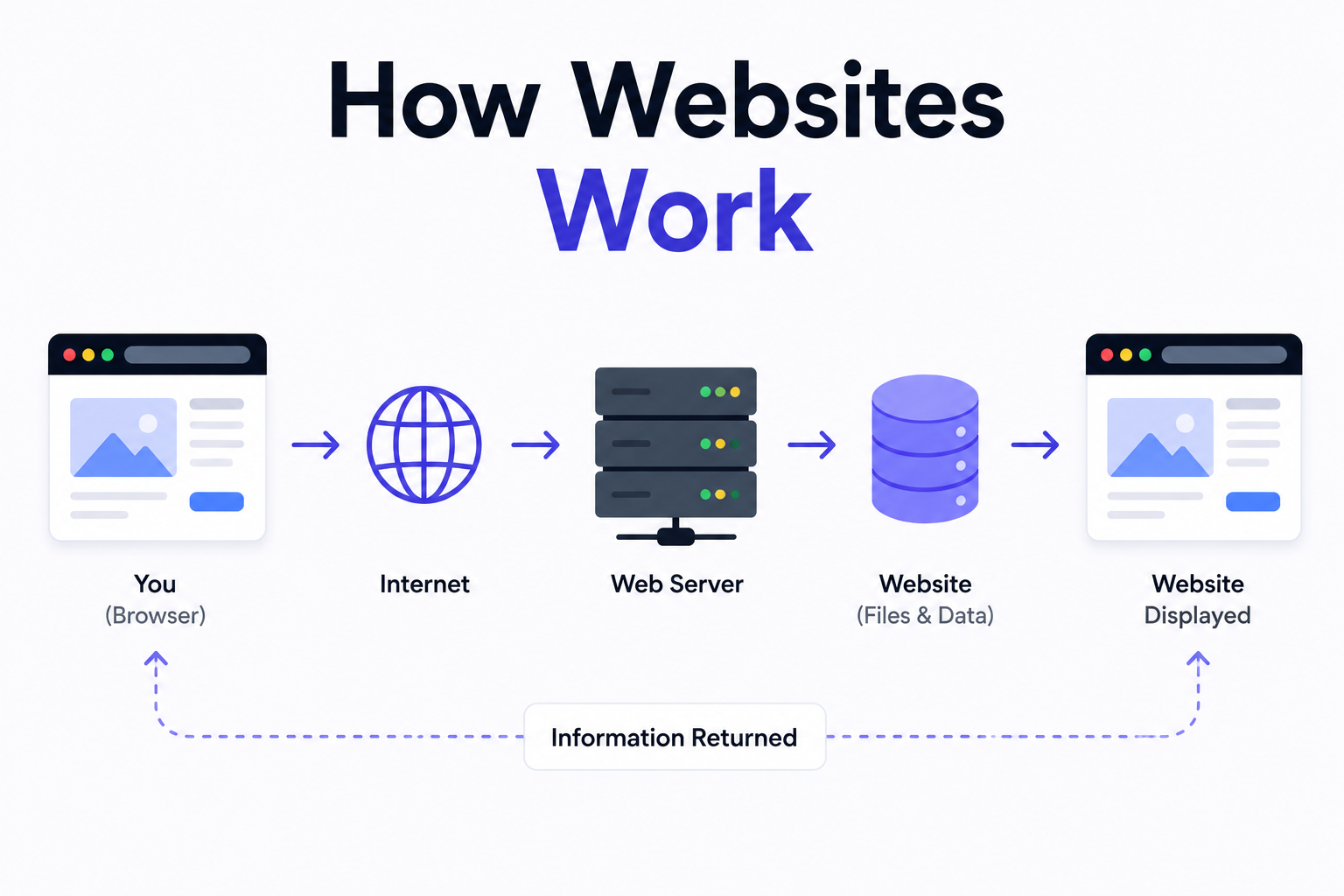
How Websites Work: DNS, Servers, Browsers
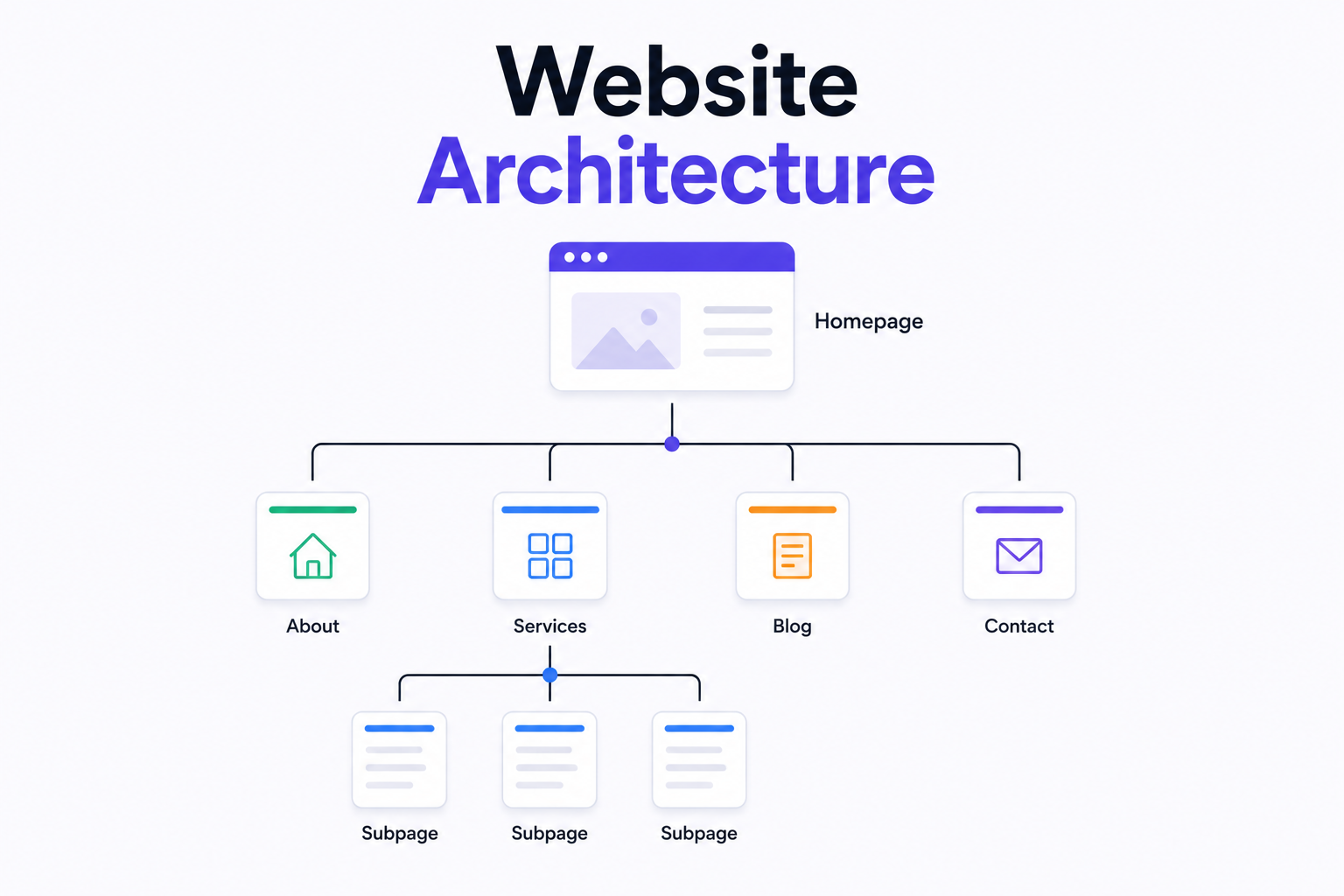
What is Website Architecture? Best Practices