What Is SEO?
SEO stands for Search Engine Optimization. It is the practice of improving a website so that it appears higher in unpaid search engine results when people search for topics, products, or services related to what the website offers. The higher a page ranks in those results, the more organic traffic it receives, meaning visitors who arrive without the website owner paying for an advertisement to bring them there.
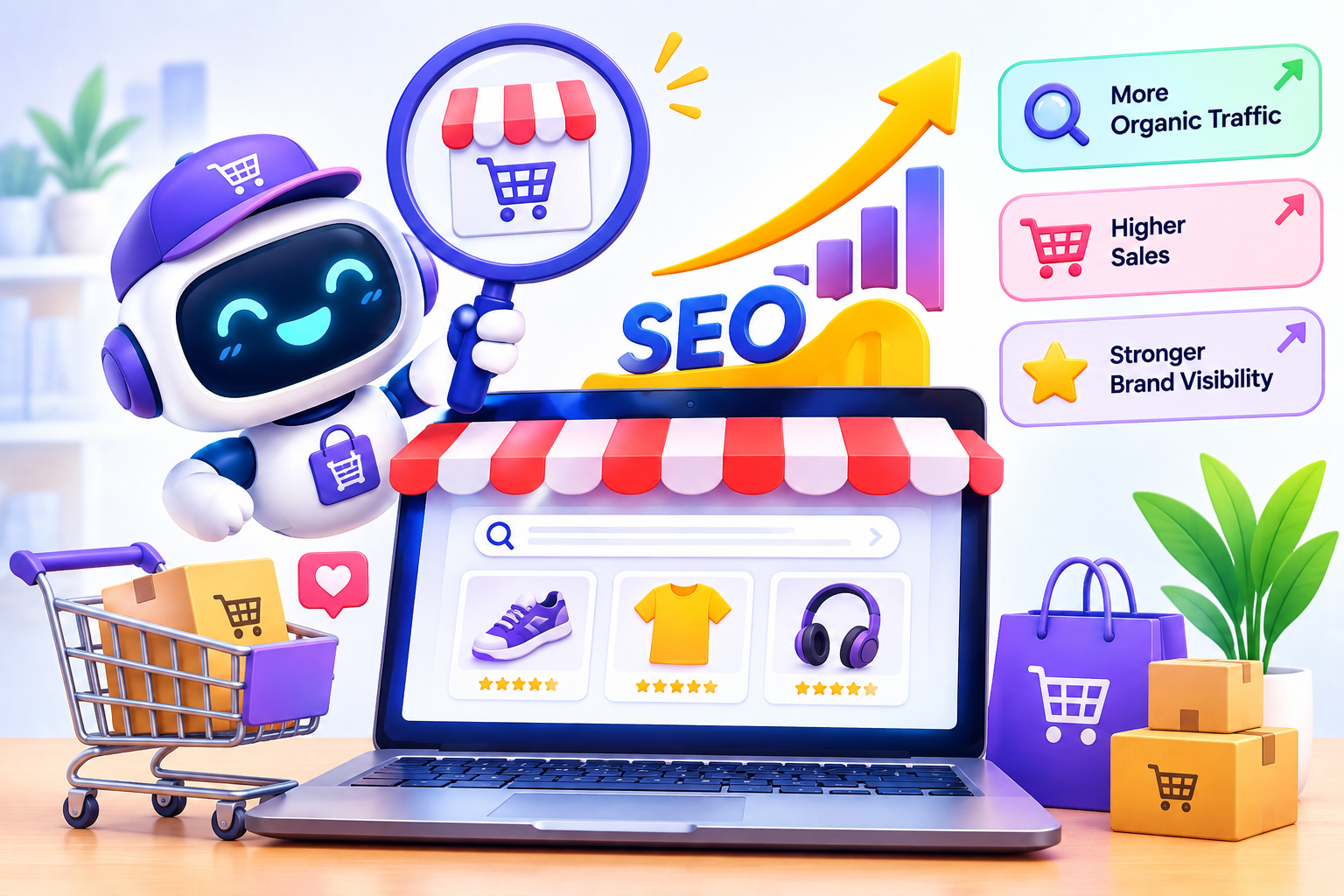
Search engines like Google use complex algorithms to evaluate every page on the internet and determine which ones best answer a given search query. SEO is the discipline of understanding what those algorithms reward and making deliberate improvements to a website so that it meets those criteria more effectively than competing pages. This involves work across three broad areas: the content on the page, the technical structure of the website, and the external signals such as backlinks that indicate a site's authority and trustworthiness.
SEO is not a one-time task. It is an ongoing process that requires consistent attention because search algorithms evolve continuously, competitors publish new content, and the searches people make shift over time. Businesses that treat SEO as a long-term investment rather than a short-term project consistently see better and more durable results than those who approach it as a campaign with a defined end date.
Why SEO Matters for Businesses
Organic search is consistently the largest single source of website traffic for most businesses. Studies across industries show that organic search accounts for more than 50 percent of all website traffic globally. People searching Google for a product, service, or answer are actively looking for what you offer, which makes SEO traffic fundamentally different from advertising traffic. A visitor who arrives through search has already expressed intent. They are not being interrupted by an ad. They came looking.
The compounding nature of SEO also sets it apart from paid channels. An advertisement stops generating traffic the moment the budget runs out. A well-optimized page can continue ranking and driving traffic for months or years after it was published, with no ongoing cost per visit. This is what makes SEO-driven traffic increasingly economical over time compared to paid acquisition, which costs the same or more per click regardless of how long a campaign has been running.
The Types of SEO
SEO is not a single discipline but a collection of related practices, each addressing a different aspect of how search engines evaluate and rank websites. Understanding the different types helps businesses identify which areas need the most attention and what a comprehensive SEO program actually involves.
Type of SEO What It Covers Primary Goal Who Handles It On-page SEO Content quality, keyword usage, title tags, meta descriptions, heading structure, internal linking Make each page relevant and useful for its target query Content team, SEO specialist Technical SEO Site speed, crawlability, indexability, structured data, Core Web Vitals, HTTPS Ensure search engines can find and index the site efficiently Developer, technical SEO specialist Off-page SEO Backlink acquisition, brand mentions, digital PR, authority building Build the site's authority and trustworthiness in Google's eyes Link builder, PR team, SEO strategist Local SEO Google Business Profile, local citations, reviews, location-specific content Rank in local search results and Google Maps for geographic queries Local SEO specialist, marketing team Content SEO Keyword research, content planning, topical authority, content architecture Build a content library that covers a topic comprehensively Content strategist, SEO writer Ecommerce SEO Product page optimization, category pages, schema markup, shopping feeds Drive qualified purchase-intent traffic to product pages Ecommerce SEO specialist, developer International SEO Hreflang tags, country targeting, multilingual content, geo-targeting Rank in multiple countries and languages simultaneously International SEO specialist
The Core Principles of SEO
Regardless of which type of SEO is being applied, several fundamental principles underpin all of it. Google's ranking systems evaluate pages based on relevance, authority, and experience. Relevance means the page genuinely addresses the searcher's query. Authority means other credible sources recognize and reference the page or the domain it sits on. Experience refers to how well the page actually serves the person who visits it, covering speed, usability, and the quality of the information provided.
Google's quality evaluator guidelines formalize this as E-E-A-T, which stands for Experience, Expertise, Authoritativeness, and Trustworthiness. These are not technical metrics that can be measured directly but signals that Google infers from how content is written, who wrote it, how other sites reference it, and how users behave when they visit it. An SEO program that addresses all four of these dimensions consistently outperforms one that focuses narrowly on technical compliance or keyword density alone.
The Components of an SEO Program
A comprehensive SEO program is made up of several interconnected components that work together. Addressing one in isolation rarely produces sustainable results. The following table shows the main components, what each involves, and how much impact each has on rankings.
Component What It Involves Impact on Rankings Time to See Results Keyword research Identifying what people search for and matching content to those queries High 3 to 6 months Content creation Writing and publishing pages that address target queries thoroughly Very high 3 to 9 months Technical optimization Site speed, crawlability, structured data, Core Web Vitals High Weeks to months Link building Earning backlinks from other credible websites to build domain authority Very high 6 to 12 months On-page optimization Title tags, meta descriptions, heading structure, image alt text, internal linking Medium to high Weeks to months User experience Page layout, mobile optimization, navigation, engagement signals Medium to high 1 to 3 months
What Is an SEO Company and What Does It Do?
An SEO company is a business that provides search engine optimization services to other organizations. These services typically include keyword research, content strategy, on-page optimization, technical SEO audits and implementation, link building, and ongoing performance monitoring and reporting. The goal is to improve clients' visibility in organic search results and drive more qualified traffic to their websites.
On a day to day basis, an SEO company conducts keyword research to identify what the client's target audience is searching for, optimizes existing pages for those queries, publishes new content designed to rank for additional keywords, fixes technical issues that prevent search engines from properly crawling and indexing the site, builds backlinks through outreach and digital PR, and provides monthly reporting that connects all of this activity to traffic and business outcomes.
An SEO firm, an SEO agency, and an SEO company all refer to the same thing. The terminology differs across regions and industries but the service offered is identical. Some companies specialize in specific types of SEO such as technical SEO, local SEO, or ecommerce SEO. Others cover the full spectrum. The right choice depends on the size of the business, the specific goals of the program, and whether the work requires deep industry specialization.
What Is SEO Consulting?
SEO consulting is an advisory service where an experienced SEO professional analyzes a website, identifies ranking opportunities and technical issues, and provides a strategic roadmap for improvement without necessarily being responsible for executing the work themselves. A consultant typically delivers an audit, a prioritized action plan, and strategic guidance, leaving implementation to the client's internal team or development partner.
SEO consulting is particularly valuable for businesses that have internal marketing or development teams but lack the specialized expertise to know where to focus their effort. For larger businesses with significant existing web presence, consulting often focuses on diagnosing why current performance is underperforming and what specific changes would produce the largest ranking impact in the shortest time.
What Is Included in SEO Services?
SEO services vary between providers but a comprehensive package typically includes a defined set of activities delivered on an ongoing monthly basis alongside one-time deliverables like an initial audit and strategy document. The table below shows what is typically included and whether each activity is a one-time or ongoing commitment.
Service What It Involves One-time or Ongoing SEO audit Full review of technical, on-page, and off-page SEO health One-time then periodic Keyword research Identifying target keywords by volume, competition, and intent One-time then updated quarterly On-page optimization Improving titles, meta descriptions, headings, and content on existing pages Ongoing Content creation Writing and publishing new SEO-optimized pages and blog articles Ongoing Technical SEO Fixing crawl errors, improving page speed, implementing structured data Ongoing Link building Acquiring backlinks from relevant authoritative websites Ongoing Local SEO Google Business Profile management, local citations, review management Ongoing Reporting and analytics Monthly reports on rankings, traffic, and conversions from organic search Ongoing monthly
The Objectives of SEO
The primary objective of SEO is to increase the quantity and quality of organic traffic to a website. Quantity refers to the total number of visitors arriving from search. Quality refers to how well those visitors match the profile of people likely to become customers or engaged users. Traffic from irrelevant queries that produces no conversions is not a useful SEO outcome regardless of the volume.
Beyond traffic, the broader objectives of a well-executed SEO program include building brand awareness by appearing prominently for the topics your ideal audience searches for, establishing authority through comprehensive topical coverage, reducing customer acquisition cost over time by growing a free traffic channel, and creating a digital asset in the form of a website with established search authority that compounds in value with each passing month.
SEO vs Paid Search
SEO and paid search serve different purposes and work best when used together rather than as alternatives to each other. Understanding the difference helps businesses allocate budget and effort more effectively across both channels.
Factor SEO (Organic) Paid Search (PPC) Cost per click Free Paid per click Time to results 3 to 12 months Immediate Traffic when budget stops Continues Stops immediately Long-term value Compounds over time Consistent but requires ongoing spend User trust Higher, organic results perceived as more credible Lower, clearly labelled as sponsored Best for Long-term sustainable traffic growth Immediate traffic, product launches, time-sensitive offers
The Benefits of SEO Services
Investing in professional SEO services delivers several distinct advantages compared to managing SEO without specialist support. The most significant is speed. An experienced SEO team knows which actions produce the fastest results and which are lower priority, which means the investment starts compounding sooner than a trial-and-error approach would allow.
Access to specialized tools and expertise that would be prohibitively expensive to build internally for most businesses.
A structured and accountable process with clear deliverables and measurable outcomes reported monthly.
Consistent execution of the ongoing activities that SEO requires, including content production, technical maintenance, and link acquisition, without those tasks competing with other internal priorities.
Strategic guidance that aligns the SEO program with broader business goals rather than treating it as a standalone technical exercise.
A compounding return on investment that grows over time as rankings improve, domain authority increases, and organic traffic builds without a proportional increase in cost.
SEO Tools and How They Are Used
SEO tools are software platforms used by SEO professionals and businesses to research keywords, audit websites, track rankings, analyze backlinks, and measure performance. The most widely used professional SEO tools are Semrush, Ahrefs, Moz, and Google Search Console. Each serves a slightly different purpose and most serious SEO programs use more than one.
Google Search Console is free and provides direct data from Google about how the site appears in search results, which queries are generating impressions and clicks, and which pages have technical issues preventing proper indexing. Semrush and Ahrefs are paid platforms that add keyword research capabilities, competitor analysis, backlink tracking, and site audit tools that Search Console does not provide. Together these tools give SEO teams the data they need to make informed decisions about where to focus effort for the highest return.
What Is an SEO Campaign?
An SEO campaign is a defined period of focused SEO activity targeted at achieving a specific outcome, such as improving rankings for a particular keyword cluster, recovering from an algorithm penalty, or building organic visibility in a new market or product category. Unlike an ongoing SEO retainer which covers the full range of optimization activities continuously, a campaign has a defined scope, a specific target, and a timeline against which success is measured.
SEO campaigns are most effective when they are run as part of a broader ongoing program rather than as standalone initiatives. A campaign that improves rankings for a specific set of keywords will not sustain those improvements without the underlying technical health, content quality, and authority building that an ongoing program maintains.
SEO Manager: What the Role Involves
An SEO manager is the person responsible for overseeing and coordinating all search engine optimization activity within an organization or agency. The role covers developing the overall SEO strategy, managing keyword research and content planning, coordinating with developers on technical implementation, overseeing link building activities, monitoring performance through analytics platforms, and communicating results and priorities to marketing leadership.
In larger organizations the SEO manager leads a team of specialists covering content, technical SEO, and link building separately. In smaller businesses the role often involves handling all of these areas directly or working closely with an external agency that handles execution while the manager focuses on strategy and internal coordination.

Start Building Your SEO Foundation With Munix Studio
Understanding what SEO is and how it works is the first step. Building and executing an SEO program that consistently improves rankings, traffic, and business outcomes is the next one. At Munix Studio we offer SEO services built around strategy, technical execution, and content that compounds in value over time.
SEO Optimization — Full-service SEO covering keyword research, on-page optimization, technical audits, and content strategy to improve your rankings and grow organic traffic consistently.
Website Development — A technically sound website built on React and Next.js with the speed, structure, and architecture that gives your SEO program the foundation it needs to perform.
Digital Marketing — Integrated marketing strategy that combines SEO with social media, content, and paid channels to build a complete and sustainable digital growth engine.
Maintenance and Support — Ongoing website management that keeps your technical SEO healthy, your content current, and your site performing at the standard Google expects.
Frequently Asked Questions
Ready to Get Started?
SEO Optimization
Full-service SEO covering keyword research, on-page optimization, technical audits, and content strategy to improve your rankings and grow organic traffic consistently over time.
Explore SEO OptimizationRelated Articles
Ecommerce SEO: The Complete Guide to Ranking Your Online Store
The History of SEO: How Search Engine Optimisation Began
Next.js vs WordPress for SEO: What Matters
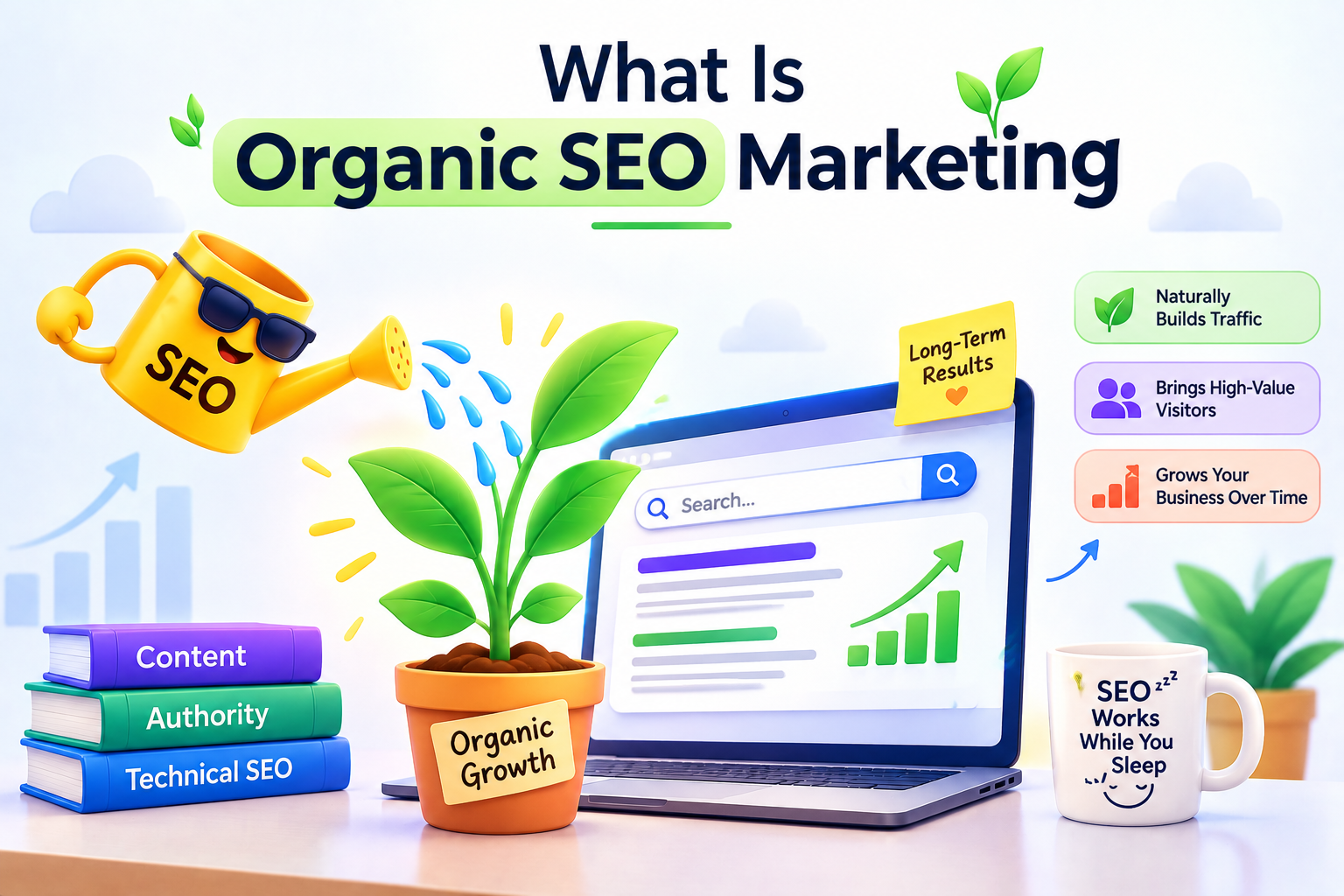
Organic SEO Marketing: Build Search Visibility That Compounds
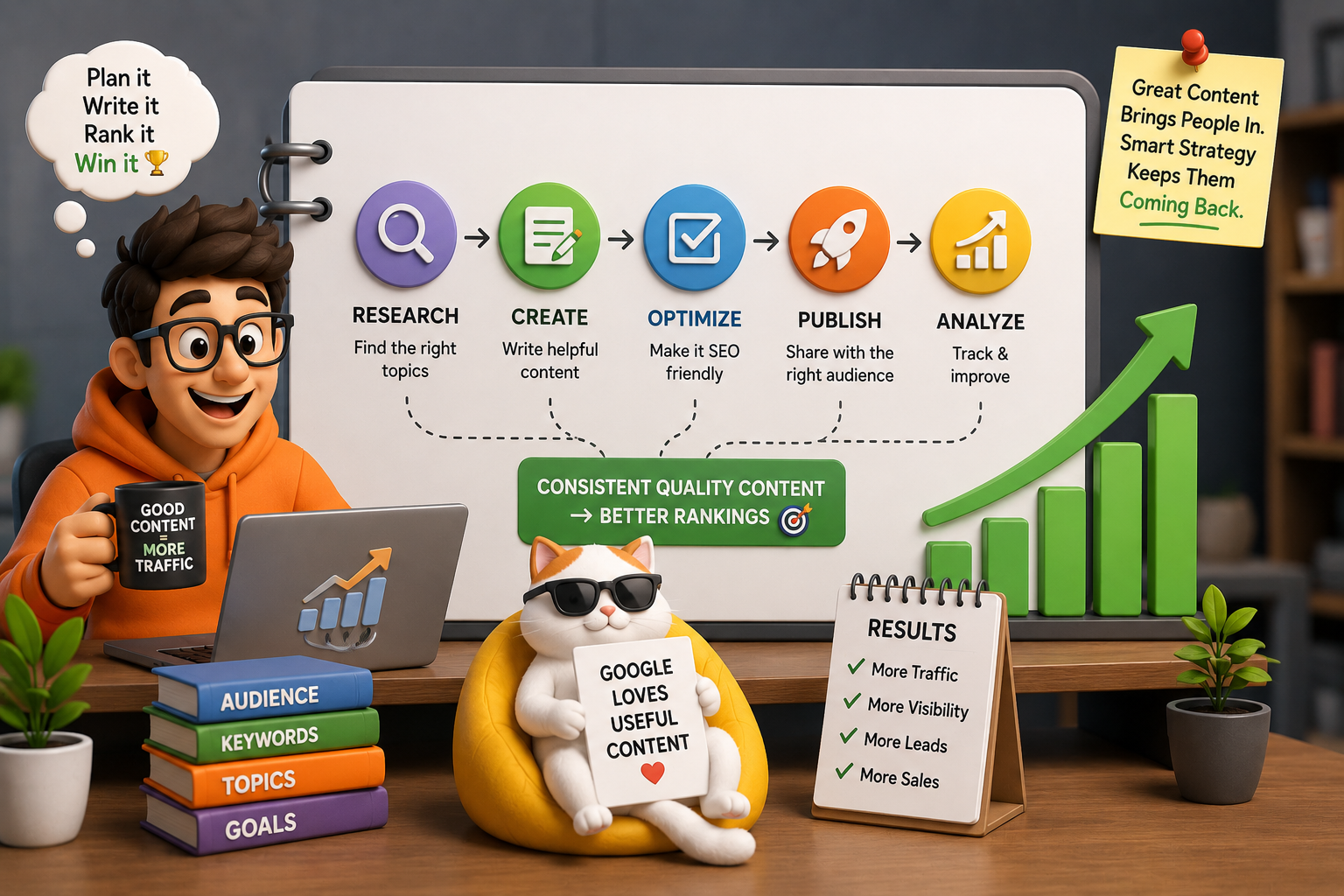
SEO Content Strategy: How to Create Content That Ranks and Converts