Most businesses do not have an SEO strategy. They have SEO activity — publishing blog posts when someone has time, fixing technical issues when they get flagged, building a handful of links whenever a new tool surfaces an opportunity. Activity without strategy produces inconsistent results and, more often than not, a growing frustration with SEO as a channel. The businesses that win in organic search are not doing more — they are doing it with a plan.
This guide covers what a proper SEO strategy looks like, how to build one, how it connects to your broader marketing efforts, and how to adapt it for your specific business type — whether you are a B2B SaaS company, a local service business, a retailer, or a multi-location franchise. By the end, you should know exactly what your next steps are.
What Is an SEO Strategy and Why Most Businesses Get It Wrong
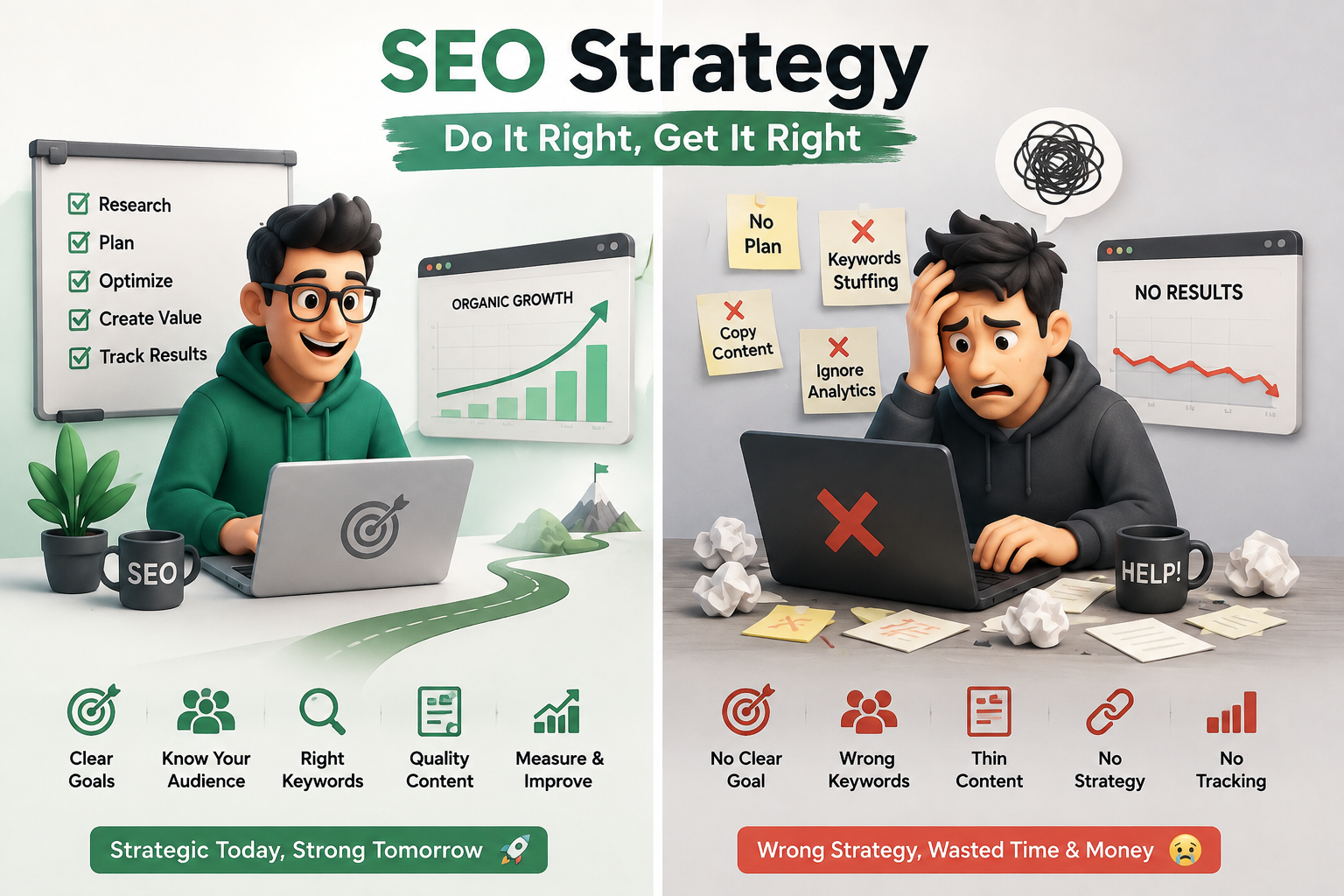
An SEO strategy is a documented plan that defines what you are trying to achieve through organic search, which audiences you are targeting, how you will position your content against competitors, and what specific actions — in what order — will get you there. It connects your business objectives to specific search behaviours, and it gives everyone involved a shared framework for making decisions.
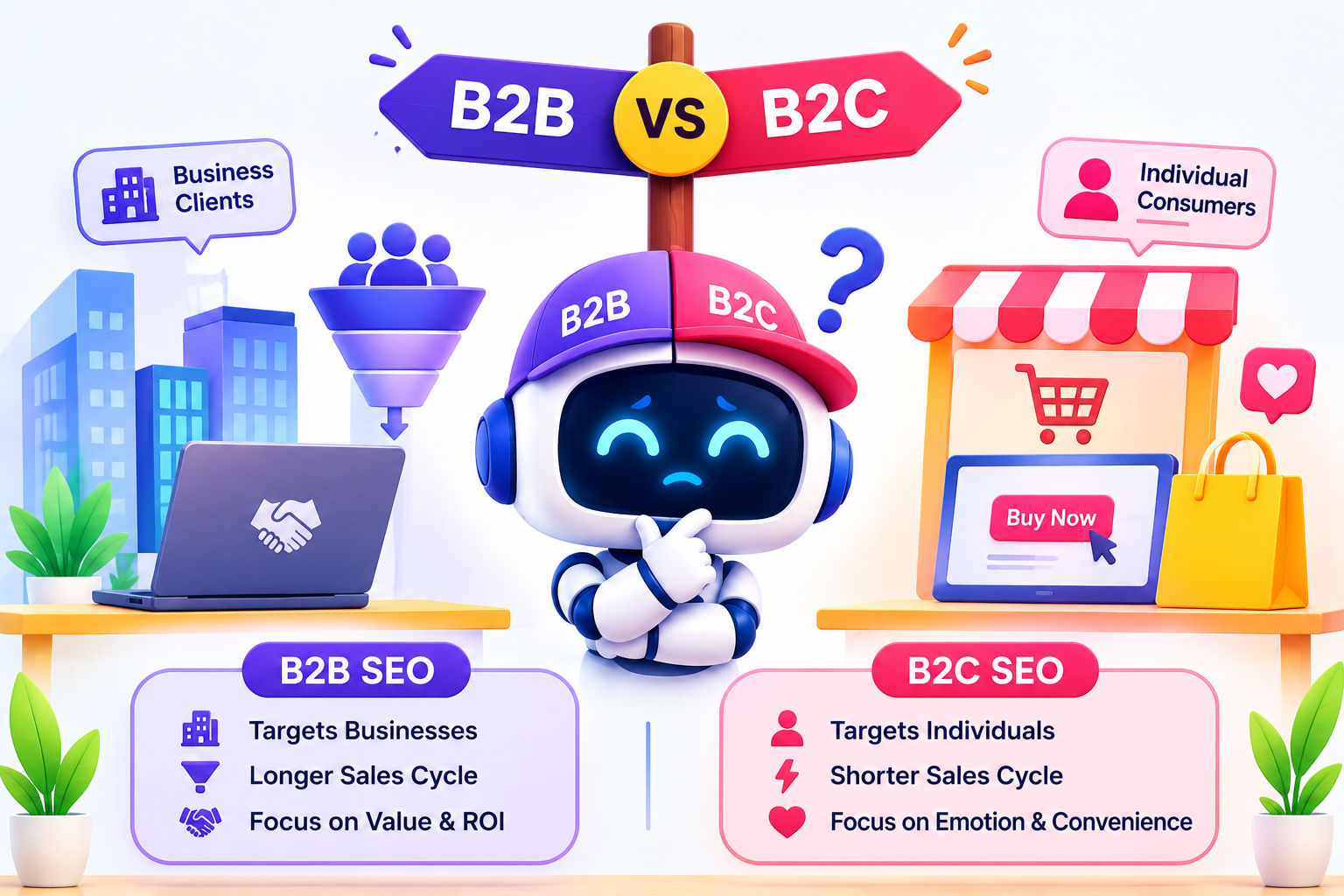
Most businesses get it wrong in one of three ways. The first is confusing tactics with strategy — picking a keyword list, publishing content, and hoping rankings follow. That is execution without direction. The second is treating SEO as a one-time project rather than an ongoing programme — spending three months on a site audit, implementing recommendations, then walking away and wondering why results plateau. The third, and most damaging, is building SEO in isolation from the rest of the business — targeting keywords that attract traffic but not buyers, or creating content that has no connection to what the sales team is actually hearing from prospects.
A real SEO strategy starts with business goals and works backward to search. Not the other way around.
The Difference Between SEO Strategy and SEO Execution
This distinction matters more than most people realise, and blurring it is one of the most common reasons SEO programmes stall. Strategy is the plan. Execution is the work. They require different thinking, different skills, and different timeframes.
SEO strategy covers decisions like which audience segments to prioritise, which areas of your site to invest in first, how to position against specific competitors, what content architecture will support long-term topical authority, and how to allocate budget across technical work, content production, and link acquisition. These are directional decisions that shape everything else.
SEO execution covers writing the content, fixing the crawl errors, building the links, updating the meta titles, compressing the images. This work only creates value when it is guided by a sound strategy. Excellent execution of a poor strategy produces poor results efficiently. Mediocre execution of a strong strategy will still generate compounding returns over time because the direction is right.
When a business hires an SEO agency or brings on an in-house hire, the first question to ask is whether that engagement includes strategy or just execution. Many agencies sell execution at strategy prices. The deliverable that tells you which one you are getting is a documented strategy with clear rationale — not just a list of tasks.
How SEO Fits Into Your Broader Marketing Strategy
SEO does not exist in isolation. It is one channel within a broader digital marketing ecosystem, and its effectiveness is shaped by how well it connects to the others. Understanding where SEO sits within your overall strategy prevents the common mistake of treating it as a separate discipline that operates independently from everything else.
SEO and Inbound Marketing
SEO is the engine of inbound marketing. Inbound is the philosophy of attracting customers by providing value rather than interrupting them with advertising. SEO is the mechanism that makes your valuable content discoverable — it connects the questions your target audience is already asking in search engines to the answers your business is best positioned to provide. Without SEO, your inbound content sits in a vacuum. Without content, your SEO has nothing to rank. The two are inseparable in practice.
SEO and Paid Search (SEM)
Paid search and SEO target the same search results page from different directions — one paid, one earned. They should inform each other. Your paid search data is one of the most valuable inputs you have for SEO strategy, because it tells you which keywords actually convert rather than just which ones get clicks. If a keyword drives strong conversion rates in your paid campaigns, it deserves priority in your organic content plan. Conversely, once you rank organically for a high-volume term, you can consider reducing paid spend on that term and reallocating it to keywords where you have no organic presence.
SEO and Social Media
Social media does not directly influence search rankings — Google has been clear on this point for years. But the relationship between social and SEO is still meaningful. Content that performs well on social gets seen by more people, some of whom will link to it from their own sites or mention it in their content. Those links do influence rankings. Social channels also drive direct traffic to your content, which signals engagement. And social profiles themselves rank in branded search results, which means your social presence shapes how your brand appears across multiple positions on a results page when someone searches your company name.
SEO and Content Strategy
Content strategy and SEO strategy should be developed together, not sequentially. A content strategy built without search data will produce content that serves editorial preferences rather than audience needs. An SEO strategy built without editorial thinking produces content that ranks but fails to convert because it lacks depth, voice, and genuine usefulness. The integration point is keyword research — specifically, mapping keyword intent to content formats and to stages of your buyer's journey so that every piece of content serves both a search purpose and a business purpose.
The Core Components of a Complete SEO Strategy
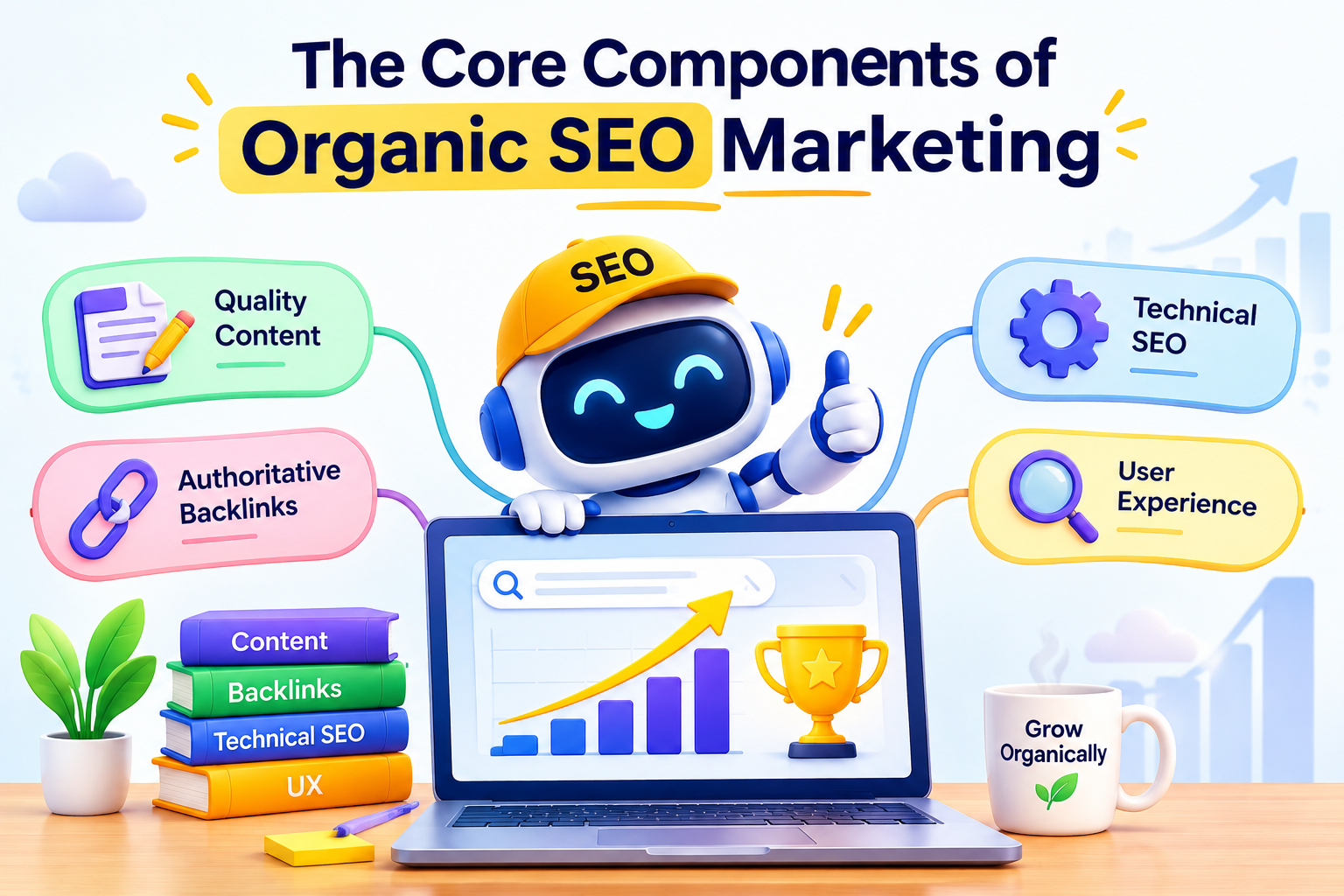
A complete SEO strategy has five core components. Businesses that focus on only one or two of these — most commonly content and links — will hit ceilings that better-rounded strategies do not encounter.
Component What It Covers Priority Level Who Is Responsible Technical SEO Crawlability, indexation, site speed, Core Web Vitals, structured data, HTTPS, mobile usability Foundation — fix first Developer + SEO specialist On-Page SEO Title tags, meta descriptions, heading structure, keyword placement, internal linking, content quality High — ongoing SEO specialist + content team Content Strategy Keyword research, content planning, topical authority, content calendar, format selection, updating existing content High — ongoing SEO strategist + writers Off-Page SEO Link building, digital PR, brand mentions, anchor text strategy, domain authority development Medium — build over time SEO specialist + PR team Measurement Framework Rank tracking, traffic analysis, conversion attribution, reporting cadence, KPI alignment Set up before launch SEO strategist + analytics
How to Build an SEO Strategy Step by Step
Building an effective SEO strategy follows a logical sequence. Skipping steps or reordering them is one of the primary reasons strategies fail to produce the expected results.
Step 1 — Define Business Goals and SEO Objectives
Start with the business, not with keywords. What does the business need organic search to do? Generate leads, drive product sales, build brand awareness in a new market, reduce dependency on paid advertising? Each of these goals leads to a different kind of SEO strategy. A lead generation strategy prioritises commercial intent keywords and conversion-optimised landing pages. A brand awareness strategy prioritises high-volume informational content and topical authority. Documenting these goals upfront keeps every subsequent decision anchored to something that matters to the business.
Step 2 — Conduct Competitor Analysis
Before researching keywords, research your competitors in search. Identify the three to five sites ranking consistently for the terms most relevant to your business. Analyse their content depth, their backlink profiles, their site architecture, and the keyword gaps between what they rank for and what you do. Tools like Semrush, Ahrefs, and Moz make this analysis accessible even for non-technical teams. The goal is not to copy what competitors are doing — it is to understand the competitive landscape you are entering and identify where the most achievable opportunities exist.
Step 3 — Keyword Research and Intent Mapping
Keyword research is not about finding the highest-volume terms and targeting them. It is about understanding the full spectrum of search behaviour relevant to your business and mapping those searches to the stages of your customer journey. Segment your keyword universe into informational keywords (people learning), navigational keywords (people looking for a specific brand or page), commercial keywords (people comparing options), and transactional keywords (people ready to act). Each segment requires different content, different page types, and different conversion strategies. Volume alone is a poor guide — a 200-search-per-month keyword with high commercial intent is often worth more than a 10,000-search-per-month keyword that attracts curiosity rather than buyers.
Step 4 — Technical SEO Audit
Before creating new content or building links, audit the technical health of your site. A site with crawlability issues, duplicate content, slow Core Web Vitals scores, or a broken internal linking structure will not rank well regardless of how good the content is. Use Screaming Frog for a crawl audit, Google Search Console for indexation and performance data, and PageSpeed Insights for load time analysis. Prioritise fixes by impact — issues that affect the most pages or block Google from properly understanding your site's structure should come first.
Step 5 — Content Architecture and Silo Strategy
Once you know which keyword clusters you are targeting, design your site architecture to support topical authority. SEO silo strategy — organising your content into tightly themed clusters where a pillar page covers a broad topic and supporting pages cover specific subtopics — is one of the most durable and effective structural approaches in SEO. Each silo concentrates topical relevance in one area of your site, internal links flow logically from supporting pages to the pillar and back, and search engines can clearly identify what your site is about at a granular level. This approach is how newer sites build authority in competitive spaces faster than broad, unfocused publishing strategies allow.
Step 6 — Link Building Plan
Off-page SEO — specifically acquiring links from relevant, authoritative external sites — remains one of the strongest ranking signals Google uses. Your link building plan should be built around earning links rather than buying or manufacturing them. The most reliable approaches are digital PR campaigns that generate coverage in industry publications, creating genuinely useful resources that other sites reference naturally, guest contributions to respected outlets in your industry, and broken link building where you identify dead links on relevant sites and offer your content as a replacement. Your anchor text strategy matters — over-optimised anchor text with exact-match keywords signals manipulation. Vary your anchors naturally across branded, partial match, and topical variations.
Step 7 — Measurement Framework and Reporting
Define your metrics before you start executing, not after you want to show results. The right metrics depend on your goals. Traffic volume is a vanity metric on its own — what matters is whether that traffic converts. Set up conversion tracking in Google Analytics 4, connect it to Google Search Console, and establish a baseline for the KPIs that matter: organic sessions by landing page, keyword rank distribution, click-through rates by page, organic conversion rate, and revenue or leads attributed to organic search. Review this data on a fixed cadence — monthly at a minimum — and use it to adjust your strategy, not just to report on it.
A 6-Month SEO Strategy Timeline
SEO results do not arrive on a linear schedule, and anyone who promises specific ranking positions within a fixed timeframe is either guessing or misleading you. What a good 6-month plan does is ensure that the right work happens in the right order so that when results arrive, they compound rather than plateau.
Month Focus Area Key Deliverables Expected Outcomes Month 1 Audit and strategy Technical audit, competitor analysis, keyword research, content gap analysis, strategy document Clear roadmap, prioritised issue list, baseline metrics established Month 2 Technical fixes and on-page Critical technical fixes implemented, top-priority page optimisations, internal linking improvements Improved crawlability, better indexation signals, first ranking movements on optimised pages Month 3 Content production begins First pillar pages published, supporting cluster content underway, content calendar locked New pages indexed, early impressions data in Search Console, topical signals building Month 4 Link building and content First link building outreach, continued content output, existing content updates First external links acquired, ranking improvements on lower-competition keywords Month 5 Scale and optimise Content velocity increases, link acquisition continues, performance data reviewed and strategy adjusted Measurable organic traffic growth, top-10 rankings on targeted low-competition terms Month 6 Review and next phase planning Full performance review, strategy refinement, next 6-month plan developed Clear ROI data, compounding traffic trend established, pipeline for next phase defined
SEO Strategy by Business Type
A single universal SEO strategy does not exist. The right approach depends fundamentally on your business model, your buyer, and your competitive environment. The table below maps the key strategic priorities by business type.
Business Type Primary Focus Areas Key Challenges Recommended First Steps B2B Long-tail commercial keywords, thought leadership content, lead capture optimisation Long sales cycles, niche audiences, attributing SEO to pipeline Map keywords to buyer journey stages, audit conversion paths on existing traffic Ecommerce Category page optimisation, product schema, faceted navigation, review signals Duplicate content at scale, thin product pages, competing with marketplaces Fix crawlability and indexation first, then prioritise highest-revenue category pages Local Business Google Business Profile, NAP consistency, local citations, review acquisition Competing in map pack, managing reviews, limited content opportunities Claim and fully optimise Google Business Profile, audit NAP consistency across directories Enterprise Technical SEO at scale, content governance, international and subdomain strategy Slow development cycles, internal stakeholder alignment, content quality at volume Establish SEO governance framework, prioritise highest-traffic templates for technical fixes SaaS Bottom-of-funnel comparison content, alternative pages, integration pages, free tool SEO High content competition, educating non-technical buyers, trial-to-paid attribution Build comparison and alternative pages first — highest conversion intent in SaaS SEO Multi-Location Individual location pages, geo-targeted content, consistent NAP across all locations Avoiding duplicate location pages, managing multiple GBP listings, franchise consistency Build unique, locally relevant content for each location page — avoid templated duplicates
What Makes an SEO Strategy Custom, Not Generic
The table above demonstrates something worth stating explicitly: there is no such thing as a single correct SEO strategy that applies equally to every business. A custom SEO strategy, sometimes called a bespoke SEO strategy, is one built from your specific competitive landscape, your specific buyer, and your specific technical starting point — not a templated checklist applied uniformly regardless of context.
Two businesses in entirely different categories — a B2B SaaS company and a local plumbing business — should never receive the same strategic priorities, even though both are technically "doing SEO." The SaaS company's strategy, following the framework above, concentrates on bottom-of-funnel comparison content and long sales-cycle nurturing. The local business's strategy concentrates on Google Business Profile optimisation and citation consistency. A generic strategy applied to either would waste significant budget pursuing tactics irrelevant to how that specific business's buyers actually search.
What makes a strategy genuinely custom rather than generic comes down to three things established earlier in this guide. First, it starts from your actual business goals, not a standard template, as covered in Step 1 of the build process above. Second, it's shaped by your specific competitive landscape from Step 2 — the keyword gaps and content depth required to compete in your category are different from every other category, sometimes dramatically so. Third, it accounts for your starting technical and authority position — a new domain with no existing content needs a different sequencing than an established site with years of accumulated authority looking to expand into new keyword territory.
The practical warning here is for anyone evaluating an SEO provider: if a proposed strategy could be handed to a competitor in a different industry with only the company name changed, it isn't actually a strategy — it's a generic execution plan wearing a strategy's clothing. A genuinely custom SEO strategy should reference your specific competitors by name, your specific buyer's search behaviour, and priorities that would visibly change if any of those specifics changed.
Silo Architecture as an SEO Strategy
Silo architecture is one of the most consistently effective structural strategies in SEO, yet it remains underused by businesses that approach content publishing without a structural plan. The concept is straightforward: organise your site's content into distinct themed clusters, each built around a core topic your business wants to rank for. Within each silo, a pillar page targets the broad head term and links to a set of supporting pages that cover related subtopics in depth. Those supporting pages link back to the pillar and to each other where relevant.
The effect is concentrated topical authority. Instead of publishing broadly across many loosely related topics, you build deep expertise in specific areas. Search engines — and readers — respond to depth. A site with 20 highly interconnected pages about a single topic will outrank a site with 200 loosely connected pages covering 50 different topics, all else being equal. For businesses with limited content resources, silo strategy also provides discipline — it tells you exactly what to write next based on where the gaps in your clusters are, rather than defaulting to whatever topic feels timely or interesting.
How AI Is Changing SEO Strategy in 2025
The arrival of AI Overviews in Google Search — the AI-generated summaries that appear above traditional results for many queries — has shifted the SEO landscape in ways that are still unfolding. For informational queries, AI Overviews now answer the question directly on the results page, which reduces click-through rates to the pages that provided the answer. This does not make SEO less important — it changes which types of content SEO is worth investing in.
Content that provides genuine original analysis, first-hand expertise, case studies, proprietary data, or complex multi-step guidance is harder for AI to replicate and more likely to earn clicks even when a summary exists. Generic informational content — definitions, simple how-tos, list posts that cover the obvious — is increasingly commoditised. The strategic implication is clear: invest in depth and originality, not volume. An SEO strategy built on producing 10 genuinely expert pieces of content per month will outperform one built on publishing 50 thin AI-generated articles.
AI tools are also valuable on the execution side. Using AI for keyword clustering, content briefs, first-draft outlines, and metadata generation is entirely reasonable and saves time. The line to hold is between using AI to accelerate research and structure and using AI to replace the human expertise and perspective that makes content worth reading. The former is smart workflow. The latter produces content that ranks nowhere and convinces no one.
Voice Search and Its Impact on SEO Strategy
Voice search has been a predicted disruption in SEO for a decade. The reality has been more nuanced than the hype suggested. Voice queries are genuinely different from typed queries — they are more conversational, longer, and more likely to be phrased as questions. "What is the best Italian restaurant near me" rather than "best Italian restaurant London." This shift toward natural language queries is real, even if voice search as a standalone channel has not replaced text search in the way some predicted.
The strategic response is to incorporate question-based keyword formats into your content — FAQ sections, conversational headings, and content that directly answers specific questions in clear, concise language. Featured snippets, which voice assistants often read aloud as answers, are disproportionately valuable for voice-optimised content. Structured data markup — particularly FAQ schema and HowTo schema — increases the likelihood that your content is selected as the spoken answer to a relevant voice query.
In-House SEO vs Agency vs Freelancer
This decision comes down to your budget, your internal capabilities, and how much strategic depth you need. Each model has genuine advantages and real limitations.
Factor In-House Agency Freelancer Cost High — salary, benefits, tools Medium to high — monthly retainer Lower — project or hourly Speed to start Slow — hiring takes months Fast — onboarding in days Fast — flexible availability Expertise depth Depends on hire quality Broad — multiple specialists Deep in one area, limited in others Business context Excellent — embedded in team Limited — external perspective Varies by relationship Scalability Limited by headcount Scales with budget Limited by one person's capacity Best suited for Large businesses with ongoing SEO at scale Businesses needing full-service SEO strategy and execution Specific projects or tactical support
How to Build an SEO Team
Once a business decides to build SEO capability in-house, covered as one option in the comparison above, the next question is who to actually hire and in what order. Building an SEO team from scratch is a sequencing problem as much as a hiring problem — the wrong first hire, or trying to hire for every function simultaneously, is a common and costly mistake.
For most businesses, the first SEO hire should be a generalist SEO strategist or manager — someone capable of running technical audits, conducting keyword research, and coordinating content, even if they aren't a deep specialist in any single area. This person owns the strategy described throughout this guide and identifies where additional specialist hires would have the most impact, rather than a business guessing at team composition before it has any internal SEO expertise to make that judgment.
The next hire, once budget allows, depends on where the biggest gap sits. A business with strong existing content but poor technical health should prioritise a technical SEO specialist next — someone who can work directly with development teams to resolve the crawlability, indexation, and Core Web Vitals issues covered earlier in this guide. A business with clean technical foundations but insufficient content output should prioritise a dedicated SEO content writer or content strategist instead. Link building capability is usually the last dedicated hire, since digital PR and outreach benefit from having established content and technical health to point to first.
A fully staffed in-house SEO team at a mid-sized company with serious organic growth ambitions typically includes an SEO manager or strategist owning direction and reporting, one or more content writers or a content strategist depending on volume needs, a technical SEO specialist working closely with engineering, and either a dedicated link building or digital PR specialist or an agency retainer covering that specific function. Smaller businesses without the budget for this full structure often combine the strategist and technical roles into one senior hire and supplement content production and link building through freelancers or a specialist agency — a hybrid model that captures much of the benefit of in-house ownership without the full headcount cost.
The team-building mistake to avoid is hiring a single junior SEO generalist and expecting them to independently produce the technical depth, content volume, and link acquisition results that this guide describes as requiring specialist attention in each area. One person can coordinate an SEO strategy; one person rarely has the bandwidth or the full range of specialist skill to execute all of it alone at a pace that produces meaningful results.
Long-Term SEO Strategy vs Paid Search
The paid versus organic debate is often framed as a binary choice. It should not be. Both channels serve distinct purposes and the strongest digital marketing programmes use them together. That said, understanding the structural differences between them is important for resource allocation decisions.
Factor Long-Term SEO Paid Search (PPC) Time to results 3 to 12 months typically Immediate — same day Cost over time Decreases as authority builds Continues as long as you pay Compounding value Yes — rankings and authority grow No — stops when budget stops Control Indirect — algorithm dependent Direct — full budget and targeting control Risk level Algorithm updates can impact rankings Costs can escalate, ad fatigue Best use case Building sustainable, owned traffic over time Launching quickly, testing messages, filling SEO gaps
Advantages and Drawbacks of a Documented SEO Strategy
Advantages
Compounding results over time. A documented strategy creates a coherent body of work — interconnected content, consistent link acquisition, progressive technical improvements — that builds on itself. Uncoordinated SEO activity produces spikes and plateaus. Strategised SEO produces a curve that trends upward.
Clearer ROI measurement. When your strategy defines goals, KPIs, and a baseline upfront, you can actually measure what the SEO investment is producing. Ad hoc activity makes attribution impossible and makes it easy for underperformance to go unnoticed for months.
Better resource allocation. A strategy tells you what not to do as clearly as what to do. That is its most underrated benefit. It prevents teams from spending time on low-impact work — writing content on topics with no search volume, building links from irrelevant sites — because every action is evaluated against the strategic priority.
Alignment across teams. A written strategy creates a shared reference point for developers, writers, marketers, and leadership. Decisions about site changes, content topics, and budget allocation all become easier when everyone is working from the same documented plan.
Drawbacks
Time required before results arrive. A properly executed SEO strategy takes months to produce measurable ranking improvements and typically six to twelve months before organic traffic growth is substantial. Businesses that need immediate pipeline cannot rely on SEO alone and should run paid channels in parallel while the organic strategy matures.
Ongoing content investment. A strategy without continued content execution stalls. The sites that compound rankings over time are those that publish consistently, update existing content, and expand into new keyword clusters. This requires real resources — good writers, editorial oversight, and enough budget to produce content at a cadence that matters.
Consistency is genuinely hard to maintain. Most SEO strategies are not abandoned because they were wrong — they are abandoned because execution fell behind when other business priorities competed for the same resources. Without dedicated ownership and protected time, even excellent strategies quietly die after a few months of inconsistent implementation.
Related Services
Building and executing an SEO strategy that produces real results requires more than keyword research and content publishing. It requires technical infrastructure, strategic oversight, and the execution capacity to sustain output over time. Munix Studio provides the full stack of services that a serious SEO strategy depends on.
SEO Optimization — End-to-end SEO strategy development and execution covering technical audits, keyword research, on-page optimisation, content planning, and link building — built around your specific business goals.
Website Development — SEO-friendly website architecture built on React and Next.js, with technical SEO best practices embedded from the foundation rather than retrofitted later.
Digital Marketing — Integrated digital marketing support that connects your SEO strategy to paid search, social media, and content distribution for a unified approach to organic and paid growth.
Dedicated Developers — Technical SEO implementation support from developers who understand the connection between site architecture, page performance, and search rankings.
Maintenance and Support — Ongoing site maintenance that keeps your technical SEO foundation intact — fast load times, clean crawlability, and no silent errors undermining your rankings.
Frequently Asked Questions
Ready to Get Started?
SEO Optimization
End-to-end SEO strategy and execution — from technical audits and keyword research to content architecture, on-page optimisation, and link building — aligned to your specific business goals and built for long-term compounding results.
Explore SEO OptimizationRelated Articles

Ecommerce SEO: The Complete Guide to Ranking Your Online Store
The History of SEO: How Search Engine Optimisation Began
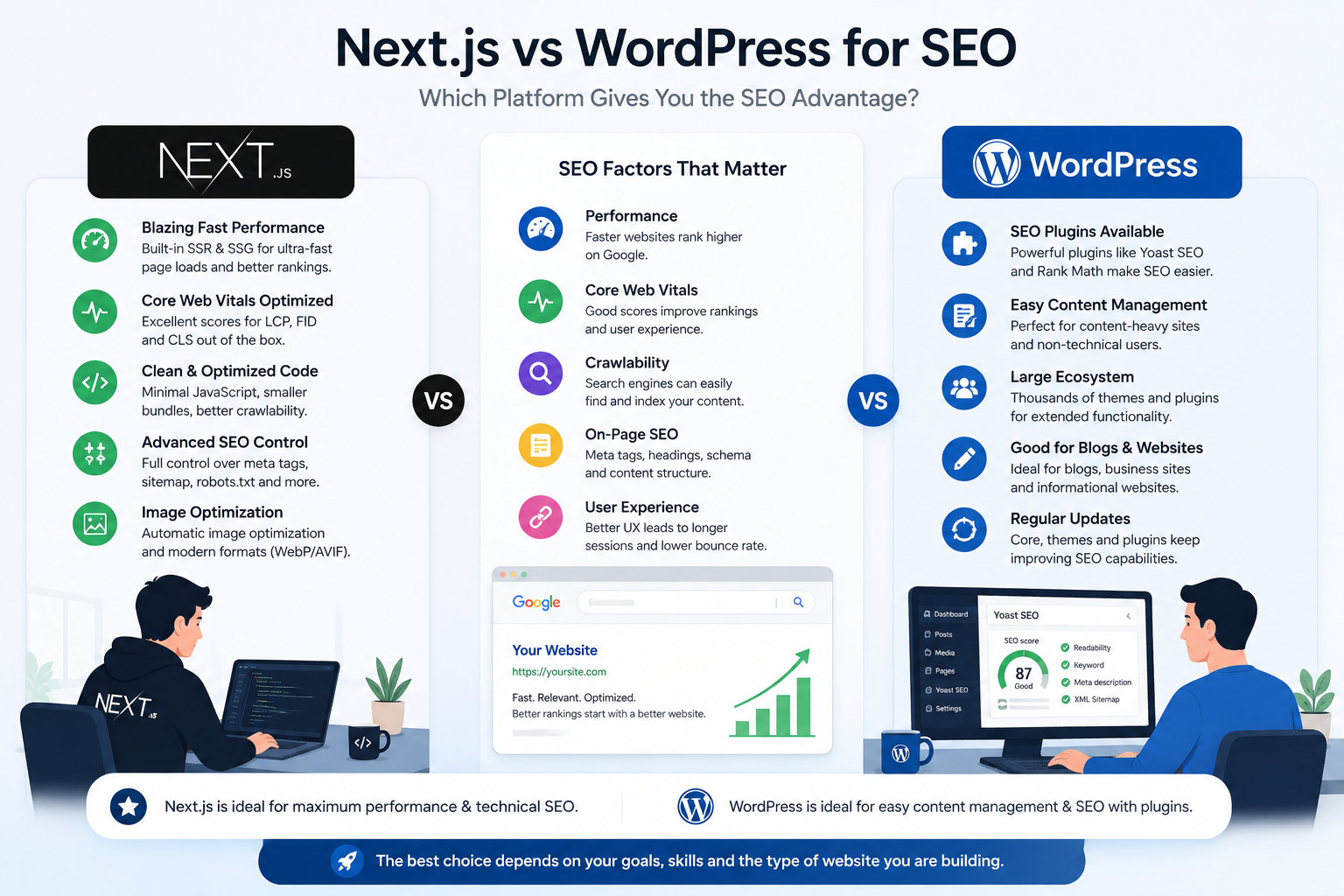
Next.js vs WordPress for SEO: What Matters
Organic SEO Marketing: Build Search Visibility That Compounds
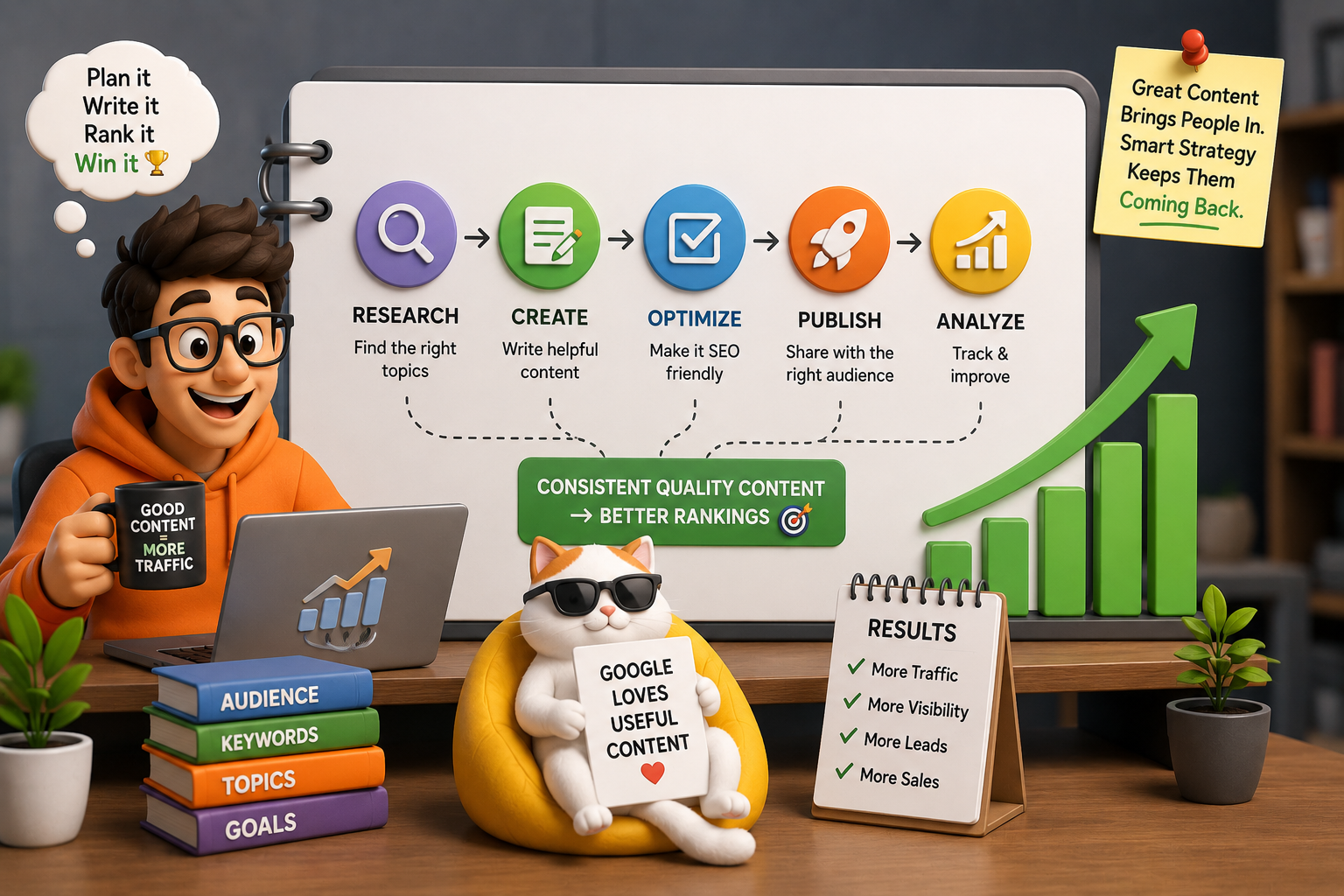
SEO Content Strategy: How to Create Content That Ranks and Converts