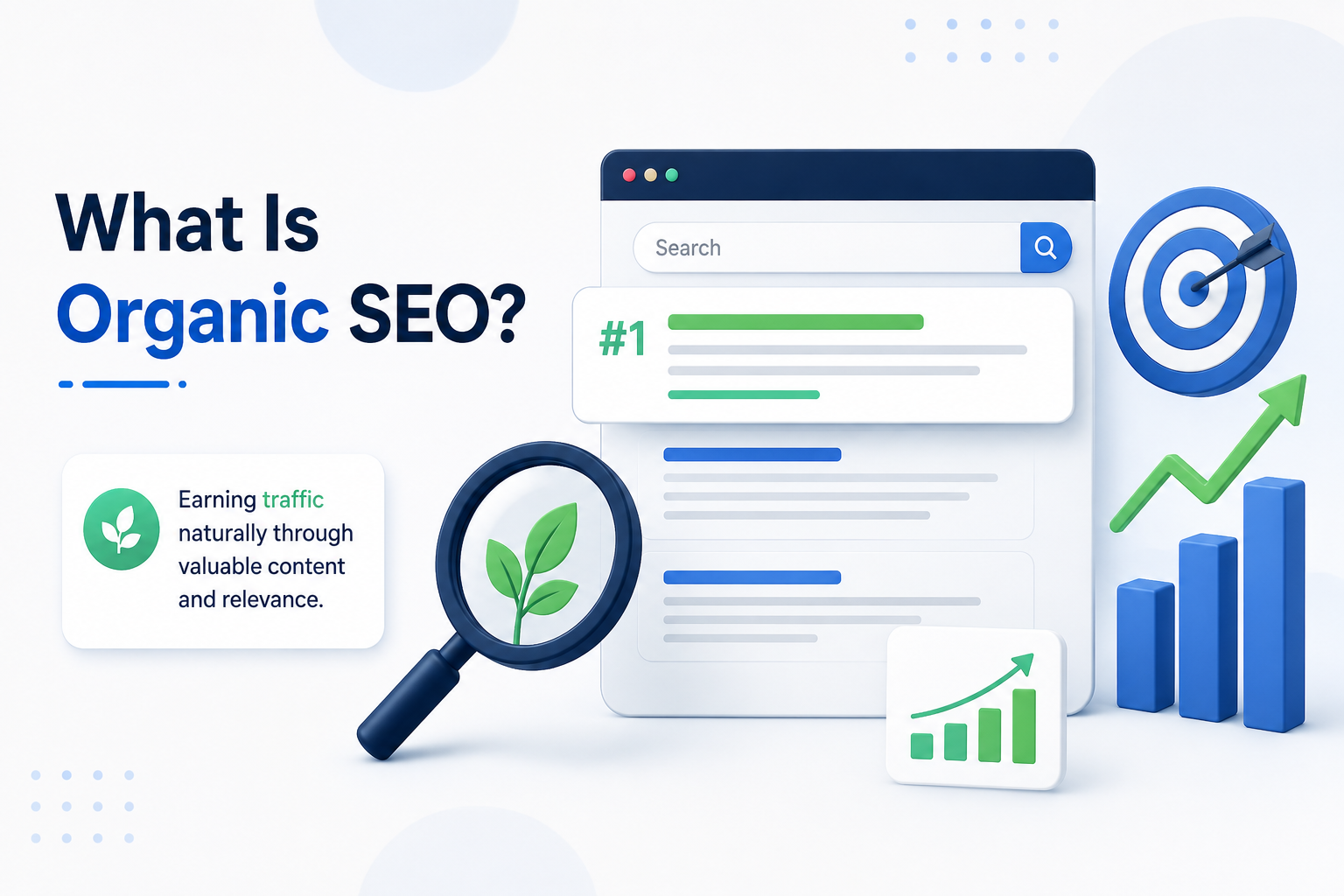
Organic SEO is the practice of improving a website's visibility in unpaid search engine results through relevance, technical quality, and authority. When someone types a query into Google and clicks a result that is not labelled as an advertisement, they are engaging with organic search. The website appearing in that position earned its place through SEO — not by paying for placement but by demonstrating to search engines that its content is the most relevant, trustworthy, and useful answer to that specific query.
Understanding what organic SEO is, how it works technically, and how to build a strategy that produces durable rankings is one of the highest-leverage investments a business or marketing professional can make. This guide covers the complete picture — from the mechanics of how search engines evaluate pages, through the components of an effective organic SEO strategy, to the specific tips and preparation steps that determine whether an SEO programme produces results or generates months of activity with minimal impact.
What Is Organic SEO?
Organic SEO refers to the set of practices used to earn unpaid search engine rankings. The word organic distinguishes this from paid search — the sponsored results that appear at the top and bottom of a search results page, labelled as ads, for which businesses pay on a per-click basis. Organic results appear because Google's algorithm has evaluated them as the most relevant, authoritative, and trustworthy responses to the searcher's query — not because money has changed hands for the position.
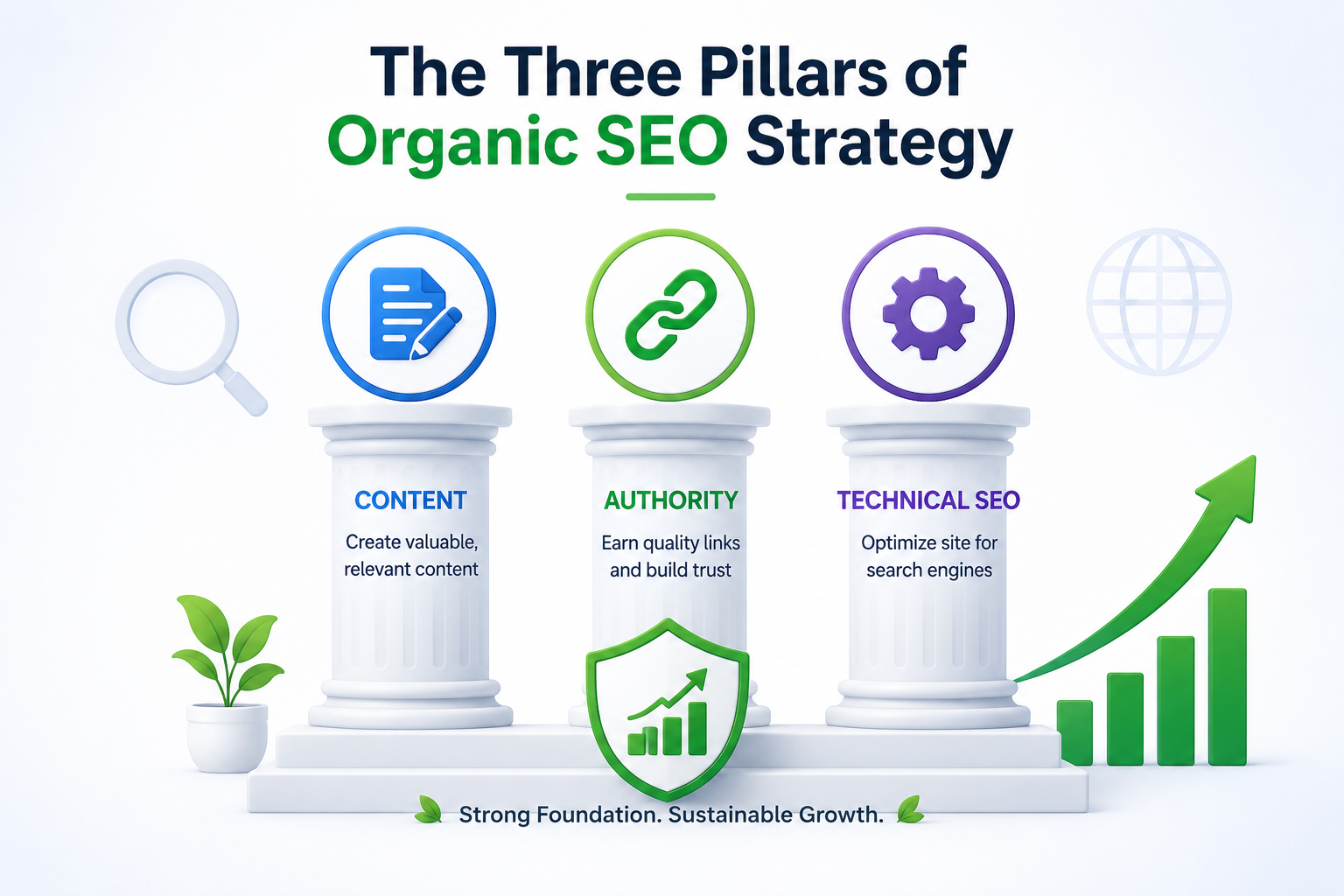
Organic SEO encompasses three interconnected disciplines. Technical SEO ensures that search engines can find, crawl, render, and index a website's content without obstruction. On-page SEO ensures that individual pages are structured, written, and optimised to match the search intent of the queries they are designed to rank for. Off-page SEO — primarily the acquisition of backlinks from credible external sources — builds the authority signals that tell search engines a website is worth ranking prominently. All three must function well for organic SEO to produce consistent results. Strong content on a technically broken site will not rank. A technically perfect site with no content of substance will not rank. Excellent content and technical quality on a site with no external authority signals will struggle to rank against competitors who have all three.
The significance of organic search as a traffic source is difficult to overstate. Research from BrightEdge consistently places organic search as the largest single source of website traffic across industries — accounting for over 50% of all visits, more than paid search, social media, email, and direct traffic combined. The first organic result for a given query receives approximately 28% of all clicks. Results beyond position ten receive a negligible share. Organic SEO is the discipline that determines where in that distribution a website appears.
How Organic SEO Works
Search engines operate through three sequential processes: crawling, indexing, and ranking. Understanding each process is foundational to understanding why organic SEO takes the form it does and why specific optimisation actions have the effects they produce.
Crawling
Crawling is the process by which search engine bots — most importantly Googlebot — discover web pages by following links from one page to another across the internet. Googlebot starts from a set of known URLs and follows every link it encounters, adding new URLs to a queue for subsequent crawling. The frequency and depth with which Googlebot crawls a site depends on the site's crawl budget — a function of how frequently the site publishes new content, how many other sites link to it, and how well its technical structure facilitates efficient crawling.
Several technical issues can impair crawling: a robots.txt file that accidentally blocks important sections of the site, a broken internal link structure that leaves pages unreachable without a direct URL, JavaScript-rendered content that Googlebot cannot access before it executes in a browser environment, or server errors that prevent Googlebot from accessing pages at all. Any of these issues can result in pages that exist on the website but are invisible to Google — and pages that Google cannot crawl cannot rank.
Indexing
Once a page has been crawled, Google processes and stores information about it in its index — a vast database of web content that forms the pool from which search results are drawn. Not every crawled page is indexed: Google evaluates the quality, uniqueness, and relevance of content before deciding whether to include it in the index. Pages with thin content, substantial duplicate content, or noindex tags in their HTML are typically excluded.
Indexing status is visible through Google Search Console, which shows which pages are indexed, which are excluded and why, and which are experiencing errors that prevent indexing. For any organic SEO programme, verifying that all important pages are correctly indexed is the first diagnostic step — a prerequisite before any content or authority work begins.
Ranking
Ranking is the process by which Google determines the order in which indexed pages appear for any given search query. The ranking algorithm evaluates hundreds of signals simultaneously, but they cluster into a manageable set of primary factors that account for the majority of ranking determination. Relevance — how closely the page's content matches the intent behind the query — is the first gate. Authority — how many credible external sources link to the page and the domain — is the second major factor. Page experience — how fast the page loads, how stable the layout is during loading, and how well it functions on mobile devices — is the third dimension. And content quality — whether the page provides information that is accurate, comprehensive, and genuinely useful to a human reader rather than produced primarily to satisfy algorithmic signals — is increasingly the primary competitive differentiator as Google's Helpful Content System matures.
The Three Pillars of Organic SEO Strategy
An effective organic SEO strategy is not a single activity but a coordinated programme across three pillars that must all be functional for rankings to improve and sustain. Each pillar addresses a different dimension of how search engines evaluate and rank content.
Pillar 1: Technical SEO
Technical SEO is the foundation. It ensures the website is structured in a way that allows search engines to find, access, and understand all of its content efficiently. The most impactful technical SEO factors are: clean crawlability with no accidental blocking in robots.txt or through JavaScript rendering problems; complete and accurate indexing verified through Google Search Console; page speed performance that meets Core Web Vitals thresholds — specifically Largest Contentful Paint under 2.5 seconds, Interaction to Next Paint under 200 milliseconds, and Cumulative Layout Shift below 0.1; full mobile responsiveness given that Google uses the mobile version of pages as the basis for indexing and ranking; HTTPS implemented correctly without mixed content warnings; a logical site architecture with descriptive URL patterns and a clear internal linking structure; and properly configured canonical tags that prevent duplicate content from diluting ranking signals.
Technical SEO problems act as a ceiling on organic performance. The most common and consequential mistake in organic SEO programmes is scaling content production before resolving technical issues, because content produced on a technically broken site is unlikely to reach its ranking potential regardless of its quality.
Pillar 2: On-Page SEO and Content
On-page SEO encompasses all of the optimisations applied to individual pages to help them rank for target keywords and convert the traffic they attract. The foundational elements are meta titles and descriptions — the text that appears in search results and directly influences whether a searcher clicks through — which should be unique, include the primary keyword naturally, and communicate a genuine reason to visit the page. The H1 heading on each page should clearly describe what the page is about and include the primary keyword. The body content should be structured with logical H2 and H3 subheadings, written comprehensively enough to satisfy the full intent behind the target query, and internally linked to related pages on the site using descriptive anchor text.
Content quality has become the primary competitive dimension in organic SEO as Google's Helpful Content System has matured. The system evaluates whether content is produced primarily for human readers — covering a topic with the depth, accuracy, and genuine usefulness that a real expert would provide — or primarily to satisfy algorithmic signals. Content that fails this evaluation does not just rank poorly; it applies a site-wide quality signal that depresses the rankings of all other pages on the same domain. This makes content quality a strategic priority rather than a page-by-page consideration.
Pillar 3: Off-Page Authority
Off-page SEO is primarily concerned with backlinks — links from other websites pointing to yours — which remain one of the most significant signals in Google's ranking algorithm. A link from a credible, relevant external source functions as an endorsement that carries authority from the linking site to the linked page. The quality and relevance of the linking domain matters far more than the quantity of links: ten links from established, topically relevant publications carry more ranking authority than a thousand links from low-quality, unrelated directories.
The most durable backlink acquisition strategy is producing content that people in the relevant community naturally want to reference — original research, comprehensive guides, tools, or resources that become standard references in a specific subject area. This earned-link approach produces higher-quality links and carries no risk of penalty compared to link schemes or purchased links, which Google actively identifies and devalues.
Building an Organic SEO Strategy
An organic SEO strategy is a structured plan that coordinates keyword research, content production, technical optimisation, and link building toward defined ranking and traffic goals. Without a strategy, SEO activity is reactive and uncoordinated — producing effort without direction. With a strategy, every action is connected to a measurable objective and prioritised by its expected impact.
Keyword Research as the Strategic Foundation
Keyword research is the strategic foundation of any organic SEO programme. It maps the specific queries a target audience uses when searching for the products, services, or information the website provides — and it identifies which of those queries represent the best ranking opportunities given the domain's current authority, the competitive landscape, and the commercial value of the searcher's intent.
Effective keyword research looks beyond volume to evaluate intent. A keyword with 200 monthly searches from buyers actively evaluating vendors is more valuable than a keyword with 20,000 monthly searches from people with no purchasing intent. Search intent — the underlying goal behind a query — determines what type of content a page needs to provide to satisfy the searcher and rank consistently. Informational queries need educational content. Commercial queries need comparison and evaluation content. Transactional queries need service or product pages with clear conversion paths.
Keywords should be organised into topic clusters — groups of related terms that can be addressed through a pillar page on the broad topic supported by cluster articles on specific subtopics. This structure builds concentrated topical authority rather than dispersing content effort across unrelated topics, and it creates the internal linking architecture that distributes ranking signals across the entire cluster.
Understanding Search Intent
Intent Type What the Searcher Wants Example Query Right Content Format Commercial Value Informational Learn something or answer a question "what is organic seo" Educational guide or explainer Low to Medium Navigational Find a specific site or page "Google Search Console login" Brand or product page Low Commercial Research before making a decision "best seo tools for small business" Comparison, review, or roundup High Transactional Take a specific action or purchase "hire seo agency" Service or product page with clear CTA Very High
Content Planning and the Pillar-Cluster Model
The pillar-cluster content model is the most effective structure for building topical authority in organic SEO. A pillar page is a comprehensive guide to a broad topic central to the website's subject area — it covers the topic thoroughly and targets the primary keyword cluster associated with it. Cluster pages are more specific articles on subtopics related to the pillar, each targeting its own keyword variation and linking internally both to the pillar and to other relevant cluster pages.
This structure concentrates topical authority on a specific subject area rather than dispersing it across unrelated topics. A website with twenty articles all covering different dimensions of the same subject will outrank a website with twenty articles on twenty unrelated topics — even if the individual article quality is equivalent — because Google's algorithm rewards topical depth and the internal linking architecture that the cluster model creates.
Organic SEO Tips That Produce Measurable Results
The following tips reflect the specific practices that experienced SEO practitioners consistently identify as producing the most measurable ranking improvements relative to the effort required — not theoretical best practices but actions with documented, repeatable impact.
Prioritise Existing Content Improvement Over New Production
For most websites that have been operating for more than a year, auditing and improving existing content produces faster organic improvements than producing new content from scratch. Existing pages that rank in positions 8 to 20 for target keywords are candidates for expansion and refreshment — they have indexing history, some existing authority signals, and are already in Google's consideration set for the relevant queries. Adding depth, updating outdated information, improving the on-page structure, and strengthening internal links to these pages consistently produces ranking improvements within weeks. New pages on a low-authority domain can take three to six months to rank at all.
Optimise Meta Titles for Click-Through Rate
Click-through rate — the proportion of searchers who see a page in results and click on it — is both a ranking signal and a direct traffic lever. A page ranking in position four with a compelling, specific meta title that communicates exactly what the reader will find can receive more clicks than a page in position two with a generic title. Meta titles should include the primary keyword naturally, stay under 60 characters to avoid truncation in search results, and communicate something specific and useful about the page's content — not a keyword list but a genuine description of why the page is worth clicking.
Build Internal Links Systematically
Internal linking is consistently underused despite being one of the lowest-effort, highest-impact organic SEO levers available. Every page on a website should link to other relevant pages using descriptive anchor text that includes the target keyword of the linked page. Service pages should be linked from every relevant blog post. Blog posts should link to related cluster articles and to the pillar page they support. New content should link to established pages that could benefit from additional authority. A systematic internal linking audit — identifying high-value pages that receive few or no internal links — typically surfaces multiple quick-win opportunities that can be acted on in hours rather than weeks.
Target Featured Snippets Deliberately
Featured snippets — the boxed answers that appear above the first organic result for certain queries — receive a disproportionate share of clicks for the queries they address. Winning a featured snippet requires formatting content to directly answer the target query: use the question as an H2 heading, follow it immediately with a concise two-to-four sentence direct answer, then expand on the topic in subsequent paragraphs. Google pulls the snippet from pages already ranking on page one, so achieving first-page rankings is a prerequisite — but optimising existing page-one content for snippet eligibility can produce a substantial traffic increase from the same keyword without improving the underlying ranking.
Refresh Existing Content on a Quarterly Cycle
Content freshness is a ranking signal for queries where recency matters — and more queries than most marketers realise have a freshness component. A quarterly content audit identifies pages with declining ranking positions despite previously good performance — these are candidates for expansion, fact-checking, and structural improvement. Updating the published date signals to Google that the content has been reviewed, but only alongside genuine substantive updates rather than cosmetic changes that leave the underlying content unchanged.
Organic SEO Action Category Effort Required Ranking Impact Speed of Results Fix indexing errors Technical Low Very High Days to weeks Optimise meta titles and descriptions On-Page Low Medium to High Weeks Improve Core Web Vitals Technical Medium High Weeks to months Build internal linking structure On-Page Low Medium to High Months Expand and refresh thin content Content Medium Very High Weeks to months Implement structured data Technical Low to Medium Medium Weeks to months Produce new keyword-targeted content Content Medium to High High (long-term) 3 to 12 months Earn quality backlinks Off-Page High Very High Months
7 Ways to Prepare for an SEO Programme Launch
The difference between an SEO programme that produces results within the expected timeframe and one that generates months of activity without measurable impact is almost always found in the preparation phase rather than in the execution phase. The seven preparation steps below, completed in sequence before scaling any SEO activity, dramatically improve the probability that investment produces returns.
1. Complete a Full Technical Audit
A technical audit maps the current state of the website's crawlability, indexing coverage, page speed, mobile responsiveness, and structural health. It identifies the specific problems currently limiting organic performance — pages not indexed, crawl errors blocking Googlebot, speed failures on Core Web Vitals thresholds, duplicate content, misconfigured canonical tags — and prioritises them by severity and impact. Running the technical audit before content production begins ensures that content published during the programme has the technical foundation needed to rank rather than being buried by issues that should have been fixed first.
2. Set Up Analytics and Search Console
Google Search Console and Google Analytics 4 must be connected, verified, and properly configured before the programme launches. Search Console provides the foundational data set for the programme: keyword ranking data, indexing coverage, crawl error reporting, and Core Web Vitals performance. GA4 connects organic traffic activity to business outcomes — form submissions, demo bookings, contact enquiries. Without these tools in place before the programme starts, there is no baseline to measure progress against and no data to guide optimisation decisions as the programme develops.
3. Define Specific Goals and KPIs
An SEO programme without defined goals produces activity without accountability. Before launching, define specific, measurable outcomes the programme is designed to achieve: organic traffic targets by month six and twelve, target keyword ranking positions for commercial terms, lead volume from organic search, or organic search share of total acquisition. These goals need to be calibrated to the realistic timeline of SEO results — accounting for the three-to-six month delay before meaningful traffic movements typically appear — so that the programme is evaluated against appropriate expectations rather than abandoned prematurely.
4. Conduct Thorough Keyword Research
Keyword research should be completed before a single piece of SEO-focused content is produced. This means mapping the full search landscape relevant to the business, building the topic clusters that will guide the content architecture, understanding the intent behind each target keyword, and producing a prioritised content roadmap that sequences production by the combination of ranking achievability and commercial value. Keyword research done comprehensively takes days rather than hours — it is among the highest-leverage investments in the entire programme because every content decision that follows is guided by it.
5. Audit Existing Content
Most websites that have been operating for more than a year have accumulated content that is thin, outdated, poorly optimised, or misaligned with current search intent. Auditing this content before adding more identifies which pages can be improved for early ranking wins, which should be consolidated with similar pages to avoid keyword cannibalisation, and which should be removed or redirected because they contribute no value and dilute overall site quality signals. Improving the existing content foundation before scaling production is consistently more efficient than building on top of a poor foundation.
6. Analyse Competitors
Competitor analysis for SEO identifies which keywords the top-ranking competitors are targeting, which content is driving the most organic traffic to their sites, and where the gaps are in their coverage that represent differentiation opportunities. Tools like Semrush and Ahrefs provide keyword gap reports showing which terms competitors rank for that the target website does not — these gaps are the highest-priority content opportunities because the search demand is proven and the competitive landscape is already understood. Competitor backlink analysis identifies which external sites link to competitors and whether those same sites represent potential link acquisition targets.
7. Align Stakeholders on Realistic Timelines
SEO programmes fail as often from internal misalignment as from strategic or tactical errors. Decision makers who expect paid-advertising-speed results from organic SEO frequently pull investment at the three-to-six month mark — precisely when technical foundations are in place and results are about to accelerate. Content production that requires subject matter expert input creates bottlenecks when those experts' availability has not been factored into the plan. Technical implementation requires development resource that must be scheduled rather than assumed. Before the programme launches, all stakeholders need to be aligned on the realistic timeline for results, clear on who owns which responsibilities, and confident that the development and content resource needed is available and committed.
Organic SEO vs Paid Search: How They Differ
Dimension Organic SEO Paid Search (PPC) Cost structure Investment in content, technical work, and links — no per-click cost Pay per click — ongoing spend required for any visibility Speed to results 3–12 months for meaningful, consistent traffic Immediate — ads appear within hours of launch Sustainability Rankings compound and persist with continued investment Traffic stops immediately when spend stops Credibility signal High — organic rankings signal authority and expertise Lower — users recognise and sometimes skip ads Long-term ROI Very High — cost per lead decreases as authority builds Moderate — cost per lead stays constant or rises over time Scalability Compounds with domain authority — each piece builds on the last Linear — scales only with budget increases
Measuring Organic SEO Performance
Organic SEO performance should be measured against different metrics at different time horizons, because the indicators that are meaningful in month two are different from those that reflect business impact at month twelve. Tracking the wrong metrics at the wrong stage leads to either premature conclusions that the programme is not working or false confidence that activity is translating into results when it is not yet.
In the first one to three months, the meaningful indicators are technical: indexing coverage in Search Console, crawl errors resolved, Core Web Vitals scores, and the appearance of target keywords in ranking data even at positions 20 to 50. These signal that the foundational work is being recognised by Google and that content is being associated with the right queries. From three to nine months, keyword ranking positions moving into the top ten, organic impressions growth, click-through rate improvements, and early organic traffic growth are the primary measures. Beyond nine to twelve months, the business-level metrics become meaningful: organic lead volume, conversion rate of organic visitors, cost per acquisition from organic compared to paid, and revenue influenced by organic search.
Related Services
Building effective organic SEO requires expertise across technical, content, and authority dimensions working in coordination. Munix Studio provides the complete range of services needed to launch, build, and sustain an organic search presence that generates compounding results:
SEO Optimization — Comprehensive organic SEO covering technical auditing, keyword strategy, on-page optimisation, content planning, and link building — structured around your specific goals and managed for measurable results at every stage.
Website Development — SEO-ready website development with technical foundations built in from the start — fast Core Web Vitals, clean architecture, proper indexing configuration, and structured data that supports organic performance rather than working against it.
Digital Marketing — Integrated digital strategy combining organic SEO with paid search and content distribution — coordinated so that both channels reinforce rather than duplicate each other's effort.
Maintenance and Support — Ongoing technical maintenance that protects organic rankings — keeping the website fast, secure, and correctly configured as it grows and as Google's algorithm continues to evolve.
Frequently Asked Questions
Ready to Get Started?
SEO Optimization
Comprehensive organic SEO covering technical auditing, keyword strategy, on-page optimisation, and link building — structured around your goals and managed for measurable results at every stage.
Explore SEO OptimizationWebsite Development
SEO-ready website development with technical foundations built in from the start — fast Core Web Vitals, clean architecture, proper indexing, and structured data that supports organic performance.
Explore Website DevelopmentDigital Marketing
Integrated digital strategy combining organic SEO with paid search and content distribution — coordinated so both channels reinforce rather than duplicate each other's effort.
Explore Digital MarketingMaintenance and Support
Ongoing technical maintenance that protects organic rankings — keeping your website fast, secure, and correctly configured as it grows and the algorithm evolves.
Explore Maintenance and SupportRelated Articles

Ecommerce SEO: The Complete Guide to Ranking Your Online Store
The History of SEO: How Search Engine Optimisation Began
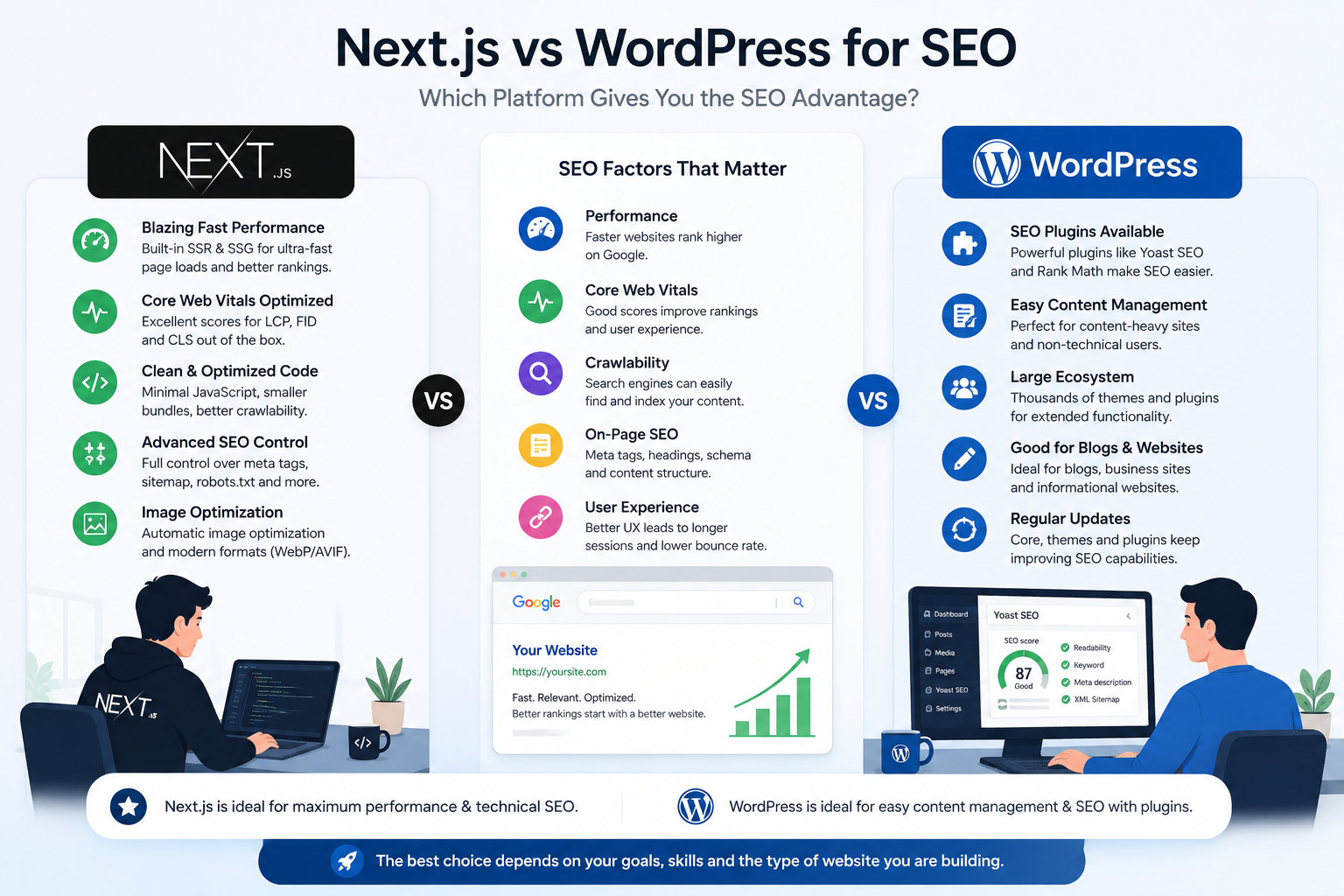
Next.js vs WordPress for SEO: What Matters
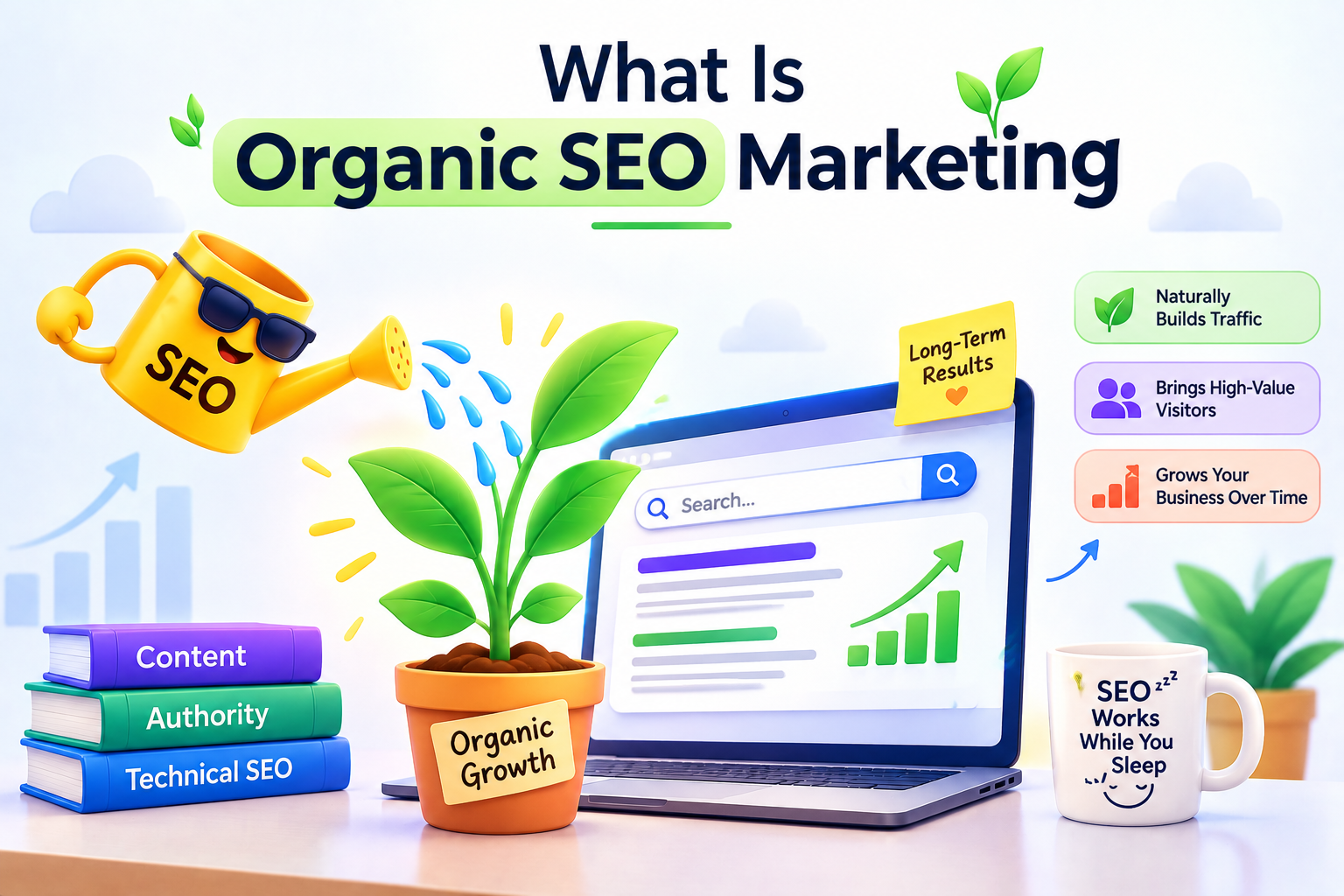
Organic SEO Marketing: Build Search Visibility That Compounds
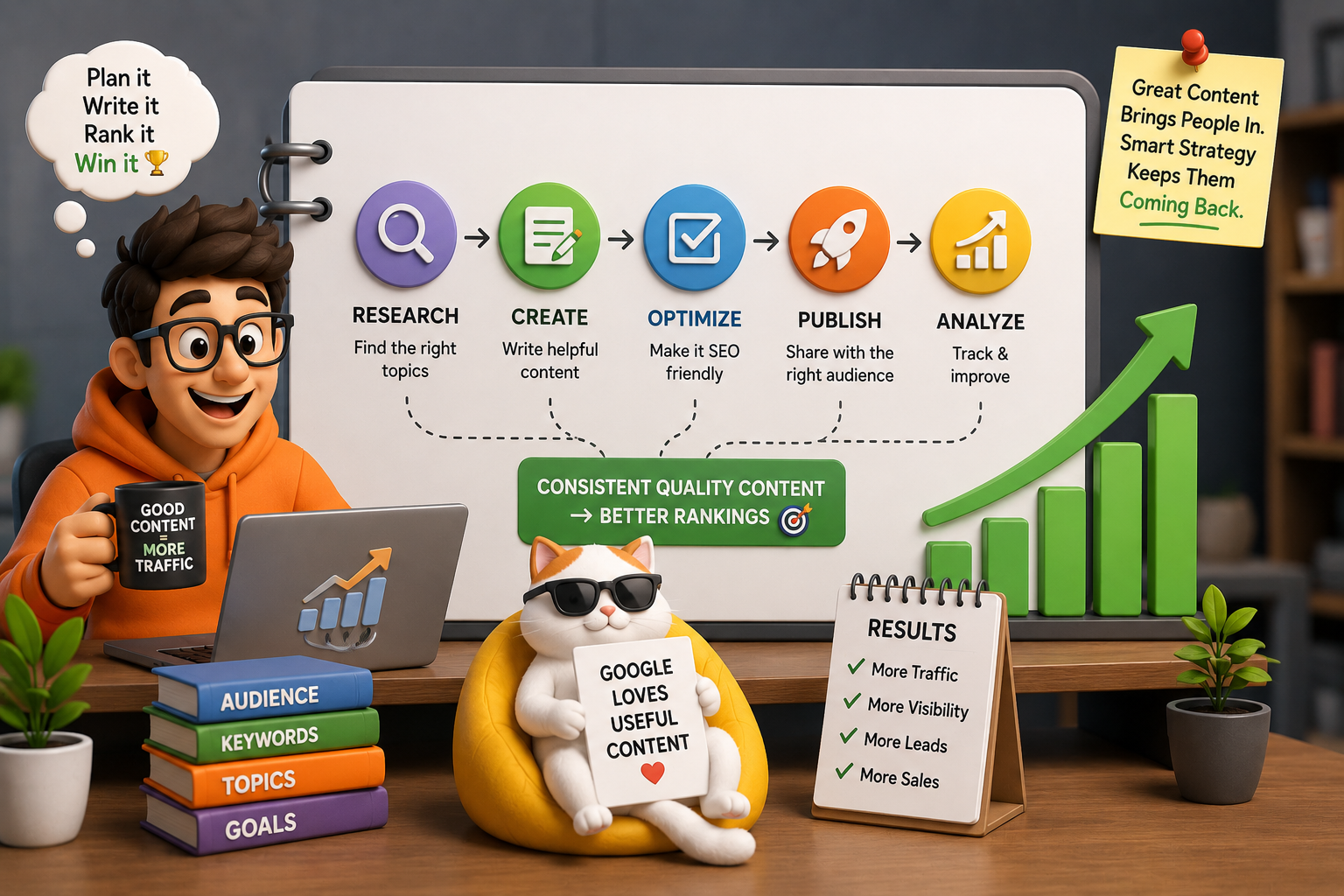
SEO Content Strategy: How to Create Content That Ranks and Converts