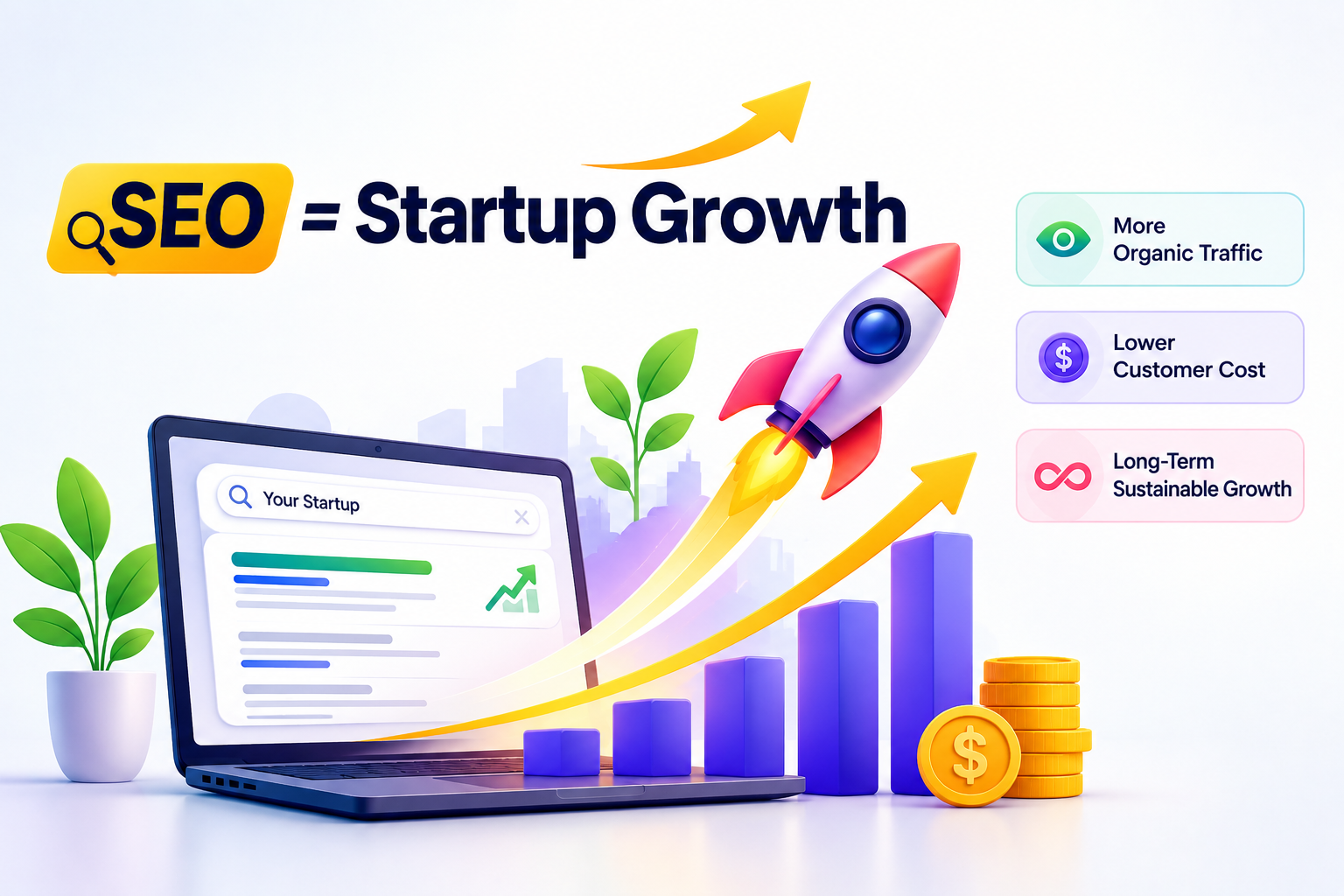
Most B2B companies approach SEO the same way consumer brands do — chasing high-volume keywords, publishing blog posts on broad topics, and measuring success by traffic. That approach fails in B2B because the dynamics are completely different. Your buyers are not impulse purchasers. They spend weeks or months researching before making contact. They search differently, evaluate differently, and convert on different signals. An SEO strategy that ignores this produces rankings without revenue.
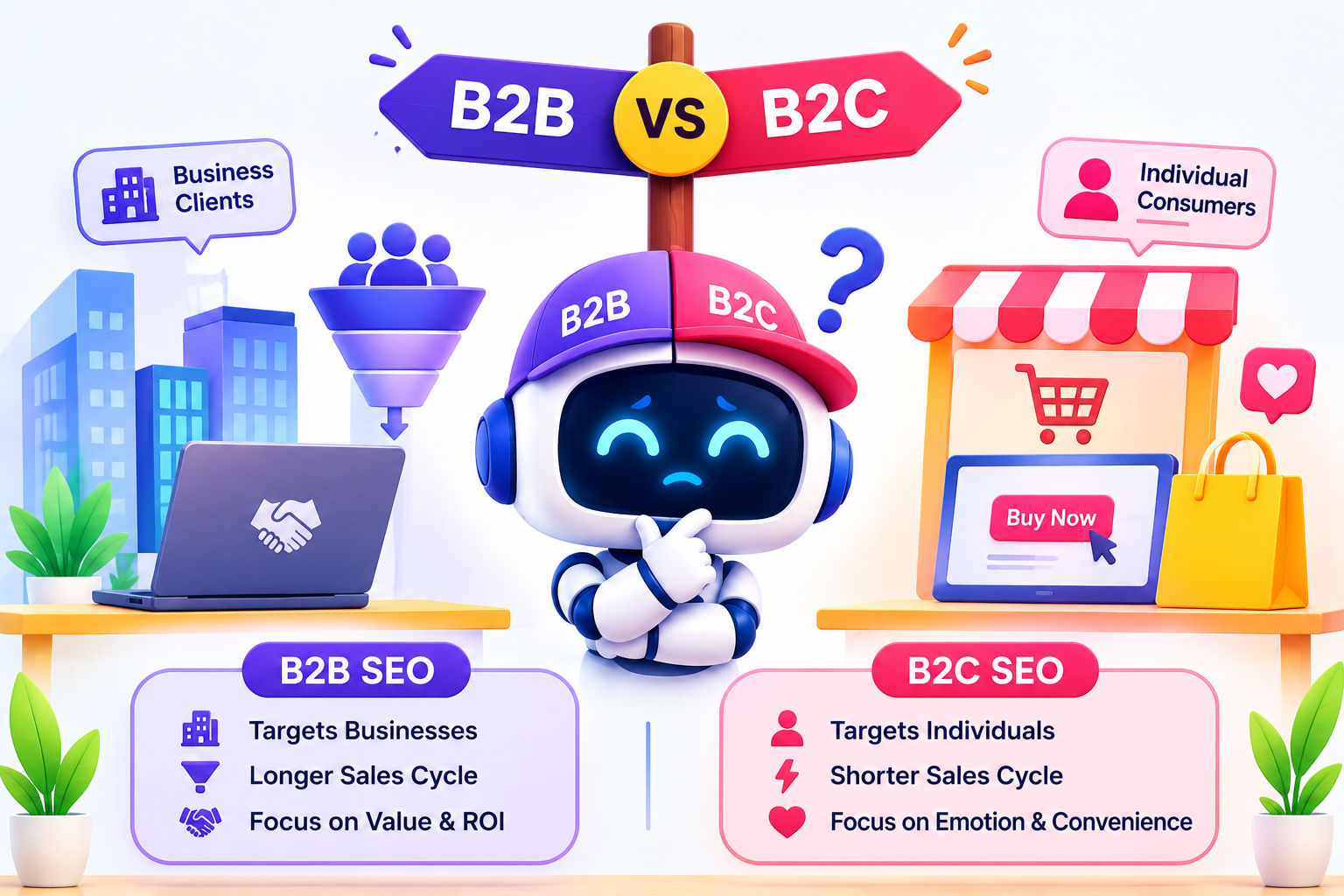
This guide covers how B2B SEO actually works, why it demands a different strategy from B2C, and how to build a programme that generates qualified pipeline from organic search — not just traffic numbers that look good in a monthly report.
What Is B2B SEO and How Is It Different from B2C SEO
B2B SEO is the practice of optimising a business's online presence to rank for the search queries its target buyers use during the research and evaluation phase of a purchase decision. The fundamentals — technical health, content quality, backlinks — are the same as any other SEO. What differs is almost everything else: the intent behind searches, the length of the decision cycle, the number of people involved in a buying decision, and the content depth required to satisfy a sophisticated buyer doing serious due diligence.
Factor B2B SEO B2C SEO Buyer journey length Weeks to months — multiple search sessions across the funnel Hours to days — often a single session to purchase Keyword intent Problem-aware and solution-aware queries — low volume, high specificity Product and category queries — higher volume, broader intent Content depth required High — buyers read thoroughly before engaging Medium — product descriptions, reviews, comparisons Conversion timeline Long — contact form to closed deal can take months Short — click to purchase within the same session Number of decision makers Multiple — technical buyers, financial approvers, end users Usually one — the individual consumer Link building approach Industry publications, trade associations, partner mentions, thought leadership Consumer press, influencer mentions, product review sites Traffic volume expectations Lower — niche audiences with precise needs Higher — mass market appeal
The implication of these differences is direct. A B2B SEO strategy that optimises for traffic volume will consistently attract the wrong audience. The right B2B SEO strategy optimises for qualified intent — attracting the specific people with the specific problems your product or service solves, at the specific stage of their research where your content is most useful.
Why B2B Companies Need SEO in 2025
Gartner research found that B2B buyers spend only 17% of their purchase journey meeting with potential vendors. The remaining 83% is spent on independent research — reading content, comparing options, evaluating case studies, and consulting peers. A substantial portion of that independent research happens through search. If your business is not present in organic search results during that research phase, you are invisible during the period when buyers are forming their shortlist.
Paid search fills the gap in the short term but at increasing cost. Average CPCs in competitive B2B categories — software, professional services, industrial equipment — have risen significantly over the past five years as more companies compete for the same search real estate. Organic search, once established, produces traffic at a declining cost per visit over time. A B2B company that builds strong organic rankings today is building an asset that becomes more valuable relative to paid as ad costs continue to rise.
In 2025 specifically, the shift toward AI-generated search summaries (Google's AI Overviews) makes it more important than ever to rank for bottom-of-funnel commercial queries where AI summaries are less prevalent. These are the queries your buyers use when they are close to a decision — comparison searches, alternative searches, and specific capability queries — and they remain the highest-value organic traffic a B2B company can earn.
How B2B Buyer Search Behaviour Works
B2B buyers do not search once and convert. They search in cycles across a journey that can span months. Understanding this journey is the foundation of an effective B2B keyword strategy because it tells you what content to create, how to structure it, and what conversion goal each piece of content should serve.
At the awareness stage, buyers are searching about problems rather than solutions. A procurement manager at a manufacturing company does not search for "ERP software vendor" initially — they search for "how to reduce inventory carrying costs" or "causes of production scheduling errors." These are problem-aware queries. Content that ranks for them reaches the buyer before any vendor has been considered, which is the most powerful position to hold.
At the consideration stage, the buyer has identified a category of solution and is now searching comparatively. Queries like "best CRM for manufacturing companies," "[your software] vs [competitor]," and "how to evaluate ERP vendors" define this stage. These searches have lower volume but significantly higher commercial intent. At the decision stage, buyers search for validation — reviews, case studies, implementation timelines, pricing — before making final contact. A complete B2B SEO strategy creates content for all three stages and connects them with a deliberate internal linking and conversion architecture.
B2B Keyword Strategy: Finding and Targeting the Right Terms
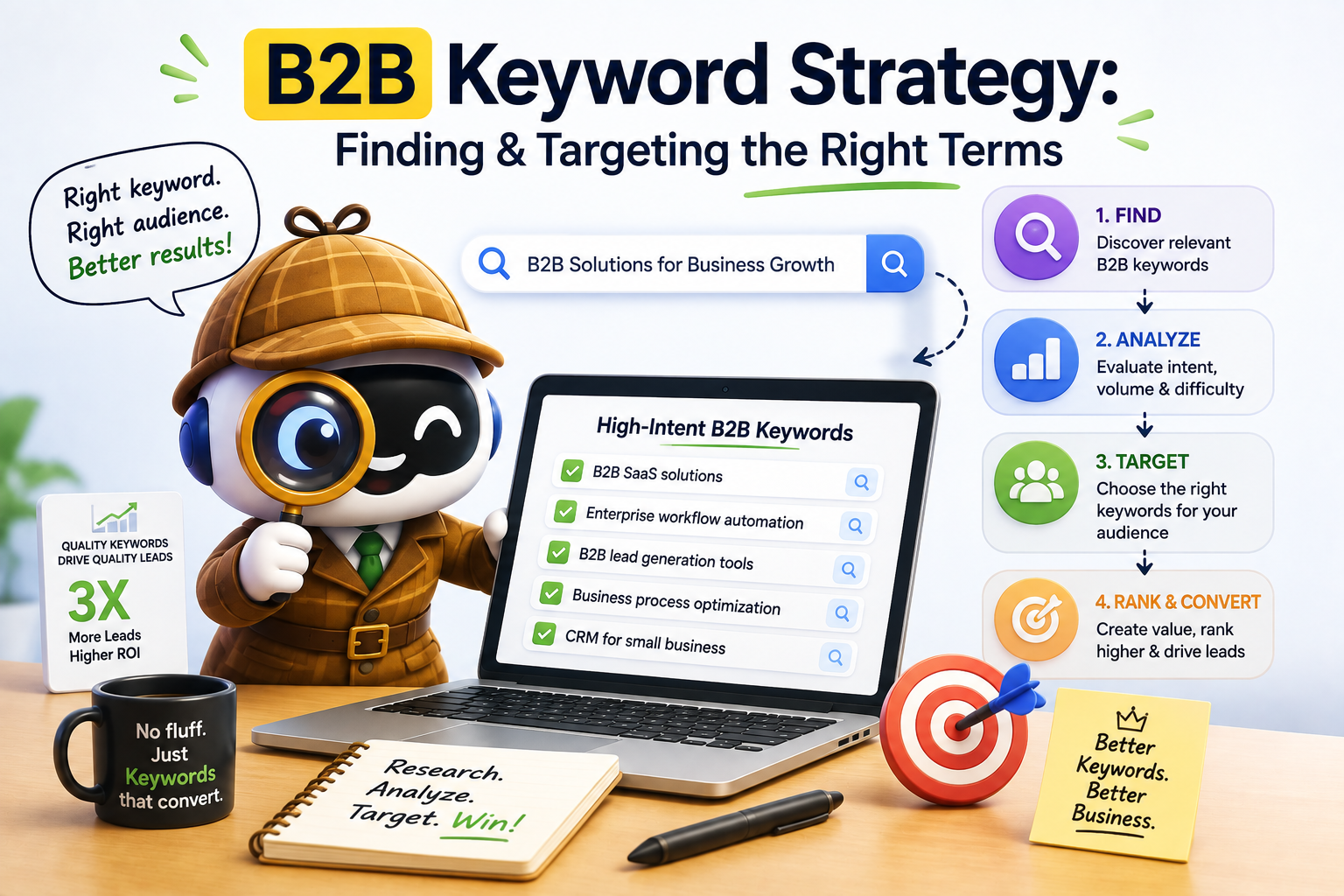
The most common B2B keyword mistake is letting search volume dominate decisions. In B2B markets, a keyword with 50 searches per month from the right audience is worth more than one with 5,000 searches from the wrong one. The frame for B2B keyword research should be commercial value, not traffic volume.
Start by building a keyword map that covers all three buyer journey stages for each of your core service or product areas. Use tools like Semrush or Ahrefs to identify keyword clusters — groups of related terms that share the same search intent and can be served by a single page. Then layer in competitor gap analysis — keywords your direct competitors rank for that you do not yet appear for. These gaps represent validated demand in your exact market that you are currently not capturing.
For B2B companies, three keyword types deliver the highest return. Comparison keywords ("HubSpot vs Salesforce," "[your service] alternatives") attract buyers in active evaluation mode. Problem keywords ("how to reduce customer churn in SaaS," "why are my manufacturing costs increasing") attract buyers at the start of their journey when vendor preferences are not yet formed. Job-to-be-done keywords ("how to automate accounts payable," "how to improve supplier onboarding") describe specific tasks your buyers need to accomplish and often have low competition relative to their commercial value.
On-Page SEO for B2B Websites
B2B on-page SEO starts with the homepage and service pages before it touches the blog. These pages are where your commercial keywords should be concentrated, and they are the pages that need to convert a qualified visitor into a lead — not just rank in search results.
Homepage Messaging and SEO
B2B homepage messaging fails in one of two ways: it is either too vague ("We help businesses grow") or too internally focused ("We are a leading provider of integrated solutions"). Neither tells a buyer searching for your category of service what you actually do or whether you are right for them. Your homepage H1 should state clearly what you do, who you do it for, and the primary outcome you deliver. This is both good UX and good SEO — a headline like "Inventory Management Software for Mid-Size Manufacturers" targets a specific search query and immediately filters for the right buyer.
Service Pages
Each core service or product should have its own dedicated page optimised for the specific search terms buyers use when looking for that capability. Generic service pages that describe what you do in broad terms rank poorly and convert worse. A managed IT services company should have separate pages for cybersecurity, cloud migration, helpdesk support, and network management — each targeting the specific queries buyers use for that service, with content that goes deep enough to demonstrate real expertise. Thin service pages with 200 words of general description are one of the most common and most damaging B2B SEO mistakes.
B2B Content Strategy: Creating Content That Ranks and Converts
B2B content needs to earn trust from a sophisticated buyer, not just attract a click. The content formats that work best in B2B SEO are those that demonstrate genuine expertise and provide specific, useful guidance that buyers cannot easily find elsewhere. Listicles and generic explainers do not move the needle. Original research, detailed comparison guides, technical how-tos, and in-depth industry analysis consistently outperform surface-level content in both rankings and conversion.
Map every piece of content you create to a buyer journey stage and a specific keyword cluster. Content at the awareness stage should educate and surface the problem your solution addresses. Content at the consideration stage should compare options, address objections, and demonstrate why your approach is differentiated. Content at the decision stage should reduce risk — case studies, implementation timelines, ROI calculators, and detailed product documentation all serve this function.
One tactic consistently underused by B2B companies is creating content that directly addresses the concerns of the economic buyer — typically the CFO, VP, or C-suite executive who approves the budget. Technical buyers research the solution. Economic buyers approve the investment. Content that speaks directly to ROI, risk reduction, and business outcome metrics gives your SEO programme reach into boardroom-level search behaviour that most competitors entirely ignore.
B2B Link Building and Authority Building Strategies
Link building in B2B is less about volume and more about relevance and authority. A single link from a well-respected industry publication is worth more than fifty links from generic directories. Your link building strategy should prioritise three channels.
Industry publications and trade press are the highest-value link source for most B2B companies. Contributing original research, expert commentary, or data-driven articles to publications your buyers already read earns links from highly relevant, authoritative domains and simultaneously builds brand visibility with your exact target audience. This is not guest posting for the sake of a link — it is thought leadership that happens to produce a link as a byproduct.
Partner and integration pages are an underutilised B2B link source. If your product integrates with other software platforms, or your services complement those of other vendors in your ecosystem, reciprocal mentions and integration listing pages produce highly relevant links. Technology companies that appear on the partner directories of larger platforms — Salesforce AppExchange, HubSpot Connect, AWS Marketplace — gain both links and qualified referral traffic.
Original data and research is the most scalable link acquisition strategy available to B2B companies. An annual industry survey, a proprietary benchmark report, or an analysis of anonymised customer data produces an asset that industry publications, bloggers, and analysts reference repeatedly over time. Semrush's annual State of Content Marketing report earns hundreds of links per year from a single published piece of research. Most B2B companies have access to data and expertise that could power equivalent assets — they simply have not packaged it as a publishable resource.
Technical SEO for B2B Websites
B2B websites face technical SEO challenges that are specific to their architecture and audience. The most common issues involve JavaScript-heavy frontend frameworks that render content client-side — making it invisible to crawlers until the second indexation wave — and product or service pages that are too thin to rank competitively on their own. Both are addressable with the right technical approach.
For B2B SaaS products, the marketing site and the product application frequently share a domain. Application routes, user dashboards, and authenticated pages can accidentally get crawled and indexed if robots.txt and meta robots directives are not properly configured. This wastes crawl budget and can introduce thin or duplicate content into the index from application-generated pages. A clear separation between indexable marketing content and non-indexable application content — enforced at the technical level — is a basic requirement for any SaaS site with SEO ambitions.
Core Web Vitals are as important for B2B as for any other site type. The assumption that B2B buyers are more patient with slow sites than consumers is not supported by data. A page that takes more than three seconds to load loses a significant percentage of visitors regardless of how sophisticated those visitors are. B2B buyers are also frequently researching on mobile devices between meetings or while commuting, making mobile performance a real operational concern rather than a theoretical one.
B2B SEO for Tech Companies and B2B Startups
Not all B2B companies operate under the same constraints, and two segments of the B2B audience search for guidance specifically scoped to their situation: B2B technology companies and B2B startups. Both groups face everything covered so far in this guide, plus a set of pressures unique to their stage or sector.
B2B SEO for Technology Companies
B2B tech companies — software vendors, IT service providers, and technology platforms selling to other businesses — sit at the intersection of two disciplines covered elsewhere on this site: the buyer-journey and content-depth principles in this guide, and the technical and category-specific keyword patterns covered in our dedicated SEO for Tech Companies guide. The distinguishing challenge for B2B tech specifically is that the buyer is usually more technically literate than the average B2B buyer in other industries, which raises the bar for content depth. A generic "why SEO matters" post will not satisfy a technical evaluator comparing your platform against three competitors on a spreadsheet — content needs to address integration specifics, security and compliance posture, and implementation complexity at a level of detail that would be unnecessary in most other B2B categories.
Keyword strategy for B2B tech companies should weight technical comparison queries — "[product] vs [competitor] for enterprise," "API rate limits comparison," "SOC 2 compliant [category] software" — more heavily than the general problem-aware queries recommended earlier in this guide for B2B broadly. Technical buyers tend to arrive further along the decision journey already, having identified the category and now filtering by capability.
B2B SEO for Startups
B2B startups face a different problem: they're applying the buyer-journey and keyword-value principles in this guide to a domain with no accumulated authority and, usually, a limited budget. Our SEO for Startups guide covers the resource-constrained tactics in depth — what follows here is specifically where startup constraints intersect with B2B buying behaviour.
The core tension for a B2B startup is that the long B2B sales cycle described earlier in this guide (weeks to months of independent research) collides with a startup's usual urgency for fast traction. This makes prioritisation critical. A B2B startup with limited resources should concentrate almost entirely on decision-stage and consideration-stage content — comparison pages, use-case pages, and content addressing specific objections a buyer would raise about working with an unproven vendor — rather than investing early in top-of-funnel, problem-aware content that takes longer to compound and requires more domain authority to rank for competitively.
Trust signals matter disproportionately for a B2B startup, since the buyer is evaluating not just the product but the risk of the company itself. Case studies, even from a small number of early customers, and specific, named social proof do more for a startup's B2B SEO than broad thought-leadership content that a company with no track record cannot yet back up credibly.
Local SEO for B2B Companies
Local SEO is often dismissed as irrelevant to B2B, which is a mistake for a large subset of B2B businesses. Professional service firms — accountants, lawyers, consultants, IT service providers — have strong geographic demand. Manufacturing companies with regional sales territories benefit from location-specific landing pages. Any B2B business that derives most of its clients from a specific metro area or region has a local search opportunity that generic SEO strategy overlooks.
The foundation of local B2B SEO is a fully optimised Google Business Profile with the correct category, complete service descriptions, consistent NAP (name, address, phone) information across all directories, and an active review acquisition strategy. Beyond this, creating location-specific service pages — "IT managed services in Chicago," "accounting firm for manufacturers in Dallas" — targets the specific geographic qualifier searches that buyers in your market use and that generic service pages do not capture.
SEO for B2B Lead Generation: Measuring and Tracking Results
The measurement framework for B2B SEO must connect organic search activity to pipeline, not just to traffic. Traffic is a leading indicator. Pipeline is what matters. Setting up this measurement requires proper conversion tracking at every touchpoint — contact form submissions, demo requests, content downloads, free trial sign-ups, and phone calls — with UTM parameters and Google Analytics 4 configured to attribute these conversions to organic search as the acquisition channel.
For B2B companies with a CRM, closing the loop between organic search and closed revenue requires connecting marketing attribution data to the CRM. HubSpot, Salesforce, and most modern CRMs support this connection. When configured correctly, you can see not just which pages generate leads but which pages generate leads that actually convert to customers — a distinction that changes your content investment priorities dramatically. A page that generates 20 low-quality leads per month is less valuable than one that generates 5 leads that close at a high rate.
Best SEO Tools for B2B Companies
Tool What It Does Best For Pricing Tier Semrush Keyword research, competitor analysis, site audit, rank tracking Full-stack B2B SEO strategy and campaign management From $139/month Ahrefs Backlink analysis, content gap, keyword explorer, site audit Link building research and competitor backlink analysis From $129/month Google Search Console Indexation data, query performance, Core Web Vitals, coverage issues Monitoring technical health and actual Google performance data Free Screaming Frog Site crawl audit, redirect mapping, duplicate content detection Technical SEO audits and pre-launch site checks Free up to 500 URLs, £259/year for full version Google Analytics 4 Traffic attribution, conversion tracking, user behaviour analysis Connecting organic search to lead generation and pipeline Free Surfer SEO Content optimisation, NLP analysis, SERP comparison Optimising individual B2B content pages for competitive rankings From $89/month Clearscope Content grading, keyword density analysis, topic coverage Content teams producing high-volume B2B SEO content From $199/month
B2B SEO Trends for 2025
The most significant shift in B2B SEO in 2025 is the growing prevalence of AI Overviews in search results for informational queries. For awareness-stage content — the blog posts and educational guides that previously drove top-of-funnel traffic — AI summaries now answer many queries directly on the results page. This has reduced click-through rates for generic informational content and increased the relative value of content that requires original expertise, first-hand experience, or proprietary data that AI cannot summarise from existing sources.
The practical response for B2B companies is to invest more in content that cannot be easily commoditised by AI — primary research, detailed case studies, expert opinion pieces backed by real experience, and highly specific technical guides that go deeper than anything else ranking for the target keyword. Bottom-of-funnel commercial content — comparison pages, alternative pages, and use-case-specific landing pages — remains largely unaffected by AI Overviews and continues to produce the highest-value B2B organic traffic.
Entity-based SEO has grown more important in 2025. Google increasingly understands businesses, people, and topics as entities with relationships rather than just matching keyword strings. For B2B companies, this means that building a clear, consistent entity presence — your company name, key people, core service areas, and industry affiliations — across your website, Google Business Profile, and third-party references strengthens your overall search presence beyond individual keyword rankings.
A Step-by-Step B2B SEO Campaign Framework
Area Action Items Priority Foundation audit Technical crawl audit, indexation review, Core Web Vitals baseline, competitor landscape analysis Critical — do first Keyword strategy Build keyword map by buyer stage, identify competitor gaps, prioritise by commercial value not volume Critical — do first Technical fixes Resolve crawl errors, fix redirect chains, implement canonical tags, address Core Web Vitals failures Critical — before content Service page optimisation Rewrite service pages with targeted keywords, expand thin content, add structured data, improve CTAs High Content production Build pillar pages for core topics, create cluster content for each keyword group, map content to buyer stage High — ongoing Link building Identify industry publications for outreach, develop a linkable asset, pursue partner and integration mentions Medium — build over time Conversion optimisation Add lead capture to high-traffic pages, test CTAs, implement exit intent on commercial pages Medium Measurement setup Configure GA4 conversion tracking, connect to CRM, set up rank tracking for priority keywords Critical — before launch Ongoing optimisation Monthly performance review, update underperforming content, expand keyword coverage, continue link acquisition Medium — recurring
Advantages and Drawbacks of B2B SEO vs Paid Advertising
Advantages of B2B SEO
Compounding returns over time. Paid search stops the moment budget stops. Organic rankings, once earned, continue to deliver traffic and leads without incremental spend per click. A B2B company that invests in SEO for 18 months builds an asset that generates pipeline indefinitely — the cost per lead from organic search typically falls below paid channels within two to three years for most B2B categories.
Higher trust signals at the point of discovery. Organic search results carry an implicit credibility that paid results do not. B2B buyers are sophisticated evaluators who understand the difference between paid placement and earned ranking. Appearing organically for a competitive keyword signals expertise and relevance in a way that a paid ad cannot replicate.
Presence during the research phase paid search misses. Paid search captures demand at the moment of search. SEO captures buyers at the very start of their journey, before they are actively searching for a vendor — through the problem-aware and category-aware content that shapes their understanding of their own situation before they ever reach a comparison stage.
Lower cost per lead at scale. As organic traffic grows, the cost per lead from SEO decreases while paid search costs typically increase as competition intensifies. For B2B companies in competitive categories where CPCs regularly exceed $50 to $100 per click, organic search represents a significant cost efficiency advantage at scale.
Drawbacks of B2B SEO
Timeline to results is long. B2B SEO typically takes six to twelve months to produce meaningful organic traffic growth and often twelve to eighteen months before it represents a significant pipeline contribution. Companies that need immediate leads cannot rely on SEO alone and must run paid channels in parallel during the organic programme's ramp-up period.
Ongoing content investment is non-negotiable. B2B SEO cannot be treated as a project with a defined end date. It requires sustained content production, regular technical maintenance, and continued link acquisition to maintain and grow rankings. The moment you stop investing, competitors who are continuing to invest will gradually overtake your positions.
Attribution across long sales cycles is genuinely difficult. When a B2B deal closes six months after the buyer first found your site through organic search — and after multiple touchpoints including direct visits, email, and sales calls — attributing that closed revenue to SEO requires a sophisticated attribution model that many companies have not built. Without proper attribution, SEO's contribution to pipeline is routinely undervalued in budget discussions.

B2B SEO Best Practices: A Quick-Reference Checklist
This guide has covered the full mechanics of a B2B SEO programme in depth. The checklist below distills it into the core practices worth returning to as a working reference.
Foundation and technical health
Run a technical crawl audit before any content investment — fix crawlability, indexation, and Core Web Vitals issues first
Confirm application routes, user dashboards, and authenticated pages are excluded from indexation on SaaS domains
Establish a Core Web Vitals baseline and treat mobile performance as an operational requirement, not a nice-to-have
Keyword and content strategy
Prioritise commercial value over search volume — a low-volume keyword from the right buyer outperforms a high-volume one from the wrong audience
Build a keyword map covering all three buyer journey stages (problem-aware, solution-aware, decision-stage) for every core service or product area
Concentrate commercial keywords on service and homepage copy before spreading them across blog content
Avoid thin service pages — expand any page under roughly 500 words of substantive, keyword-targeted content
Create content that speaks to the economic buyer (ROI, risk, business outcomes), not just the technical evaluator
Authority and link building
Prioritise relevance over volume — one link from a respected industry publication outweighs dozens from generic directories
Pursue partner and integration page listings if your product or service has an ecosystem of complementary vendors
Package existing data or expertise into a publishable research asset rather than relying solely on outreach for links
Measurement
Connect organic search conversions to your CRM so pipeline — not just traffic — is the metric under review
Track which pages generate leads that actually close, not just which pages generate the most leads
Realistic expectations
Budget six to twelve months before meaningful organic growth appears, and twelve to eighteen months before SEO contributes materially to pipeline
Run paid search in parallel during the SEO ramp-up period rather than treating organic as an immediate substitute
Related Services
Executing a B2B SEO strategy that generates consistent qualified pipeline requires technical expertise, content capability, and strategic oversight working together. Munix Studio provides the complete range of services B2B companies need to build and sustain organic search performance.
SEO Optimization — B2B-focused SEO strategy and execution covering technical audits, keyword research mapped to your buyer journey, content architecture, on-page optimisation, and link building programmes designed to generate qualified pipeline rather than generic traffic.
Website Development — B2B websites built on React and Next.js with the technical SEO foundations, service page architecture, and conversion infrastructure needed to turn organic search traffic into sales-ready leads.
Digital Marketing — Integrated B2B marketing support that connects your SEO programme to paid search, LinkedIn advertising, and content distribution — ensuring organic and paid channels reinforce each other through the full length of your buyer's journey.
Dedicated Developers — Specialist B2B content writers and SEO specialists available on a dedicated basis to produce the depth and volume of expert content your SEO strategy requires without straining your internal team.
Maintenance and Support — Ongoing technical monitoring and support that keeps your B2B site's SEO foundation intact — fast performance, clean crawlability, and no silent technical issues undermining the rankings your strategy has earned.
Frequently Asked Questions
Ready to Get Started?
SEO Optimization
B2B-focused SEO strategy and execution — technical audits, buyer journey keyword mapping, content architecture, and link building — designed to generate qualified pipeline from organic search rather than generic traffic volume.
Explore SEO OptimizationRelated Articles

Ecommerce SEO: The Complete Guide to Ranking Your Online Store
The History of SEO: How Search Engine Optimisation Began
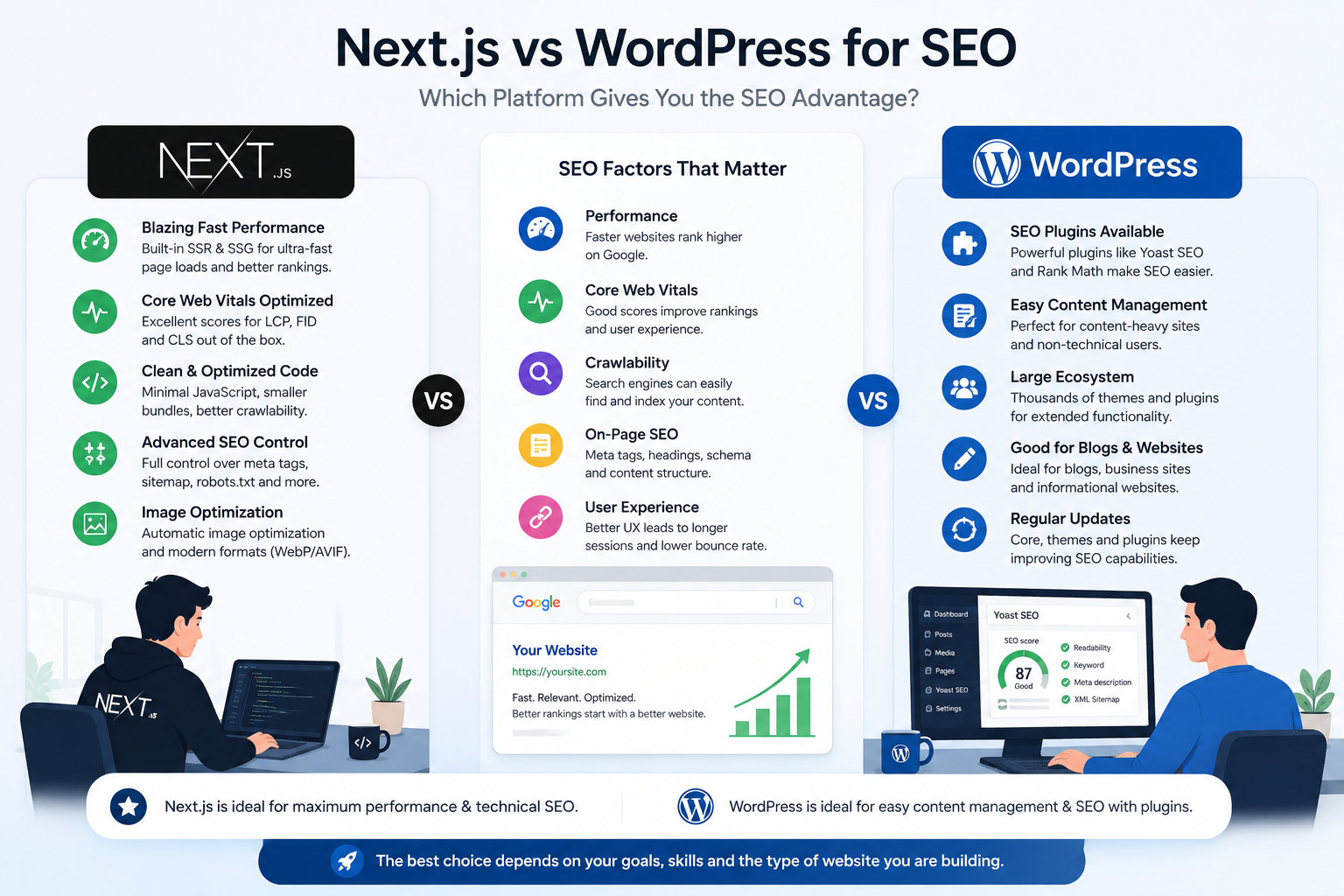
Next.js vs WordPress for SEO: What Matters
Organic SEO Marketing: Build Search Visibility That Compounds
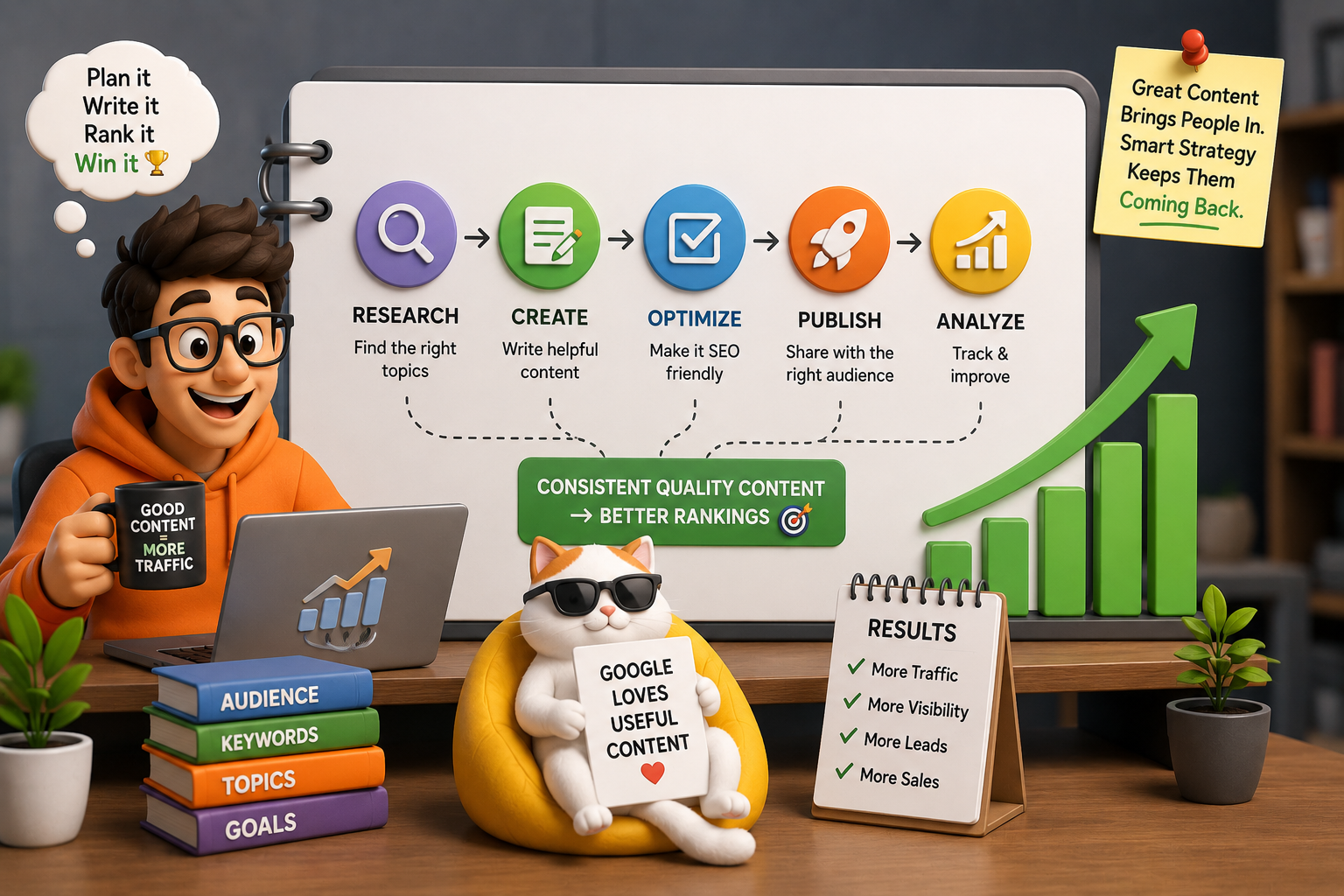
SEO Content Strategy: How to Create Content That Ranks and Converts