Most startup founders treat SEO as something to think about later — after the product is built, after the first customers are acquired, after there is budget to spare. This sequencing is understandable but expensive. The founders who treat SEO as infrastructure from the beginning, building it into the website architecture, the content strategy, and the product communication from day one, arrive at the twelve-month mark with a compounding organic channel that their competitors are only just beginning to consider.
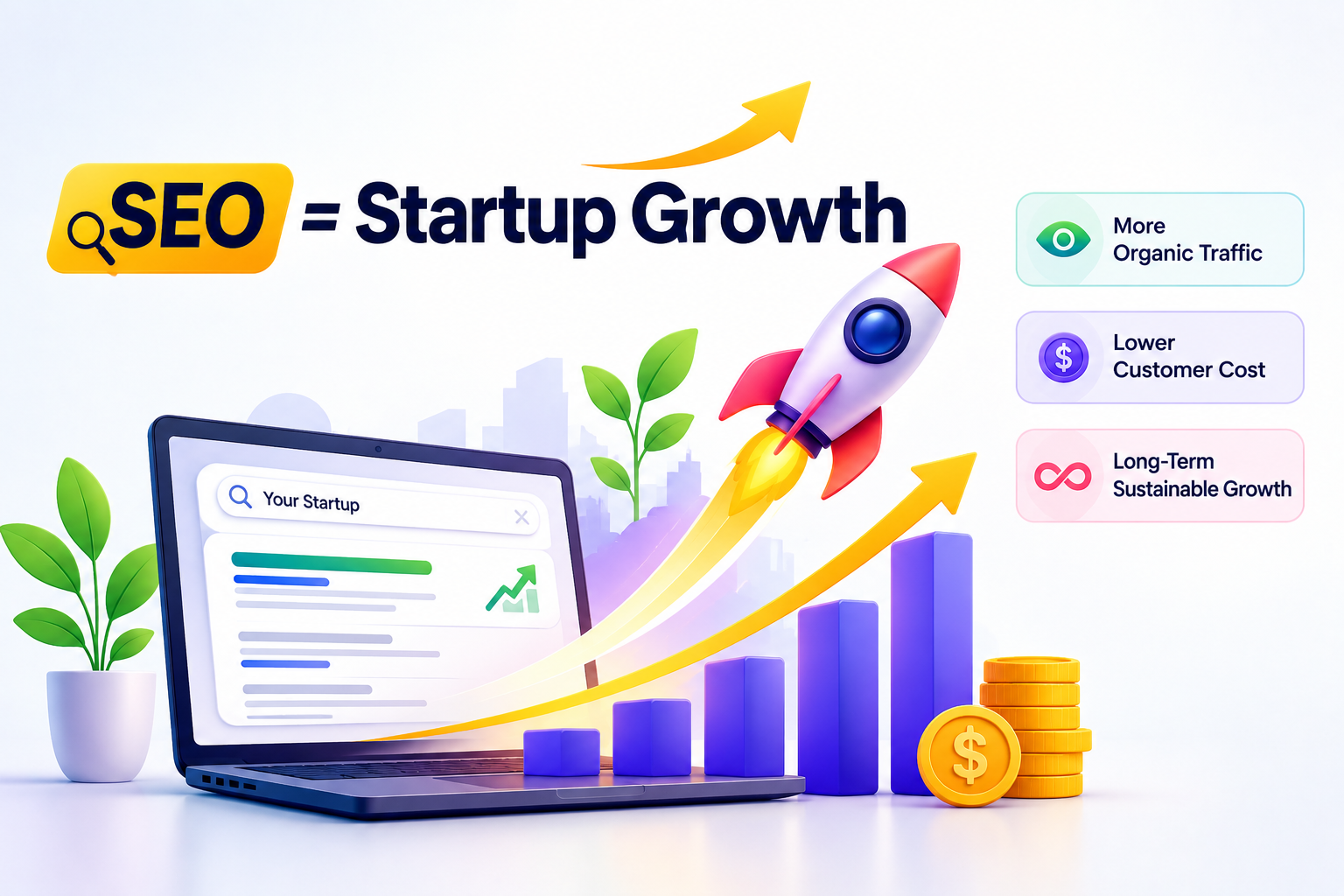
SEO for startups is different from SEO for established businesses in ways that matter. The budget constraints are real. The timeline pressure is real. The need to prioritise ruthlessly — to find the highest-impact actions rather than executing a textbook SEO programme across every dimension simultaneously — is more acute than in any other business context. This guide is written specifically for startup founders and early-stage teams: what to do first, what to deprioritise, which tools to use, when to hire help, and how to build an organic growth engine that works for a business that is still finding its footing.
Why SEO Is One of the Best Growth Bets for an Early-Stage Startup
Startups operate under a constraint that makes most growth channels economically brutal: customer acquisition costs need to stay low while the business is pre-revenue or pre-scale, precisely when paid channels are most expensive relative to return. Google Ads, LinkedIn campaigns, and paid social all require ongoing spend to maintain any visibility — the moment spend stops, so does the traffic. For a startup with limited runway, building a channel that generates compounding returns without proportional ongoing spend is not a nice-to-have. It is a survival advantage.
SEO compounds in a way no paid channel can replicate. A well-optimised page that ranks for a high-intent keyword continues generating traffic and leads for months or years after the initial investment in creating it. As the domain builds authority — through more content, more backlinks, more engagement signals — each new piece of content ranks faster and with less effort than the pieces that came before it. The startup that begins this compounding process at month one is in a categorically different position at month eighteen than the one that starts at month twelve.
There is also a market intelligence dimension to startup SEO that often goes unrecognised. The keyword research process — mapping what potential customers are searching for, in what volume, with what specific language — is one of the most rigorous and data-grounded forms of market research available. A startup that understands the exact search terms its target customers use to describe their problems is a startup with a significant advantage in how it positions its product, writes its website copy, and communicates its value proposition.
The Startup SEO Mindset: Constraints as Advantages
Established businesses doing SEO are often trying to defend existing rankings, cover a broad keyword footprint, and maintain a large content operation across many topics. Startups have none of these obligations. A startup can choose exactly where to focus, go extremely deep on a narrow set of high-value keywords, and build authority in a specific niche faster than a larger, more diffuse competitor can. The constraint of limited resources, properly channelled, becomes a strategic advantage.
The right startup SEO mindset focuses on three things above all else: choosing the right keywords to build around before producing any content, getting the technical foundation right before scaling content production, and producing a small number of genuinely excellent pieces rather than a large volume of mediocre ones. These priorities reflect the reality that a startup cannot outspend competitors on content volume — but it can outthink them on keyword selection and outperform them on content quality within a focused niche.
SEO Tips for Startups: The First 10 Actions That Actually Move the Needle
Most startup SEO advice describes what to do without being specific enough about sequence. The ten actions below are ordered by impact and by the dependencies between them. Do them in this sequence and you will have more organic traction in six months than most startups achieve in two years of unfocused effort.
1. Connect Google Search Console before you do anything else. This is free and takes ten minutes. Search Console is the only tool that shows you exactly what Google sees when it crawls your site, which pages are indexed, and which keywords are generating impressions. Without it you are operating blind.
2. Run your homepage through Google PageSpeed Insights. Note your Largest Contentful Paint, Cumulative Layout Shift, and Interaction to Next Paint scores. Fix any Core Web Vitals failures before publishing SEO content. A slow homepage penalises every page on the site, not just itself.
3. Verify your robots.txt is not blocking anything important. Go to yourdomain.com/robots.txt and check it. Many startup websites accidentally block their own pages through misconfigured robots.txt rules, particularly those built on Next.js or React where the file is generated programmatically.
4. Submit your XML sitemap to Search Console. This tells Google every page that exists on your site and prompts faster indexing. In Next.js, sitemap.xml is generated automatically when you configure the sitemap in your app directory. In WordPress, Yoast or RankMath handle this automatically.
5. Write a unique meta title and description for every page. Not one template applied to all pages. Each page's title should include the primary keyword for that page. Each description should be a genuine one to two sentence summary that gives someone a reason to click.
6. Do keyword research before writing a single piece of content. Use Semrush or Ahrefs to identify the ten to fifteen keywords most relevant to your offering with a keyword difficulty under 30. These are your first content targets. Writing content without this step is producing work that may never rank regardless of its quality.
7. Optimise your service or product pages first. Your homepage and core offering pages are more commercially valuable than any blog post. Before writing educational content, ensure these pages target the right keywords, have proper heading structures, and answer the questions a buyer has when evaluating your category of solution.
8. Publish your first pillar article on the topic most central to your offering. This is a comprehensive guide of at least 2,500 words targeting your most important informational keyword. It becomes the hub that cluster articles link back to, and it signals to Google that your site has genuine depth on this topic.
9. Get your first five backlinks from startup directories and launch platforms. Product Hunt, BetaList, G2, Capterra, and relevant industry directories all provide legitimate backlinks at zero financial cost. These give your domain an initial authority baseline and help Google understand what your startup does.
10. Set a consistent content publishing cadence and maintain it. Two well-researched articles per month published consistently beats ten articles published in one month and nothing for the next three. Consistency is a freshness signal and a compounding factor. The editorial calendar is as important as the individual articles on it.
When Should a Startup Start SEO?
The honest answer is before the website is built. The decisions made during website development — URL structure, page architecture, how the CMS is configured, which pages get dedicated URLs versus which content is dynamically generated — all have SEO implications that are expensive to undo later. A startup that builds its website with SEO in mind from the start avoids the technical debt of retrofitting SEO onto a structure that was not designed for it.
At minimum, the following SEO foundations should be in place from the moment a startup's website launches: a clear site structure with logical URL patterns, properly configured meta titles and descriptions on every page, Google Search Console connected and the sitemap submitted, HTTPS configured correctly, and at least basic on-page optimisation on the homepage and primary service or product pages. These are not resource-intensive tasks — they take hours rather than weeks — but their absence creates an SEO hole that takes months to climb out of.
Content-focused SEO — the blog posts, comparison articles, and resource guides that build topical authority and long-tail organic traffic — can begin as soon as the core product or service offering is stable enough to be described clearly. Starting content production while the product is still changing rapidly risks publishing content that needs constant revision. But waiting for perfect product-market fit before starting content means losing six to twelve months of compounding that cannot be recovered.
Startup SEO Strategy: Where to Start
A startup SEO strategy needs to be sequenced correctly because the order of operations matters. Technical foundations enable content to rank. Keyword research determines which content to create. Content builds topical authority. Topical authority earns links. Links improve rankings. Each layer enables the next. Starting with content production before technical foundations are solid, or producing content without keyword research to guide it, wastes resources that an early-stage startup cannot afford to waste.
Step 1: Technical Foundation Audit
Before writing a single word of SEO-focused content, audit the technical state of the existing website. This does not require expensive tools — Google Search Console, Google PageSpeed Insights, and a free crawl with Screaming Frog's free tier (up to 500 URLs) surface the most critical issues. The audit should identify: pages that are not being indexed and why, crawl errors, duplicate content issues, Core Web Vitals failures, missing or duplicate meta tags, and broken internal links. Fixing these issues before scaling content production ensures that everything produced afterward has a chance to rank rather than being buried by technical problems.
Step 2: Keyword Research Focused on Startup Reality
Startup keyword research differs from enterprise keyword research in one critical dimension: a startup has no domain authority to compete for high-competition, high-volume keywords. Targeting keywords with keyword difficulty scores above 40 at the outset is a resource sink — the content will produce little organic traffic because the domain cannot yet compete in that difficulty range. The startup keyword strategy should focus almost entirely on low-competition, high-intent keywords where genuine rankings are achievable within three to six months.
Long-tail keywords — three to five word phrases that are highly specific — are the startup's natural hunting ground. "Project management software for architecture firms" is a better early target for a new project management startup than "project management software" — it has lower competition, the searcher has a specific and well-defined need, and ranking for it sends a precision signal to Google about the content's topical relevance. As the domain builds authority from successfully ranking for long-tail terms, progressively broader and more competitive keywords become attainable.
Step 3: Content Production Prioritised by Impact
With technical foundations solid and target keywords identified, content production should be prioritised by the combination of ranking achievability and commercial value. Bottom-of-funnel pages — the service pages, product pages, and landing pages that describe what the startup offers and target keywords buyers use when actively evaluating solutions — should be optimised first because they directly generate leads and revenue. Informational content that builds topical authority and attracts top-of-funnel traffic should follow, prioritised by the keywords with the most realistic ranking potential given the domain's current authority.
Consistency matters more than volume at the startup stage. Publishing two substantive, well-researched, well-optimised articles per month consistently is more effective than publishing ten thin pieces in a burst and then going quiet for three months. Search engines reward consistent content production as a freshness signal, and the internal links between a growing body of consistently produced content compound in their effect on topical authority over time.
SEO Phase Startup Stage Priority Actions Expected Outcome Time Horizon Foundation Pre-launch or launch Technical audit, site structure, meta tags, GSC setup Clean indexing, no technical blockers Weeks 1–4 Keyword Strategy Months 1–2 Full keyword research, content gap analysis, topic clustering Content roadmap mapped to search demand Month 1–2 Content Build Months 2–6 Service page optimisation, first blog cluster, internal linking First keyword rankings, early organic traffic Months 3–6 Authority Building Months 6–12 Link building, content depth expansion, competitor gap targeting Growing traffic, mid-competition keyword rankings Months 6–12 Compounding Month 12+ Broader keyword expansion, content refresh, conversion optimisation Organic as primary lead channel Month 12+
Technical SEO Priorities for Startups
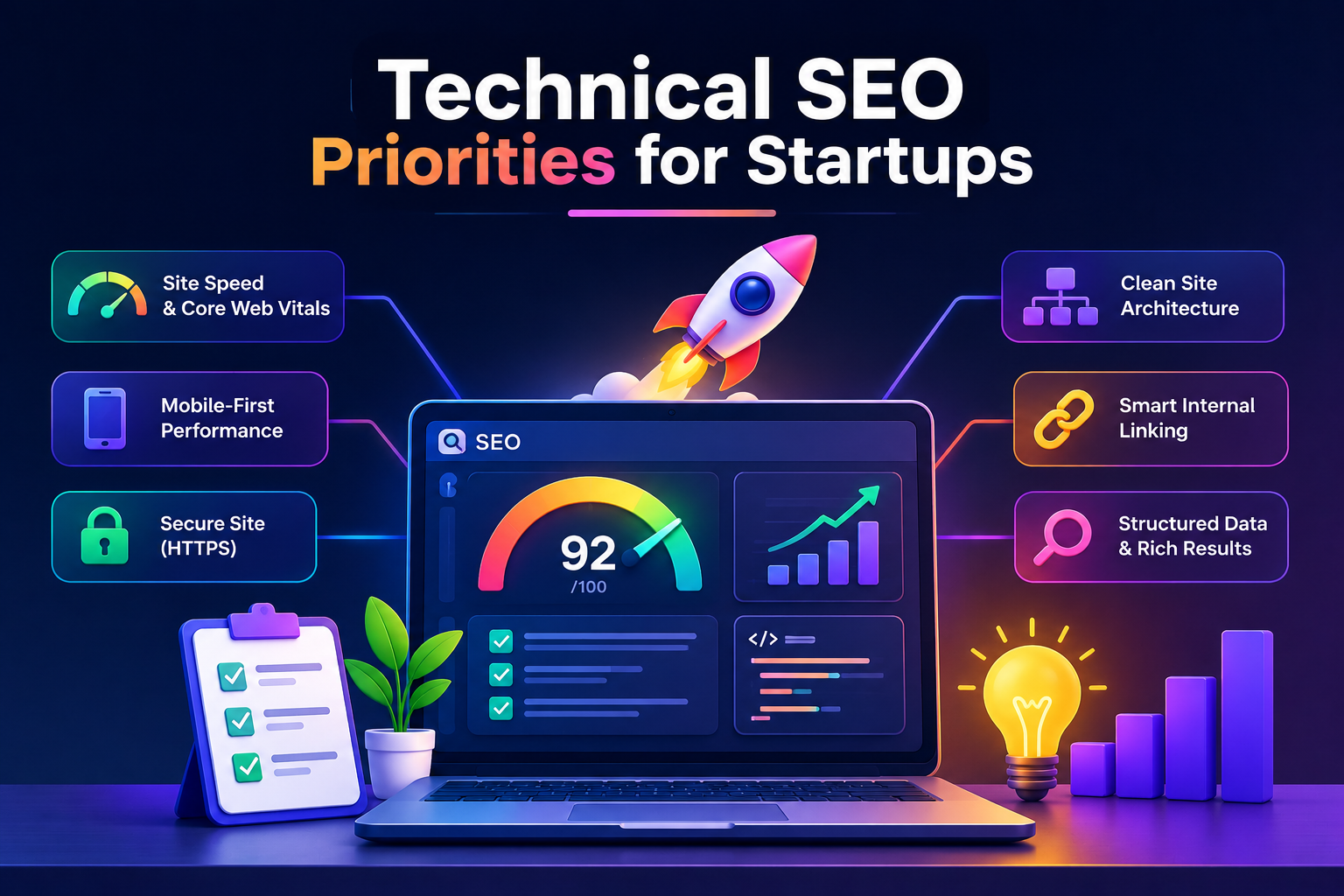
Technical SEO for a startup does not need to be comprehensive from day one — it needs to be correct on the things that matter most. A startup website that is properly indexed, loads fast, is mobile-responsive, and has no crawl errors is in a better position than one that has implemented every advanced technical SEO feature but has a fundamental indexing problem preventing its pages from appearing in search results at all.
Indexing and Crawlability
The single most important technical SEO check for a new startup website is verifying that Google can find and index the pages that matter. This means checking Google Search Console for crawl errors, verifying that the robots.txt file is not accidentally blocking important pages, and ensuring the XML sitemap contains all the pages the startup wants indexed. Many startup websites — particularly those built on JavaScript-heavy frameworks — have indexing problems that are invisible until Search Console surfaces them. A React or Next.js site that relies entirely on client-side rendering can be difficult for Googlebot to crawl effectively, which means pages appear to load in the browser but are invisible to search engines. Server-side rendering or static generation solves this problem and should be implemented from the start rather than as an afterthought.
Page Speed and Core Web Vitals
Page speed is both a ranking signal and a conversion factor. A startup website that takes four seconds to load is losing visitors before they have read a word — and it is being penalised in rankings for it. For startup websites built on modern frameworks, the most common speed problems are large unoptimised images, excessive JavaScript bundle sizes, and third-party scripts from analytics, chat, and marketing tools that load synchronously and block page rendering. Each of these has a well-established solution: next-generation image formats with proper compression, code splitting and lazy loading for JavaScript, and asynchronous or deferred loading for third-party scripts.
URL Structure and Site Architecture
A startup's URL structure should be logical, descriptive, and stable from the beginning. Changing URL structures after content is published and indexed forces redirects that dilute link equity and create crawl complexity. The right approach is deciding on the URL pattern before launching — keeping URLs short, descriptive, and lowercase with hyphens rather than underscores — and maintaining that pattern consistently as the site grows. A blog post at /blog/seo-for-startups is better than one at /blog/post?id=4827 for both users and search engines.
Content Strategy for Tech Startups: Doing More With Less
Startup content strategy is defined by constraint. Most early-stage teams cannot produce ten articles per week — and producing ten thin, poorly researched articles per week would not help them if they could. The content strategy that works for a startup optimises for quality and specificity over volume, targeting a narrow set of high-value keywords with content that is genuinely the best available resource on each topic.
The Pillar and Cluster Model for Startups
The pillar and cluster content model is particularly well-suited to startups because it produces concentrated topical authority rather than spreading thin across many unrelated topics. A pillar page is a comprehensive guide to a broad topic central to the startup's core offering. Cluster pages are more specific articles covering subtopics related to the pillar, each internally linked to and from the pillar page. This structure signals to search engines that the website is a thorough, authoritative resource on the pillar topic rather than a site with isolated articles on unrelated subjects.
For a startup offering HR software for small businesses, the pillar page might be a comprehensive guide to HR management for small businesses. Cluster articles might cover specific subtopics: how to set up a leave management system, employee onboarding best practices, HR compliance requirements by industry, and how to conduct performance reviews effectively. Each cluster article links to the pillar, and the pillar links to each cluster article. The internal linking structure reinforces the topical authority of the entire cluster and helps all of the pages rank better than they would as isolated pieces.
Founder-Led Content: A Startup's Structural Advantage
One genuine advantage startups have over established businesses in content strategy is founder expertise. A founder who has spent years in a specific industry or solving a specific technical problem has knowledge depth that an established company's content team — writing about multiple industries simultaneously — cannot match. Founder-led content, where the founder's specific insights, opinions, and experience are the substance of the content, produces articles that are both more genuinely useful to readers and more credible to search engines under Google's E-E-A-T framework than generic content produced for SEO volume alone.
Practically, this means the founder contributes the substance and insight while a writer or editor handles the research, structure, and optimisation. This division of labour is more sustainable than expecting the founder to produce polished, SEO-optimised articles from scratch, and produces better content than expecting a writer without domain expertise to produce technical depth on their own.
SEO for Solo Entrepreneurs and Early-Stage Startups: A Simpler Framework
Solo founders and very early-stage startups face a version of the SEO problem that is even more constrained than the general startup context. A two-person team with fifteen hours of combined weekly capacity for marketing cannot execute the same SEO programme as a five-person team with a dedicated marketing hire. This section offers a simplified framework specifically for the earliest stage, where simplicity and focus matter more than comprehensiveness.
The Three-Priority Framework for Solo Founders
Solo founder SEO should be organised around three priorities only: making sure Google can find and index your site correctly, targeting five to ten achievable keywords with dedicated pages or articles, and getting your first ten to twenty backlinks from legitimate sources. Everything beyond this is secondary until the domain has demonstrated it can rank for something, which typically takes three to six months of consistent effort.
Make sure Google can find you means connecting Search Console, submitting your sitemap, verifying there are no indexation errors, and checking that your core pages appear when you search for them directly. This takes a morning to set up and rarely needs revisiting unless you make structural changes to the site.
Targeting five to ten achievable keywords means doing keyword research once, identifying the lowest-competition keywords genuinely relevant to your offering, and building one good page or article for each. Five well-targeted, properly optimised pages produce more organic traffic for a new domain than fifty pages targeting keywords the domain cannot yet rank for.
Getting your first ten to twenty backlinks from legitimate sources means launch platform listings, directory submissions, and one or two pieces of genuinely useful content that your target community will share. This is not a full-time activity. It takes a focused effort of a few hours per week for three to four months to build an initial backlink baseline that gives the domain the credibility signals it needs to rank for anything competitive.
The Minimum Viable SEO Stack for a Solo Founder
The tools a solo founder needs are simpler than most SEO guides suggest. Google Search Console and Google Analytics 4 are free and cover monitoring and traffic analysis completely. One keyword research tool, either the free tier of Ubersuggest or Semrush's starter plan, is sufficient for keyword research at the volume a solo founder can execute. Screaming Frog's free tier handles crawl audits for sites under 500 URLs. That is the entire stack. Four tools, two of them free, covering every essential SEO function for an early-stage startup.
Best SEO Tools for Startups: What to Use and What to Skip
Startup SEO tool selection should be guided by the same constraint-based thinking that guides everything else at an early stage: use the minimum set of tools that covers the necessary functions, and do not pay for capabilities you do not yet have the team or content volume to use. A startup spending $400 per month on an enterprise SEO platform when it is publishing two articles per month is misallocating resources.
Tool Function Cost Startup Recommendation Priority Google Search Console Indexing, rankings, crawl errors Free Use from day one — non-negotiable Essential Google Analytics 4 Traffic analysis, user behaviour Free Set up alongside Search Console Essential Google PageSpeed Insights Core Web Vitals, speed diagnostics Free Run on every key page before launch Essential Semrush (Starter) Keyword research, competitor analysis ~$130/mo Worth it once content strategy begins High Ahrefs (Lite) Backlink analysis, keyword explorer ~$99/mo Strong alternative to Semrush for link data High Screaming Frog (Free) Site crawl, technical audit Free up to 500 URLs Sufficient for most early-stage startups High Yoast / Rank Math On-page SEO (WordPress) Free tiers available Use if on WordPress — reduces technical overhead Medium Surfer SEO / Clearscope Content optimisation scoring $89–$199/mo Skip until content volume justifies cost Low (early stage)
Link Building for Startups: Earning Authority Early
Backlinks — links from other websites pointing to yours — are one of the most significant signals in Google's ranking algorithm. A startup with zero external links pointing to its domain is at a fundamental disadvantage against established competitors who have accumulated backlinks over years. Building initial link authority requires different tactics from the link acquisition strategies used by established businesses with large content marketing budgets.
Startup Launch Listings
Product launch platforms — Product Hunt, BetaList, Hacker News (Show HN), and startup directories — provide genuine backlinks from established domains alongside the launch traffic they generate. A well-executed Product Hunt launch can generate dozens of links from aggregators and publications that cover new product launches, providing an initial baseline of backlink authority that a brand new domain would otherwise take months to build. These links are not as high-quality as editorial links from specialist publications, but they are legitimate, real, and far better than nothing.
Industry Directory and Resource Listings
Most industries have directories, resource lists, and curated tools pages where relevant startups can earn listings. For software startups, G2, Capterra, Clutch, and similar software review platforms all provide backlinks alongside the review and credibility value of being listed. For service-focused startups, relevant professional association directories and local business directories in target markets provide geographic anchor links that support local SEO alongside domain authority signals. These listings take hours rather than weeks to secure and represent reliable link building at zero cost beyond time.
HARO and Expert Commentary
Help a Reporter Out (HARO) and similar journalist query platforms allow founders to respond to media requests for expert commentary in their field. A founder whose response is used in a published article earns a backlink from the publication alongside the brand visibility of being quoted. The quality of links earned this way — from publications like Forbes, Inc, TechCrunch, and industry-specific media — is significantly higher than most other startup link building methods. The time investment required to monitor queries and write quality responses is real, but the return on a single high-quality editorial link can be substantial.
How SEO Can Help a Tech Startup Attract Investors
Most startup SEO guides focus entirely on customer acquisition. A less discussed but genuinely meaningful application of startup SEO is its role in investor due diligence and credibility building. This is particularly relevant for tech startups where investors are sophisticated enough to evaluate organic traction as a signal of product-market fit and execution capability.
Organic Traffic as a Traction Metric
Investors at the seed and Series A stage evaluate traction signals that demonstrate the startup is building something people want. Month-over-month organic traffic growth, particularly when it is driven by product-relevant search queries rather than broad brand searches, is a meaningful traction metric that can be presented in a fundraising deck. A startup showing 40 percent month-over-month organic growth in its first six months is demonstrating that the market is actively searching for what it offers and finding it.
Domain Authority as a Credibility Signal
When an investor researches a startup they are considering, they search for the company name, the founders, the product category, and the competitive landscape. A startup that appears prominently in organic results for its own category, that has been mentioned in industry publications through earned backlinks, and whose founders appear in expert commentary and industry resources, presents a credibility picture that a startup with no organic presence does not. Investors notice this, even when they do not explicitly measure it.
SEO Content as Market Validation
The keyword research process for SEO produces data that directly supports investor conversations about market size and customer pain points. A startup that can show search volume data demonstrating that thousands of people per month are searching for the exact problem their product solves, using the language that keyword research has revealed, has a more grounded market validation story than one relying purely on top-down market sizing. The SEO research you do for content planning is simultaneously research you can present in a fundraising context.
Ranking for Category Keywords as Competitive Positioning
A tech startup that ranks on page one for its primary product category keyword, ahead of established competitors, is demonstrating something important to investors: that it can win in spaces where the incumbents are already present. This is a competitive signal that requires no additional explanation. The ranking is the evidence.
Startup SEO vs Paid Advertising: Getting the Balance Right
The question of whether a startup should invest in SEO or paid advertising is often framed as a binary choice when the right answer for most startups involves both, sequenced correctly. Paid advertising — Google Ads, LinkedIn, or paid social — produces immediate traffic and is useful for testing messaging, validating product-market fit signals, and generating early revenue while organic channels are being built. SEO produces results more slowly but builds an asset that compounds over time and does not require ongoing spend to maintain.
Factor SEO Paid Advertising Time to first results 3–6 months minimum Immediate Ongoing cost Low once rankings established Continuous — stops when budget stops Asset built Yes — rankings and content compound No — spend stops, visibility stops Message testing Slow feedback loop Fast — A/B test ad copy quickly Credibility signal High — organic rankings signal authority Low — buyers know it is paid Scalability High — compounds with domain authority Linear — scales with budget only Best for Long-term sustainable growth Immediate validation and early traction
The practical recommendation for most startups is to use paid advertising for early traction and message testing while SEO foundations are being built, then progressively shift budget toward organic as rankings begin to produce results. The insights from paid advertising — which ad copy converts best, which landing pages produce the most leads, which audience segments respond most strongly — directly inform the SEO content strategy by identifying the messaging and positioning that resonates with the actual buyer.
Should a Startup Hire a Startup SEO Agency or Go In-House?
Most early-stage startups do not have the budget to hire a full-time senior SEO specialist, nor the content production capacity to make full use of one if they did. The realistic options are a founder handling SEO directly with tool support, a part-time contractor covering specific functions, or a specialist startup SEO agency or consultant who covers strategy and execution across the full scope.
Founder-led SEO works best when the founder has some existing SEO knowledge, has time to invest in learning and execution, and the startup is at a stage where spending founder time on SEO is the right allocation of that scarce resource. The risk is that SEO done without genuine expertise produces slow results, misses the highest-impact opportunities, and occasionally causes technical problems that take longer to fix than they would have taken to avoid.
A startup SEO agency or consultant that works specifically with early-stage companies brings expertise across the full SEO function without the commitment of a full-time hire. The key distinction from a general SEO agency is understanding startup constraints — budget sensitivity, the need to prioritise ruthlessly, the importance of quick wins alongside long-term foundations, and the ability to adjust strategy as the startup's product and positioning evolve. A startup SEO consultant who treats a $2,000 monthly engagement with the same thoroughness and strategic care as a $20,000 enterprise account is what early-stage founders should be looking for.
SEO for Founders: What to Do Yourself vs What to Delegate
The resource allocation question in startup SEO is not just about budget. It is about where founder time produces the highest return. Some SEO activities benefit enormously from founder involvement. Others are better delegated from the start because they do not require founder expertise and consume time that should be spent on product and customer relationships.
What Founders Should Do Themselves
Keyword research at the strategic level belongs with the founder. Nobody understands the customer's language, the problems the product solves, and the competitive landscape better than the founder. Reviewing keyword research data, identifying the queries that reflect genuine customer pain points, and deciding which topics to build authority around are strategic decisions that should not be fully delegated.
Founder-led content contribution is the highest-leverage SEO activity available to most startups. A founder who writes a technical deep-dive based on real customer conversations, proprietary insights, or years of domain expertise produces content that a hired writer cannot replicate. The founder does not need to write polished, SEO-optimised articles from scratch. Contributing the core insight, the original perspective, or the genuine expertise, and having a writer or editor structure and optimise it, produces the best possible content at the lowest founder time cost.
What Solo Founders Should Prioritise When Time Is Extremely Limited
If you are a solo founder with less than three hours per week available for SEO, focus everything on two things: technical foundations and one piece of genuinely expert content per month. The technical foundations, once set up correctly, require very little ongoing maintenance. One expert article per month, consistently published and properly optimised, compounds meaningfully over twelve to eighteen months. Everything else is secondary to this minimum viable SEO programme.
What to Delegate Once You Can
On-page optimisation of published content, internal linking updates, keyword research execution (as distinct from strategic direction), meta title and description writing, technical audit implementation, and link building outreach are all activities that can be effectively delegated to a freelancer or agency once budget allows. These are execution tasks that follow clear processes and do not require the founder's unique knowledge of the business to execute well.
SEO for Funded Startups: What Changes After a Seed Round
Post-funding changes the SEO calculus significantly. The constraint shifts from time and budget to speed and scale. A funded startup can now afford a dedicated SEO resource, an agency engagement, or a larger content production budget. The right move after raising is to invest in the SEO capabilities that were constrained pre-funding: more content published at higher frequency, a proper link building programme, deeper keyword coverage across the full product surface area, and potentially a technical SEO specialist if the site has accumulated technical debt during the early build phase. Funded startups should also treat SEO as investor communication, since strong organic growth metrics in the twelve months post-seed are a meaningful signal in a Series A conversation.
Measuring SEO Performance for Startups
Startup founders used to the fast feedback loops of paid advertising sometimes become frustrated with SEO measurement because the meaningful metrics take time to appear. Setting the right expectations and tracking the right indicators at each stage prevents both premature abandonment and the false confidence of tracking vanity metrics that look like progress without reflecting real results.
In the first three months, the metrics that matter are technical: pages indexed in Search Console, crawl errors resolved, Core Web Vitals scores, and the appearance of first keyword rankings even in positions 20 to 50 where they are not yet generating meaningful traffic. These signals confirm that the foundation is working and that Google is recognising the content as relevant to the target keywords.
From three to nine months, keyword ranking positions moving into the top ten, organic click-through rate from Search Console, and early organic traffic growth are the meaningful measures. Beyond nine months, the metrics that reflect business impact become available: organic lead volume, conversion rate of organic visitors, cost per lead from organic compared to paid channels, and — eventually — revenue attributed to organic search. These are the numbers that make the case for continued SEO investment to co-founders, investors, and boards.
Related Services
Munix Studio works with startups at every stage to build organic growth foundations that compound over time. The following services are directly relevant to startup SEO:
SEO Optimization — Startup-focused SEO covering technical foundations, keyword strategy, on-page optimisation, content planning, and link building — prioritised for maximum impact within startup budget and timeline constraints.
Website Development — SEO-ready startup website development with clean architecture, fast Core Web Vitals, proper indexing configuration, and structured data built in from the start — not retrofitted after launch.
Digital Marketing — Full-funnel growth strategy for startups combining organic SEO with paid search and content distribution — coordinated to accelerate traction while organic channels build toward becoming self-sustaining.
Graphic and Branding — Startup brand identity that builds credibility with the visitors your SEO efforts attract — ensuring the first impression your website makes matches the quality of the content that brought people to it.
Maintenance and Support — Ongoing website maintenance that keeps technical SEO foundations intact as your startup grows and your website scales — preventing the technical decay that erodes hard-earned rankings.
Frequently Asked Questions
Ready to Get Started?
SEO Optimization
Startup-focused SEO covering technical foundations, keyword strategy, on-page optimisation, and content planning — prioritised for maximum impact within early-stage budget and timeline constraints.
Explore SEO OptimizationWebsite Development
SEO-ready startup websites built with clean architecture, fast Core Web Vitals, proper indexing, and structured data from day one — not retrofitted after launch.
Explore Website DevelopmentDigital Marketing
Full-funnel growth strategy for startups combining SEO with paid search and content distribution — coordinated to build traction while organic channels compound toward self-sufficiency.
Explore Digital MarketingGraphic and Branding
Startup brand identity that builds credibility with the visitors your SEO efforts attract — ensuring your website's first impression matches the quality of the content that brought people there.
Explore Graphic and BrandingMaintenance and Support
Ongoing website maintenance that protects your technical SEO foundations as your startup grows — preventing the ranking decay that follows neglected technical upkeep.
Explore Maintenance and SupportRelated Articles

Ecommerce SEO: The Complete Guide to Ranking Your Online Store
The History of SEO: How Search Engine Optimisation Began
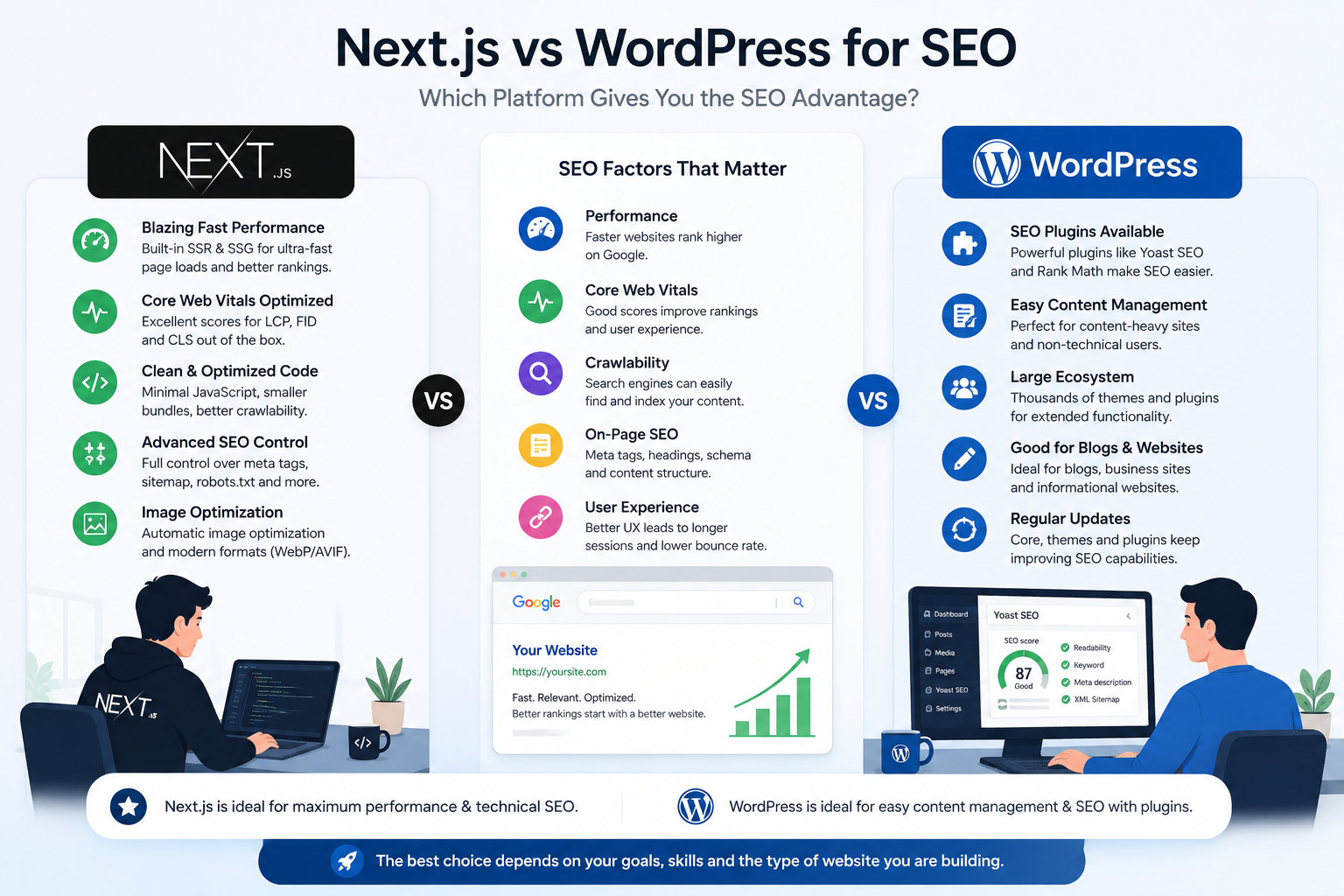
Next.js vs WordPress for SEO: What Matters
Organic SEO Marketing: Build Search Visibility That Compounds
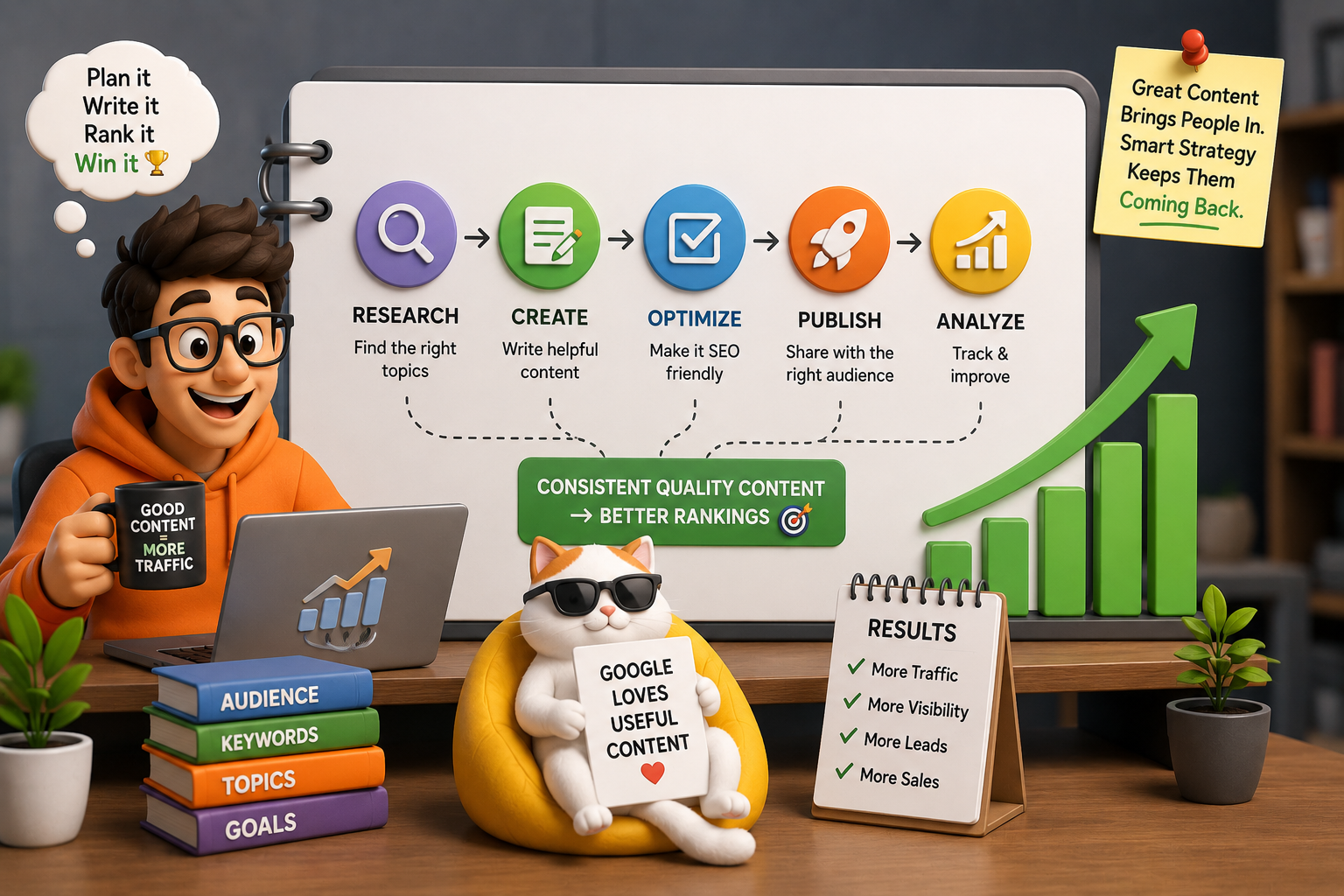
SEO Content Strategy: How to Create Content That Ranks and Converts