Organic SEO marketing is the practice of earning search visibility through relevance, authority, and technical performance — not through paid placement. Every ranking your site holds in organic search results was earned rather than bought, and unlike paid search, those rankings continue working whether or not you are actively spending. That compounding quality is what makes organic SEO one of the most strategically valuable marketing investments a business can make.
This guide covers what organic SEO marketing involves, how it fits within the broader search marketing landscape alongside SEM and paid search, how to build a strategy that drives sustained growth, and what separates businesses that see compounding organic results from those that plateau after early gains.
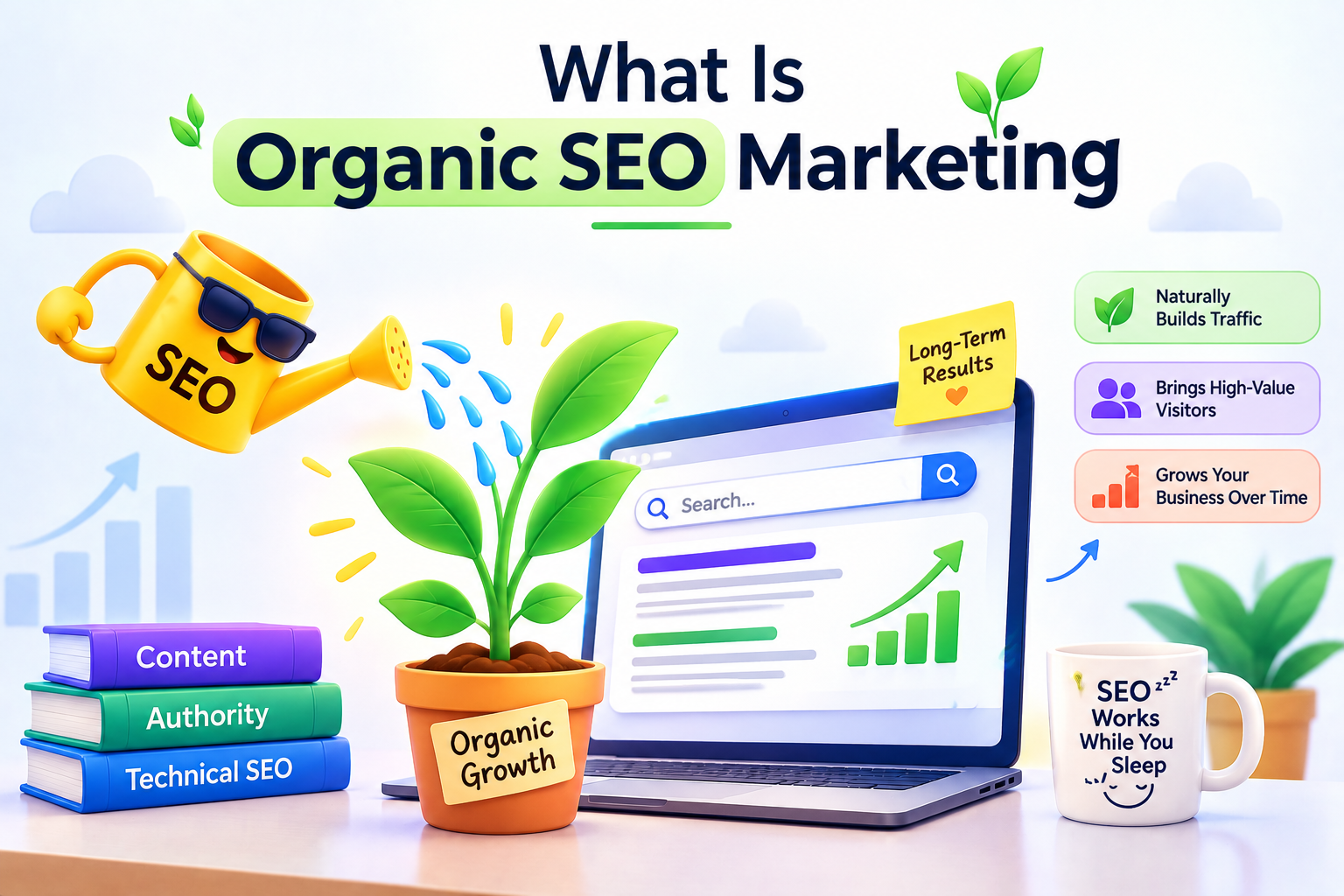
What Is Organic SEO Marketing
Organic SEO marketing refers to all the activities that improve a website's position in unpaid search results — the listings that appear below any paid ads in Google, Bing, or other search engines. These positions are determined by search engine algorithms that evaluate hundreds of signals across three core dimensions: the technical quality of your site, the relevance and depth of your content, and the authority signals generated by external links pointing to your pages.
Unpaid search traffic — sometimes called organic traffic or natural search traffic — is the visitors who arrive at your site by clicking on these earned results rather than on paid advertisements. This distinction matters commercially. Organic traffic carries no cost per click, it tends to attract visitors with higher intent relative to display advertising, and it builds an asset that grows in value over time rather than resetting when a campaign ends.
Organic SEO marketing encompasses everything that influences these results: technical site optimisation, on-page content development, off-site link acquisition, local search optimisation, and the strategic architecture that determines how all of these elements work together. It is a discipline, not a tactic — and it rewards businesses that treat it with the same seriousness as any other core marketing function.
SEO, SEM, and SEA: Understanding the Search Marketing Landscape
The terminology around search marketing is frequently misused, which creates confusion about what budget is actually buying and what strategy is actually being executed. The three terms that matter most — SEO, SEM, and SEA — refer to distinct but related disciplines.
SEO (Search Engine Optimisation) refers specifically to the work done to improve organic, unpaid search rankings. SEM (Search Engine Marketing) is the broader category that encompasses all marketing activity conducted through search engines — including both organic and paid methods. SEA (Search Engine Advertising) refers specifically to the paid component: running ads through platforms like Google Ads or Microsoft Advertising to appear in the sponsored positions above organic results. In everyday use, many marketers use "SEM" to mean only paid search, which adds to the confusion — but technically, a complete SEM strategy includes both organic SEO and paid SEA working in coordination.
Term What It Covers Cost Model Time to Results SEO Organic search rankings through content, technical optimisation, and links Investment in time and expertise — no cost per click 3 to 12 months — compounds over time SEA (Paid Search) Paid ad placements in search results via Google Ads or Microsoft Ads Cost per click — ongoing spend required Immediate — active while budget is live SEM All search engine marketing — organic SEO plus paid SEA combined Combined investment across both channels Paid results immediately, organic results build over time
The most effective search marketing programmes use both organic and paid channels with deliberate coordination. Paid search covers high-commercial-intent queries where you cannot yet rank organically. SEO builds the long-term organic presence that eventually reduces your dependency on paid spend. Keyword performance data from paid campaigns informs which organic content to prioritise. Organic rankings reduce the number of paid clicks you need to buy for the same level of visibility. Neither channel operates at full effectiveness when built entirely independently of the other.
Where Organic SEO Fits Within Your Broader Digital Marketing Strategy
Organic SEO does not operate in isolation from the rest of a business's marketing activity, and treating it as a siloed channel undersells its value. Within a broader digital marketing strategy, organic search interacts directly with content marketing, social media, and email in ways that make each channel more effective than it would be alone.
Content marketing and organic SEO are frequently the same underlying work viewed through two lenses: a piece of content built for SEO to rank for a target keyword is also a content marketing asset that can be distributed through email and social channels, and content originally created for social or email distribution often becomes a strong organic search asset once properly optimised for the keywords it happens to address. Social media, while it does not directly influence search rankings, extends the reach of organic content and can generate the kind of engagement and brand awareness that indirectly supports the earned links and mentions covered in this guide's off-site SEO section. Email marketing benefits from organic SEO by using search-optimised content as the substance of nurture sequences, giving subscribers genuinely useful material rather than purely promotional messaging.
The businesses that get the most from organic SEO are the ones that plan content once and distribute it across every channel, rather than treating SEO content, social content, and email content as three separate production efforts. A single well-researched, comprehensively optimised article can serve as the SEO asset, the newsletter feature, and the social media source material simultaneously — multiplying the return on the time invested in producing it.
Organic vs Non-Organic SEO: What the Difference Actually Means
Non-organic SEO is not a formal discipline — it is a descriptor for search visibility that is paid for rather than earned. When someone refers to non-organic search traffic, they mean visitors arriving via paid ads rather than earned rankings. The distinction matters because the two produce fundamentally different business outcomes over time.
Paid (non-organic) search delivers immediate, controllable, but entirely temporary visibility. The moment you stop paying, the traffic stops. Organic search delivers slower, less directly controllable, but compounding and permanent visibility. A page that earns a strong organic ranking through content quality and authority does not lose that ranking the moment the marketing budget is redirected elsewhere. This permanence is the defining commercial advantage of organic SEO marketing over its paid equivalent.
Some marketers also use "non-organic" to describe black-hat SEO tactics — link schemes, keyword stuffing, cloaking — that attempt to game search algorithms rather than earn rankings legitimately. These approaches can produce short-term ranking gains but carry a high risk of manual penalties and algorithmic demotions that can devastate organic traffic overnight. Sustainable organic SEO marketing operates entirely within search engine guidelines and builds visibility that is not vulnerable to a single algorithm update or penalty action.
The Core Components of Organic SEO Marketing
Organic SEO marketing is not a single activity — it is a programme of interconnected work across three primary areas. The businesses that achieve sustained organic growth treat all three as ongoing disciplines rather than one-time projects.
On-Site Search Engine Optimisation
On-site SEO covers both the technical foundation of your site and the optimisation of individual pages. The technical layer — crawlability, indexation, site speed, mobile usability, structured data, and HTTPS — determines whether search engines can properly access and understand your content at all. The on-page layer covers how individual pages are optimised for specific search queries: title tags, heading structure, keyword placement, content depth, internal linking, and meta descriptions.
A search engine friendly website is one that removes every obstacle between Google's crawlers and your content. This means clean URL structures that reflect your site hierarchy, page load times that pass Core Web Vitals thresholds, properly configured robots.txt and sitemap files, and a logical internal linking architecture that distributes ranking authority across the site and helps search engines understand which pages are most important. These are not optional refinements — they are the baseline requirements for organic SEO to function at any meaningful level.
Off-Site Search Engine Optimisation
Off-site SEO covers all the ranking signals that come from outside your own website — primarily backlinks, but also brand mentions, reviews, social signals, and any external indicator of your site's authority and trustworthiness. Backlinks remain the most powerful off-site ranking signal. When reputable, relevant websites link to your pages, they pass authority that search engines interpret as a vote of confidence in your content's quality and relevance.
Effective off-site SEO is earned rather than manufactured. The most durable approaches are digital PR that generates coverage and links from industry publications, creating original research or data-driven resources that other sites reference naturally, and contributing expert content to respected outlets where your audience already spends time. These approaches produce links from genuinely relevant domains — the kind that compound domain authority over time rather than the kind that create a footprint of artificial link building that search engines increasingly identify and discount.
Search Engine Positioning and Web Presence Optimisation
Search engine positioning refers to where your pages appear in search results for specific queries — and managing that positioning is an ongoing process, not a one-time achievement. Rankings shift as competitors publish new content, earn new links, or benefit from algorithm updates. Maintaining and improving your positioning requires continuous monitoring, regular content updates, and a systematic approach to identifying pages that are losing ground and diagnosing why.
Web search engine positioning is also shaped by your presence beyond your own domain. Google's search results increasingly show knowledge panels, featured snippets, People Also Ask boxes, local map packs, and image carousels alongside traditional blue-link results. Optimising for these rich result formats — through structured data markup, Google Business Profile management, and content structured to answer specific questions directly — expands your overall search footprint and captures visibility that organic rankings alone do not provide.
Building an Organic SEO Strategy That Drives Growth
An organic SEO strategy is the documented plan that connects your business goals to specific search behaviours and defines the sequence of work that will close the gap between where your site currently ranks and where it needs to rank to generate meaningful business impact. Without this plan, organic SEO activity produces inconsistent results because the work has no direction and no prioritisation framework.
Setting the Strategic Foundation
Every organic SEO strategy starts with a clear definition of what success looks like in business terms — not in ranking terms. Ranking on page one for a keyword nobody converts on is a vanity achievement. The strategic foundation maps your target audience's search behaviour to the specific outcomes your business needs: leads, sales, demo requests, or revenue by product line. Every keyword, every content piece, and every technical priority is evaluated against this commercial frame rather than against traffic volume alone.
Keyword Research and Search Intent Mapping
Keyword research for an organic SEO programme should cover the full spectrum of search behaviour your target audience exhibits — from the problem-aware queries they use when they first recognise a need, through the comparison queries they use when evaluating options, to the decision-stage queries they use immediately before converting. Mapping keywords to search intent stages and to specific content types gives every piece of content a clear purpose and a clear place in the strategy.
Content Architecture and Topical Authority
Topical authority — the depth and breadth of your site's coverage of a specific subject area — is one of the most significant factors in organic search positioning for competitive keywords. Search engines evaluate not just individual pages but the overall expertise and comprehensiveness a site demonstrates on a topic. A site with twenty deeply interconnected, expert-level pages on a single topic will consistently outperform a site with two hundred loosely related surface-level pages on fifty different topics.
Building topical authority requires organising content in deliberate clusters — pillar pages that cover broad topics comprehensively, supported by cluster pages that go deep on specific subtopics and link back to the pillar. This architecture concentrates your topical relevance signals, gives search engines a clear map of your expertise, and creates a user experience where visitors can move naturally from broad understanding to specific answers within your site rather than returning to Google for each follow-up question.
Running an Organic SEO Campaign
A search engine optimisation campaign is a structured, time-bound programme of SEO work focused on a specific set of goals — improving rankings for a particular keyword cluster, recovering traffic after an algorithm update, or launching a new section of the site into competitive search results. Unlike ongoing SEO maintenance, a campaign has defined objectives, a defined timeline, and a defined set of activities that will be executed in sequence.
Campaign Phase Key Activities Primary Output Timeline Discovery and audit Technical crawl, competitor analysis, keyword research, content gap analysis Prioritised issue list and strategy document Weeks 1 to 3 Technical foundation Fix crawl errors, implement canonicals, resolve Core Web Vitals issues, submit sitemap Clean technical baseline Weeks 3 to 6 On-page optimisation Rewrite priority pages, optimise title tags and meta descriptions, improve internal linking Optimised existing page set Weeks 4 to 8 Content production Publish pillar pages and cluster content, build topic depth systematically Published content programme Month 2 onwards — ongoing Off-site acquisition Outreach to industry publications, develop linkable assets, pursue partner mentions Growing backlink profile from relevant domains Month 3 onwards — ongoing Measurement and review Monthly performance review, rank tracking, conversion attribution, strategy adjustment Performance data and revised priorities Monthly throughout campaign
Should You Hire an Organic SEO Agency or Build In-House?
Once an organic SEO campaign is underway, the question of who executes the ongoing work — an in-house team, a specialist agency, or some combination of both — becomes unavoidable, and the right answer depends on scale, internal capability, and how central organic search is to the business's growth strategy.
An in-house team makes the most sense when organic SEO is a primary growth channel that justifies dedicated headcount, when the business has genuine domain expertise that benefits from being written directly by internal subject matter experts, and when the volume of ongoing technical and content work is consistent enough to occupy a full-time role or team productively. The tradeoff is that building genuine SEO expertise internally takes time, and a single in-house hire rarely covers technical SEO, content strategy, and link acquisition equally well.
An organic search engine marketing agency makes sense when a business needs the full range of technical, content, and off-site expertise without the overhead of building and managing that capability internally, or when internal teams need specialist support for a specific initiative — a technical migration, a content sprint, a link acquisition campaign — without a permanent headcount commitment. The right agency brings established processes, a track record across multiple clients that surfaces what actually works, and the ability to flex resource allocation as priorities shift, in exchange for a cost structure that scales with the engagement rather than a fixed salary.
Many businesses land on a hybrid model: an in-house marketing or content team handles the work that benefits most from internal product and customer knowledge, while an agency provides the technical SEO depth, off-site link acquisition, and strategic oversight that are harder to build and retain internally at a sustainable cost. Evaluating any agency, whether for organic SEO specifically or the broader search engine marketing this guide describes, should focus on their transparency about methodology, their ability to explain strategy in terms of business outcomes rather than vanity metrics, and evidence of results sustained over a realistic timeline rather than short-term ranking spikes that are vulnerable to reversal.
Enterprise Search Engine Optimisation
Enterprise SEO is a distinct discipline from the organic SEO marketing applied to small and mid-size businesses — not because the principles differ, but because the scale, the internal complexity, and the technical challenges are fundamentally different. An enterprise website might have hundreds of thousands of pages, multiple subdomains, international variants, and a development pipeline where SEO recommendations compete with product roadmap priorities for engineering time.
The most critical enterprise SEO challenge is governance — ensuring that SEO requirements are embedded into development processes so that new features, page templates, and site migrations are built with search engine visibility considered from the start rather than audited and fixed after launch. A single poorly managed platform migration or a widely deployed template with a structural SEO error can affect thousands of pages simultaneously and take months to recover from. Enterprise organic SEO marketing is as much about organisational process as it is about technical implementation.
At scale, the ROI of organic SEO compounds dramatically. A 10% improvement in organic click-through rate across 50,000 pages produces a fundamentally different business impact than the same improvement on a 50-page site. This is why enterprise search engine optimisation commands dedicated resources and specialist expertise — the potential upside justifies the investment in a way that is not always true for smaller sites with lower traffic ceilings.
What Is Organic Search Visibility?
Organic search visibility is a distinct concept from both rankings and traffic, and it's worth understanding separately because it's often the earliest signal that an organic SEO programme is working, well before rankings or traffic reflect meaningful change.
Where a ranking measures your position for one specific keyword, organic search visibility measures your overall presence across the full set of keywords relevant to your business — how many of them you appear for at all, and where, aggregated into a single view. A site might hold a mediocre average position across five hundred relevant keywords and have far greater organic search visibility, and far greater long-term potential, than a competitor holding a single page-one ranking for one keyword. Visibility also extends beyond traditional blue-link rankings to include presence in featured snippets, People Also Ask boxes, image results, and other rich result formats covered earlier in this guide's positioning section — each of these represents a form of search visibility even when it doesn't generate a click directly.
Tracking organic search visibility typically means monitoring the trend in total impressions across Search Console, tracking a visibility index or share-of-voice metric from a rank tracking tool like Semrush or Ahrefs (which estimate the percentage of possible traffic you're capturing across your full tracked keyword set), and watching how many distinct keywords a domain ranks for in any position, not just the top ten. This is a genuinely useful leading indicator: visibility across a broad set of keywords frequently increases months before the traffic and conversion improvements that ultimately justify the investment become visible, which makes it a valuable metric for maintaining confidence in a programme during the early months this guide's FAQ describes, when other numbers are still slow to move.
SEO for Growth: Using Organic Search as a Business Scaling Engine
The businesses that use organic SEO most effectively treat it as a growth infrastructure investment rather than a marketing line item. The distinction is meaningful. A marketing line item is evaluated on a quarterly budget cycle and cut when results are not immediately visible. An infrastructure investment is evaluated over a longer horizon based on the asset it builds and the compounding return that asset generates.
Companies like HubSpot, Atlassian, and Zapier built substantial portions of their growth on organic search by investing early in topical authority across the problems their target audiences searched for. HubSpot's learn section alone generates millions of organic visits per month and positions the company at the beginning of the buyer journey for marketing and sales professionals worldwide. These outcomes were not accidental — they were the result of treating organic SEO as a core growth channel with multi-year investment horizons and dedicated teams.
For growing businesses, the window of opportunity in organic SEO is often largest before the market becomes crowded. Industries and niches where search volume exists but strong competitors have not yet dominated the results page represent the highest-return organic SEO opportunity available. Moving first — before competitors establish deep topical authority — produces a compounding advantage that becomes progressively harder for later entrants to overcome.
Measuring Organic SEO Marketing Performance
Measuring organic SEO effectively requires connecting search performance data to business outcomes rather than reporting on rankings and traffic in isolation. The metrics that matter depend on your business goals, but a complete organic SEO measurement framework covers four levels.
Metric Level What It Measures Where to Track Review Cadence Visibility Impressions, average ranking positions, keyword rank distribution Google Search Console, rank tracking tools Weekly Traffic Organic sessions by page, click-through rate, new vs returning visitors Google Analytics 4, Search Console Weekly Engagement Time on page, scroll depth, bounce rate, pages per session from organic entry Google Analytics 4 Monthly Business outcomes Organic conversions, leads, revenue attributed to organic search, cost per organic lead GA4 + CRM integration Monthly
Advantages and Drawbacks of Organic SEO Marketing
Advantages
No cost per click. Once rankings are earned, organic traffic carries no incremental cost per visitor. As organic traffic grows, the effective cost per visit falls continuously — the opposite dynamic from paid search, where cost per click typically rises as competition increases.
Compounding asset value. Every piece of content published, every link earned, and every technical improvement made contributes to a cumulative authority that makes future rankings easier to achieve. Organic SEO is one of the few marketing channels where the return on past investment continues to grow rather than depreciate.
Higher trust signals. Organic results carry an implicit credibility with users that paid placements do not. Studies consistently show that organic results receive higher click-through rates than paid ads for the same query — particularly for informational and research-oriented searches where buyers are evaluating options rather than ready to transact immediately.
Visibility during the full buyer journey. Organic SEO can place your brand in front of buyers at every stage — from the earliest problem-aware searches through to final decision-stage queries — in a way that cost-effectively paid search cannot sustain across the full research cycle.
Drawbacks
Results take time. Organic SEO is not a short-term channel. Meaningful ranking improvements typically take three to six months, and the full impact of a sustained programme is rarely visible in under twelve months. Businesses that need immediate leads cannot rely on organic SEO alone during this ramp-up period.
Requires sustained investment. Organic SEO is not a project with an end date — it is an ongoing programme. Competitors who continue publishing, earning links, and optimising their technical foundations will gradually overtake positions that are not actively maintained. The investment does not stop when rankings improve.
Algorithm dependency. Organic rankings are subject to search engine algorithm changes that can shift positions significantly. A core algorithm update can affect well-optimised sites alongside poorly optimised ones, and recovery from a significant ranking drop caused by an algorithm change requires diagnosis, strategy adjustment, and patience before positions are restored.
Related Services
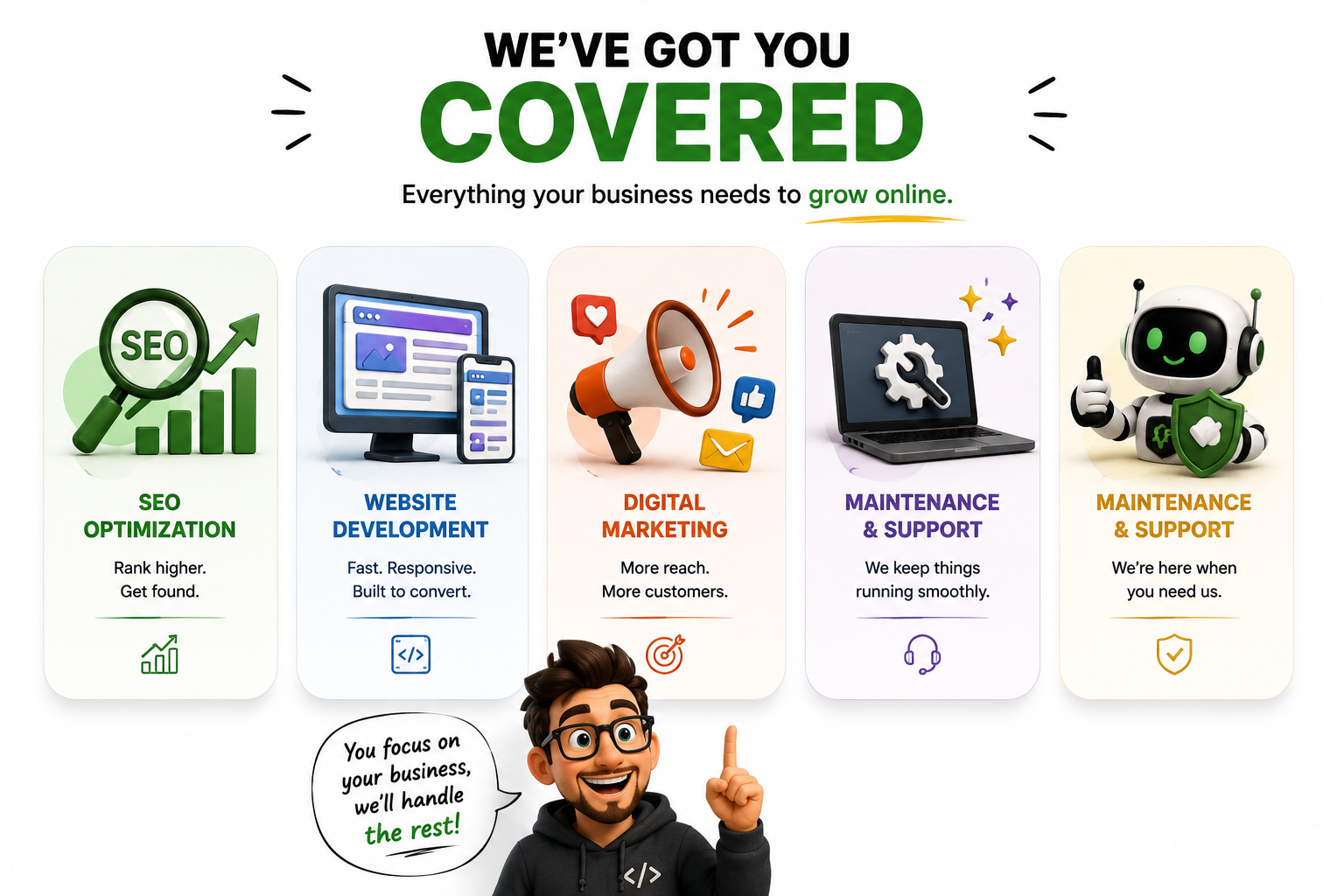
Organic SEO marketing requires technical excellence, strategic content production, and the off-site authority building that compounds rankings over time. Munix Studio provides the full range of services needed to build and sustain a high-performing organic search presence.
SEO Optimization — End-to-end organic SEO services covering technical audits, keyword strategy, content architecture, on-page optimisation, and off-site link acquisition — built to generate compounding search visibility tied to measurable business outcomes.
Website Development — Search engine friendly websites built on React and Next.js with technical SEO embedded at the architecture level — fast, crawlable, and structured to earn and hold organic rankings.
Digital Marketing — Integrated search marketing support connecting organic SEO with paid search campaigns for businesses that need immediate visibility while their organic programme matures.
Dedicated Developers — Specialist content writers and SEO practitioners available on a dedicated basis to produce the consistent, expert-level content that organic SEO growth depends on.
Maintenance and Support — Ongoing monitoring and technical maintenance that protects your organic rankings from the silent technical regressions that erode search visibility over time.
Frequently Asked Questions
Ready to Get Started?
SEO Optimization
End-to-end organic SEO services — technical audits, keyword strategy, content architecture, on-page optimisation, and off-site link acquisition — built to compound search visibility into sustainable business growth.
Explore SEO OptimizationWebsite Development
Search engine friendly websites built on React and Next.js — technically optimised from the ground up for crawlability, performance, and the structural signals that organic rankings depend on.
Explore Website DevelopmentDigital Marketing
Integrated search marketing that coordinates your organic SEO programme with paid search campaigns, ensuring both channels work together to cover the full buyer journey from first search to final conversion.
Explore Digital MarketingRelated Articles
Ecommerce SEO: The Complete Guide to Ranking Your Online Store
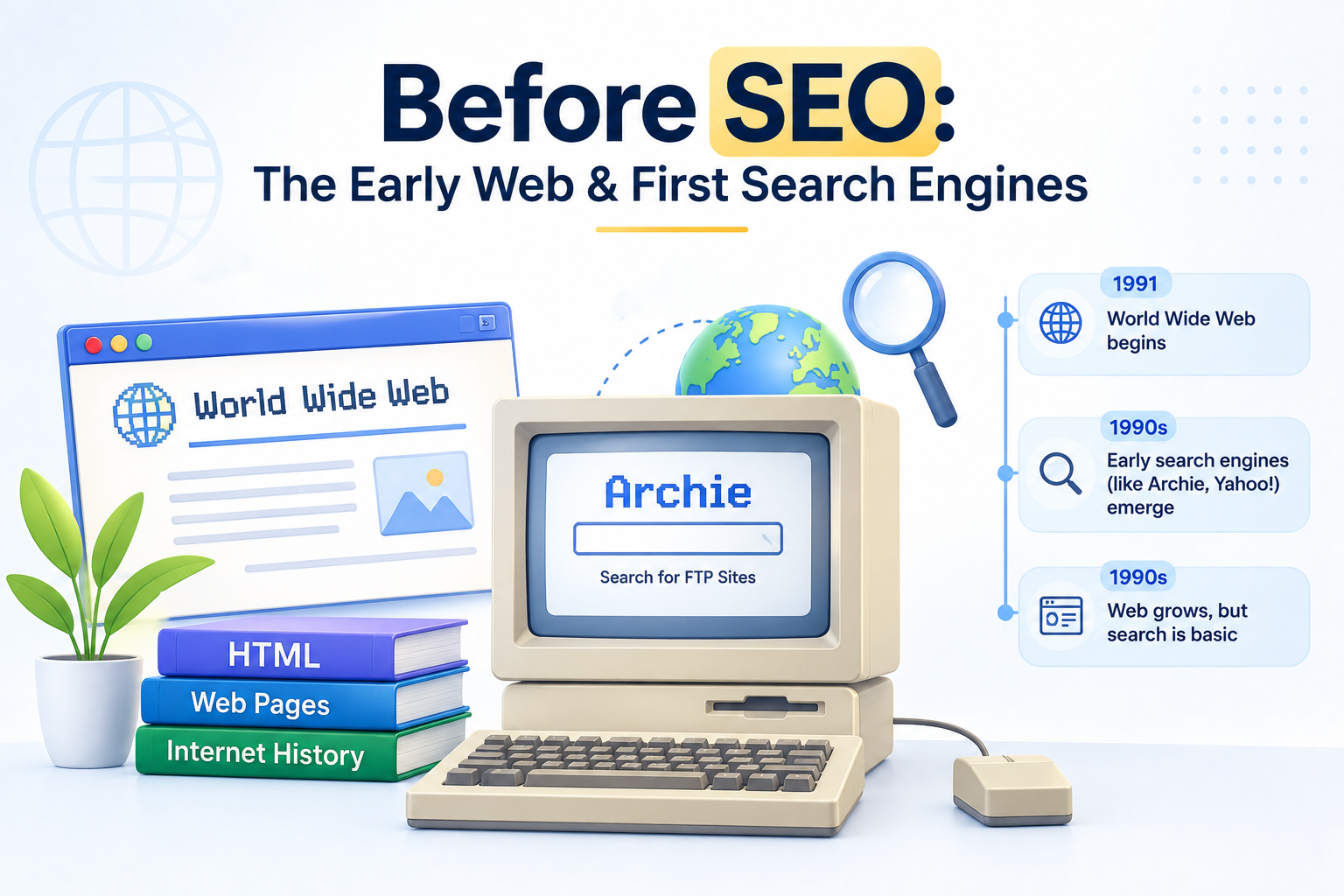
The History of SEO: How Search Engine Optimisation Began
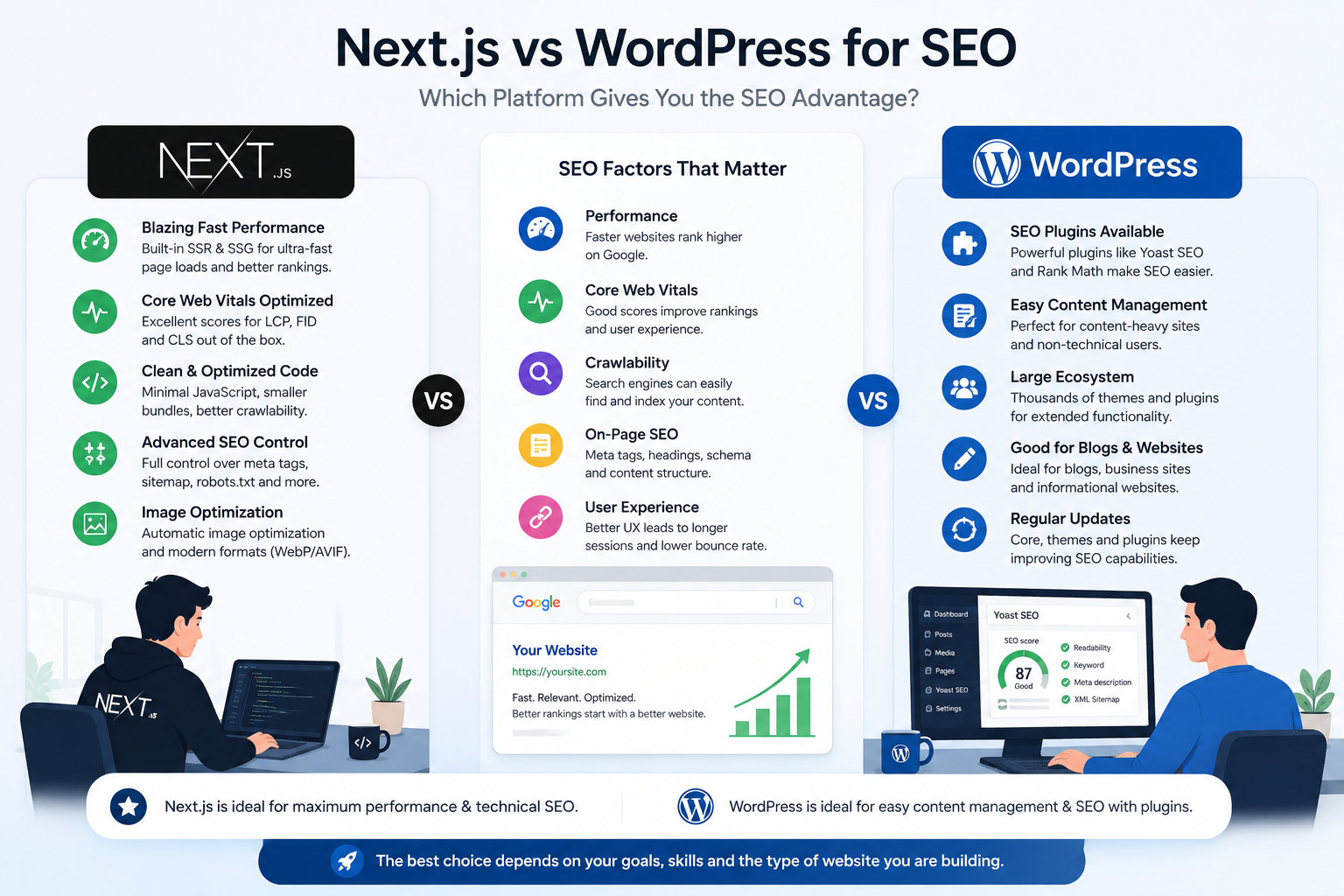
Next.js vs WordPress for SEO: What Matters
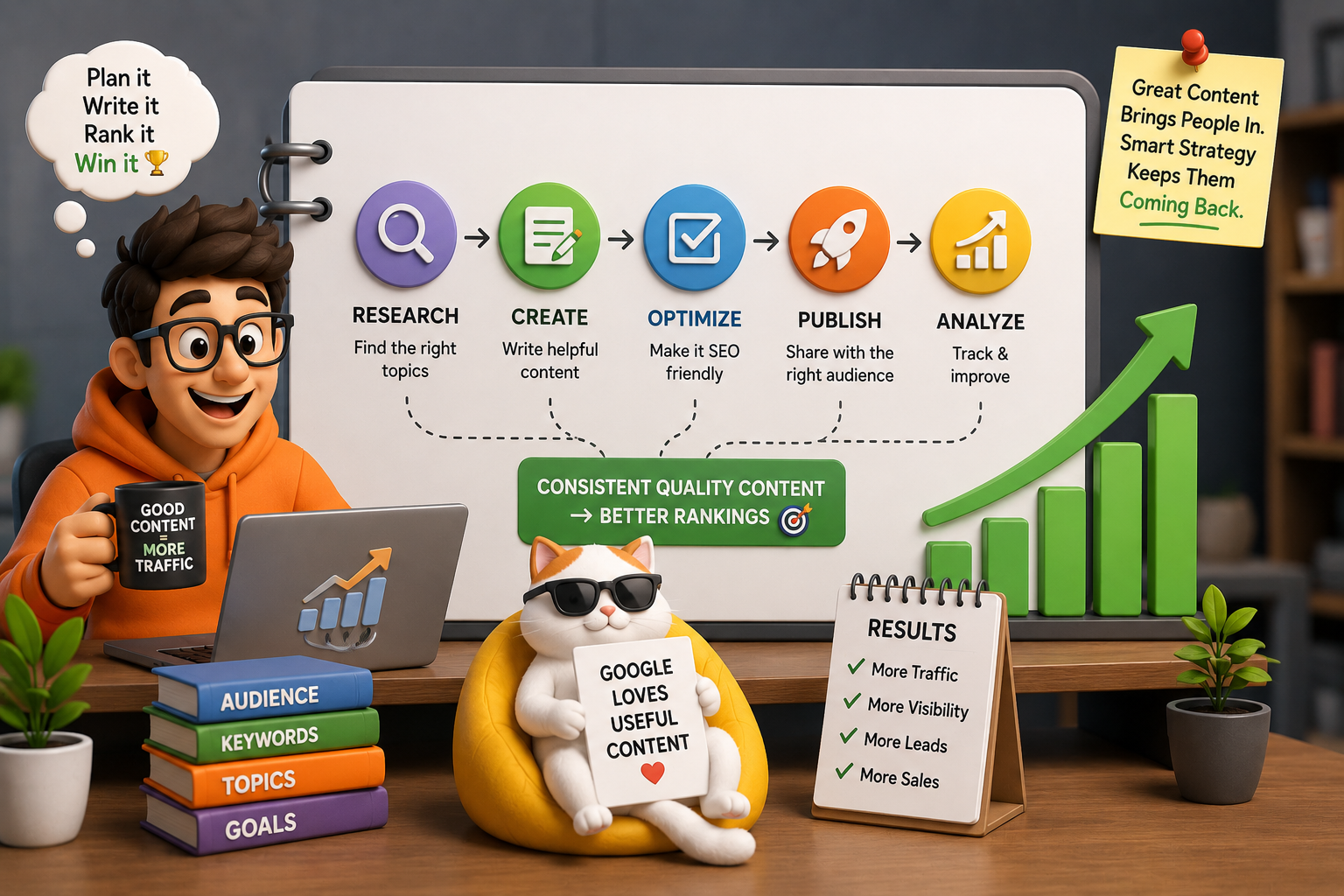
SEO Content Strategy: How to Create Content That Ranks and Converts
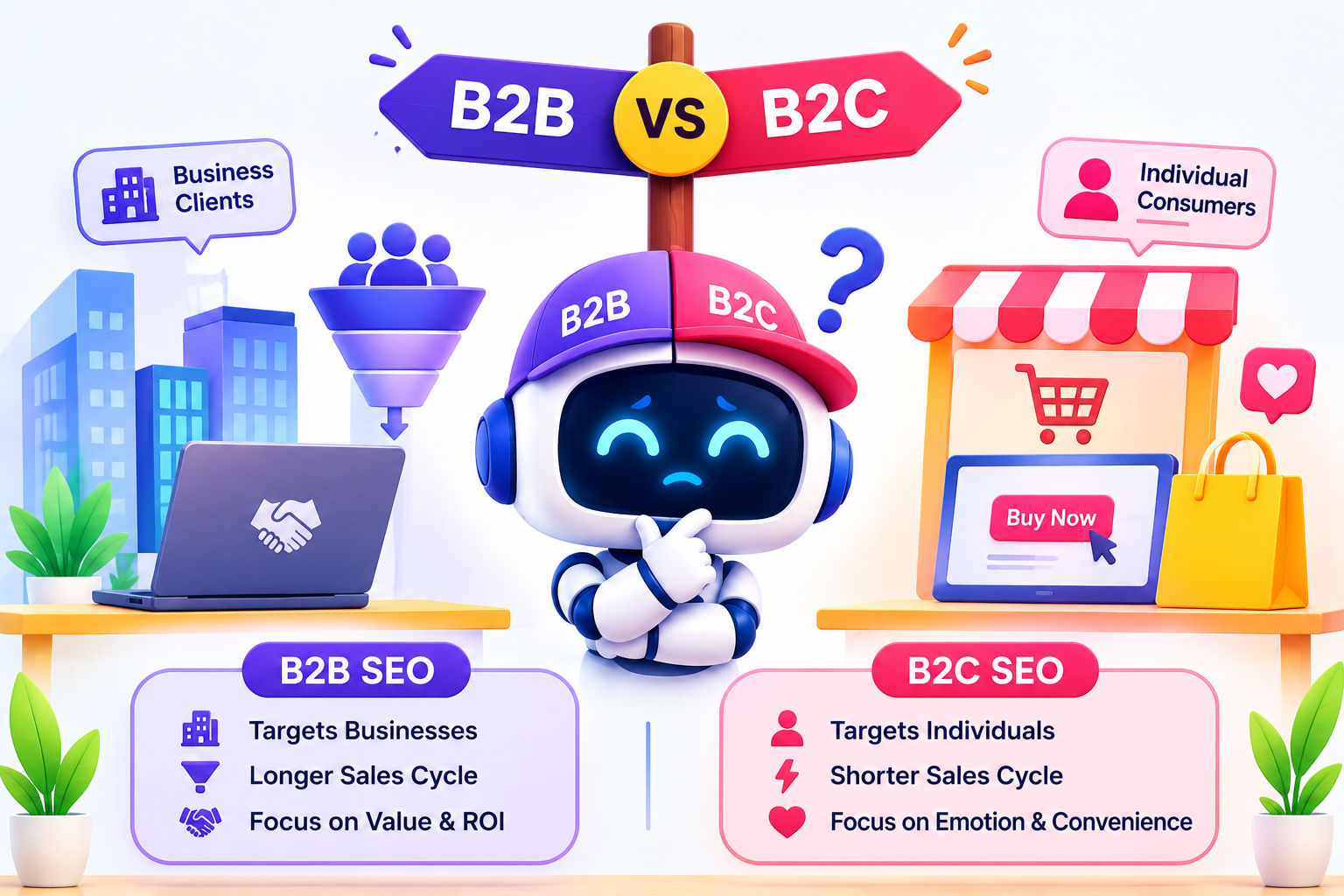
SEO for B2B Companies: A Complete Strategy Guide