You already know to check portfolios, read reviews, and get multiple quotes. Every agency selection guide tells you that. What they skip is the harder part: figuring out whether the agency that looks impressive in a sales presentation is actually going to deliver what they promised once you have signed a contract and transferred a deposit. That gap between pitch and delivery is where most bad agency experiences live, and it is almost entirely predictable if you know what to look for before you commit.
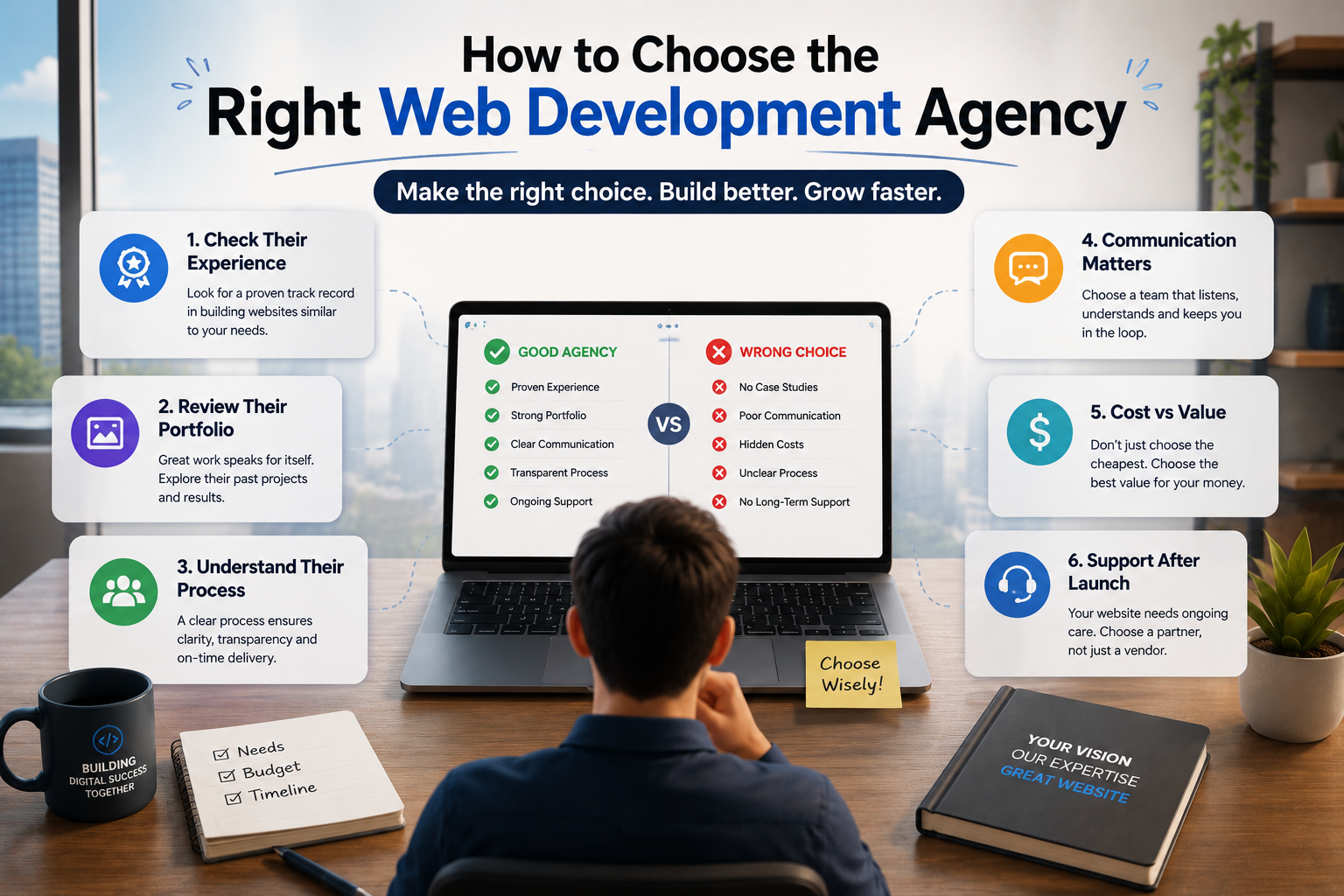
In an analysis of 500 US agencies, 68 percent of project failures were found to stem from poor communication and vague contracts, not from technical incompetence. The agency you are evaluating probably can build the site. The question is whether they will build the right one, on time, with clear accountability, and leave you with something you actually own when the project ends. This guide focuses on that question.
The Red Flags That Actually Predict a Bad Experience
These are not abstract warnings. They are specific behaviors that, when you encounter them during the evaluation process, reliably predict the kind of engagement you are about to have.
No Named Delivery Team
If you are being quoted by a salesperson or account manager but cannot find out who will actually build your site, you are not evaluating the team that will do your work. Ask directly: "Will the same developer who starts my project finish it?" The answer tells you a great deal. Agencies that use a rotating pool of contractors or constantly shuffle team members between projects are a common source of quality inconsistency and context loss mid-project. A good agency can tell you the name and background of the lead developer and designer on your account before you sign.
Guaranteed Rankings or Performance Claims With No Conditions
No agency controls Google's algorithm. An agency that promises specific ranking positions, traffic increases, or conversion rate improvements as part of a web design or development proposal is either uninformed or telling you what you want to hear to close the deal. Real SEO and performance outcomes depend on variables no agency controls unilaterally, including your content, your competition, your domain history, and ongoing algorithm changes. Specific guarantees without clearly stated conditions are a trust signal worth taking seriously as a warning.
No Staging, Testing, or Rollback Process
A professional development workflow includes a staging environment where the site is built and tested before anything touches the live server, a formal QA process covering real devices and browsers, and a defined rollback procedure if something goes wrong on launch day. If an agency's launch process amounts to "we will push the changes live and monitor," they are working without a safety net. Ask specifically: how is the site tested before it goes live, what is the staging environment, and what happens if something breaks during or after launch? An agency that cannot answer these questions concretely is not running a professional development process.
Platform Lock-In or Reliance on Unmaintained Plugins
Agencies pushing a single platform for every project, whether they are WordPress maximalists or Webflow evangelists who cannot objectively assess fit, are a red flag. The platform should follow the requirements, not the other way around. Equally concerning is a proposal that relies heavily on third-party plugins without any audit of those plugins' maintenance status, security track record, or long-term viability. Plugins that stop being maintained become security liabilities. An agency that builds your site on a stack of poorly vetted plugins is handing you an ongoing problem the moment the project closes.
Unclear Ownership of Code, Accounts, and Assets
When the project ends, you should own everything. The source code, the design files, the hosting account, the domain, the analytics account, the ad accounts if applicable. If any of these are registered under the agency's own accounts rather than yours, leaving the agency means losing access to your own assets. Ask before signing: who owns the hosting account, who owns the Google Analytics property, who owns the ad accounts, and what does the IP assignment clause in the contract say. An agency that cannot answer clearly or resists the question is telling you something important.
Vague Maintenance Fees With No Itemized Services
A monthly maintenance fee is not a problem. A vague maintenance fee with no defined scope is. Ask any agency quoting you a maintenance retainer to itemize exactly what it covers: uptime monitoring, security patches, software and plugin updates, performance checks, content updates, and emergency response. The specific services covered, the response time commitments, and what happens if something breaks outside business hours should all be documented. An agency that can answer this question with a specific itemized list is running a real support operation. One that describes it as "keeping the site healthy" is not.
The Questions That Reveal Real Answers
Generic questions get generic answers. The questions below are designed to reveal how an agency actually operates rather than how they describe themselves. Ask all of them. The answers, and especially the hesitations, tell you more than the portfolio.
Question to Ask What a Strong Answer Looks Like What a Weak Answer Looks Like Who specifically will build my project? Named lead developer and designer with backgrounds you can verify "Our team" or "assigned based on availability" Can you walk me through your staging and launch process? Specific staging environment, QA checklist, rollback procedure "We test everything before it goes live" What does your maintenance fee specifically cover? Itemized list of services with response time commitments "Keeping your site healthy and up to date" Who owns the code and accounts when the project ends? Full IP transfer in contract, all accounts registered to you Hesitation, redirection, or "we can discuss that" Tell me about a project that went wrong. What happened? Specific honest account of what broke and how they resolved it "We have not had any significant issues" or deflection What would you push back on in our current brief? Specific, reasoned challenge to at least one assumption in your brief "Your brief looks good, we are ready to get started" How do you handle out-of-scope requests mid-project? Defined change request process with documented approval and pricing "We are flexible, we will work it out"
The last question on the list deserves particular attention. The best agencies ask hard questions during discovery. They sometimes disagree with you, which is a healthy sign. Teams that nod at everything are not thinking, they are just executing. An agency that challenges nothing in your brief during the sales process is showing you exactly how they will handle your project when you are the one being agreed with rather than the one doing the evaluating.
What a Strong Proposal Looks Like vs a Polished One
There is a meaningful difference between a proposal that makes you feel confident in your decisions and one that makes you excited about the presentation. A polished proposal has beautiful layouts, client logo walls, case study slides, and a compelling narrative about the agency's process. A strong proposal has specific milestone dates tied to specific deliverables, a clearly scoped statement of work, a named team, a defined change request process, explicit IP ownership language, and itemized post-launch support terms.
After reading a proposal, ask yourself whether you now know more about your own project than you did before, or whether you know more about the agency. A strong proposal improves your understanding of the scope, the risks, and the decisions ahead. A polished one impresses you without increasing your clarity. The distinction is not always obvious in the moment, which is why having a specific list of items to check for in the proposal is more reliable than an overall impression.
Proposal Element Present and Specific Missing or Vague Statement of work with named deliverables Strong signal Walk away Milestone dates in the contract Strong signal Significant risk Named delivery team Strong signal Investigate further IP assignment clause Non-negotiable requirement Do not sign without it Change request process defined Strong signal Scope creep risk Itemized post-launch support terms Strong signal Post-launch void Payment tied to milestones Aligned incentives All risk on you Beautiful case study slides Neutral, not a quality signal Neutral, not a disqualifier
How Much Should You Expect to Pay?
Pricing varies enough by project scope, agency location, and team seniority that a single number is not useful. What is useful is understanding the ranges that correspond to different types of projects and what the price signals about scope rather than quality alone.
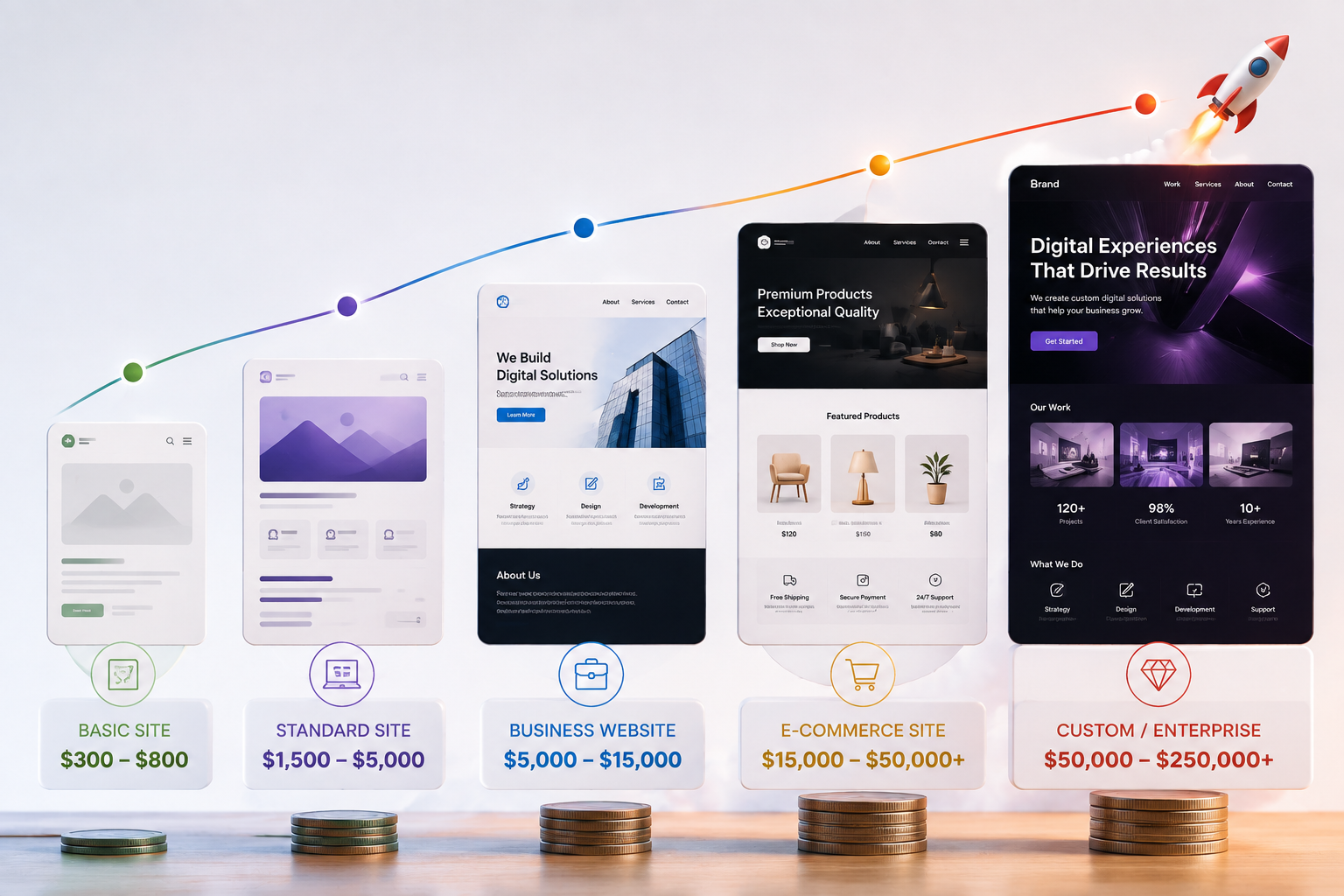
Project Type US Agency Range Offshore Agency Range What Drives Cost Up Small marketing site, 5 to 15 pages $8,000 to $25,000 $3,000 to $12,000 Custom design, animations, integrations Business site with CMS and blog $15,000 to $45,000 $6,000 to $20,000 Content volume, custom fields, SEO setup Ecommerce site $25,000 to $80,000 $10,000 to $35,000 Product volume, payment integrations, inventory Custom web application $50,000 to $200,000 plus $20,000 to $80,000 User authentication, business logic, API complexity
The cheapest quote almost always means the narrowest scope. When a quote comes in significantly below the range for your project type, the question to ask is not "how did they get the price so low" but "what did they leave out of the scope." The answer is almost always something that will be billed as additional work later, or simply not delivered. You can use our free website cost calculator to get a ballpark estimate for your specific project before approaching any agency, which gives you a baseline for evaluating whether quotes you receive are within a reasonable range.
A Practical Shortlist Method
The process below is not a rigid framework. It is the sequence of steps that consistently surfaces the information you need before committing to an agency relationship.
Start by identifying five to eight agencies that do work similar in complexity and type to yours. Do not spend more than two to three hours on this initial research. Portfolio quality and client list are the only criteria at this stage. From that initial group, run each one through the red flag checklist above using publicly available information. Any agency that triggers multiple red flags at this stage does not need a discovery call. Narrow to three to five for direct conversations.
During discovery calls, use the questions from the table above rather than open-ended questions about their process. Specific questions get specific answers. Open-ended questions get rehearsed answers. Ask every agency the same questions so you can compare responses directly rather than impressions.
Before making a final decision, call two past clients directly. Not testimonials. Not written case studies. Direct phone or video conversations. Ask specifically about what went wrong during their project, how the agency responded, and whether the final cost matched the original quote. If an agency cannot provide direct client references for a direct conversation, remove them from your shortlist regardless of how good everything else looks. For more detail on the agency versus freelancer decision, our guide on hiring a freelancer vs an agency covers that comparison with specific cost ranges and decision frameworks.
How Munix Studio Approaches This With Prospective Clients
We build websites and web applications on React and Next.js for startups and growing businesses, primarily in the US, UK, and EU. When a prospective client reaches out, we run a discovery call before quoting anything. Not to sell harder, but because we cannot give a useful estimate without understanding the actual scope. We name the lead developer and designer on every project before a contract is signed. We use shared project boards throughout every engagement. We include a defined post-launch support period in every contract and we itemize exactly what it covers.
We are also honest about what we are not the right fit for. If you need a simple five-page brochure site maintained by a non-technical team, a freelancer on a platform-based CMS is probably a better fit than we are. We will tell you that directly rather than take the project and deliver something oversized for your actual needs. If you want to get a rough cost range before any conversation, our website cost calculator gives you a starting point with no form required.
Related Services
If you have worked through the evaluation framework above and are ready to put Munix Studio on your shortlist, the services below are the most relevant to what most readers of this page are looking to build.
Website Development — Custom website and web application development built on React and Next.js, with named delivery teams, milestone-tied contracts, and full IP transfer at project close.
Dedicated Developers — Hire a dedicated developer from Munix Studio who works exclusively on your project, combining the direct access of a freelancer with the accountability of a structured team.
Maintenance and Support — Post-launch support plans with itemized services, defined response times, and ongoing technical maintenance that protects what was built after the project closes.
Frequently Asked Questions
Related Articles
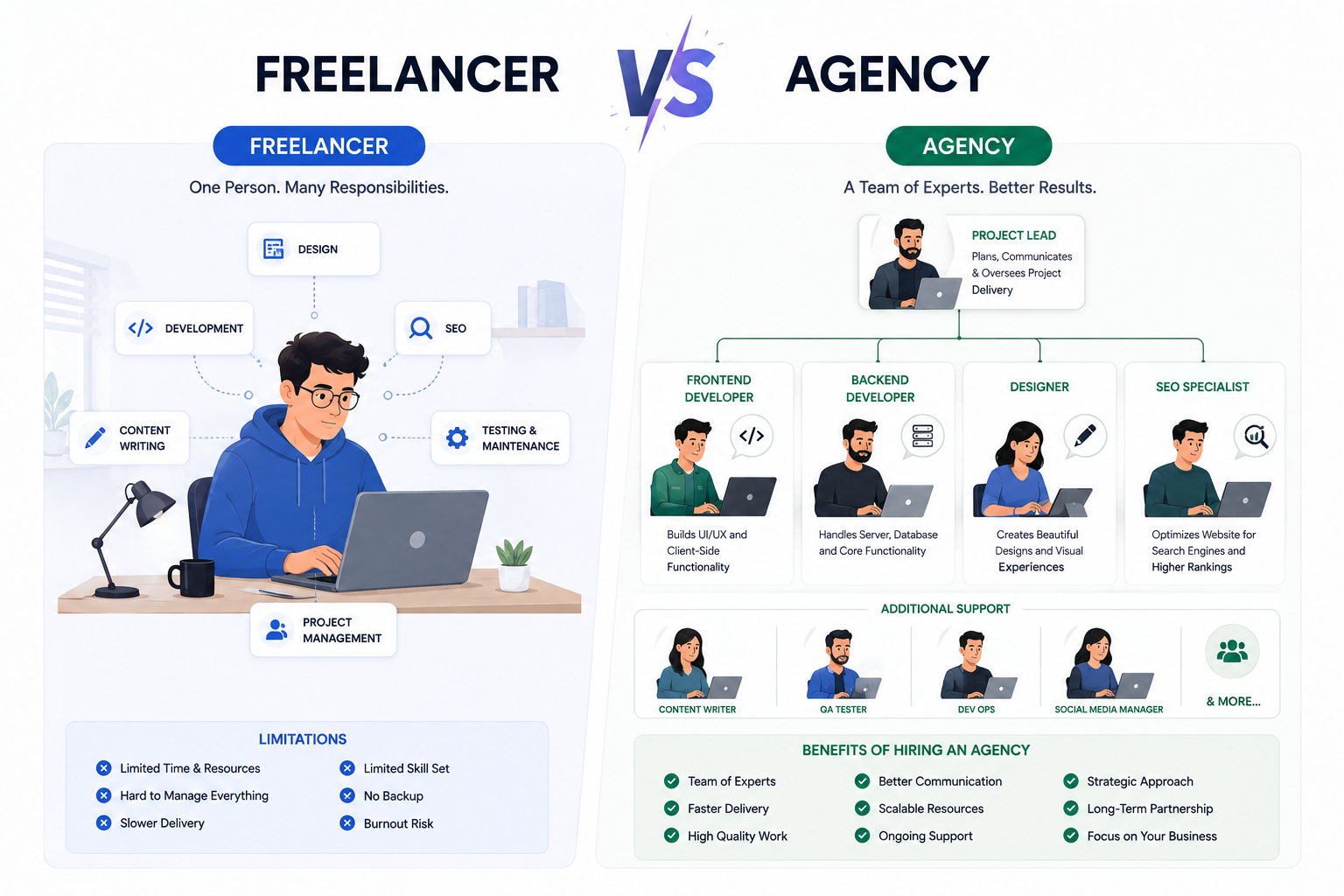
Freelancer vs Agency: What Reddit Users Recommend
Choosing a Web Design Agency: Reddit's View
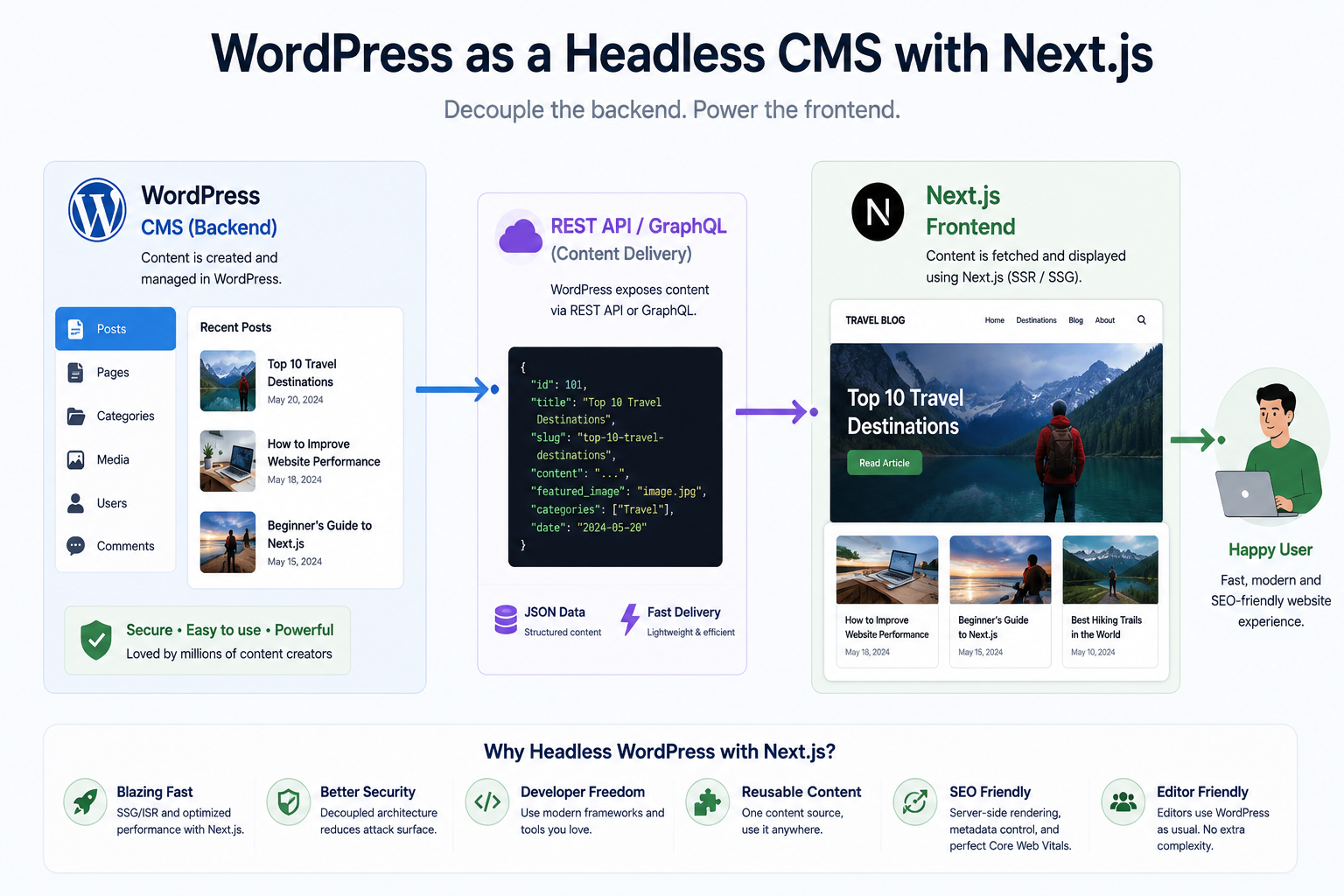
Headless CMS vs WordPress: The Honest Take
WordPress to Next.js Migration: What Happens
React vs WordPress for Small Business